
You woke up with a row of small, red, itchy welts on your arm, and now you’re wondering if those are bed bug bites. You’re not alone. Thousands of Bangalore residents deal with this exact situation every year, and the first step toward solving the problem is knowing exactly what you’re looking at. Misidentifying the bite can send you down the wrong treatment path and let an infestation grow unchecked.
Bed bug bites often look similar to mosquito bites or allergic skin reactions, which makes them tricky to identify without the right information. The bite pattern, the timing, and where they appear on your body all offer clues. Understanding these signs helps you figure out whether you’re dealing with bed bugs or something else entirely, and whether your home needs professional treatment.
In this article, we break down what bed bug bites look like with real visual descriptions, explain the symptoms and causes, and walk you through effective treatment options for the itch and irritation. We also cover how to spot the signs of an active infestation in your home. At A to Z Pest Solutions, we’ve handled bed bug problems across Bangalore since 1993, and we’ve seen firsthand how early identification saves families from weeks of discomfort. If anything in this guide sounds familiar, our team is ready to help.
What bed bug bites look like in real life
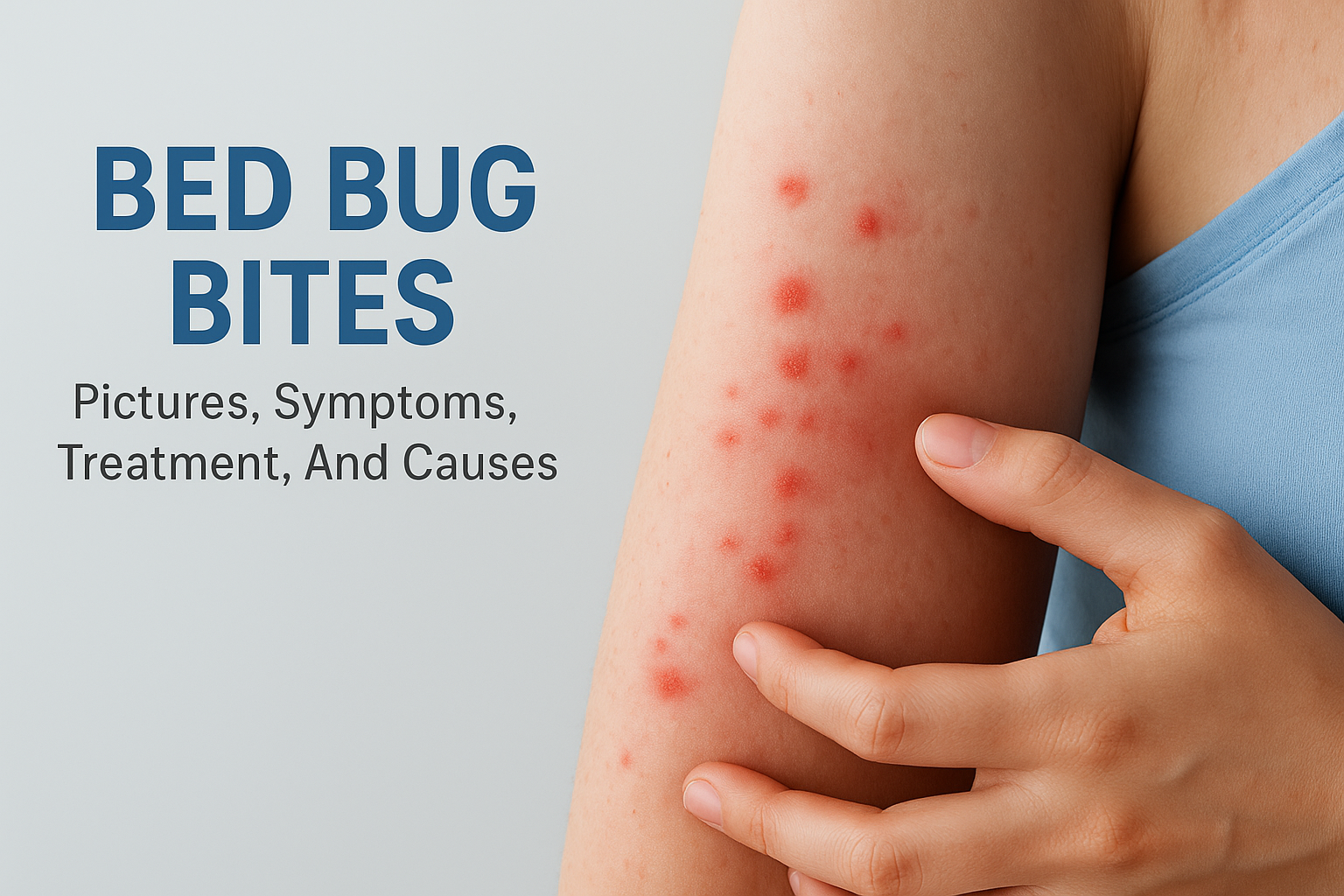
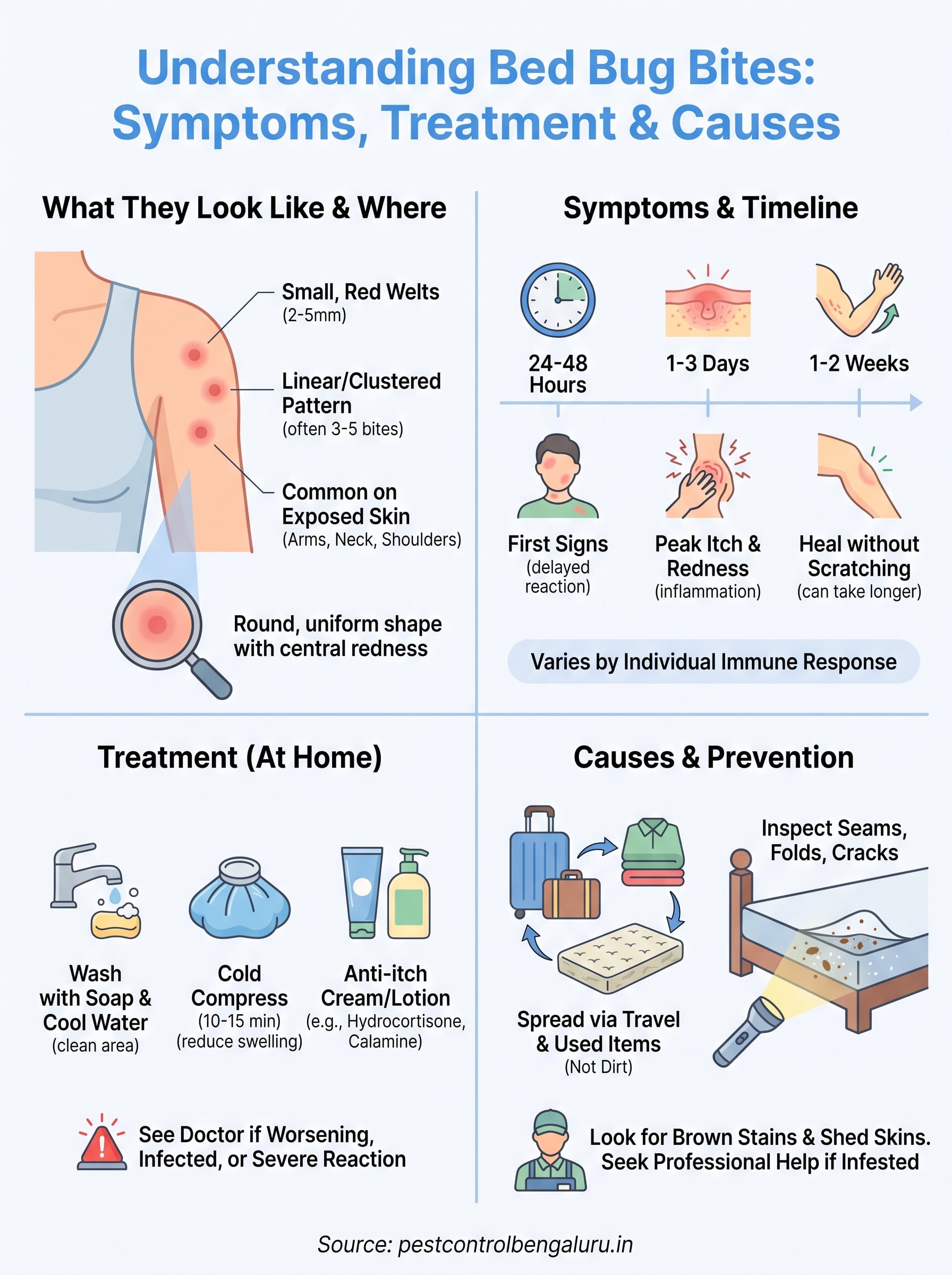
Bed bug bites typically appear as small, raised, red welts on the skin, usually between 2 to 5 millimeters in diameter. They look very similar to mosquito bites at first glance, but they have a few distinct visual features that set them apart. Most bites show a slightly darker red center surrounded by a lighter red or pinkish ring, and the skin around the bite often looks slightly swollen or puffy.
The appearance of the bite itself
The individual bite usually appears as a flat or slightly raised bump with defined edges. Unlike a mosquito bite, which tends to have a random shape, a bed bug bite is often round and uniform. The center of the bite may feel slightly harder than the surrounding skin. Some people develop a small blister or fluid-filled bump at the bite site, especially those with sensitive skin. In people with darker skin tones, redness may be harder to see, but the swelling and itch remain clear signs.
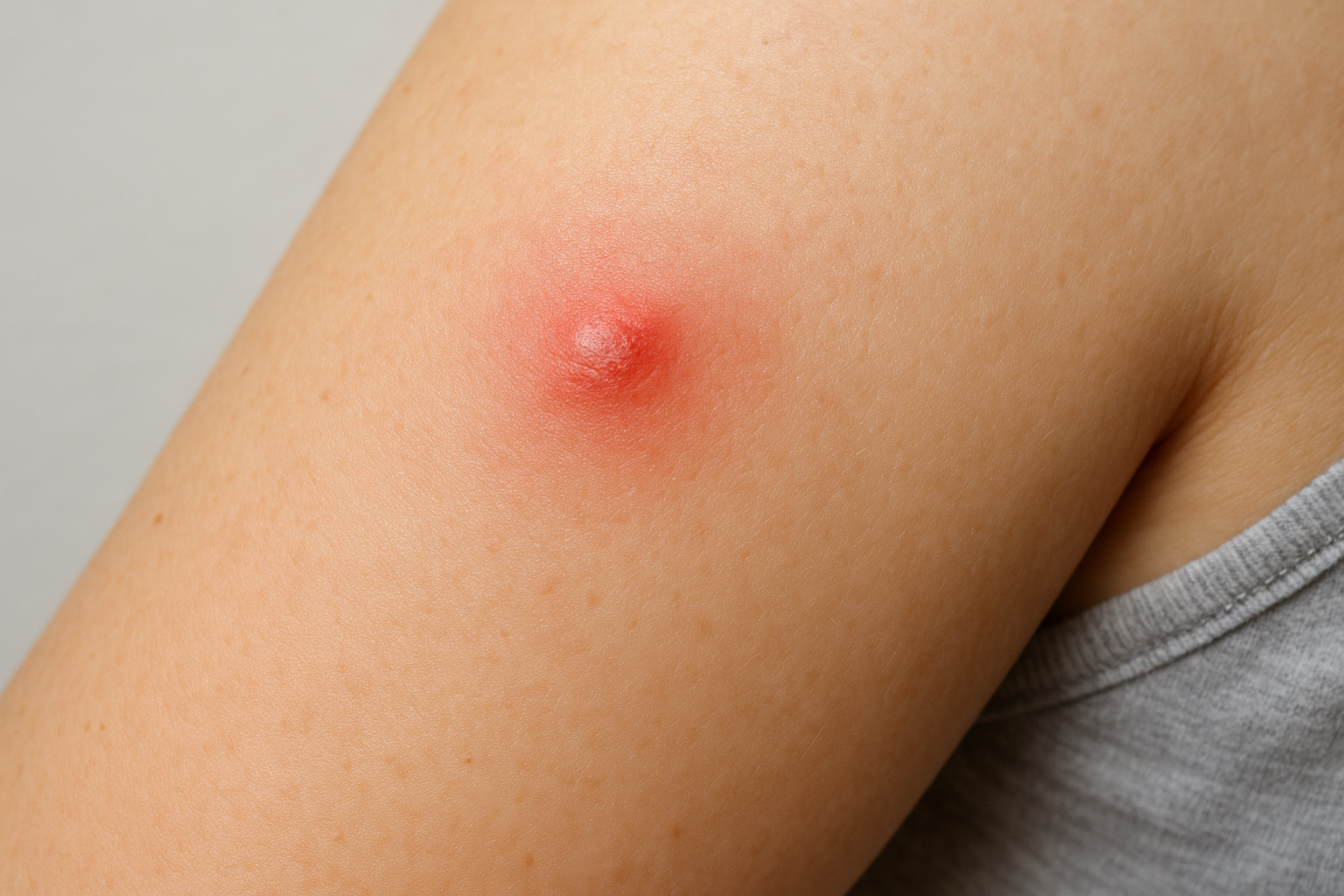
Bed bug bites are painless when they happen, so most people only notice them hours later when the itching starts.
A common visual feature is the linear or clustered pattern in which the bites appear. Bed bugs feed multiple times in one session, moving slightly along the skin between each bite. This produces a row of three to five bites close together. You will often find these rows on exposed skin areas such as your arms, neck, shoulders, and ankles, since bed bugs target the parts of your body that stay uncovered while you sleep.
Where the bites appear on your body
Bed bug bites almost always show up on skin that was exposed during sleep. That means your face, neck, hands, arms, and legs are the most common locations. You rarely find bites on areas covered by clothing or blankets, which is a useful clue when trying to figure out what bit you. If you notice bites on your back or stomach, it usually means your sleep position left those areas uncovered through the night.
The distribution also depends on how severe the infestation is. A mild infestation may only produce a few bites concentrated in one area, making it easy to dismiss them as random insect bites. A heavier infestation can lead to bites scattered across multiple parts of your body in a single night, which is a strong signal that you need a professional assessment without further delay.
Symptoms timeline and who reacts
Bed bug bites don’t appear on your skin the moment a bug feeds on you. The time between the actual bite and your visible reaction depends on your immune system and whether you’ve been exposed before. First-time victims often wait 24 to 48 hours before noticing any redness or swelling at all, which is why people frequently dismiss early bites as something else entirely.
How symptoms develop over time
Most people notice the itch and redness sometime the morning after being bitten, with symptoms peaking between one and three days. The swelling and inflammation usually reach their worst point around day two and then gradually subside over the following week. If you scratch the bites repeatedly, you risk breaking the skin, which can introduce bacteria and lead to secondary infections that take far longer to heal.
If your bites are still worsening or spreading after five days, see a doctor to rule out an infection or a stronger allergic response.
Bites typically clear up on their own within one to two weeks without treatment, but this timeline extends if you keep scratching or if an active infestation continues feeding on you every night.
Who reacts more severely
Your reaction to bed bug bites depends heavily on your individual immune response. Some people develop large, swollen welts with intense itching, while others show almost no reaction and may not realize they’ve been bitten at all. Children, elderly individuals, and people with existing skin conditions like eczema tend to experience stronger reactions and more noticeable inflammation.
Repeated exposure also shifts how your body responds. Some people become increasingly sensitive over time and react faster and more severely with each bite, while a small number develop a tolerance and show progressively milder symptoms despite an ongoing infestation.
Bed bug bites vs other bites and rashes
Correctly identifying bed bug bites saves you time and prevents the wrong course of action. Several common skin conditions look similar, but each has specific visual and contextual clues that help you tell them apart. The most useful approach combines what the bites look like with when and where they appear on your body.
Mosquito bites and flea bites
Mosquito bites tend to appear randomly scattered across exposed skin, not in rows or clusters. They also develop almost immediately after the bite and produce a rounder, softer bump that fades within a day or two. Flea bites are smaller and concentrated mostly around your ankles and lower legs, since fleas jump from floor level. Bed bug bites, by contrast, appear higher on the body and form the characteristic linear feeding pattern tied to the bug’s behavior.
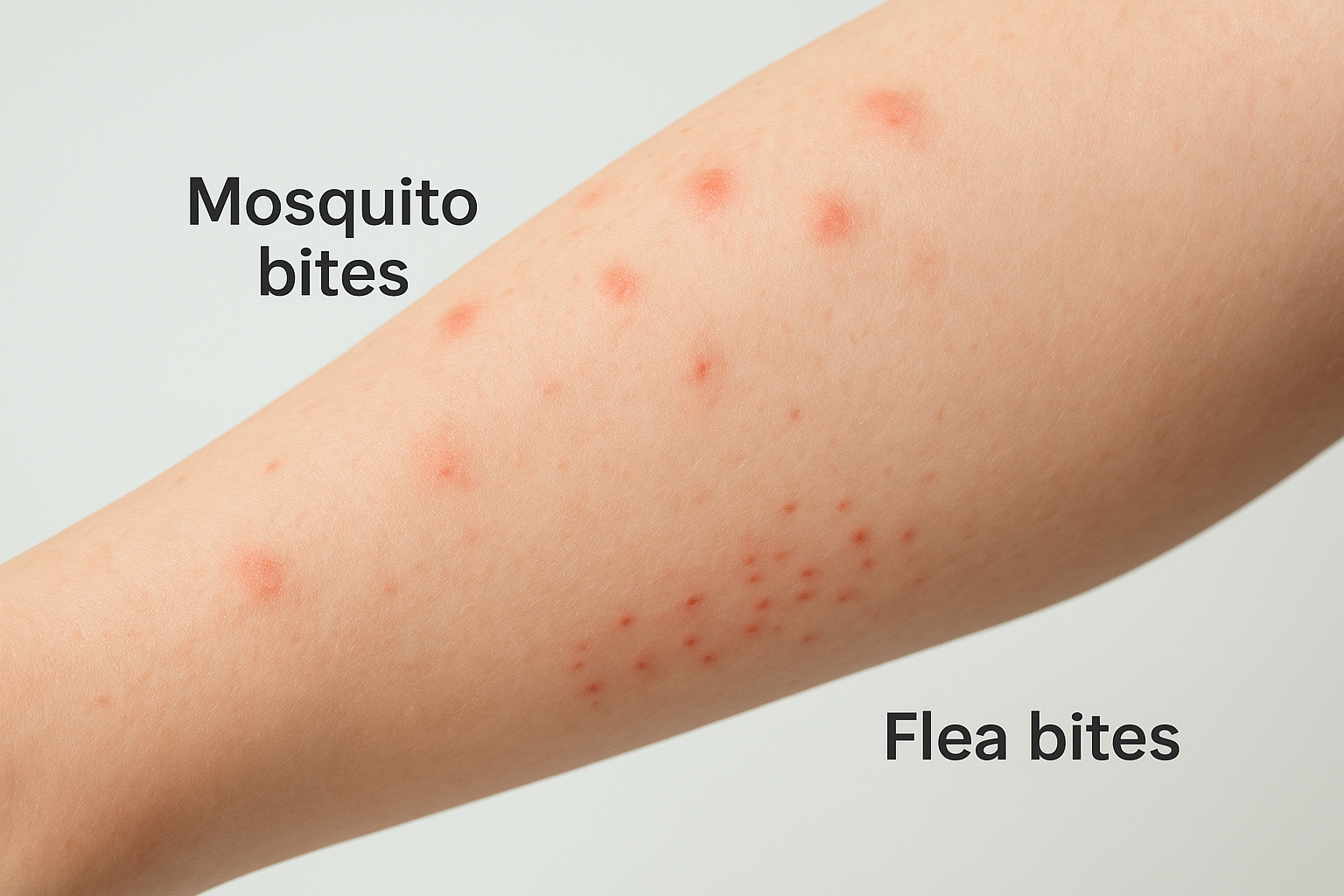
If your bites appear in a straight line on your arm or shoulder, bed bugs are far more likely than mosquitoes or fleas.
| Feature | Bed Bug Bites | Mosquito Bites | Flea Bites |
|---|---|---|---|
| Pattern | Rows or clusters | Scattered | Scattered, low on body |
| Location | Upper body, arms, neck | Any exposed area | Ankles, lower legs |
| Reaction timing | 24 to 48 hours | Immediate | Immediate |
| Blister formation | Possible | Rare | Rare |
Rashes and allergic reactions
Skin rashes from heat, contact allergies, or eczema cover broader areas without defined individual bite marks. They spread continuously and don’t follow the clustered pattern linked to bed bug feeding. Allergic reactions to food or medication produce widespread hives across multiple body regions simultaneously rather than targeting specific sleep-exposed areas.
Scabies is another condition that causes intense itching and is often confused with bed bug activity. Scabies produces a burrow pattern under the skin, particularly between fingers and on wrists, while bed bug bites remain on the surface and cluster in exposed areas like your arms and neck.
How to treat bed bug bites at home
Most bed bug bites heal on their own within one to two weeks, but the itching can be intense enough to disrupt your sleep and daily routine. Treating the bites promptly reduces the risk of infection from scratching and makes the recovery period far more manageable for you and your family.
Immediate relief for itching and swelling
The first thing you should do is wash the affected area with mild soap and cool water. This removes surface irritants and reduces the chance of infection if the skin has been broken at all. Cool water also helps bring down the initial swelling around each bite.
After cleaning the area, apply a cold compress or ice pack wrapped in a cloth to the skin for 10 to 15 minutes. This reduces inflammation and numbs the surface, which dulls the itch temporarily. Follow this with an over-the-counter hydrocortisone cream or calamine lotion applied directly to each bite, targeting the inflammatory response driving the itch. If the itch is severe, an oral antihistamine such as cetirizine helps control the reaction systemically and makes it easier to avoid scratching overnight.
Avoid scratching the bites entirely, since breaking the skin opens the door to bacterial infections that require medical treatment to resolve.
When to see a doctor
Some people develop stronger allergic reactions to bites than others, and home treatment is not always enough. Signs that require medical attention include bites that swell significantly beyond the original size, blisters that break open on their own, or visible signs of infection such as increasing redness, warmth, or discharge around the bite site. A doctor can prescribe a stronger topical corticosteroid or an antibiotic if an infection has developed.
You should also seek immediate medical care if you experience systemic symptoms like difficulty breathing, tightness in your chest, or widespread hives across your body, since these point to a serious allergic response that goes beyond a standard skin reaction.
What causes bed bugs and how to check your home
Bed bugs don’t appear because your home is dirty. They spread through human movement and travel, hitching rides on luggage, clothing, used furniture, and even second-hand mattresses. Anyone can bring them home after staying in a hotel, using public transport, or buying pre-owned items. The real cause is contact with an infested surface, not poor hygiene, which is why infestations turn up in clean Bangalore apartments and well-maintained guest houses alike.
How bed bugs spread from place to place
Bed bugs are exceptionally good at hiding in small, dark spaces like seams, cracks, and the folds of fabric. They move from room to room through wall gaps, electrical outlets, and shared furniture in apartment buildings. Visiting a neighbor’s home or having guests stay over can introduce them into your space without either party realizing it until bites start appearing days later.
A single female bed bug can lay up to 250 eggs in her lifetime, which means even a small introduction can grow into a full infestation within weeks.
How to inspect your bedroom for bed bugs
Start your inspection in the most likely hiding spots: the seams and tags of your mattress, the joints of your bed frame, and the gap between your headboard and the wall. Use a flashlight and a flat card to probe along edges and folds. Look for small brown stains, shed skins, or tiny white eggs along these surfaces, since these physical signs confirm active bed bug activity before bites even become obvious.
Your nearby furniture also needs checking, including nightstands, sofas, and the edges of carpets close to the bed. Inspect any upholstered pieces with visible stitched seams carefully, since bed bugs cluster wherever fabric creates a covered edge. If you find these signs alongside recurring bed bug bites on your skin, you have strong enough evidence to move forward with a professional inspection immediately.
Frequently asked questions
How long do bed bug bites take to appear after being bitten?
Most people notice redness and itching 24 to 48 hours after the actual bite, though some sensitive individuals react within hours while others show no visible mark for several days. This delay is why many people initially mistake fresh bed bug bites for something else.
Do bed bug bites always appear in a line or cluster?
Not always, but the linear or clustered pattern is one of the most reliable visual clues, since bed bugs feed several times in one session as they move slightly along the skin. Isolated single bites without any pattern can still be bed bugs, especially in mild or early-stage infestations.
Can bed bug bites make you sick beyond itching and swelling?
Bed bug bites themselves rarely cause illness, but repeated scratching can break the skin and lead to secondary bacterial infections that need medical treatment. Severe allergic reactions are uncommon but possible, so seek medical care if you notice spreading redness, warmth, or discharge around a bite.
How do I know if it’s bed bug bites and not just dry skin or eczema?
Eczema and dry skin rashes tend to cover broader, continuous patches without individual raised bumps, while bed bug bites are distinct, round welts arranged in rows on skin exposed during sleep. Checking your mattress seams and bed frame for staining or shed skins alongside the bite pattern gives you a much clearer answer than the bites alone.
Will bed bug bites go away without any treatment?
Most bites fade on their own within one to two weeks, even without cold compresses or creams, but treating them speeds up relief from the itch and lowers your risk of infection from scratching. The bites will keep reappearing, though, until the actual infestation is treated at its source.
Next steps if you suspect bed bugs
If the signs in this article match what you’re seeing at home
, don’t wait for the problem to get worse. Recurring bed bug bites combined with physical evidence like staining or shed skins in your mattress seams means an infestation is already active. Waiting only gives the population more time to spread through your bedroom and into adjacent rooms.
Start by washing all bedding in hot water and sealing it in bags until treatment happens. Avoid moving furniture between rooms, since that can scatter bugs into areas that aren’t yet affected. Document the bite locations and take photos of any physical evidence you find during your inspection, since this information helps a technician plan an accurate treatment.
The most reliable next step is a professional inspection from an experienced pest control team. Contact A to Z Pest Solutions for bed bug treatment in Bangalore and let our team assess your home and eliminate the infestation completely.