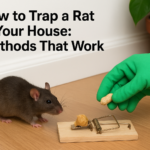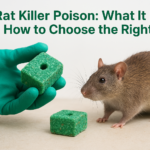

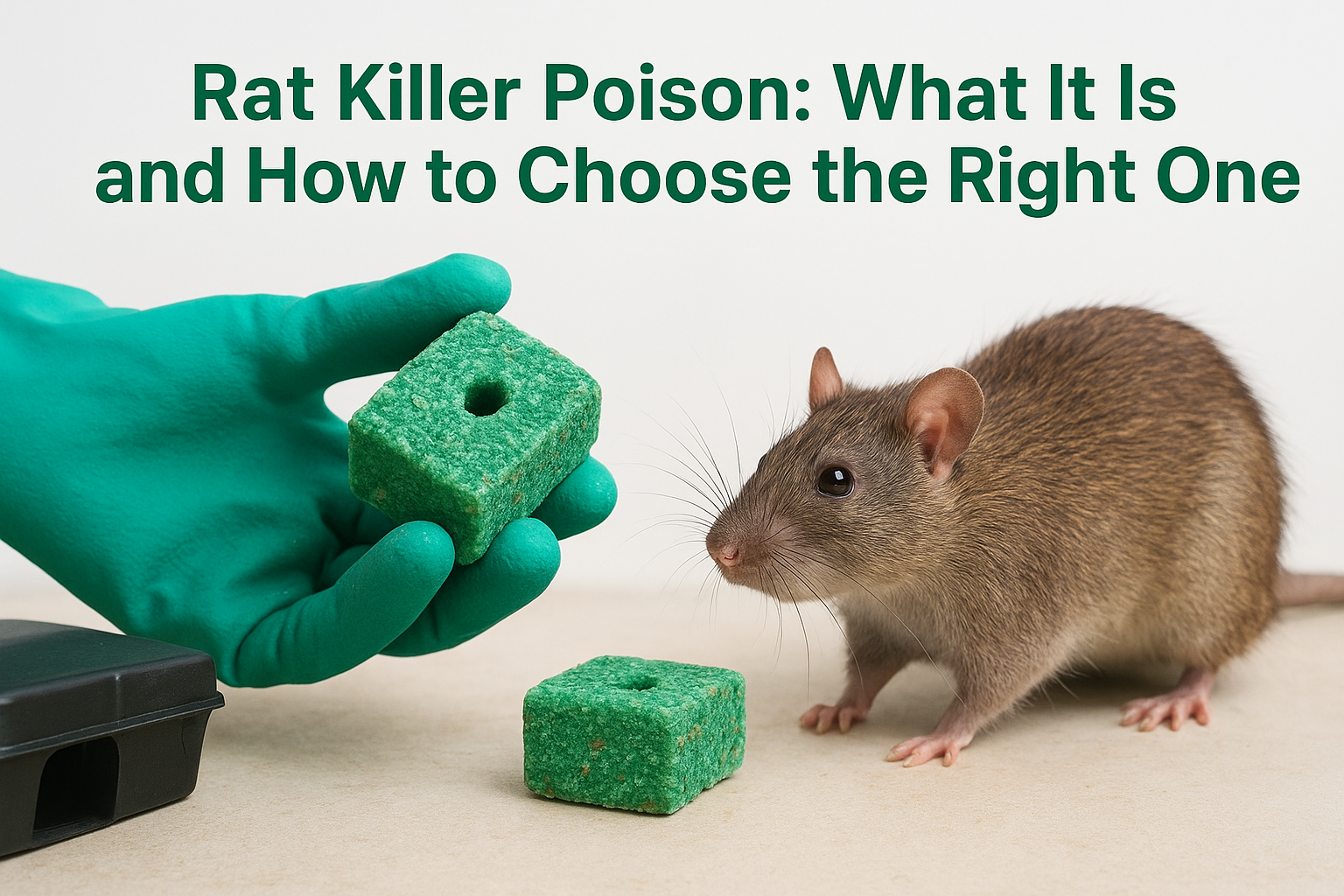
If you have found droppings in the kitchen or heard scratching in the ceiling at night, you have probably already searched for rat killer poison online and found dozens of confusing options. Powders, tablets, blocks, pellets. Some claim to work in one feeding, others promise results on the biggest rats in the colony. Without knowing how each one actually works, it is easy to buy the wrong product and watch the infestation carry on regardless.
This guide breaks down what rat poison rodenticide actually is, how the different active ingredients kill rodents, and which formulations work best depending on the size of your infestation and the type of rats you are dealing with. We cover everything from a basic rat poison powder to stronger anticoagulant formulas built for big rat poison situations, so you can match the product to the actual problem in your home.
We have handled rodent control across Bangalore homes and commercial kitchens since 1993, and we have seen which rat killer poison genuinely works and which ones just waste money and time while rats keep breeding behind your walls.
Why rat killer poison matters for rodent control
Rats do not stay put. A single breeding pair can produce over 100 offspring in a year, and once a colony establishes itself in your ceiling, kitchen, or store room, the problem multiplies faster than most homeowners realize. Rat killer poison matters because it is one of the few methods that reaches rats you never actually see, the ones hiding in wall cavities, under false ceilings, or behind kitchen cabinets. Traps only catch the rats that walk into them, but a well-placed rodenticide for rats disrupts the entire colony, including the cautious, trap-shy rats that survive everything else you try.
The real cost of ignoring an infestation
Untreated rat problems cost more than a few chewed food packets. Rats gnaw through electrical wiring, which is a documented fire hazard, and they contaminate stored grains and kitchen surfaces with droppings and urine. In India, rodents are linked to the spread of leptospirosis during the monsoon and salmonella, and the Centers for Disease Control and Prevention lists rats among the animals responsible for transmitting several serious diseases to humans through direct contact or contaminated food. Beyond health risks, rats damage furniture, insulation, and stored inventory in commercial kitchens, which is exactly why pest control for restaurants generates so many emergency calls from restaurants and warehouses across Bangalore once an infestation is already visible.
A colony you cannot see is still a colony that is growing, and poison is often the only thing that reaches it.
Why glue traps and repellents are not enough on their own
Many households try glue boards, ultrasonic repellents, or a cat first when working out how to get rid of rats at home fast, and we understand the appeal since these feel less messy than handling poison. The problem is scale. Glue traps catch one rat at a time and do nothing for the fifteen others still breeding behind your refrigerator. Ultrasonic devices have inconsistent results once rats grow accustomed to the sound over a few weeks. A proper rat kill poison program, by contrast, is designed to be shared through the colony’s natural feeding and grooming behavior, so even rats that never touch the bait station directly are affected when they groom a contaminated rat or eat contaminated droppings.
Common signs you need rodenticide, not just cleanup
Before reaching for any product, confirm you are actually dealing with an active infestation rather than a one-off rat that wandered in. Look for these signs:
- Fresh droppings near food storage, stoves, or under sinks, usually dark and moist if the infestation is active
- Gnaw marks on wood, plastic containers, or electrical cables
- Grease smears along walls and skirting boards where rats repeatedly travel the same path
- Scratching or scurrying sounds in ceilings or wall voids, especially at night
- A distinct musky odor in enclosed spaces like storerooms or false ceilings
If you notice two or more of these signs, you are almost certainly past the point where a single trap will solve things, and this is where the best rat poison to kill rats for your specific situation becomes worth researching properly. Choosing correctly at this stage saves you weeks of repeat trips to the hardware store and, more importantly, stops the colony from expanding while you experiment with weaker solutions. We walk through exactly how to make that choice in the next section, starting with how the different rat poison rodenticide types actually work inside a rat’s body.
Types of rat killer poison and how they work
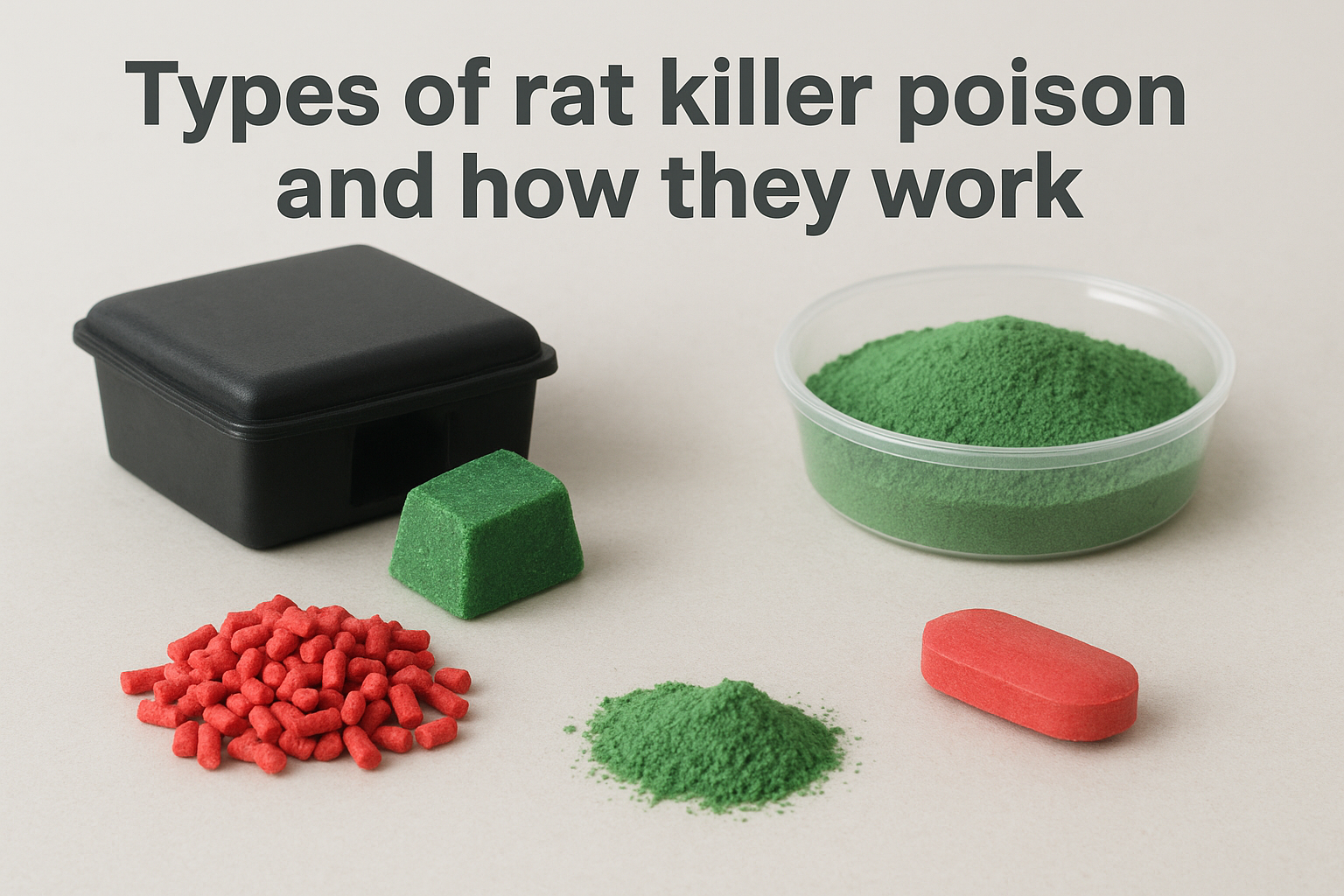
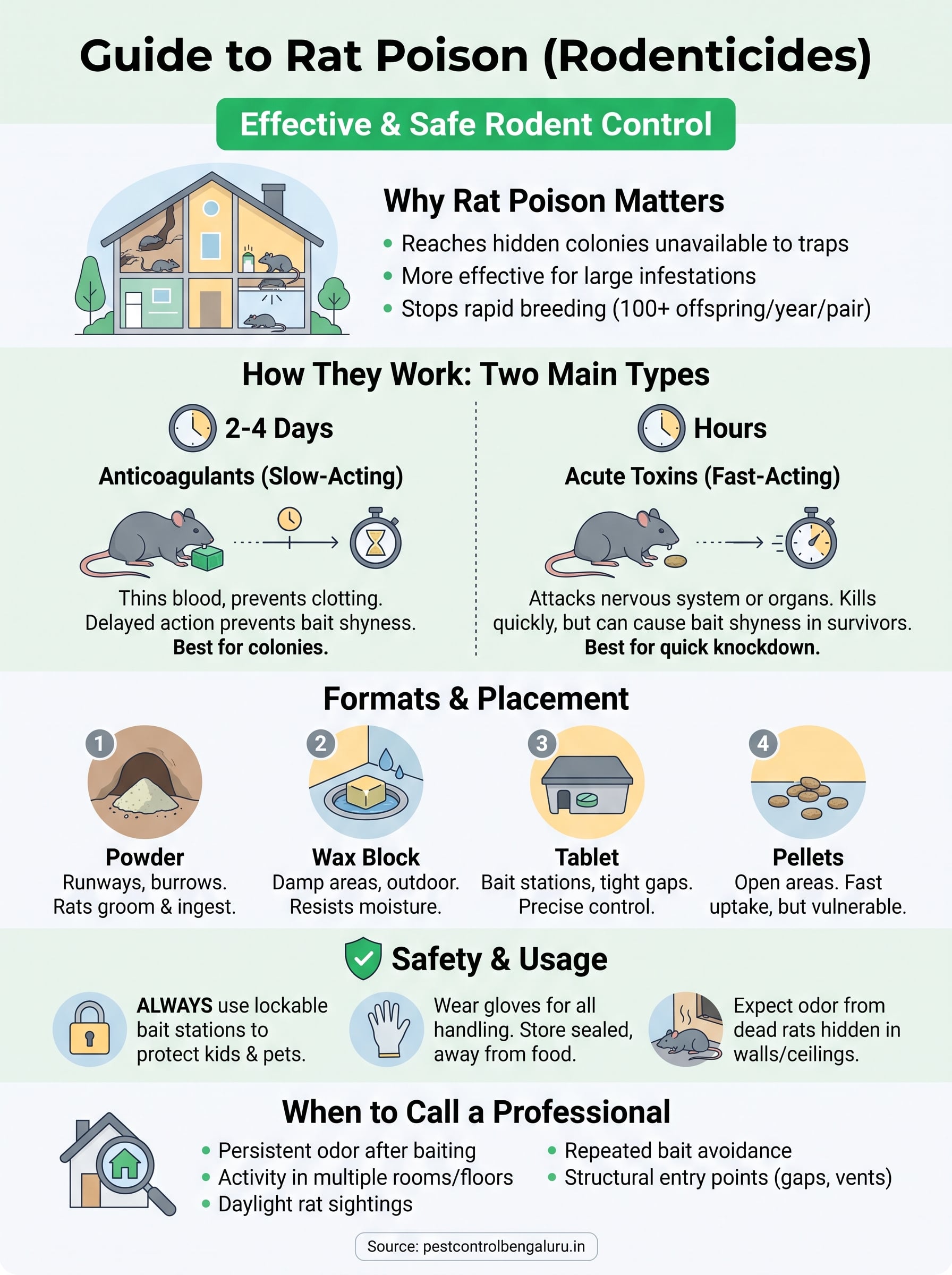
Every rodenticide on the market falls into one of two chemical categories, and understanding the difference explains why some products take days to work while others act within hours. Anticoagulants thin the rat’s blood until it can no longer clot, causing fatal internal bleeding over several days. Acute toxins attack the nervous system or organs directly and can kill after a single feeding. Knowing which category you are buying matters more than the brand name on the box.
Anticoagulant rodenticides: the slow, reliable colony killer
Anticoagulants like bromadiolone and brodifacoum are the backbone of most rat killing poison programs because rats do not associate the bait with their death, since symptoms appear two to four days later. This delay is a feature, not a flaw. Rats are naturally suspicious of new food sources, a behavior called neophobia, and if a poison killed instantly, survivors would avoid that bait forever. Second-generation anticoagulants are strong enough to be considered the strongest rat poison available for tough infestations, since a single feeding is often lethal even without repeat visits to the bait station.
The best rat poison is the one rats do not recognize as dangerous until it is too late for the whole colony.
Acute poisons: fast but riskier around homes
Zinc phosphide and similar acute rodenticides kill within hours, which sounds appealing but carries a real drawback. Surviving rats that sample a sublethal dose and feel sick often develop bait shyness, refusing that poison permanently. We generally reserve acute formulas for situations needing a quick knockdown, such as a warehouse with a sudden surge in activity, rather than as a first-line household treatment.
Rat poison powder, tablet, and block: matching the format to the job
Formulation affects how well rats actually consume the product, and it should influence your choice as much as the active ingredient does.
| Format | Best for | Notes |
|---|---|---|
| Rat poison powder | Runways, burrow entrances | Rats track it onto fur and ingest it while grooming |
| Wax block | Damp areas, drains, outdoor stations | Resists moisture, good for big rat poison situations |
| Rat poison tablet | Bait stations, tight gaps | Easy to place precisely and monitor consumption |
| Pellets | Open floor areas | Fast uptake but vulnerable to pets and children |
How to choose the right rat poison for your infestation
Picking the right product starts with an honest assessment of what you are actually dealing with, not just grabbing whatever sits on the top shelf at the hardware store. A single mouse behind the pantry needs a different approach than a warehouse with a full-blown rat colony chewing through sacks of grain. Match the rat poison strongest available to genuinely severe cases, and save the milder first-generation anticoagulants for smaller, early-stage problems where you want to avoid overkill.
Assess the scale before you buy
Count the signs from the previous section rather than guessing. One or two droppings and a single gnaw mark usually mean a small population that a standard anticoagulant bait station handles fine. Multiple droppings across different rooms, grease trails on several walls, and nightly noise from more than one part of the ceiling point to an established colony that needs a stronger, second-generation formula placed at multiple stations simultaneously.
Undersizing your treatment is the most common reason rat poison seems to "not work" when the real issue is simply not enough bait in enough places.
Match the poison to rat behavior, not just size
Bigger rats, particularly the Norway rats common in Bangalore’s older drainage systems, eat more per feeding and need bait stations that hold larger quantities without running dry, which matters when you are trying to remove rats permanently from a Bangalore home. For these cases, a rat poison for big rats should come in wax block form since it survives humidity in drains and outdoor runs far better than powder or pellets. Indoors, near cabinets and skirting boards, a rat poison tablet placed inside a lockable bait station gives you precise control and easy monitoring without exposing children or pets.
A quick decision checklist
- Light activity, one room: first-generation anticoagulant tablet or block
- Multiple rooms, visible trails: second-generation anticoagulant, several bait stations
- Warehouse or outdoor drains: wax blocks resistant to moisture
- Sudden severe surge: acute rodenticide for fast knockdown, followed by anticoagulant maintenance baiting
When the infestation spans more than a couple of rooms, or you are simply unsure which category fits your situation, it is worth getting a proper inspection instead of guessing with retail products. Our team assesses the colony size on site and selects the exact formulation and placement strategy that clears it without repeat purchases, and it helps to know how rodent control services in Bangalore are priced before you decide.
How to use rat poison safely at home
Handling rat killer poison correctly matters as much as choosing the right formulation. Every year we get calls from families who bought a good product but placed it where a toddler or a curious dog could reach it, turning a rodent problem into a poisoning scare. Safety is not an afterthought here, it is the difference between a clean solve and a household emergency.
Placement rules that protect kids and pets
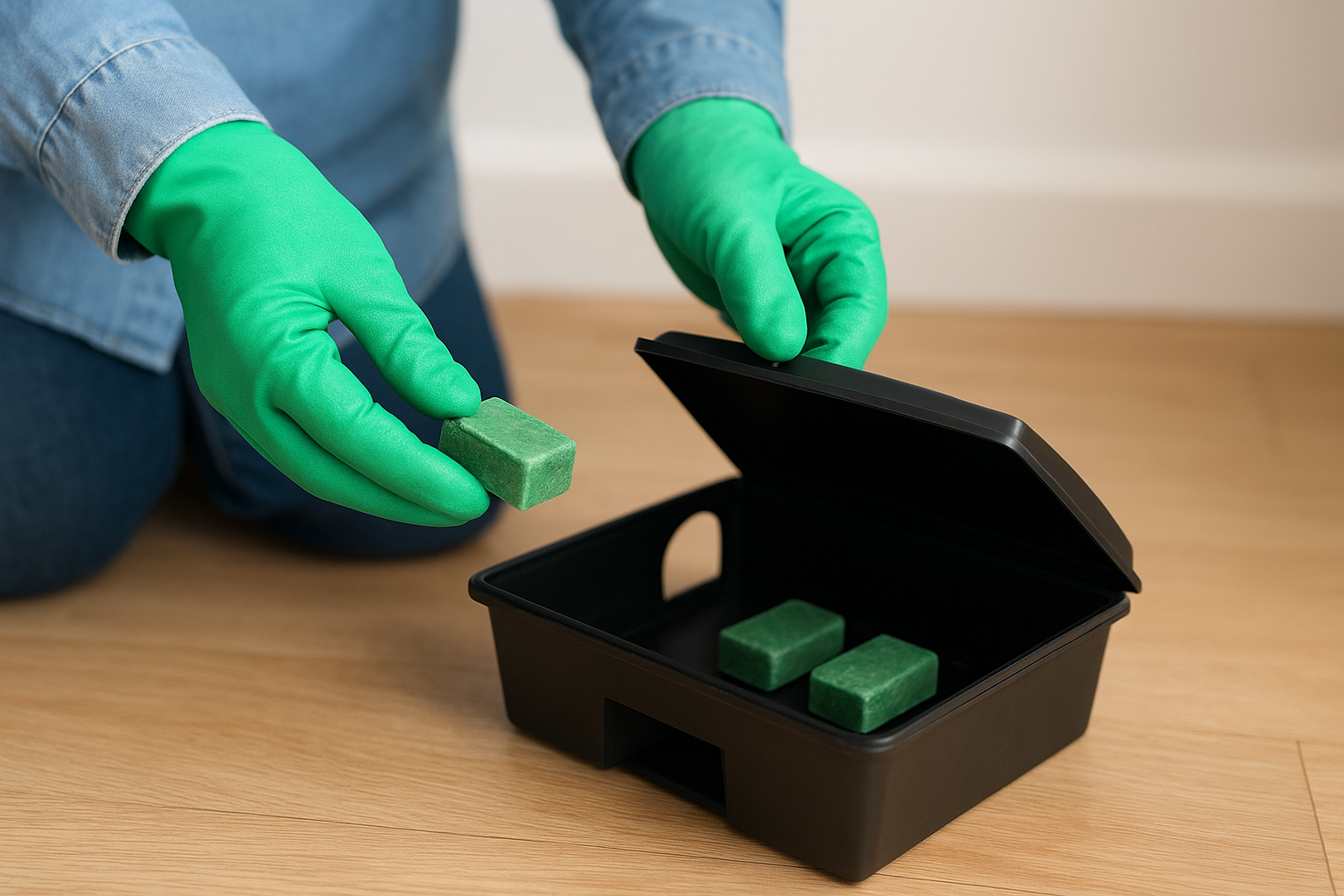
Always use a lockable bait station rather than leaving powder, pellets, or a rat poison tablet exposed on the floor. Stations keep the bait accessible to rats while sealing it away from small hands and paws. Place stations along walls and skirting boards where rats actually travel, since rats hug edges and rarely cross open floor space.
- Set stations behind appliances, under sinks, and near known gnaw marks
- Never place bait near food prep surfaces, children’s play areas, or pet feeding bowls
- Label every station with the date and product used so you can track consumption
- Check stations every two to three days and refill only what has actually been eaten
A locked bait station is not optional. It is the single feature that separates safe rodenticide use from a household accident.
Handling and storage precautions
Gloves matter every time you touch rat poison, whether it is a rat poison powder or a wax block. Skin contact with concentrated anticoagulant formulas can cause irritation, and residue left on your hands transfers easily to food or your face. Store unused product in its original container, sealed, on a high shelf away from your kitchen, and keep the label handy so you know exactly what active ingredient you are dealing with if anyone accidentally ingests it.
What to do after a rat dies
Dead rats often crawl into wall voids or under furniture before the poison takes full effect, so expect an odor a few days into treatment. Wear gloves, double-bag any visible carcasses, and disinfect the area with a household cleaner. If the smell persists inside a wall cavity, that usually means the carcass is somewhere you cannot reach without opening the ceiling or wall panel, which is one of several reasons families end up calling in professional help rather than continuing to manage it alone.
When to call a professional for rat control
Home treatment works for light to moderate infestations, but there is a point where continuing to buy retail rat killer poison just delays the inevitable call to a licensed pest control team, so it is worth knowing what to expect from rodent control near you. If you have rotated through two or three products, tried different bait stations, and still hear activity in the ceiling after three to four weeks, the colony is likely larger or more established than a DIY approach can handle. At that stage, more poison is not the fix. The right diagnosis is.
Signs the problem has outgrown retail products
Certain warning signs point directly to professional intervention rather than another trip to the hardware store:
- Persistent odor from a wall or ceiling cavity days after baiting, suggesting a carcass you cannot reach
- Activity in multiple rooms or floors, which usually means more than one colony or entry point
- Rats appearing during daylight, a sign of severe overcrowding pushing them out of hiding
- Repeated bait avoidance, indicating bait shyness from a previous acute poison exposure
- Structural entry points like gaps around pipes, vents, or roof edges that keep reintroducing rats
If you are restocking the same bait station every week with no drop in activity, the colony is winning, not the poison.
What a professional visit actually adds
Inspection changes everything. Our technicians trace entry points, droppings patterns, and grease trails to map exactly where the colony lives, not just where you happen to see rats. That allows us to place the correct anticoagulant strength and formulation at the actual pressure points, seal reachable entry gaps, and set a follow-up schedule to confirm the colony is gone rather than just quieter for a week. Commercial kitchens, warehouses, and hospitals in particular need documented treatment records for compliance, something over-the-counter rat killer poison alone cannot provide.
Once an infestation involves multiple rooms, a persistent odor, or repeat sightings despite consistent baiting, it is worth knowing what rat control in Bangalore involves and having our team inspect the property directly rather than continuing to guess at the right product and placement on your own.
Frequently asked questions
How long does rat killer poison take to work?
Anticoagulant rodenticides like bromadiolone and brodifacoum take two to four days to kill a rat, since the delay stops surviving rats from associating the bait with danger. Acute poisons such as zinc phosphide work within hours but carry a higher risk of bait shyness if a rat survives a first dose.
Is rat killer poison safe to use around children and pets?
Yes, when placed correctly. Always use a lockable bait station rather than leaving powder, pellets, or tablets exposed, and keep stations away from food prep areas, play areas, and pet feeding bowls. Wear gloves when handling any formulation and store unused product sealed and out of reach.
What is the best rat poison format for a bad infestation?
For established colonies, a second-generation anticoagulant placed at multiple bait stations works best. Wax blocks hold up in damp areas like drains and outdoor runs, while tablets suit indoor bait stations near cabinets and skirting boards where you want precise, monitored placement.
What should I do after finding a dead rat?
Wear gloves, double-bag the carcass, and disinfect the area. If an odor persists from inside a wall or ceiling cavity, the carcass is likely somewhere you cannot reach, which is one of the more common reasons to bring in a professional.
When should I stop using retail rat poison and call a professional?
If you have tried two or three products over three to four weeks and still hear activity, or you notice persistent odors, daytime sightings, activity across multiple rooms, or repeated bait avoidance, the colony has likely outgrown what a DIY approach can fix.
Keeping your home rat-free for good
Choosing the right rat killer poison comes down to matching the formulation to the actual scale of your infestation, placing it safely away from kids and pets, and knowing when the problem has outgrown what a retail product can fix. A single tablet won’t touch an established colony, and the strongest anticoagulant won’t help if it’s sitting in the wrong spot. Get the diagnosis right first, then let the product do its job.
If droppings, gnaw marks, and nighttime scratching keep showing up despite your best efforts with store-bought bait, that’s your signal to stop guessing. Rats breed faster than most DIY schedules can keep up with, and every week of delay means a bigger colony behind your walls. Reach out to our rodent control services team for an inspection that pinpoints exactly where the rats are living and clears them for good, not just for a week.