
If you’ve spotted mud tubes along a wall or noticed your wooden furniture crumbling into dust, you already know why termite pest control bangalore searches spike every monsoon. Bangalore’s red soil and humid pockets create perfect breeding conditions for termites, and by the time you see visible damage, the colony has often been active for months, sometimes eating through beams, doors, and even bookshelves.
This guide answers exactly what professional termite pest control bangalore treatment involves, from soil treatment methods to chemical barriers and bait systems, so you know what you’re paying for before you sign up. You’ll also learn how pre-construction and post-construction treatments differ and why timing matters for long-term protection.
We’ll walk through the inspection process, treatment options, typical costs in Bangalore, and the questions worth asking any provider, including warranty terms and follow-up inspections. Whether you’re dealing with an active infestation or want to prevent one, this breakdown, drawn from over three decades of field experience at A to Z Pest Solutions, gives you a clear picture of what to expect.
Why termite control matters for Bangalore properties
Bangalore sits on a mix of red laterite soil and clay pockets that hold moisture long after the rains stop, and that moisture is exactly what termite colonies need to survive. Areas like Whitefield, Sarjapur, Electronic City, and even older neighborhoods in Jayanagar and Basavanagudi report heavy termite activity every year, especially in homes with wooden doorframes, false ceilings, or storage boxes stacked against walls. Termite pest control bangalore isn’t a seasonal fix here, it’s an ongoing necessity because the climate never really gives termites a reason to stop building.
Bangalore’s climate and soil create ideal termite conditions
Humidity above 60%, combined with underground moisture retention, lets subterranean termites build mud tubes from the soil straight into your foundation without ever being exposed to open air. This is why you rarely see the termites themselves until the damage is already visible on skirting boards, window frames, or wooden almirahs. Newer construction in outer Bangalore, built on reclaimed agricultural land, tends to see even higher termite pressure because the soil already carries established colonies before the first brick is laid.
The real cost of ignoring an infestation
Untreated termite damage doesn’t stay contained to one room. A colony can spread through wooden support beams, door frames, and even electrical conduit insulation, weakening structural elements you can’t easily inspect. Repairing termite damage after the fact routinely costs far more than preventive treatment would have, and insurance in India typically doesn’t cover termite-related structural repairs since it’s classified as a maintenance issue, not an accident. This is the core reason termite pest control bangalore treatment is worth budgeting for early rather than after damage appears.
A termite colony rarely announces itself until the repair bill is already bigger than the treatment would have been.
Subterranean termites vs drywood termites in Bangalore
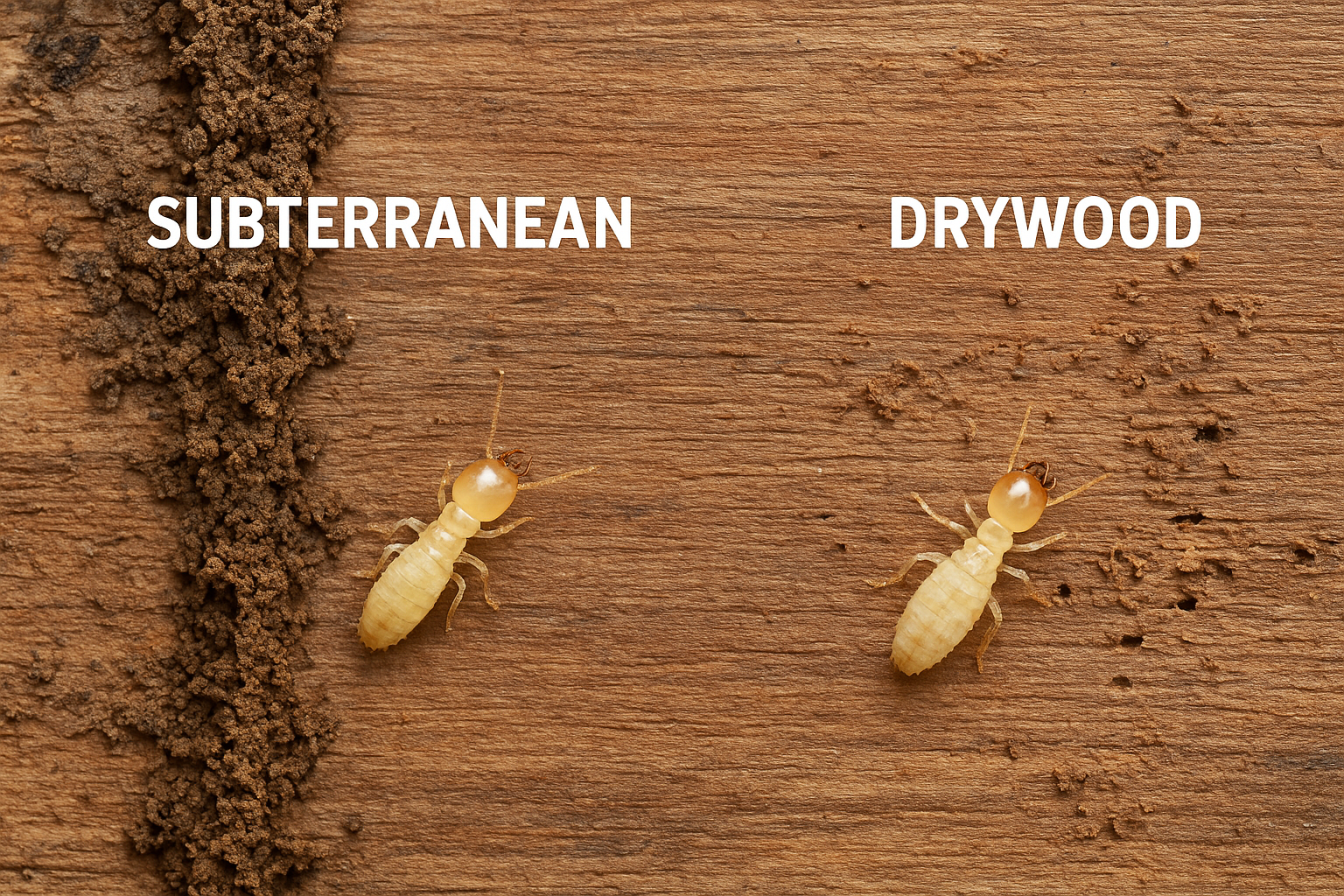
Most Bangalore infestations come from subterranean termites, which live in the soil and travel into structures through cracks in the foundation or gaps around plumbing. Drywood termites are less common but still show up in furniture, especially untreated wood brought in from outside the city. Knowing which type you’re dealing with changes the treatment approach entirely, which is why a proper inspection always precedes any chemical application.
| Termite Type | Where They Live | Common Signs | Typical Treatment |
|---|---|---|---|
| Subterranean | Soil, foundations, wall voids | Mud tubes, hollow-sounding wood | Soil treatment, chemical barrier |
| Drywood | Inside furniture and dry wood | Wood dust (frass), small exit holes | Localized wood treatment, fumigation |
Property value takes a direct hit when termite damage is discovered during resale inspections or when tenants report ongoing issues. Buyers and renters in Bangalore’s competitive housing market increasingly ask for termite treatment records before finalizing a deal, particularly for independent houses and older apartments. Skipping regular inspections doesn’t just risk your furniture, it risks the resale value of the entire property.
Safety matters too, though it’s less obvious than structural cost. Chemical barrier treatments applied by trained professionals use termiticides at controlled concentrations that are safe once cured, but improper DIY application (spraying random powders near foundations) can expose children and pets to unnecessary risk without actually solving the infestation. This is one reason the Bureau of Indian Standards publishes specific guidelines for termite treatment application in residential construction, covering everything from chemical concentration to application depth around foundations.
How termite pest control treatment works
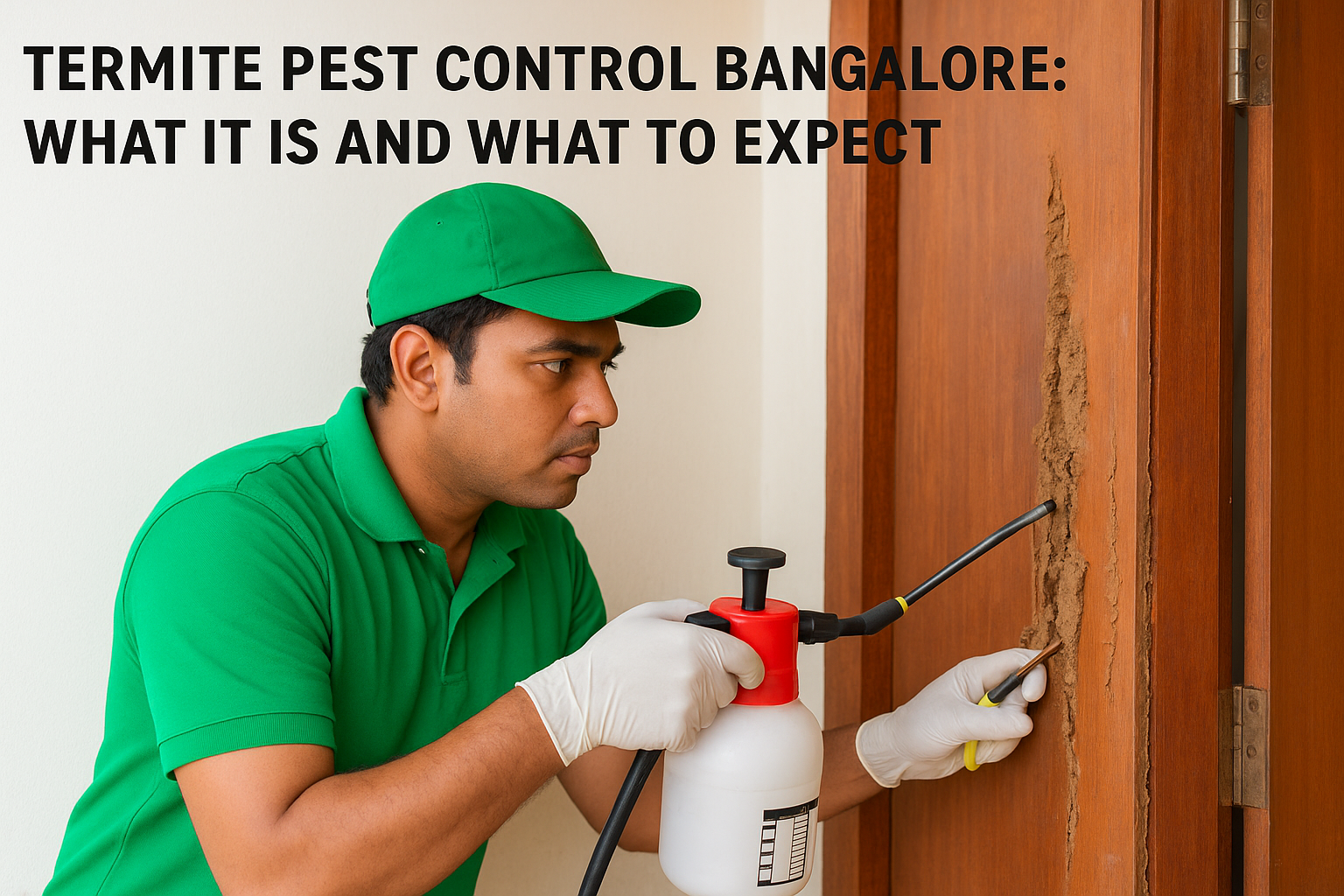
A professional termite pest control bangalore treatment always starts with a termite inspection, not spraying. Technicians check the perimeter, plumbing entry points, wooden fixtures, and any visible mud tubes before deciding on a treatment plan, because applying chemicals blindly wastes product and misses the actual colony entry points. Proper inspection takes anywhere from 30 minutes for a small apartment to over an hour for an independent house with a garden and outbuildings.
The inspection and diagnosis stage
During this stage, the technician identifies whether you’re dealing with subterranean or drywood termites, maps out active mud tubes, and checks moisture levels near the foundation since damp areas attract fresh colonies even after treatment. Good technicians also inspect false ceilings, modular kitchen cabinets, and wooden almirahs, spots homeowners rarely think to check themselves. This diagnosis determines whether you need a full soil treatment or a more localized chemical injection around specific timber elements.
Chemical barrier application
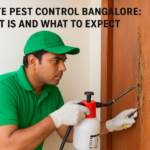
Once the inspection is done, the crew drills small holes along the foundation line at set intervals, usually every 30 centimeters, and injects a termiticide solution into the soil to create a continuous chemical barrier the termites can’t cross without dying. Indoor application follows a similar pattern along skirting boards and expansion joints. The process typically follows these steps:
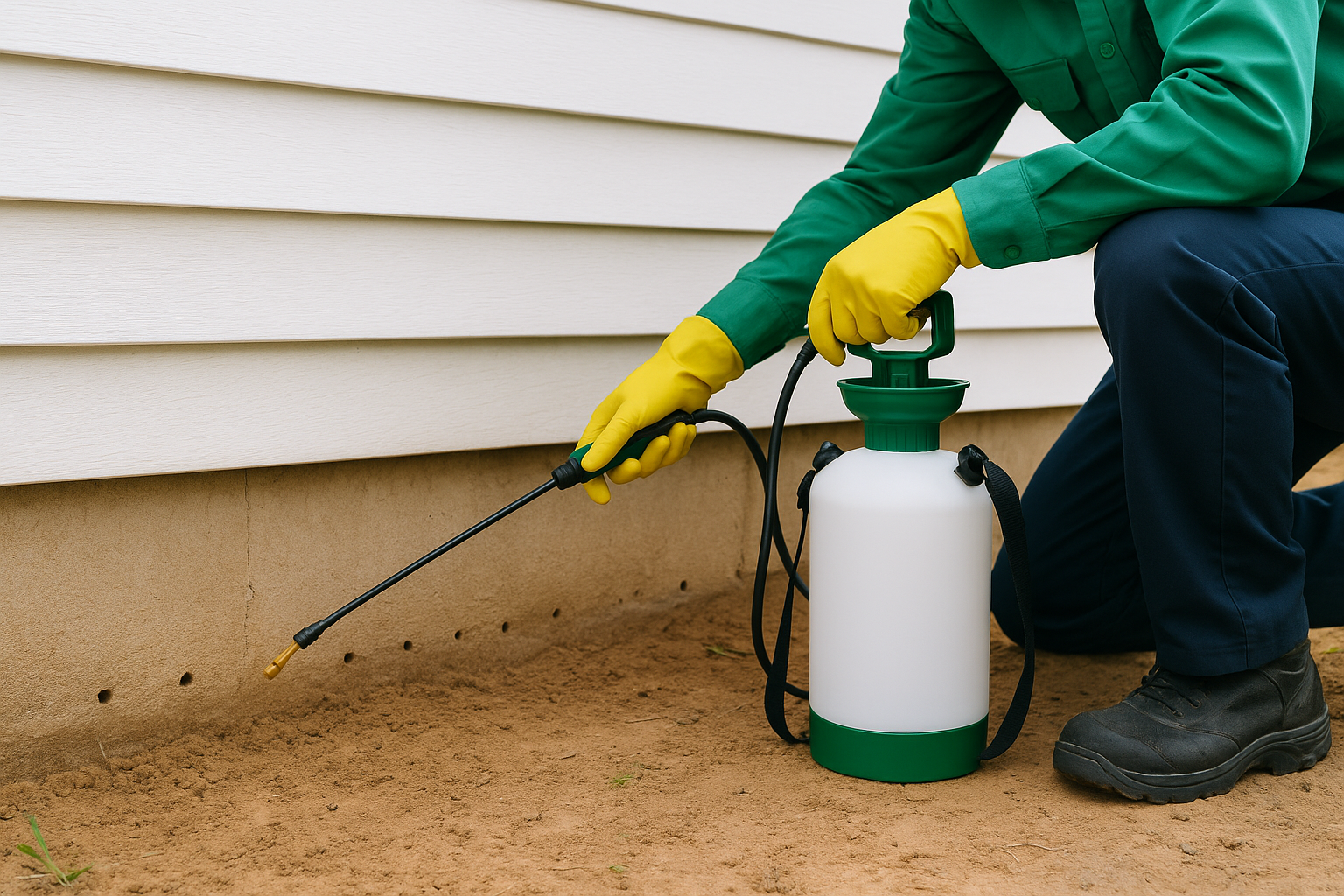
- Mark drilling points along external and internal walls
- Drill holes at standard depth and spacing
- Inject termiticide solution into soil and wall voids
- Seal drill holes with matching cement or filler
- Treat wooden fixtures directly if drywood activity is found
The chemical barrier only works if it’s unbroken, one missed section is all a colony needs to get back in.
Curing time and post-treatment monitoring
Most termiticides need 24 to 48 hours to cure fully, during which the treated area should stay undisturbed and pets or children kept away from freshly drilled zones. Follow-up visits, usually scheduled at three and six months, confirm the barrier is holding and catch any fresh activity early before it spreads. Reliable providers document each visit with photos and a written report, giving you a paper trail if termite damage ever comes up during a property sale or rental negotiation.
Types of termite treatments available in Bangalore
Not every property needs the same approach, and a good termite pest control bangalore provider will recommend a termite treatment type based on whether the structure is new, existing, or already showing damage. Builders and homeowners often confuse these categories, which leads to either overpaying for unnecessary work or skipping a step that leaves the foundation exposed.
Pre-construction soil treatment
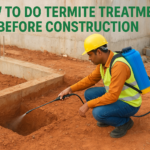
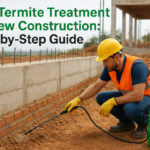
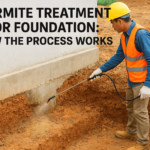
Before the foundation is poured, technicians treat the excavated soil with termiticide, creating a chemical barrier beneath and around the plinth that termites can’t tunnel through later. This is the single most effective way to prevent infestation, since it stops colonies before the building even exists, and it’s far cheaper per square foot than any post-construction fix. Most reputable builders in Bangalore now include pre-construction treatment as a standard line item, but it’s worth confirming the contractor actually did it rather than just billed for it.
Prevention built into the foundation costs a fraction of what removal costs after the walls go up.
Post-construction treatments for existing buildings
For homes and offices already standing, treatment shifts to drilling and injecting termiticide along the foundation line, skirting boards, and expansion joints, exactly as described in the earlier inspection process. This category also includes wood preservation treatment, where technicians directly inject or spray termiticide into door frames, window frames, and furniture showing early hollow spots, stopping localized colonies before they spread further into the structure.
Bait systems and non-chemical alternatives
Bait stations, placed at intervals around the property, use slow-acting toxicants that worker termites carry back to the colony, eliminating the queen and the nest over several weeks. This is one of the less invasive options within termite pest control bangalore providers offer, and it works well for properties where drilling isn’t practical, such as heritage buildings or homes with finished flooring the owner doesn’t want disturbed.
| Treatment Type | Best For | Duration | Disruption Level |
|---|---|---|---|
| Pre-construction soil treatment | New builds | One-time, lasts years | None (done before flooring) |
| Post-construction chemical barrier | Existing homes with active infestation | 24-48 hour cure | Moderate (drilling required) |
| Bait systems | Sensitive structures, ongoing monitoring | Weeks to eliminate colony | Minimal |
| Wood treatment/fumigation | Furniture, drywood termites | Days | Low to moderate |
Ultimately, the right choice depends on your property’s age, construction type, and how far the infestation has already spread, which is exactly why a proper inspection should always come before anyone recommends a specific treatment.
Signs your property needs termite treatment
Most homeowners don’t call a termite pest control bangalore provider until they spot obvious damage, but termites usually leave earlier clues if you know where to look. Catching an infestation at the mud-tube stage instead of the collapsed-shelf stage saves you thousands of rupees in repairs and weeks of disruption.
Visible warning signs around the property
Walls, foundations, and wooden fixtures usually show the first physical evidence. Look for these during a quick walk-through every few months:
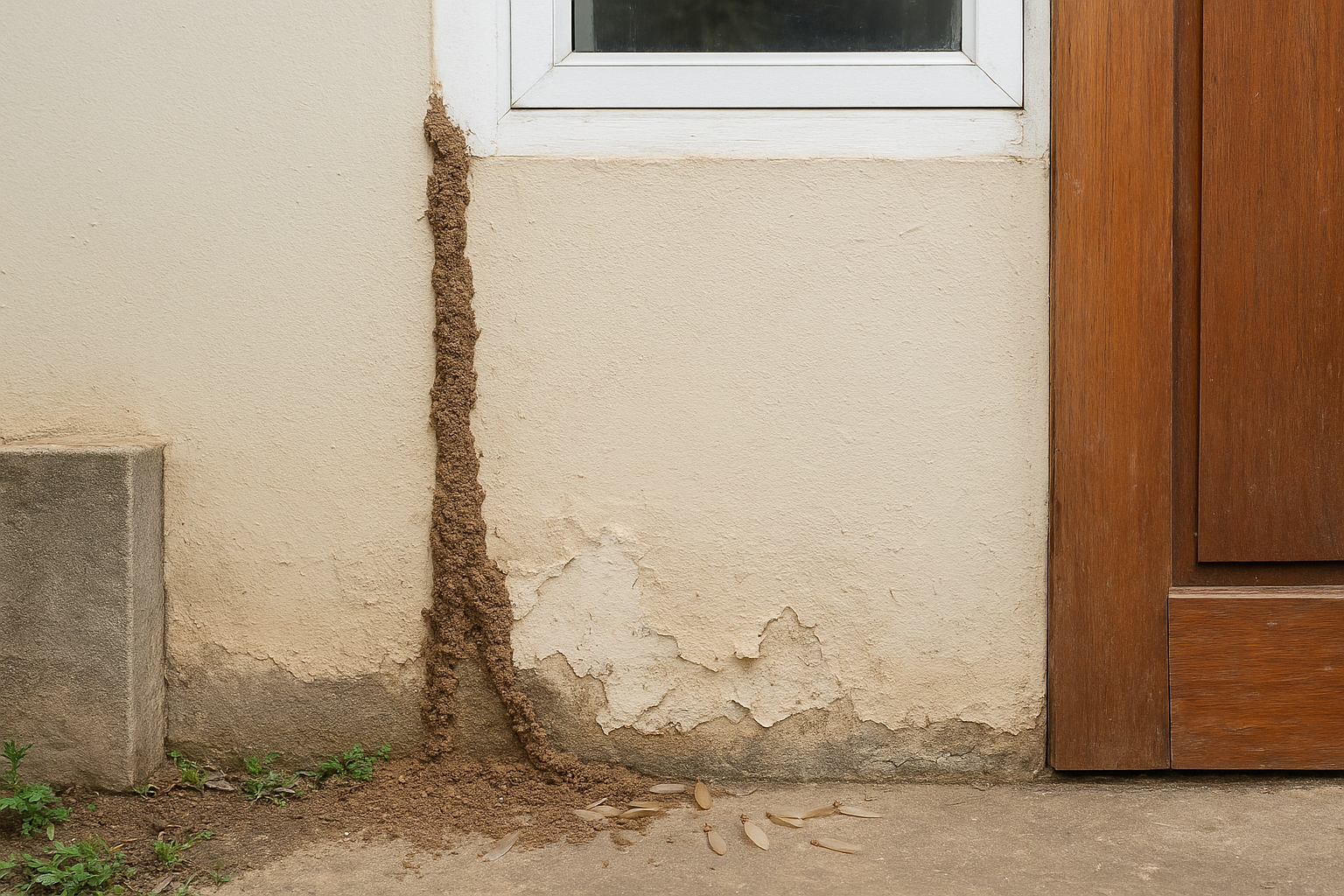
- Mud tubes running up exterior walls, foundation pillars, or inside cupboards
- Wood that sounds hollow when tapped, especially door frames and skirting boards
- Discarded wings near windowsills or light fixtures after a swarm
- Small holes or blistered paint on wooden surfaces
- Sagging or buckling wooden flooring near skirting boards
If you can see the damage without moving furniture, the colony has already been active for months.
Hidden signs homeowners often miss
False ceilings, modular kitchen units, and storage boxes stacked against walls hide early activity better than any open wall ever could. Piles of what looks like fine sawdust near wooden furniture is actually frass, the waste drywood termites push out of their tunnels, and it’s one of the most reliable early indicators available. Termite activity also tends to spike right after Bangalore’s monsoon months, so check wooden almirahs and skirting in June and July even if nothing looks obvious.
When symptoms mean you need professional inspection now
Seasonal swarms of winged termites near tube lights or windows in the evening usually mean a mature colony nearby is reproducing, not that a new problem is starting. Rippled or bubbling paint on wooden surfaces, doors that suddenly stick without a change in humidity, or a hollow sound from what should be solid furniture all point to active feeding underneath the surface. Given how fast subterranean colonies spread through Bangalore’s moisture-retentive soil, waiting even a few extra weeks after noticing these signs often turns a localized treatment into a full structural repair job. Schedule an inspection the same week you notice any of these signs rather than monitoring the situation yourself, since termite activity almost never slows down on its own.
Termite control costs in Bangalore
Termite control cost and termite pest control bangalore pricing vary widely depending on property size, treatment type, and how far an infestation has already spread. A small 2BHK apartment with early-stage activity costs far less to treat than an independent house needing full perimeter drilling and wood injection. Most providers quote per square foot for post-construction treatment and a flat rate for pre-construction soil treatment tied to the plinth area.
What drives the price up or down
Several factors push quotes higher than the base rate you might see advertised. Property age matters because older homes often need more drilling points to reach every foundation gap, and properties with finished flooring cost more to treat since technicians have to drill through tile or marble rather than bare soil. Infestation severity also plays a direct role, a preventive treatment on an undamaged property costs a fraction of what a full colony removal with wood replacement runs.
Typical price ranges you’ll encounter
Below is a general breakdown based on common service categories across Bangalore. Actual quotes will shift based on inspection findings, so treat these as a starting reference rather than a fixed price list.
| Service Type | Typical Price Range (per sq ft or flat) | Notes |
|---|---|---|
| Pre-construction soil treatment | ₹8 to ₹15 per sq ft | One-time, done before flooring |
| Post-construction chemical barrier | ₹15 to ₹35 per sq ft | Varies with drilling access |
| Localized wood treatment | ₹1,500 to ₹5,000 per item | Depends on furniture size |
| Bait station system | ₹4,000 to ₹10,000 flat | Includes monitoring visits |
| Annual maintenance contract | ₹3,000 to ₹8,000 per year | Covers periodic inspections |
The cheapest quote almost never includes a real warranty, and that gap costs more than the discount saves.
Why the lowest quote can cost more later
Deeply discounted quotes usually mean diluted termiticide concentration, fewer drilling points, or no follow-up visits included, all of which let a colony survive underground and return within a year. Reputable companies build warranty coverage, typically one to five years depending on treatment type, directly into the price, so a slightly higher upfront cost often works out cheaper than paying for a second treatment later. Understanding this pricing structure before you call anyone puts you in a much stronger position to compare quotes on substance rather than just the bottom line number.
How to choose a termite control company in Bangalore
Dozens of pest control outfits advertise termite pest control bangalore services and termite treatment packages, but experience, certification, and transparency separate the ones worth hiring from the ones who’ll disappear after taking your deposit. Picking the wrong provider often means paying twice, once for the botched treatment and again for the company that actually fixes it.
Credentials and experience to verify
Ask how long the company has operated in Bangalore specifically, since local experience matters more than a generic national franchise name. Confirm technicians carry proper training certificates and that the company uses termiticides approved under Indian pesticide regulations rather than unbranded chemicals bought in bulk. A provider with decades of local fieldwork, like the 32 years A to Z Pest Solutions has logged since 1993, has already seen how Bangalore’s specific soil and climate behave across seasons, which shows up in fewer callback visits.
Questions worth asking before you sign
A short conversation before booking tells you more than any brochure. Ask these directly:
- What warranty period comes with this specific treatment?
- How many follow-up inspections are included, and at what intervals?
- Which termiticide brand and concentration will be used?
- Will I receive a written report with photos after each visit?
- Is the price quoted per square foot or a flat rate, and what’s excluded?
A company that hesitates to answer warranty and chemical questions clearly is telling you something important.
Red flags that signal a weak provider
Beware of quotes given without a physical inspection, since accurate pricing depends entirely on drilling access, infestation severity, and property layout. Avoid providers who push same-day payment in full before any work begins, or who can’t name the termiticide they’re using when asked directly. Vague warranty terms, no written contract, and reluctance to schedule follow-up visits all point toward a company built for one-time jobs rather than long-term protection.
Reputation built over years matters more than a low bid built for one job. Search for reviews mentioning follow-up service specifically, not just the initial treatment, since that’s where cut-rate providers usually fall short. Trusted, established companies survive on repeat customers and referrals, which naturally pushes them toward honest pricing and real warranty backing rather than one-time transactions.
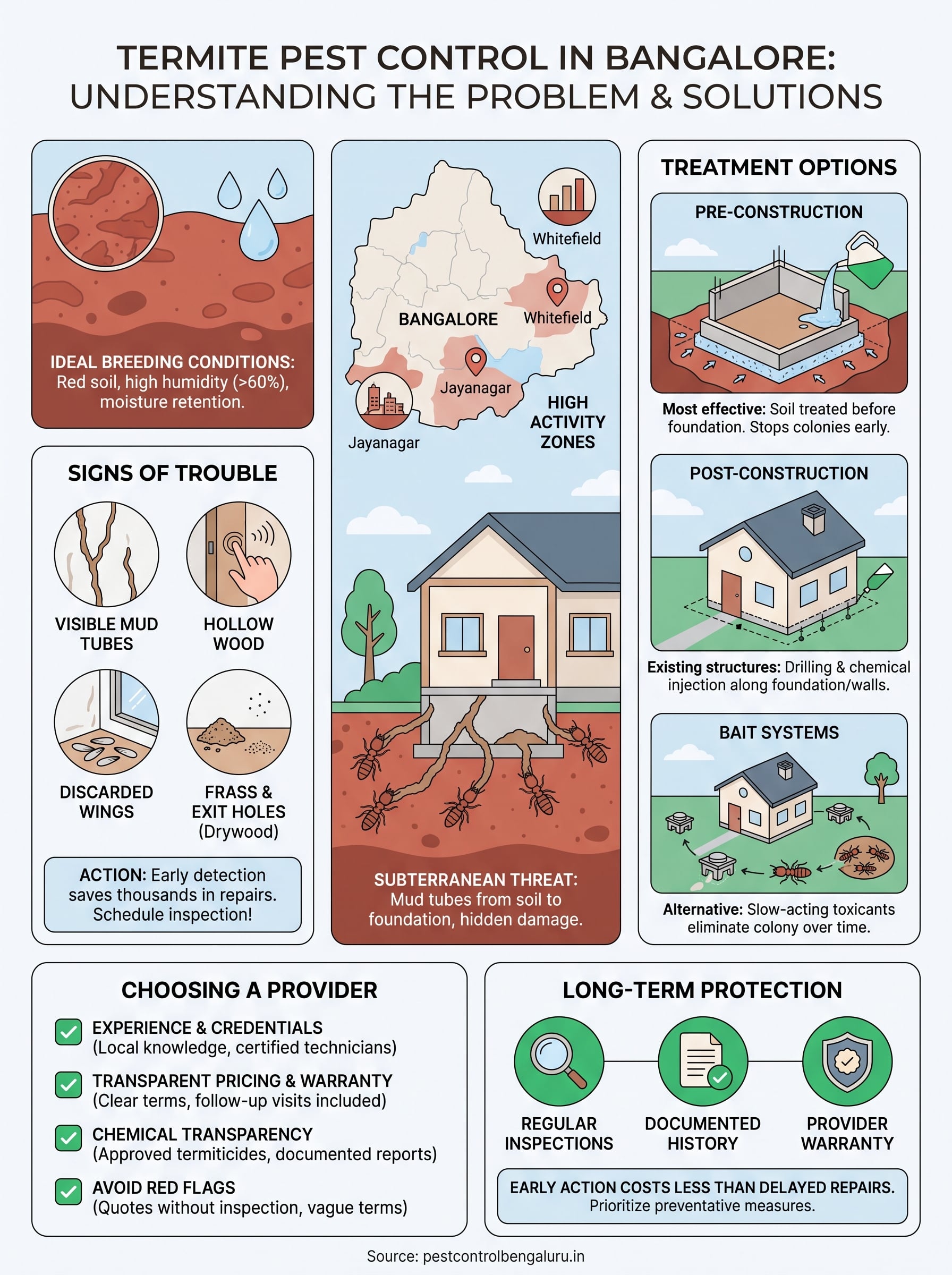
Protecting your home from termites, long term
Termites don’t take breaks in Bangalore’s climate, so your defense against them shouldn’t either. Consistent termite pest control bangalore habits, regular inspections, a documented treatment history, and a provider willing to stand behind their work with a real warranty matter far more than the cheapest quote you can find. Whether you’re preventing a first infestation or recovering from an active one, the fundamentals stay the same: proper diagnosis before any chemical touches your walls, a continuous barrier that doesn’t leave gaps, and follow-up visits that catch trouble early.
After three decades of treating homes across this city, one pattern holds true every single year: early action always costs less than delayed action. If you’ve spotted mud tubes, hollow wood, or discarded wings anywhere on your property, don’t wait for the damage to spread further. Get in touch with A to Z Pest Solutions for an inspection and a treatment plan built around your actual property, not a generic package.
Frequently asked questions
How long does termite pest control bangalore treatment take to complete?
A standard post-construction chemical barrier treatment for a 2-3 bedroom home usually takes half a day to a full day, depending on the number of drilling points and whether wooden fixtures need separate treatment. Pre-construction soil treatment is faster since it happens before flooring and walls go up.
How often should I get my property inspected for termites?
Most providers recommend a follow-up inspection at three and six months after initial treatment, then annually after that. Properties in high-risk areas like Whitefield, Sarjapur, or Electronic City, or homes with heavy wooden fixtures, benefit from checking more often, especially right after monsoon season.
Is termite treatment safe for children and pets?
Yes, once cured. Termiticides used in professional treatment are safe after the standard 24-48 hour curing period, but treated areas should stay undisturbed and pets or children kept away until curing finishes.
Can I treat termites myself instead of hiring a professional?
DIY sprays and powders rarely reach the actual colony and can’t create the continuous chemical barrier a subterranean infestation needs. Improper DIY application also risks exposing your household to chemicals without solving the underlying problem, which is why professional inspection and treatment remain the reliable option.
How much does termite pest control cost in Bangalore?
Costs typically range from ₹8 to ₹15 per square foot for pre-construction soil treatment and ₹15 to ₹35 per square foot for post-construction chemical barriers, with localized wood treatment and bait systems priced separately. Actual pricing depends on property age, size, and infestation severity.