
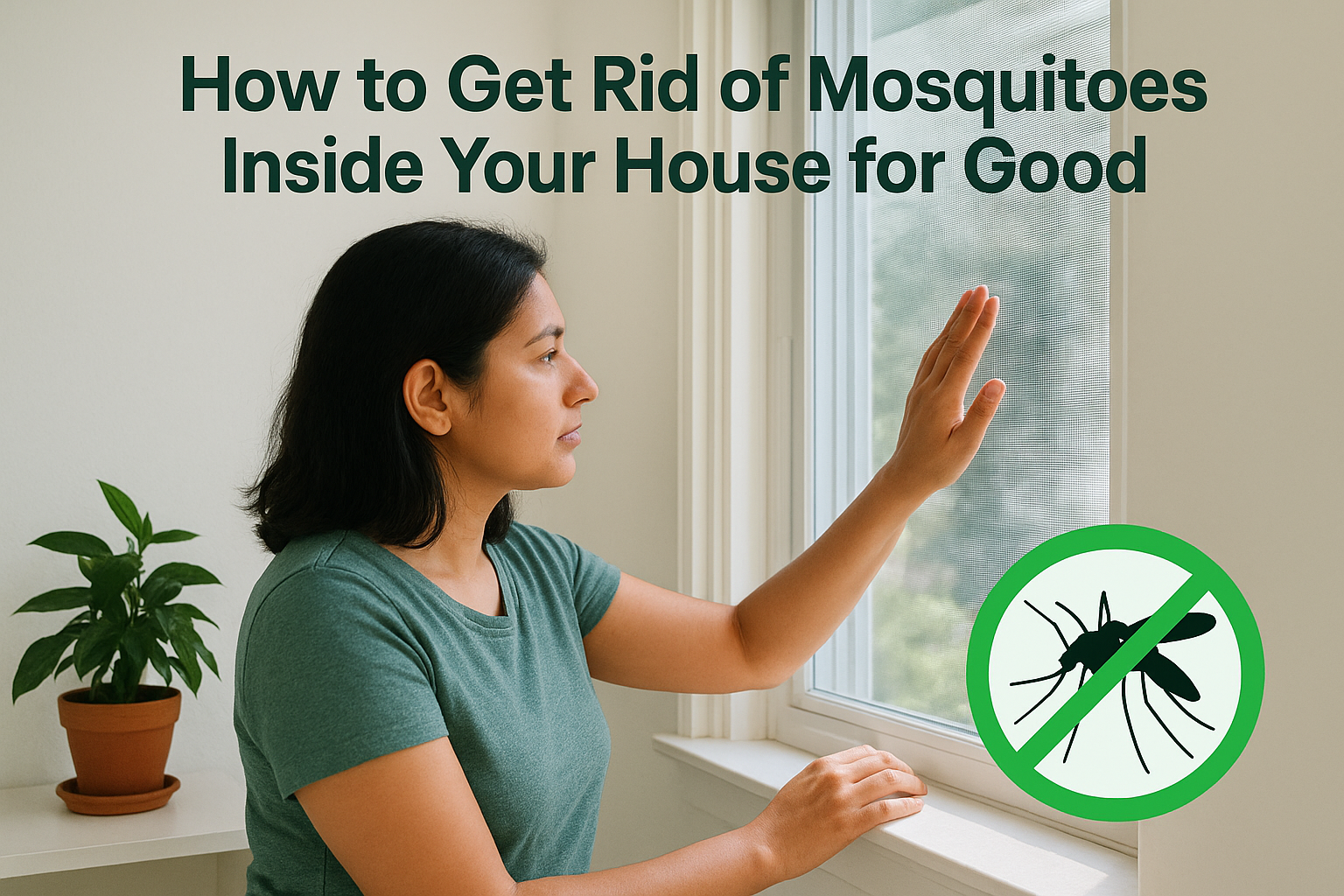
That high-pitched whine at 2 a.m. means you’re not sleeping until you deal with your indoor mosquito problem. If you’re searching for how to get rid of mosquitoes inside house, you’ve probably already tried a plug-in repellent or a can of spray that worked for one evening and then stopped. Bangalore’s climate, with its warm spells and sudden rain, keeps mosquito breeding going almost year-round, so a quick fix rarely holds.
How to get rid of mosquitoes inside house for good means combining breeding site removal with targeted treatment, not just masking the problem with scented coils. You need to know where they’re hiding, how they’re getting in, and which methods actually break the breeding cycle instead of just knocking down the adults you can see.
In this guide, we walk through practical, tested steps for indoor mosquito control: finding hidden breeding spots around drains, plants, and stored water, sealing entry points, using mosquito repellent methods like fogging and residual treatments correctly, and setting up a seasonal mosquito prevention routine that keeps them from coming back. We’ve handled mosquito problems in Bangalore homes since 1993, so this isn’t guesswork, it’s what actually works on the ground.
Why mosquitoes keep showing up inside your house
Mosquitoes don’t just wander into your house by accident. Every female mosquito needs stagnant water to lay eggs, and Bangalore homes are full of it: a saucer under a potted plant, a clogged balcony drain, an open bucket in the utility area. Eggs hatch into larvae within 24 to 48 hours in warm weather, and the whole cycle from egg to biting adult takes as little as 7 to 10 days. That’s why treating the mosquitoes you see and ignoring the water sources around them never solves the problem for long. According to the World Health Organization, mosquitoes remain one of the deadliest disease vectors globally, which makes indoor control more than a comfort issue. In Bangalore, the two species behind most household complaints are Aedes aegypti, a day-biting mosquito linked to dengue and chikungunya that breeds in small clean-water containers, and Culex, the night-biting nuisance species that breeds in drains and stagnant, dirty water. Knowing which one you’re dealing with changes where you should focus your inspection: Aedes hides indoors near stored water, while Culex tends to swarm in from outdoor drains and sumps at dusk.
If you’re not removing standing water, you’re not getting rid of mosquitoes, you’re just delaying the next batch.
Bangalore’s weather keeps the cycle going
Cities with distinct dry and monsoon seasons usually get a break from mosquitoes for part of the year. Bangalore doesn’t work that way. Intermittent rain, humidity that lingers after showers, and mild year-round temperatures mean breeding rarely stops completely. Homes near lakes, construction sites, or poorly maintained drains see the heaviest indoor mosquito infestation pressure, but even well-kept apartments on higher floors aren’t immune, since mosquitoes travel through stairwells, lift shafts, and open windows.
The hiding spots most people miss
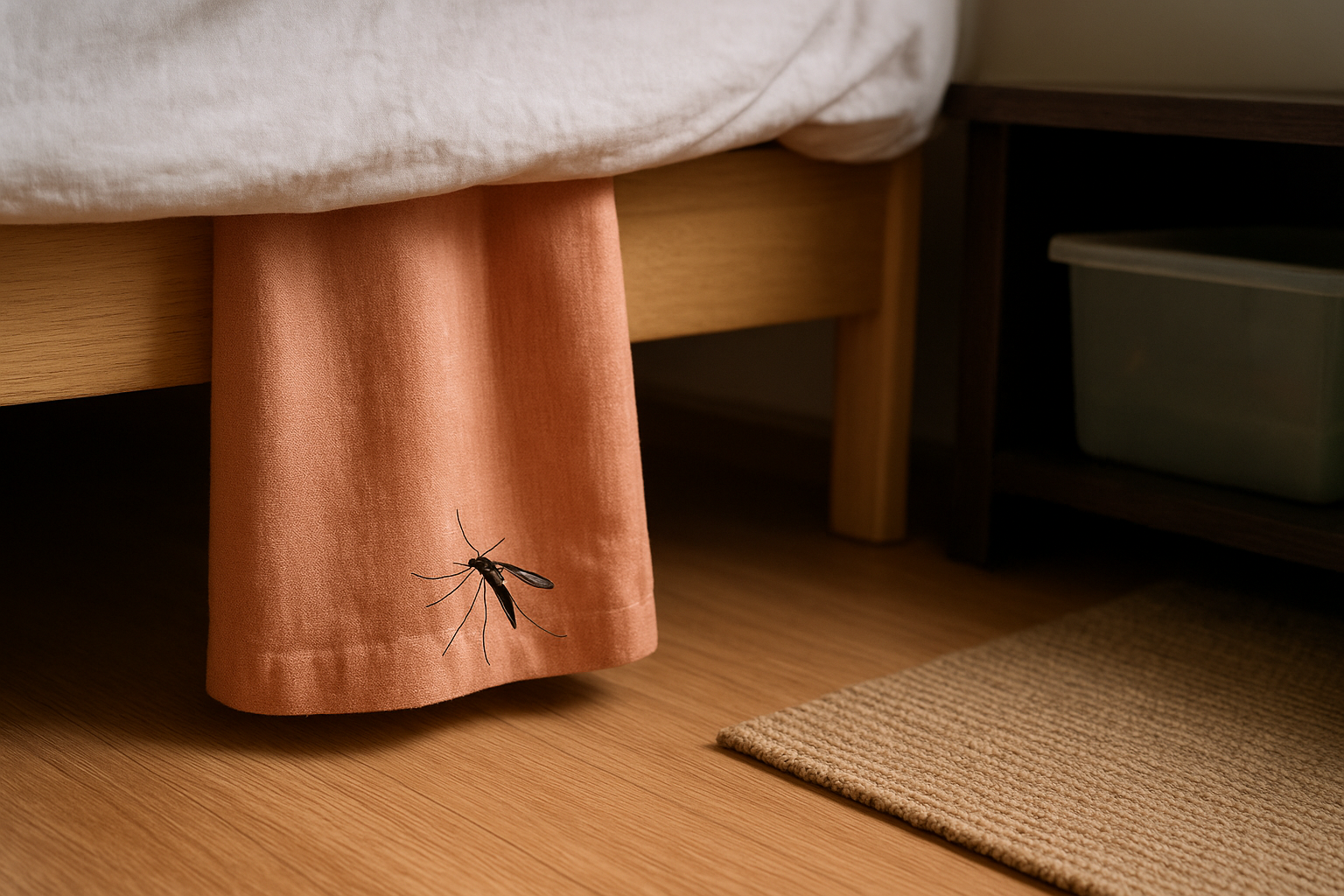
Adult mosquitoes rest in cool, dark, humid spots during the day and come out to feed at dusk and dawn. Inside a typical home, that means:
| Location | Why mosquitoes like it |
|---|---|
| Behind curtains and under beds | Dark, undisturbed, close to a food source (you) |
| Bathroom drains and unused floor traps | Constant moisture, minimal airflow |
| Balcony plant saucers and vases | Standing water refreshed by watering or rain |
| Storage rooms with old containers | Collect dust and stagnant water unnoticed |
| AC drip trays and window ledges | Slow-draining water pools for days |
Going through this list room by room tells you more about your actual risk than any spray can.
Sprays and coils treat symptoms, not the source
Aerosol mosquito sprays and mosquito coils kill what’s flying around at the moment you use them, which feels like progress. The problem is that they do nothing to the eggs and larvae sitting in a clogged drain three feet away, so a fresh wave of adults emerges within days. Repeated use also means breathing in chemical residue every evening, which isn’t something you want in a bedroom with kids or elderly family members. Temporary relief like this trains people to reach for a can every night instead of fixing what’s actually generating the problem.
Why some homes get hit harder than others
Ground floor units, homes next to open drains, and properties with dense landscaping or unused wells almost always report worse mosquito problems than upper floors with sealed windows. If your neighbors are dealing with a heavy mosquito season and you’re not doing anything differently, you’ll likely get an overflow once their outdoor breeding sites max out. That’s a strong argument for treating your property as one system, indoor and outdoor together, rather than fighting mosquitoes room by room every time you notice a bite. It’s also the core idea behind any lasting answer to how to get rid of mosquitoes inside house for good.
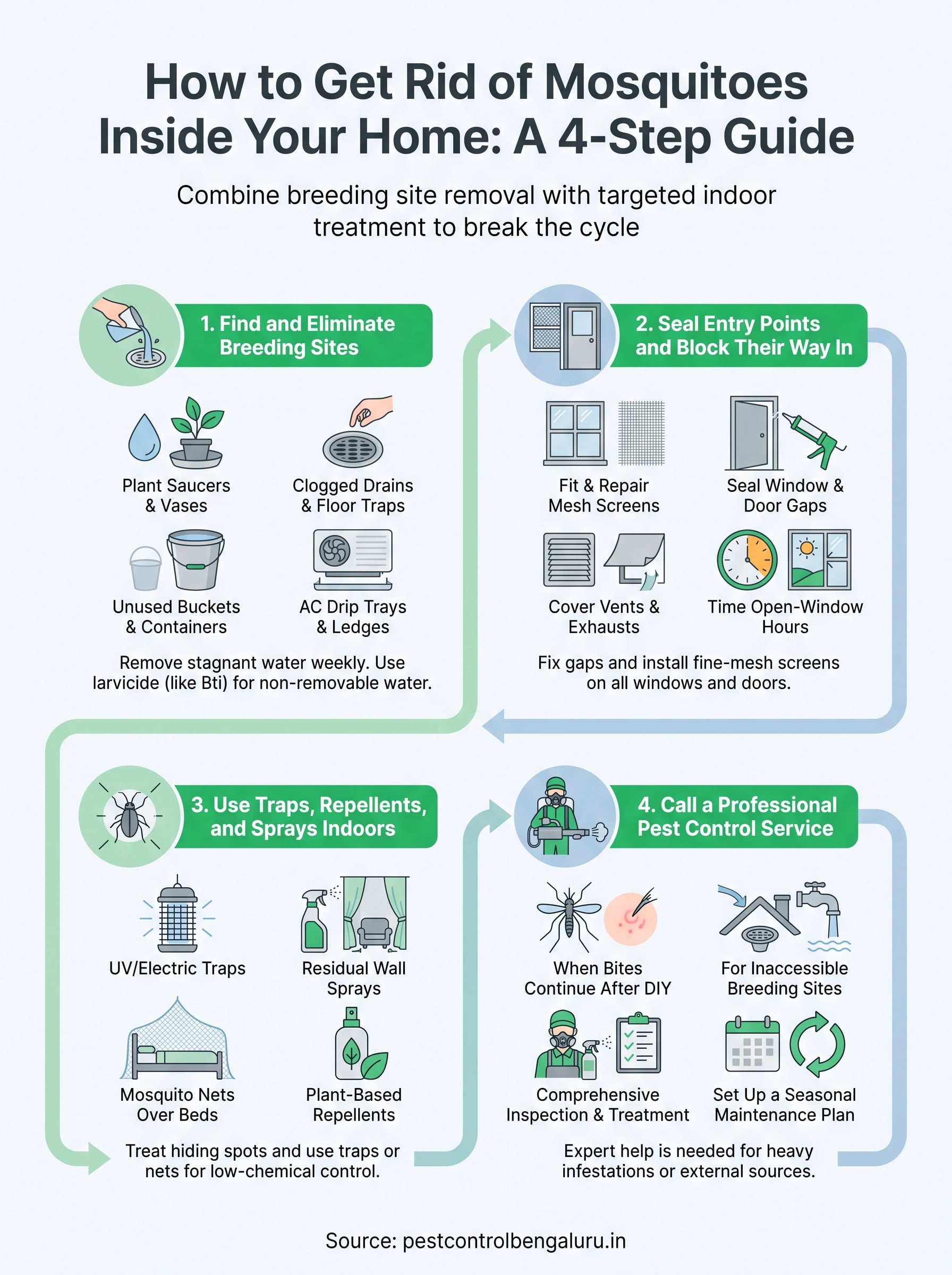
Step 1. Find and eliminate breeding sites
If you’re serious about how to get rid of mosquitoes inside house, start before you touch a spray can: walk your property with one goal, find every spot holding water for more than two days. This is the first and most important step to get rid of mosquitoes inside your house for good. This is the single most effective thing you can do, and it costs nothing but time. A breeding site inspection takes about 15 minutes for a typical apartment and longer for an independent house with a garden, but skipping it means every other step in this guide only buys you a few days of relief.
Kill the water source and you kill the next three generations of mosquitoes, not just today’s batch.
Walk the property with a checklist
Go room by room and outdoors, checking anything that can hold even a spoonful of water. Use this list as your walkthrough:
- Balcony and terrace: plant saucers, empty pots, blocked drain outlets
- Bathrooms: floor traps, unused bucket storage, mop water left overnight
- Kitchen: under-sink pipe leaks, water stored in open containers
- Utility area: washing machine drip trays, unused flowerpots
- AC units: drip trays and condensation pooling on window ledges
- Compound/garden: birdbaths, tarpaulin folds, discarded tires, tree stumps
- Overhead tanks and sumps: check that lids are sealed and mesh screens are intact
Anything you find on this list needs draining, covering, or scrubbing today, not next weekend.
Empty, cover, or treat what you can’t remove
Some water sources can’t be eliminated outright, like an overhead tank or a decorative pond. For these, larvicide treatment using products like Bti (Bacillus thuringiensis israelensis) kills larvae without harming people or pets, and a tight-fitting mesh lid stops adults from laying eggs there in the first place. Ornamental containers should be emptied and scrubbed weekly, since eggs stick to the container walls even after you pour the water out. Drains that can’t be capped need a weekly flush with hot water and a stiff brush to dislodge egg clusters clinging to the sides.
Don’t forget the small stuff
Bottle caps, plant tray rims, and folds in a stored tarp hold enough water for an entire generation of mosquitoes to develop. Check these small, easily missed spots every few days during the monsoon months, when rain refills them faster than you can dump them out. Doing this consistently for two weeks usually produces a noticeable drop in the number of mosquitoes you see indoors, before you’ve even sprayed anything.
Step 2. Seal entry points and block their way in
Once you’ve dealt with breeding sites, the next job in how to get rid of mosquitoes inside house is closing off how they get inside in the first place. Even a spotless, well-drained property will still get bitten if your windows, doors, and vents give mosquitoes an open invitation every evening. Mosquito proofing your home doesn’t require a renovation, just a focused afternoon fixing the gaps you’ve probably walked past a hundred times.
Every gap you seal is one less mosquito you have to fight indoors tonight.
Check doors, windows, and vents first
Mosquitoes need surprisingly little space to slip through, so inspect the usual weak points room by room:
- Window and door frames: gaps around old frames, especially in older independent houses
- Mosquito mesh screens: torn corners, loose fitting, or missing screens on balcony doors
- Exhaust fans and vents: kitchen and bathroom exhausts without a flap or cover
- Gaps under doors: enough clearance for mosquitoes to walk or fly through at dusk
- Balcony grills: unscreened openings that let mosquitoes in as the sun sets
Fix what you can yourself with weatherstripping tape or a door draft stopper, and get a carpenter or mesh fitter in for anything structural.
Fit or repair mesh screens properly
A torn or badly fitted mosquito mesh screen is worse than no screen at all, since it gives you a false sense of security while mosquitoes squeeze through the same holes every night. Stainless steel or fiberglass mesh with a fine weave (around 18×16 per square inch) blocks mosquitoes without cutting off airflow, which matters in Bangalore’s mild climate where many homes rely on cross-ventilation instead of AC. Get screens custom-fitted for balcony doors and kitchen windows, since these see the heaviest traffic and the most gaps from repeated opening and closing.
Time your open-window hours
Mosquitoes are most active during dusk and dawn, so if you’re keeping windows open for ventilation, close them or fit screens before sunset and after sunrise. Households that leave windows open all evening for the breeze almost always report more indoor bites than those who shut things up by 6:30 pm and rely on screened vents overnight. This one habit change, paired with sealed entry points, cuts down a huge share of the mosquitoes making it inside in the first place, well before you need to reach for a spray.
Step 3. Use traps, repellents, and sprays indoors
Once breeding sites are gone and entry points are sealed, the mosquitoes left indoors are the ones already resting somewhere in the house, and this is the stage where most people finally solve how to get rid of mosquitoes inside house for good. This is where targeted indoor treatment earns its place, not as a first move, but as cleanup for whatever slipped through steps one and two. Used this way, sprays and traps stop being a nightly ritual and become an occasional touch-up.
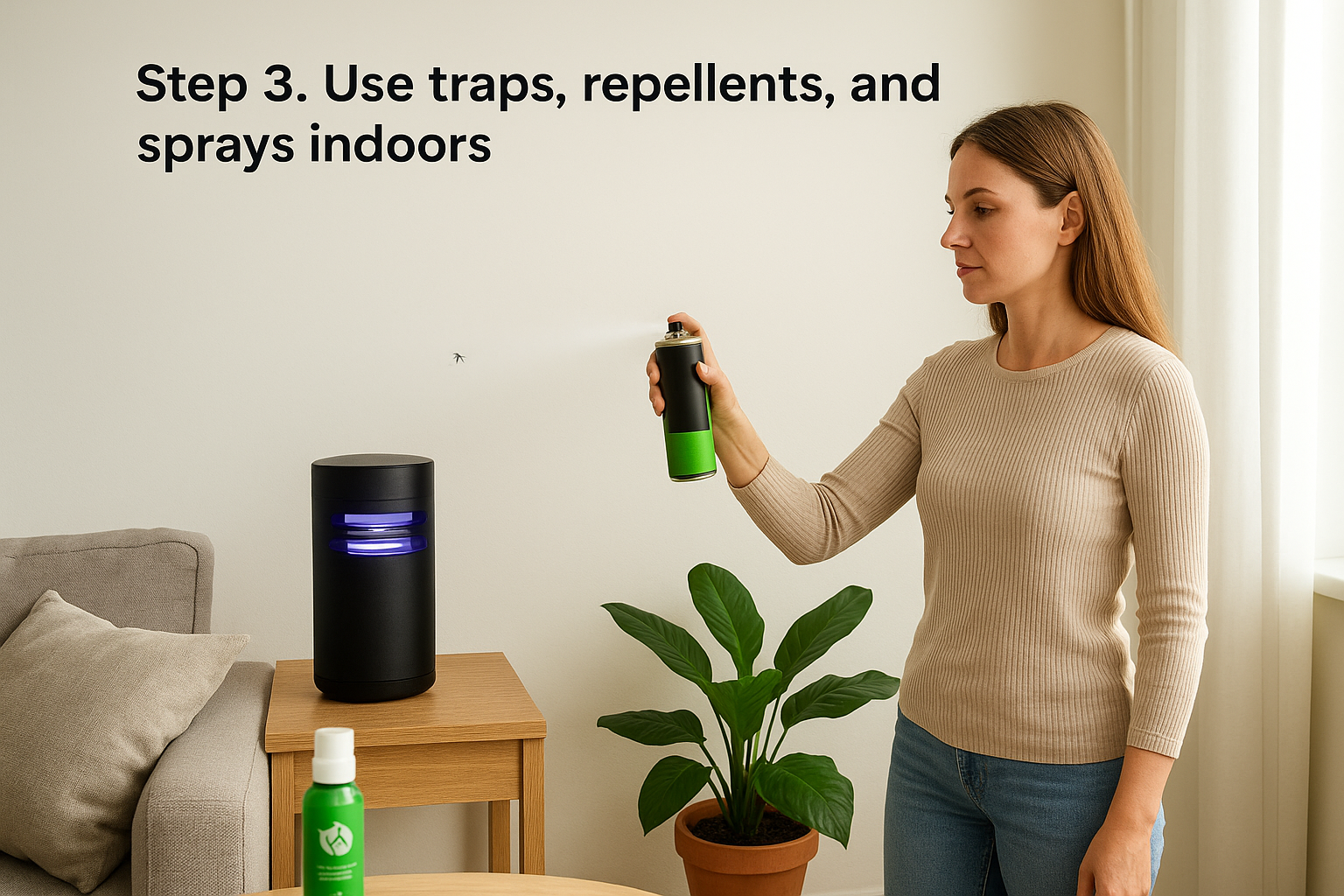
Treat the survivors, not the symptom, and you’ll use far less spray overall.
Pick the right mosquito repellent for the room
Different rooms need different indoor mosquito control approaches, and mixing repellent methods usually works better than relying on one product everywhere:
| Method | Best for | Notes |
|---|---|---|
| UV/electric mosquito traps | Living rooms, bedrooms | Runs quietly overnight, no chemical smell |
| Residual wall spray | Corners, behind curtains, under furniture | Kills mosquitoes that land hours later |
| Space spray/fogging | Quick knockdown before guests or bedtime | Short-lived, doesn’t reach hidden larvae |
| Mosquito nets | Sleeping areas, especially for kids | Zero chemical exposure |
| Plant-based repellents (citronella, neem oil) | Balconies, open doors | Mild deterrent, needs frequent reapplication |
Apply residual sprays where mosquitoes actually rest
Regular aerosol sprays only kill what’s flying when you spray, but a residual spray application on walls, behind curtains, and under beds keeps working for weeks because mosquitoes absorb the chemical when they land to rest during the day. Most residual formulations use synthetic pyrethroids such as cypermethrin or deltamethrin, which bond to porous surfaces like unpainted walls and cement corners far better than glossy tile or glass. For skin-applied repellents used on balconies or during outdoor evenings, look for DEET, picaridin, or IR3535 on the label; these are the actively tested compounds recommended by public health bodies, unlike many "natural" sprays that wear off within the hour.
Focus on dark, low-traffic corners rather than open floor space, since that’s where adults actually settle between feeding. Reapply every four to six weeks during peak season, and always check that the product label lists it as safe for indoor residential use before you spray near sleeping areas.
Use traps and nets for lasting, low-chemical control
Electric or UV traps work well as a set-and-forget option for bedrooms and living rooms, since they run continuously without adding chemical residue to the air. For households with small children or anyone with respiratory sensitivity, a mosquito net over the bed is still one of the most reliable, zero-chemical options available, and it protects you even on nights when a stray mosquito gets past everything else. Combine a trap in the main living area with nets in bedrooms, and you’ll cover both the areas you occupy during the day and the hours you’re most vulnerable to bites.
Step 4. Call a professional pest control service
Some mosquito problems don’t respond to breeding site removal, sealed screens, and indoor sprays, no matter how carefully you’ve followed the first three steps. If you’re still getting bitten indoors after two to three weeks of consistent effort, the infestation is likely coming from a source you can’t access yourself, like a neighboring plot, a storm drain, or a well on an adjoining property. At that point, professional mosquito control stops being optional and becomes the only reliable answer to how to get rid of mosquitoes inside house when DIY effort has plateaued.
When breeding sites sit outside your boundary wall, DIY effort alone will never be enough.
Signs you need expert help
Certain patterns point to a problem bigger than what a can of spray or a mesh screen can fix:
- Bites continue indoors even after sealing windows and doors
- You spot larvae in a drain or sump you can’t clean yourself
- Multiple family members report bites during daytime hours, not just dusk
- Nearby construction, vacant plots, or lakes are visibly breeding mosquitoes
- Someone in the household has had dengue or chikungunya symptoms recently
Any one of these is reason enough to bring in a licensed pest control technician rather than repeating the same store-bought fixes. A qualified exterminator carries access to professional-grade insecticides and larvicides that aren’t sold over the counter, and knows the correct dosage and application method for each surface, which matters both for effectiveness and for keeping the treatment safe around children and pets.
What a professional visit actually covers
A proper mosquito control service goes well beyond spraying a room. Technicians inspect the entire property, including areas you might not check, like overhead tanks, terrace drains, and shared common areas in apartment complexes. They also assess the mosquito species present, since an Aedes-heavy infestation calls for a different fogging chemical and treatment schedule than a Culex-driven one from a nearby drain. At A to Z Pest Solutions, our teams combine indoor residual treatment, outdoor fogging, and larvicide application in stagnant water sources that can’t be drained, all calibrated to the size and layout of your specific property. We’ve been running this exact process across Bangalore homes since 1993, so we know which corners of a typical apartment or independent house get missed during a DIY sweep.
Set up a maintenance schedule, not a one-time fix
A single treatment knocks down the current mosquito population, but Bangalore’s near year-round breeding conditions mean you need a seasonal mosquito treatment plan to keep numbers low. Most households do well with quarterly service, stepping up to monthly visits during heavy monsoon months when breeding accelerates. Ask any pest control company you hire whether they offer a scheduled maintenance plan rather than a single visit, since ongoing coverage is what actually prevents the problem from creeping back within a few weeks.
Frequently asked questions
How long does it take to get rid of mosquitoes inside a house?
If you’re wondering how to get rid of mosquitoes inside house quickly, most households see a noticeable drop within two weeks of removing breeding sites and sealing entry points, since that breaks the egg-to-adult cycle at its source. Full control, where bites become rare, usually takes four to six weeks alongside a residual treatment, and ongoing quarterly maintenance keeps numbers low afterward.
What kills mosquitoes instantly indoors?
Space sprays and fogging knock down flying adults within minutes, which is useful before guests arrive or bedtime. They don’t touch eggs or larvae, though, so expect a new batch within days unless you’ve also dealt with standing water and entry points.
Do mosquito repellent plants actually work indoors?
Citronella, neem, and similar plants offer a mild deterrent near balconies and open doors, but they’re not strong enough to control an active indoor infestation on their own. Treat them as a supplement to traps and sealed screens, not a replacement.
Why do I still get bitten even with closed windows?
Mosquitoes already resting indoors before you closed up, gaps in door frames, unscreened exhaust fans, and torn mesh are the usual culprits. Walk the entry-point checklist in Step 2 and check for breeding sites you may have missed, such as AC drip trays or bathroom floor traps.
How often should I get professional mosquito treatment?
Most Bangalore homes do well with quarterly service, stepping up to monthly visits during heavy monsoon months when breeding accelerates. A scheduled maintenance plan works far better than calling for emergency fogging once bites have already piled up.
Keeping your home mosquito-free for good
How to get rid of mosquitoes inside house for good comes down to sequence, not luck. Remove breeding water first, seal the gaps they use to slip inside, then use traps and residual sprays only on whatever survives those first two steps. Skip a step and you’re back to spraying every evening with nothing to show for it by morning.
Homes that stay mosquito-free long-term treat mosquito prevention as a routine, not a one-off cleanup before guests arrive. Walk your breeding-site checklist monthly, check screens before monsoon season, and don’t wait until bites pile up to call for backup. Quarterly maintenance beats emergency fogging every time.
If you’ve worked through all four steps of how to get rid of mosquitoes inside house and they’re still winning, it’s time for a property-wide inspection rather than another can of spray. Book a mosquito control service with our team and get a treatment plan built around your actual property, not guesswork.