
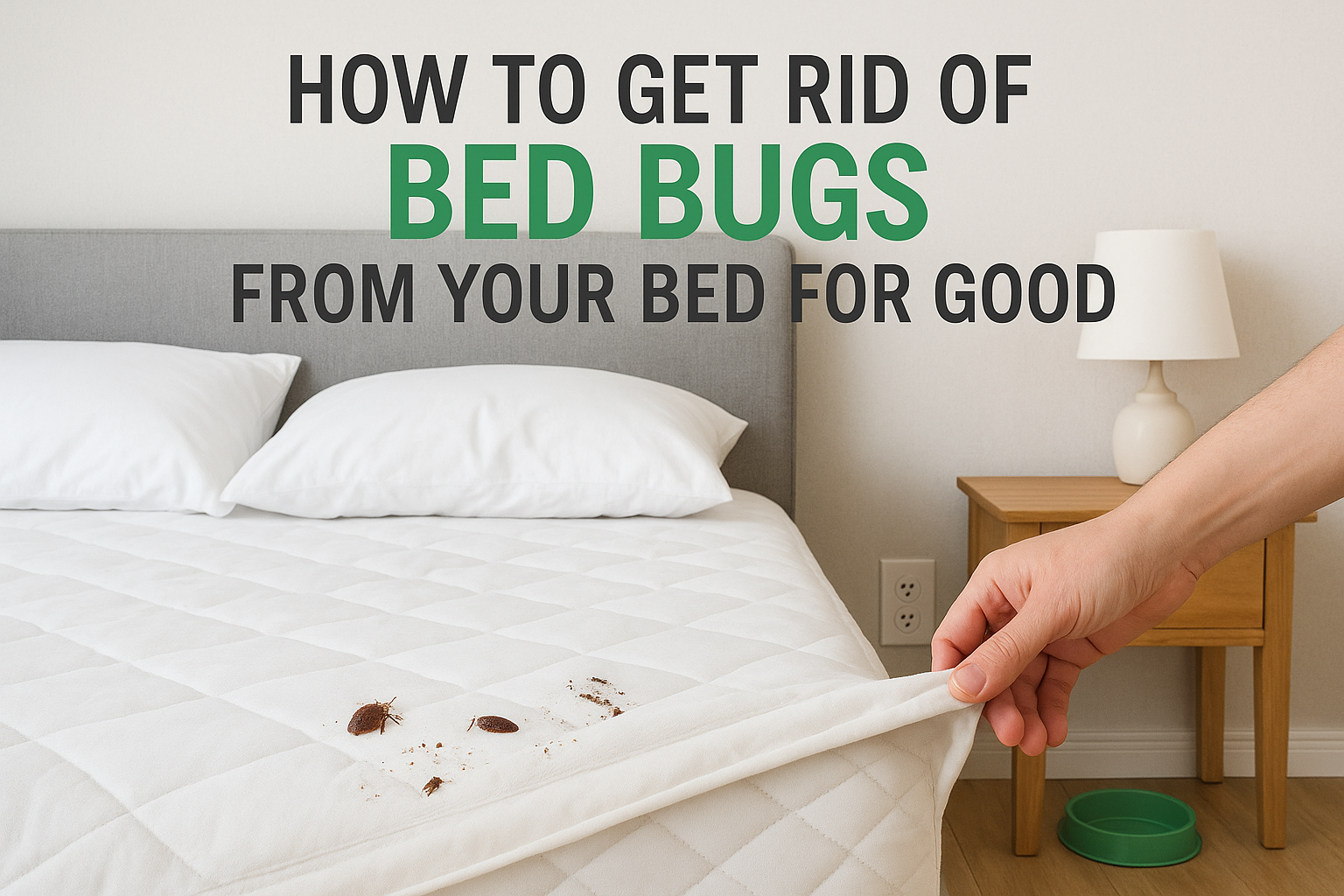
You wake up with itchy red bites in a neat line, strip the sheets, and spot tiny reddish-brown insects hiding along the mattress seams. That first discovery is unsettling, and the panic to fix it fast is real. If you are searching for how to get rid of bed bugs from bed, you already know these pests do not just live in mattresses, they hide in headboards, bed frames, skirting boards, and nearby furniture too.
The good news is you can learn how to get rid of bed bugs from bed yourself if you catch it early and follow the right sequence of steps. This guide walks you through practical, odorless treatment methods, from washing fabrics on high heat to using diatomaceous earth, cold treatment, and targeted sprays, so you understand exactly what works, what wastes your time, and how to get rid of bed bugs from bed without harsh chemical smells.
We will cover how to get rid of bed bugs from bed by identifying an infestation correctly, treating your mattress and bed frame, and extending treatment to furniture and other rooms so bugs do not simply relocate. We will also flag the honest limits of DIY methods and when a heavy infestation genuinely needs professional pest control instead of another home remedy.
By the end, you will have a clear, sequenced plan to get your bed bug problem under control quickly and keep it from coming back.
Why bed bugs are so hard to eliminate on your own
If you are trying to get rid of bed bugs from bed, know that they survive DIY attempts more often than any other household pest, and it is not because homeowners are careless. It is because these insects are built to outlast a single spray or wash cycle. Understanding why they persist helps you see why how to get rid of bed bugs questions rarely have a one-step answer.
Their biology works against quick fixes
A single female bed bug lays 200 to 500 eggs in her lifetime, and those bed bug eggs are glued into cracks where sprays cannot reach. The eggs hatch in 6 to 10 days regardless of what treatment you applied to adult bed bugs, so a home that looks clear after one weekend can show fresh bed bug bites two weeks later. Adults can also survive for months without feeding, which means they simply wait out a treatment instead of walking into it. This life cycle is why the CDC notes that effective bed bug control usually requires a thorough, sustained approach rather than a single treatment rather than a single treatment.
Bed bugs do not die from one cleaning session, they die from a sequence of treatments repeated over weeks.
They hide where you are not looking
Mattress seams get all the attention, but bed bugs squeeze into gaps as thin as a credit card. Headboards, bed frame joints, skirting boards, electrical outlets, and even picture frames near the bed all qualify as hiding spots. If you treat the mattress and mattress alone, the bugs sheltering three feet away in the headboard will simply repopulate it once the spray dries. This is the biggest reason how to get rid of bed bugs in house searches trend upward after failed mattress-only treatments.
Resistance makes chemical sprays unreliable
Many populations of bed bugs in Indian cities have developed resistance to common pyrethroid insecticides and bed bug spray products sold over the counter. Spraying a resistant population does not kill it, it just teaches you the bed bug spray does not work while the infestation keeps growing. That is why cold treatment and residual dusts, covered in Step 3, matter as much as chemical options.
One missed step restarts the whole problem
Treating the bed but skipping laundry, luggage, or a nearby sofa gives survivors a path straight back to where you sleep. Because bed bugs travel between rooms and cling to fabric, a treatment plan needs to cover the whole space, not just the piece of furniture where you first spotted them. The next four steps walk through that full sequence in order, starting with confirming exactly what you are dealing with before you spend money on treatment.
Step 1. Confirm and locate the bed bugs
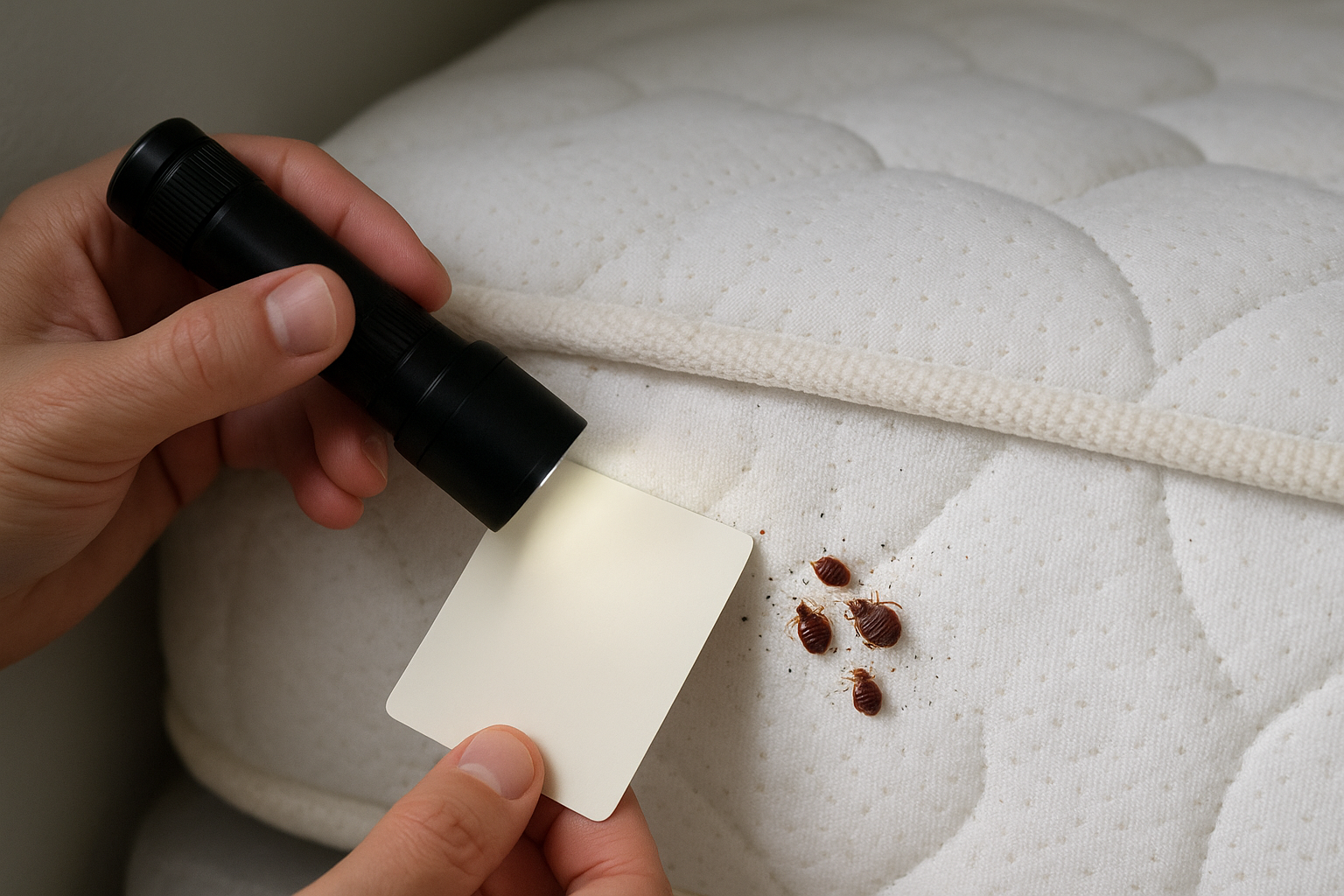
Before you buy a single spray to get rid of bed bugs from bed, confirm you are actually dealing with bed bugs and not fleas or carpet beetles. Bed bugs are flat, oval, reddish-brown, and roughly the size of an apple seed once fed. Bed bug eggs are pearly white and about 1mm long, usually glued in clusters inside seams. If you are still unsure, a thorough inspection beats guessing based on bites alone, since bite patterns vary a lot between people.
You cannot treat what you have not found, so inspection always comes before spraying.
Where to check first
Work through these spots with a flashlight and a stiff card or old credit card to scrape along seams:
- Mattress seams, piping, and tags
- Box spring frame and staples
- Headboard joints and screw holes
- Bed frame corners and where the frame meets the wall
- Skirting boards and electrical outlet plates near the bed
- Nightstands, picture frames, and curtain folds within a few feet of the bed
Signs that confirm an active infestation
Look for rusty or dark spotting on sheets and mattress seams, which is dried bed bug excrement. Small blood smears near the pillow area are another giveaway, along with pale yellow eggshells and shed skins in the crevices you checked above. A musty, sweetish odor in a heavily infested room is also common, though it usually only shows up once numbers are high.
Map the infestation before moving on
Write down or photograph every location where you found live bugs, eggs, or fecal spotting. This map tells you exactly which pieces need treatment in Step 2 and which rooms are still clear. Skipping this step is how people miss the headboard or a nearby sofa, treat the mattress alone, and end up asking how to get rid of bed bugs completely all over again a month later.
Step 2. Isolate and prep the infested area before you get rid of bed bugs from bed
Once you know where the bugs are hiding, stop them from spreading before you apply any treatment to get rid of bed bugs from bed. Isolating the bed means cutting off every path bugs use to travel between the mattress, the frame, and the rest of the room. Skip this step and you will chase bugs from room to room instead of trapping them where you can kill them.
Pull the bed away from the wall
Move the bed frame at least six inches from the wall and away from curtains or nightstands. Bed bugs cannot fly or jump, so this gap alone blocks a lot of their movement between furniture pieces.
Fit interceptor cups under the legs
Place a plastic bed bug interceptor, or a shallow bowl dusted with a thin layer of talcum powder, under each leg of the bed frame. This traps bugs trying to climb up or down and gives you a daily count of how bad the infestation actually is.
Bag and wash everything fabric
Strip the bed completely and follow this sequence:
- Bag sheets, pillowcases, and mattress covers in sealed plastic bags immediately, don’t carry them loose through the house.
- Wash everything on the hottest setting the fabric allows, ideally above 60°C.
- Dry on high heat for at least 30 minutes, since heat kills bugs and eggs that washing alone misses.
- Seal cleaned items in fresh plastic bags until treatment is finished.
Vacuum before you spray anything
Run a vacuum with a crevice attachment slowly over the mattress seams, bed frame joints, and skirting boards you mapped in Step 1. Empty the canister or bag outside immediately into a sealed bag, since live bugs can crawl back out of your vacuum otherwise. This prep work sets up safe pest control treatment to actually reach the bugs instead of scattering them further into the room.
Step 3. Kill the bed bugs with cold, dusts, and safe treatments
With the room isolated and fabrics washed, you now attack the bugs still hiding in the mattress, frame, and skirting boards, the core work of getting rid of bed bugs from bed for good. Learning how to get rid of bed bugs fast at this stage means combining more than one method, since no single treatment kills every life stage on contact.
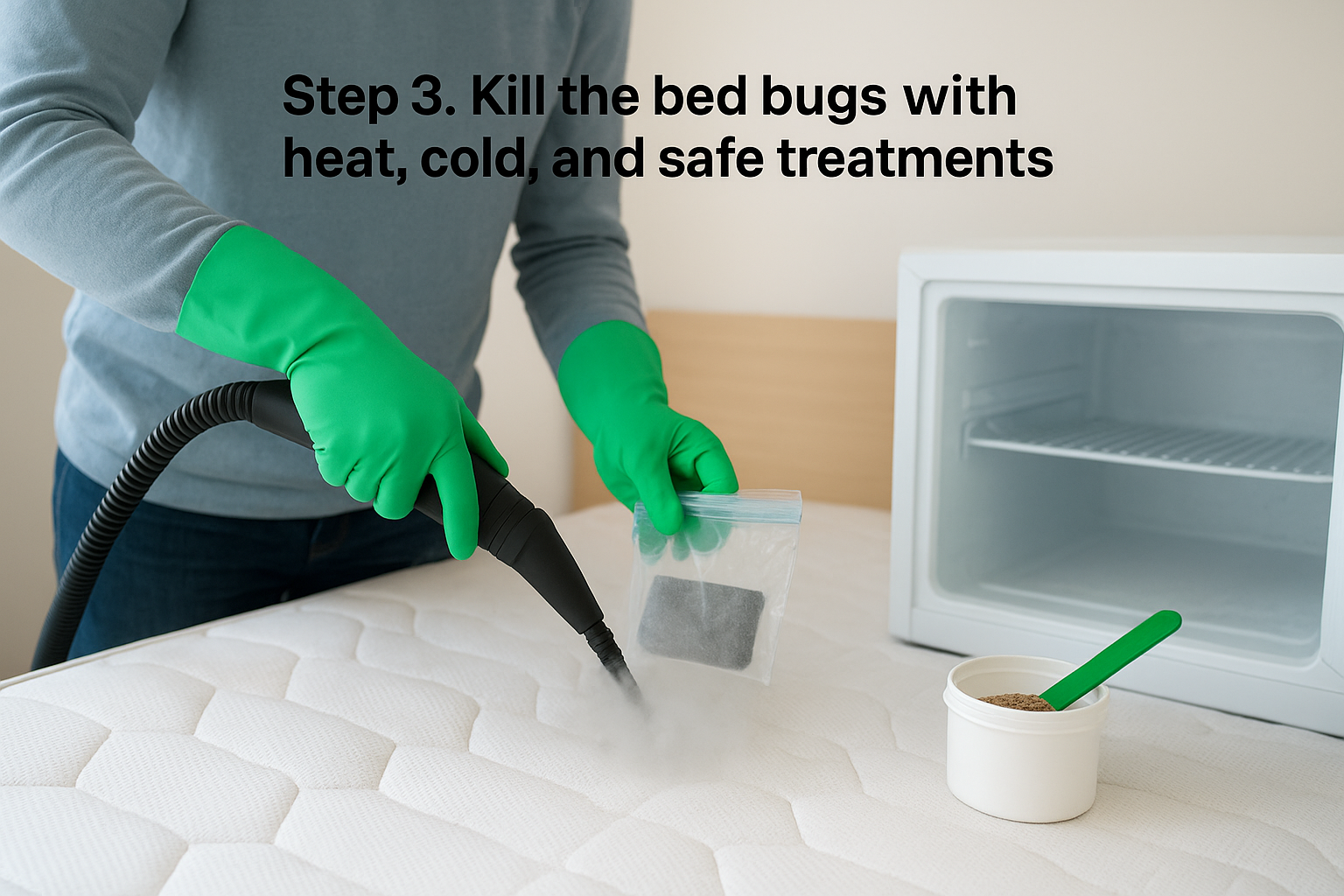
No single treatment kills every bed bug life stage, you need cold, dust, and a residual product working together.
Use dust treatments as your primary weapon
Diatomaceous earth and silica-based dust worked directly into mattress seams, tufts, and bed frame joints are the most effective home treatment without specialized equipment. Use a soft brush to push the dust deep into every seam, moving slowly, about a minute per foot, so it reaches bugs hiding at the back rather than sitting on the surface.
Cold works well for small items
Small items like phone cases, remote controls, or shoes can go into a sealed bag in the freezer at 0°F (-18°C) for four full days. This is a slower, fully odorless treatment option, so reserve it for items that cannot handle a hot wash.
Apply targeted, safe products after the initial dust treatment
Once the dust and cold treatment have done the initial kill, follow up with these for lasting protection:
Diatomaceous earth: dust a thin layer into bed frame joints and skirting board gaps, it cuts through the bugs’ exoskeleton and works for weeks as a fully odorless treatment.
- Silica-based dust: an alternative to diatomaceous earth in humid rooms, since it holds up better against moisture and is just as odorless.
Encasement covers: zip a bed bug proof cover over the mattress and box spring immediately after treatment, trapping any survivors inside until they starve.
Avoid soaking the mattress in liquid insecticide. It rarely penetrates deep enough to matter and leaves residue you will be sleeping on.
Step 4. Monitor for survivors so bed bugs stay gone from your bed
Treating a room once does not guarantee the bugs are gone, since eggs laid before your dust treatment can still hatch days later. Checking your interceptor cups and treated seams on a fixed schedule is how you catch survivors before they rebuild a colony, and it is the step most DIY attempts skip once the itching stops.
A clean bed today means nothing if you stop checking after one good night’s sleep.
Recheck on a fixed schedule to keep bed bugs out of your bed
Do not rely on memory. Set a recurring reminder and follow this pattern:
- Day 3: check interceptor cups and vacuum seams again.
- Day 7: repeat the odorless dust treatment on any seam that shows fresh spotting.
- Day 14: full re-inspection of mattress, frame, and skirting boards.
- Day 30: final check before you consider the room clear.
Newly hatched nymphs are pale and nearly invisible against light sheets, so use the same flashlight and card technique from Step 1 rather than trusting a glance.
Keep the encasement sealed
Leave the mattress and box spring encasement zipped for at least six months. Any bug trapped inside when you sealed it will starve without a blood meal long before that mark, and reopening early just gives survivors a way out.
Stop new bugs from arriving
Bed bugs travel in luggage, secondhand furniture, and clothing from infested spaces. Inspect any secondhand item before it enters your bedroom, and keep luggage off the bed after travel until you have checked the seams. This habit matters more than any product, since most immediate reinfestations trace back to something carried in rather than a survivor from the original treatment.
Know when to call it
If interceptor cups still show live bugs after two full treatment cycles, or bites keep appearing in new rooms, the infestation has outgrown a DIY response. That is the point to bring in a professional bed bug exterminator before the infestation spreads further.
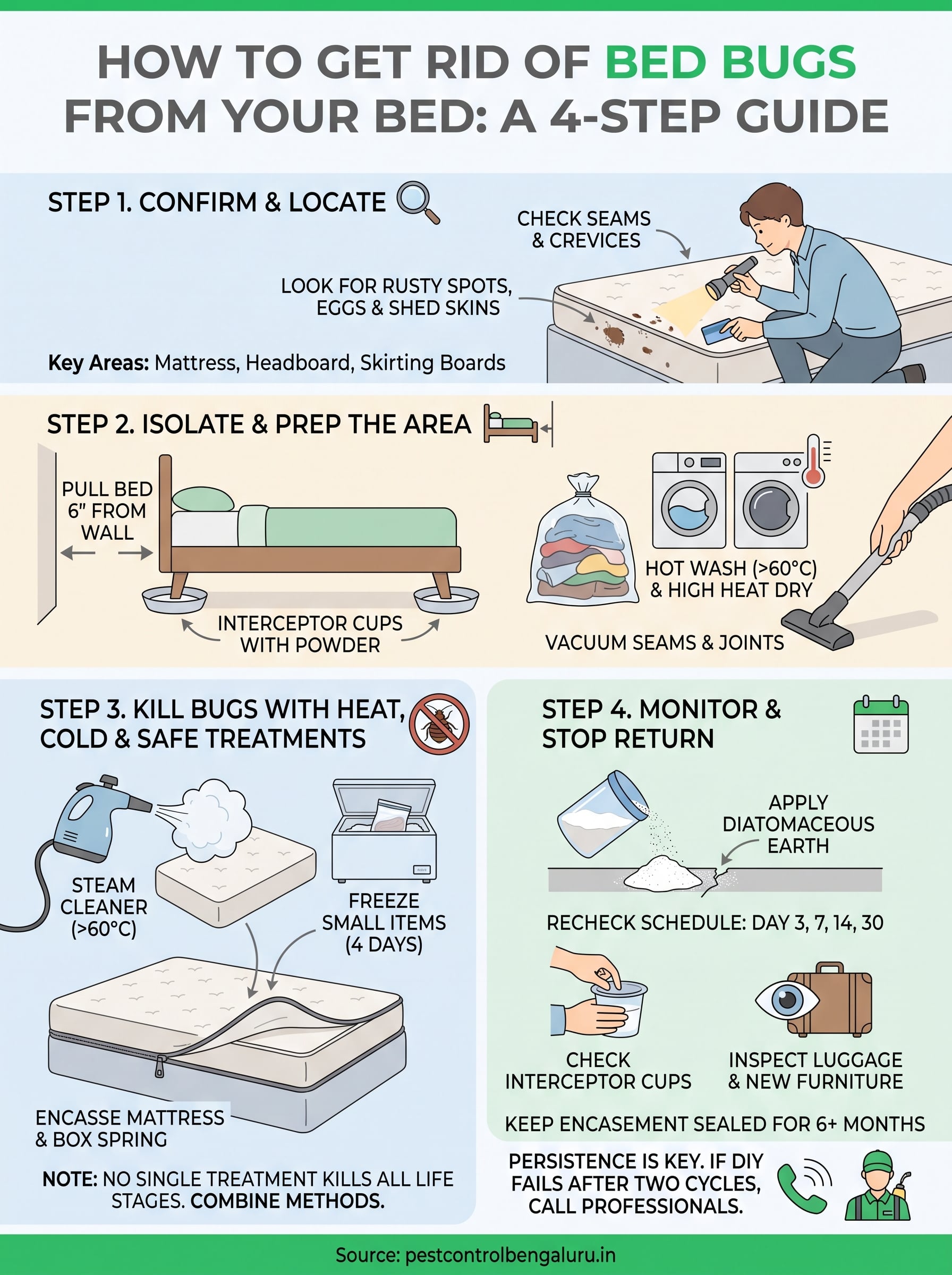
Frequently asked questions about how to get rid of bed bugs from bed
How long does it take to get rid of bed bugs from bed?
Most early infestations clear up over a 2 to 4 week cycle of treatment and monitoring, since eggs laid before treatment keep hatching for about two weeks. Heavier infestations, or ones caught late, can take several months of repeated treatment and checks to fully resolve.
Can bed bugs come back after treatment?
Yes, if a hiding spot was missed or a new bug travels in on luggage, clothing, or secondhand furniture, a bed bug reinfestation can start within days. This is why the Day 3, 7, 14, and 30 recheck schedule in Step 4 matters as much as knowing how to get rid of bed bugs from bed in the first place.
Do I need to throw away my mattress?
Usually not. A mattress encasement seals in any survivors until they starve, so replacement is rarely necessary unless the mattress is already damaged or heavily soiled.
What if diatomaceous earth and cold treatment do not fully work?
If interceptor cups still show live bugs after two full treatment cycles, the infestation has outgrown a DIY response and it is time to call a professional pest control service.
Treating bed bugs on furniture and in other rooms
A bed rarely stays the only affected spot. Bed bugs on furniture, especially sofas, armchairs, and dressers near the bed, are how an infestation spreads from one bedroom to the rest of the house. If you are dealing with how to get rid of bed bugs in house rather than just in bed, extend the same confirm-isolate-treat-monitor sequence to every piece of upholstered furniture within a few feet of the original find.
Sofas and armchairs
Remove and wash any removable cushion covers on the hottest safe setting, then vacuum every seam, fold, and the underside of the frame with a crevice attachment. Work diatomaceous earth into the seams and along the legs the same way you treated the bed frame, and set an interceptor cup under each leg to track survivors. Keeping this bed bug treatment consistent across every seat in the room stops survivors from simply relocating.
Wardrobes, dressers, and nightstands
Empty drawers completely and inspect the joints and back panel, where bugs commonly hide undisturbed for weeks. A light dusting of diatomaceous earth along the back and underside, combined with keeping the piece a few inches from the wall, keeps it from becoming a new source of reinfestation. Treating these pieces early keeps a small bed bug infestation from turning into a house-wide one.
Why treating one room is not enough
Bed bugs travel through wall voids, along baseboards, and on anything carried between rooms, including laundry baskets and slippers. Someone searching how to get rid of bed bugs naturally across an entire home should budget for inspecting and treating every room within one floor of the original infestation, not just the bedroom, since a single untreated chair is enough to restart the cycle. Whether you are treating one room or the whole house, the goal is still the same: how to get rid of bed bugs from bed and keep them from coming back.
DIY versus professional treatment: what to expect when you get rid of bed bugs from bed
Most people start with DIY bed bug removal because it is cheaper and immediate, but it helps to know the honest tradeoffs against hiring a bed bug exterminator before you commit weeks to it.
- Cost: DIY materials (diatomaceous earth, encasements, interceptor cups) typically cost a fraction of a single professional visit, but repeated failed cycles of bed bug treatment add up in wasted product and lost time compared to hiring a bed bug exterminator once.
- Speed: A professional odorless treatment can resolve a heavy infestation in one or two visits, while DIY methods often need the full 30-day monitoring cycle described in Step 4 to confirm success.
- Scale: DIY works best when the infestation is confined to one bed and caught early. Once bugs have spread to multiple rooms or furniture pieces, professional equipment reaches wall voids and gaps a home dust application cannot.
If your situation matches the DIY-friendly profile, the steps above are enough. If it does not, the section below explains where to draw that line.
Is diatomaceous earth or silica dust safe to use on a bed?
Yes, food-grade diatomaceous earth and silica dust are considered safe for use around beds and in bedrooms when applied as a thin, dry layer in seams and joints rather than a heavy visible coating. Keep it out of reach of children and pets who might inhale a disturbed cloud of it, and wipe away excess dust from any surface you sleep or sit on directly. This is a core part of how to get rid of bed bugs from bed without exposing your household to harsh chemicals.
Can I kill bed bugs in 30 minutes?
No single home method kills an entire infestation in 30 minutes, and any product promising that overstates what dust, cold, or encasements can do. A hot wash and dryer cycle can kill the bugs and eggs on one batch of fabric in under an hour, but the bugs hiding in the mattress, frame, and skirting boards still need the full dust, cold, and monitoring sequence in Steps 3 and 4 to be fully cleared. That full sequence, not a single shortcut, is how to get rid of bed bugs from bed for good.
Sleeping easy again
Getting rid of bed bugs from your bed comes down to sequence, not luck. Confirm the infestation, isolate the bed, hit every life stage with cold and residual dust, then keep checking long after the itching stops. Skip a step and you are back where you started, wondering how hard is it to get rid of bed bugs when the real answer is that it is manageable, just not quick.
Most early infestations respond well to this DIY approach to get rid of bed bugs from bed if you stay disciplined about the monitoring schedule. But if interceptor cups keep showing live bugs after two full cycles, or bites spread to a second room, that is your signal to stop repeating home remedies that clearly are not working. A heavier infestation needs equipment and products beyond what a hardware store sells.
If you are past the point of diatomaceous earth and cold treatment, talk to the bed bug control specialists at A to Z Pest Solutions for a professional odorless treatment that gets rid of bed bugs from your bed for good, backed by 32 years of experience in Bangalore homes.