
You spot one mosquito in your bedroom and by next week there’s a dozen. That jump feels sudden, but it isn’t. The lifespan of a mosquito and how fast it reproduces explains exactly why a small problem turns into a full infestation in your Bangalore City home within days.
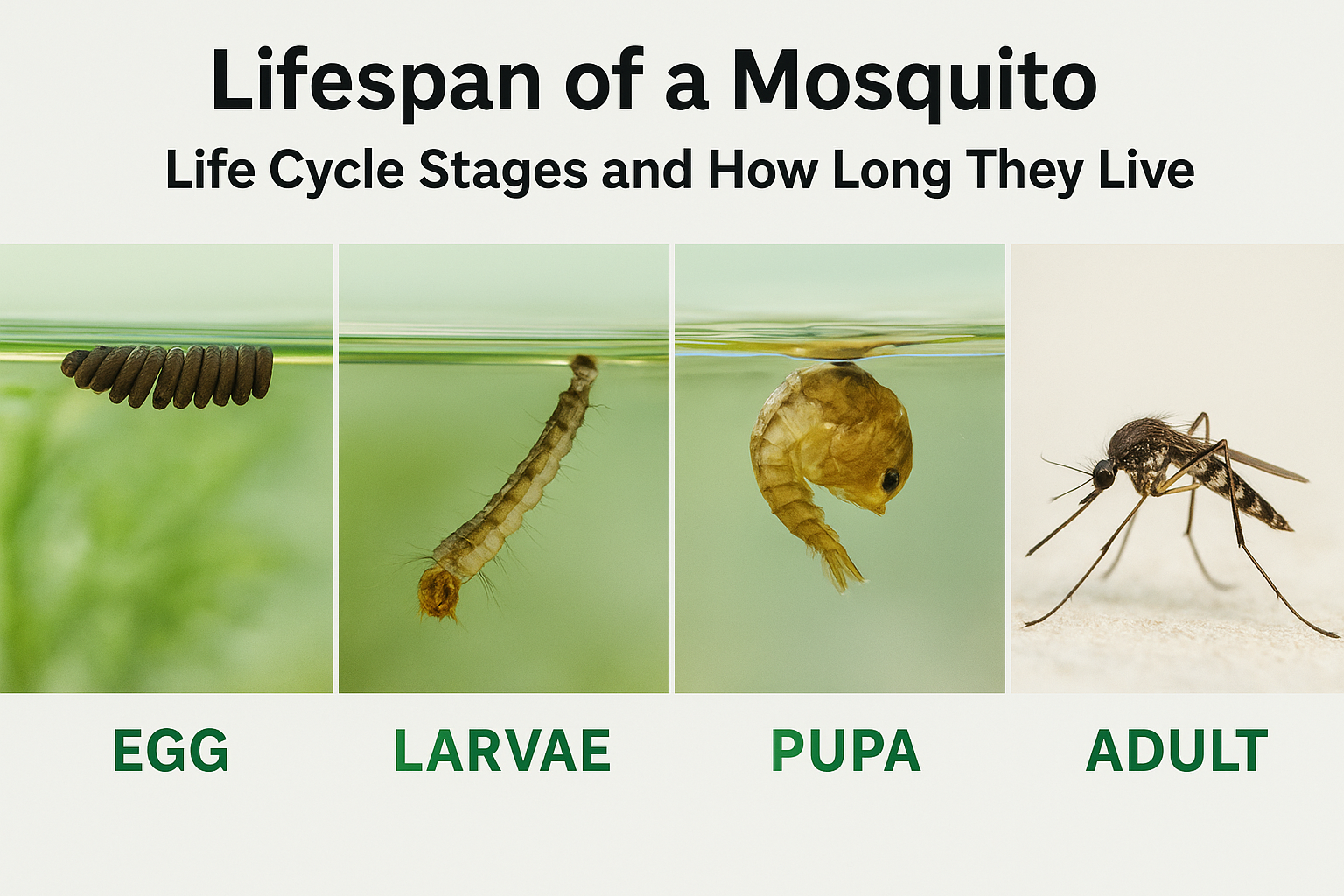
So, how long is the lifespan of a mosquito? Most adult female mosquitoes survive 2 to 4 weeks, while males live barely a week. But lifespan is only half the story. The mosquito life cycle runs through four stages, egg, larva, pupa, and adult, and can complete in as little as 8 to 10 days when standing water and warm temperatures are around, which is exactly the climate Bangalore City offers for most of the year.
In this article, we’ll walk through each stage of the life cycle of a mosquito, how long every phase takes, and what conditions speed it up or slow it down. Knowing this cycle matters because it’s the difference between spraying symptoms and actually breaking the breeding pattern in and around your property.
Why understanding the mosquito lifespan matters
The four stages, egg to adult
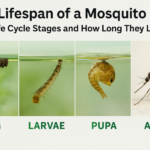
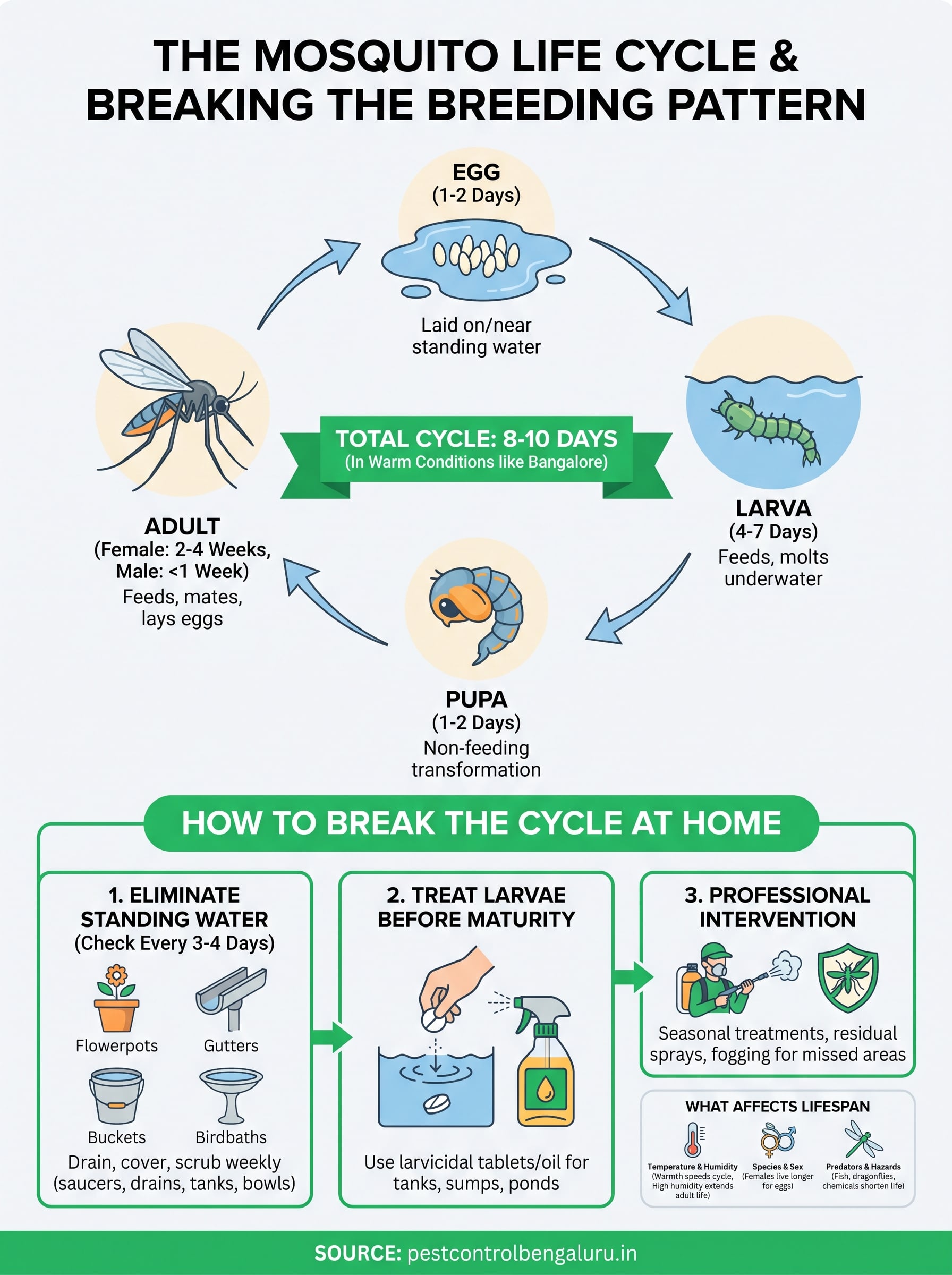
Every mosquito passes through four distinct phases, and knowing how each one shapes the lifespan of a mosquito tells you exactly where to intervene. A single female lays 100 to 200 eggs directly on standing water, and within 48 hours those eggs hatch into larvae. The larvae feed and molt for 4 to 7 days before pupating, a resting stage that lasts 1 to 2 days before an adult emerges ready to bite and breed within 48 hours.
| Stage | Duration | What happens |
|---|---|---|
| Egg | 1 to 2 days | Laid on or near standing water |
| Larva | 4 to 7 days | Feeds, molts, lives underwater |
| Pupa | 1 to 2 days | Non-feeding transformation stage |
| Adult | 2 to 4 weeks | Feeds, mates, and lays eggs |
Why the short cycle matters in Bangalore’s climate
Given this timeline, a single stagnant flowerpot saucer or clogged drain can produce a new generation of biting adults in barely over a week. Bangalore’s warm, humid stretches between monsoon showers, when pests move indoors, give mosquitoes exactly the conditions they need to complete every stage without delay. That’s why homeowners who treat only the adults flying around the living room keep losing the fight. Kill the visible mosquitoes today and, without addressing breeding sites, you’ll have a fresh batch emerging from the same water source within 10 days.
A single overlooked puddle can restart the entire mosquito life cycle in under two weeks.
Health risks that scale with population
Because each female can lay eggs multiple times over her 2 to 4 week lifespan, populations don’t grow in a straight line, they grow exponentially. One gravid female today can be responsible for thousands of descendants within a month if breeding sites go untouched. That math matters in Bangalore City, where dengue, chikungunya, and malaria cases spike every year during and after the monsoon, and where mosquito swarms seem to appear out of nowhere. Health authorities like the World Health Organization and India’s National Centre for Disease Control consistently link mosquito-borne disease outbreaks to unchecked breeding sites near homes, not just the presence of a few adult mosquitoes.
Understanding this cycle also changes how you judge whether a treatment worked. If mosquitoes reappear within one to two weeks of a spray, it’s rarely a sign the product failed, it usually means a breeding source close to your property never got addressed. Professional mosquito control services target both the adult population and the standing water where eggs and larvae develop, which is the only way to actually shorten how long an infestation lasts rather than just resetting the clock every few days.
How to break the mosquito life cycle at home
Breaking the mosquito life cycle at home, and clearing the mosquitoes already indoors, comes down to one simple rule: remove the water before it removes your peace of mind. Every stage from egg to adult depends on standing water, so eliminating breeding sites does more to control mosquitoes than any amount of spraying on adults alone.
Eliminate standing water first
Check your property every three to four days, since that’s roughly how long it takes for eggs to become biting adults. Look in the usual overlooked spots:
- Flowerpot saucers and plant trays
- Clogged roof gutters and open drains
- Buckets, tires, and unused containers left outdoors
- Overhead water tanks and sumps without tight lids
- Pet water bowls and birdbaths
Drain, cover, or scrub these weekly, since larvae can cling to container walls even after you dump the water out.
Removing standing water every few days does more to stop mosquitoes than spraying ever will.
Treat larvae before they mature
Once water can’t be removed entirely, such as in water tanks or ornamental ponds, treat it directly. Larvicidal tablets or oil-based larvicides kill larvae before they pupate, cutting the mosquito life cycle in days short instead of waiting for adults to emerge and bite. This step matters most in Bangalore homes with sumps or overhead tanks that can’t be drained on a weekly schedule.
Know when to call in professional help
Home efforts handle small, visible sources, but they rarely reach every breeding pocket around an apartment complex or independent house with multiple neighboring properties. Professional teams use residual sprays and fogging combined with a property-wide inspection to catch water sources you’d otherwise miss, including neighboring plots feeding mosquitoes onto your land. If mosquitoes keep returning despite your own efforts, a pest control plan and what it costs, covering seasonal mosquito treatment, closes the gaps that DIY methods leave open.
What affects how long a mosquito lives
Several factors decide whether the lifespan of a mosquito runs closer to two weeks or stretches past a month. Temperature, humidity, species, sex, and the presence of predators or chemical treatments all push the lifespan of the mosquito up or down. Knowing which factors you can actually control at home helps you focus effort where it counts instead of guessing.
Temperature and humidity
Warmth speeds up every stage of the life cycle in mosquito development, but extreme heat above 35°C actually shortens adult survival by drying out their bodies faster. Humidity above 60%, which Bangalore sees for much of the year, keeps adults alive longer since it slows dehydration. Cooler temperatures below 16°C slow the cycle down, sometimes stretching egg-to-adult development to three weeks or more instead of eight to ten days.
Species and sex differences
The lifespan of a mosquito isn’t the same for every individual. Females live longer than males because they need repeated blood meals to develop eggs, while males survive on plant nectar alone and die within a week. Species matters too: Aedes mosquitoes, common carriers of dengue in Bangalore, typically survive two to four weeks, while some Culex species can live over a month under favorable indoor conditions.
Female mosquitoes live longer than males because reproduction, not survival, drives their biology.
Predators, chemicals, and physical hazards
Few mosquitoes actually die of old age. Dragonflies, birds, fish, and spiders eat huge numbers of larvae and adults before they ever reach their natural lifespan. Residual insecticides, larvicidal treatments, and even strong wind or rain knock out a large share of any local population early. Homes with fish-stocked ponds or clean, predator-friendly gardens naturally see shorter average mosquito lifespans than stagnant, untreated properties where nothing interrupts the cycle.
Frequently asked questions
How long does the mosquito life cycle take from egg to adult?
Under warm, humid conditions like Bangalore’s, the full cycle from egg to biting adult can take as little as 8 to 10 days: 1 to 2 days as an egg, 4 to 7 days as a larva, and 1 to 2 days as a pupa before the adult emerges.
Do male and female mosquitoes live the same length of time?
No. Females typically live 2 to 4 weeks because they need repeated blood meals to develop eggs, while males survive on nectar alone and usually die within a week.
Why do mosquitoes come back a few days after spraying?
Spraying only kills the adults present at the time. If a breeding site with standing water is left untouched nearby, new adults can emerge and start biting again within 8 to 10 days.
How often should I check my property for standing water?
Every three to four days, since that’s roughly how long it takes mosquito eggs to develop into biting adults.
When should I call a professional instead of handling it myself?
When mosquitoes keep returning despite regularly removing standing water, or when breeding sites extend beyond your own property into neighboring plots you can’t inspect or treat yourself.
Staying ahead of mosquitoes year-round
The lifespan of a mosquito is short, but its reproductive speed is what turns a single puddle into a household problem within days. You now know the four stages, the conditions that speed them up, and the small habits, weekly water checks, larvicide use, and timely professional help, that actually interrupt the cycle instead of just knocking down adults for a week. Bangalore City’s climate rarely gives you a real off-season, so treating mosquito control as a one-time fix leaves you resetting the clock every month.
Givens this, the smartest move is pairing your own water-source checks with a treatment plan built for repeat protection. If mosquitoes keep coming back despite your efforts, get in touch with our team through odorless mosquito control services and let a proper inspection find the breeding sites you’ve been missing.