
You’re slapping your ankles every evening and the mosquito coil isn’t cutting it anymore. Before you buy another bottle off a shelf, it helps to know what’s actually in a mosquito repellent spray and why some work for hours while others wear off in twenty minutes. Bangalore’s humidity and stagnant water spots keep mosquito populations active almost year-round, so picking the right spray matters more than most homeowners realize.
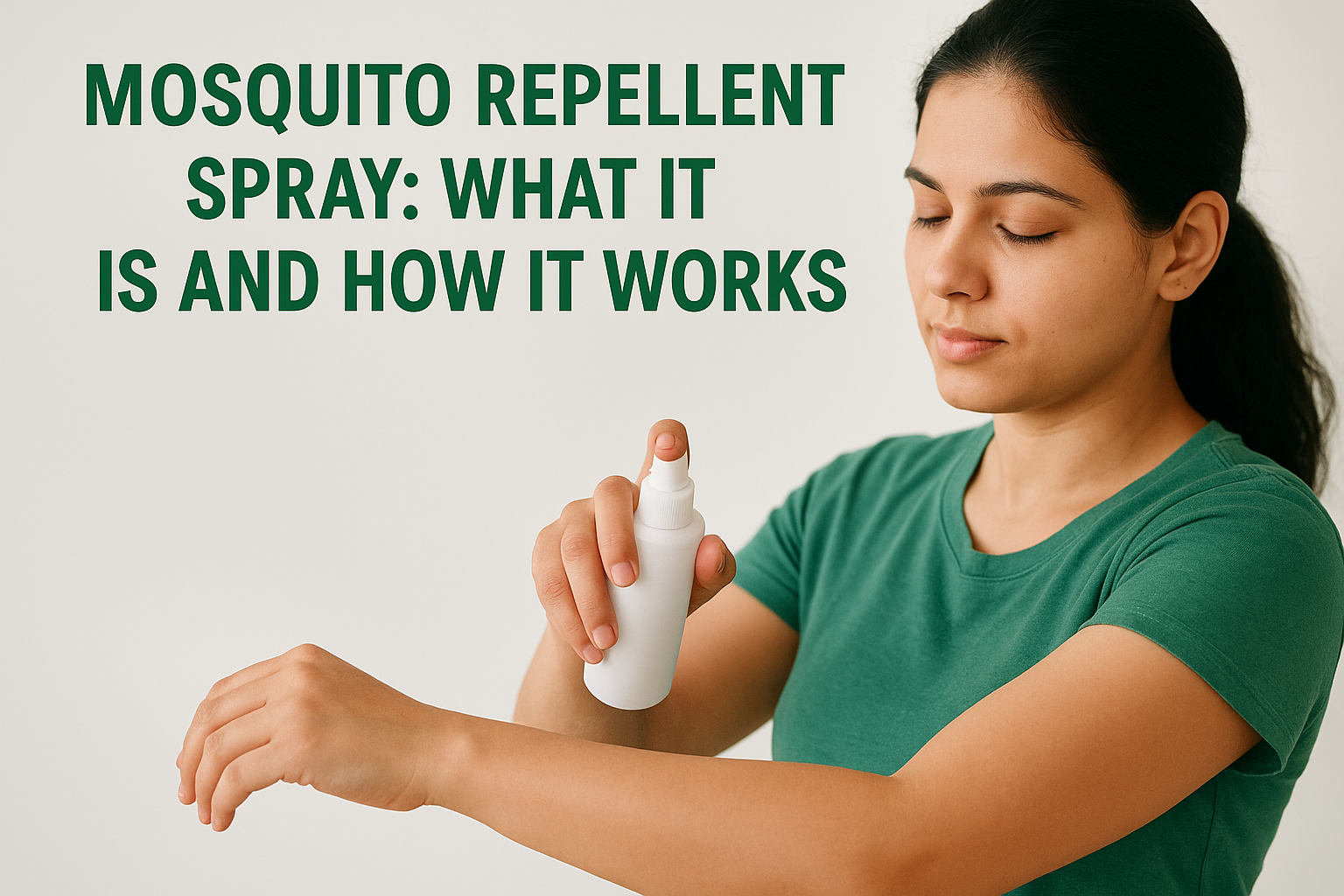
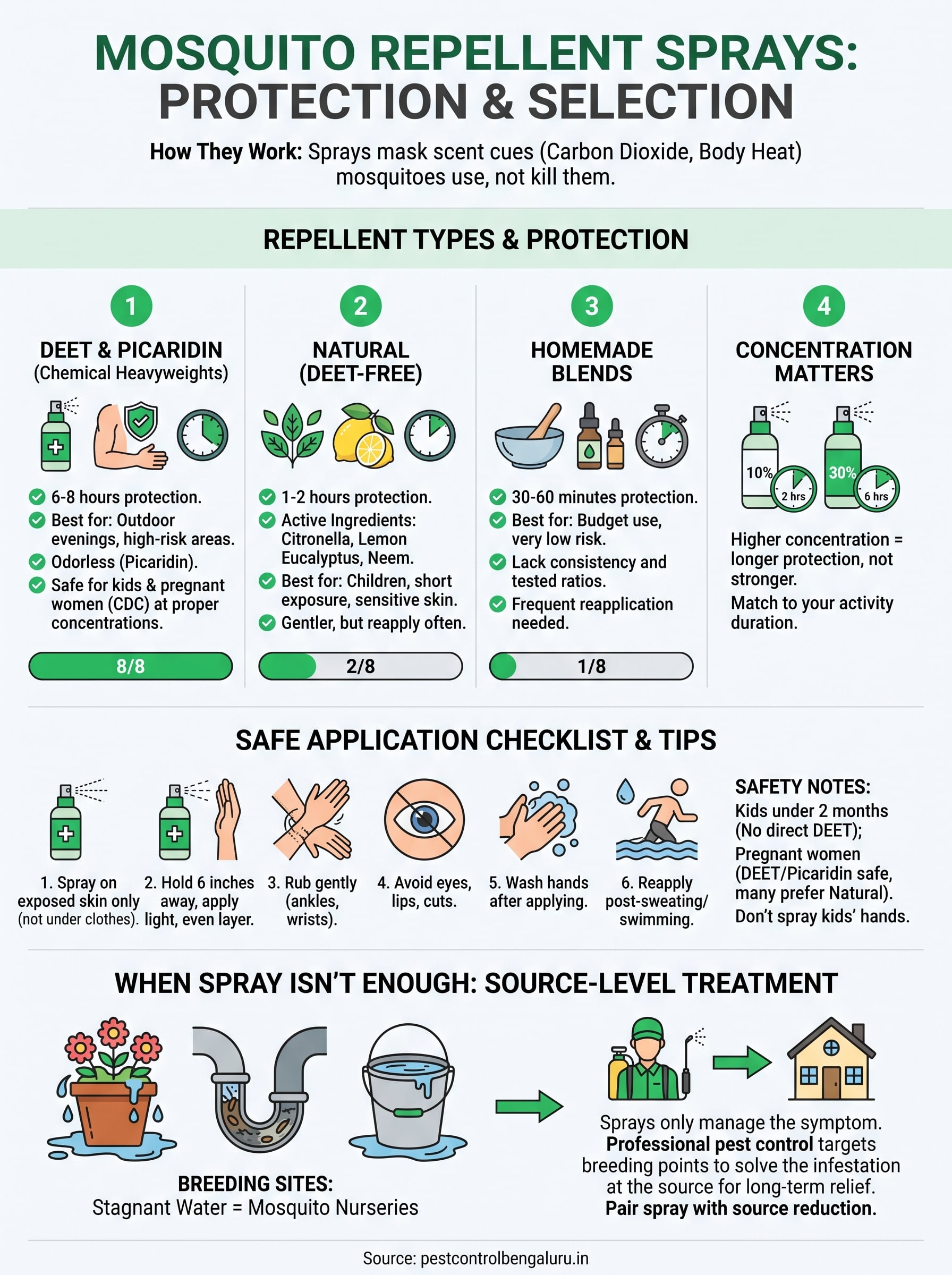
An anti mosquito repellent spray works by masking the scent cues mosquitoes use to find you, mainly carbon dioxide and body heat, rather than killing them outright. Some rely on DEET or picaridin for longer protection, while natural options use citronella, lemon eucalyptus, or neem oil with shorter but gentler coverage. Knowing which chemistry suits your skin, your kids, and your outdoor exposure time changes how much protection you actually get.
In this article, we’ll break down how these sprays work, compare DEET-free formulas against chemical ones, and look at whether homemade repellents hold up against store-bought sprays. We’ll also cover when a spray isn’t enough on its own, and how professional mosquito control treatment fills that gap at the source.
Why using a mosquito repellent spray matters
More than an itch: the disease risk

Mosquito bites in Bangalore aren’t just an annoyance, they carry a real health risk. Aedes aegypti mosquitoes, the same species that breeds in flower pots, coolers, and clogged terrace drains, spreads dengue and chikungunya across the city every monsoon season. Anopheles mosquitoes carry malaria, and Culex species transmit lymphatic filariasis. A single unprotected evening on the balcony can expose you to any of these vectors, especially when standing water sits nearby in your own compound.
| Disease | Mosquito Vector | Common Symptoms |
|---|---|---|
| Dengue | Aedes aegypti | High fever, severe joint pain, skin rash |
| Chikungunya | Aedes aegypti | Fever, debilitating joint pain |
| Malaria | Anopheles | Chills, fever, heavy sweating |
| Lymphatic filariasis | Culex | Limb swelling, recurring fever |
According to the World Health Organization, dengue cases have risen sharply worldwide over the past two decades, and urban areas like Bangalore report seasonal spikes every year during and right after the rains, which is why monsoon pest prevention for Bangalore homes matters so much. Wearing a mosquito repellent spray before dusk, when Aedes mosquitoes are most active, cuts your exposure window during the hours you’re most vulnerable.
A can of repellent costs less than a single day of dengue treatment.
Bangalore’s mosquito season never really ends
Bangalore doesn’t get the harsh winters that knock mosquito populations down in northern India, so breeding continues almost all year. Gated communities with ornamental ponds, apartment complexes with clogged terrace drains, and even small balcony planters give mosquitoes exactly the stagnant water they need to multiply, which explains why thousands of mosquitoes suddenly appear across the city. Homeowners who assume repellent is only a monsoon purchase often get caught off guard during what should be a quieter month, only to find bites piling up again within days of letting their guard down.
Humidity above 60%, common in Bangalore for most of the year, keeps mosquito activity high both indoors and outdoors. This is exactly why an anti mosquito repellent spray applied consistently, rather than reactively once bites appear, works far better than scrambling for a can after the itching has already started. Waiting until symptoms show up means you’re already behind.
What happens when you skip protection
Skipping repellent doesn’t just mean itchy ankles for one evening, the effects add up over a season. Children who scratch bites repeatedly risk secondary skin infections, and disturbed sleep from buzzing mosquitoes affects the whole household, not just the person getting bitten. Families often end up spending more on coils, plug-in vaporizers, and doctor visits for skin infections over a few months than they would have spent on consistent, effective spray use from the start.
Repeated unprotected exposure also raises risk for the entire household once one family member shows symptoms of dengue or chikungunya, since these illnesses commonly spread within homes sharing the same breeding sources nearby. Choosing a reliable spray now costs far less than treating illness later, and it works best alongside source-level treatment rather than as a standalone fix. When the real problem is breeding sites on your property, a can of spray only manages the symptom. That’s where a professional mosquito control service that identifies and treats breeding points makes the lasting difference between constant reapplication and actually solving the infestation.
Types of mosquito repellent sprays available today
Walk down any pharmacy aisle in Bangalore and you’ll find a dozen bottles promising the same thing, but the active ingredient inside each one changes how long it works and who should use it. Broadly, every mosquito repellent spray falls into one of four categories: DEET-based, picaridin-based, plant-derived natural formulas, or homemade blends mixed at home, and it helps to see which mosquito repellents actually work before you commit to one. Understanding these differences before you buy saves you from reapplying every hour or, worse, using something too harsh for a toddler’s skin.
DEET and picaridin: the chemical heavyweights
DEET has been the industry standard since the 1950s and remains the most studied repellent ingredient available, offering protection that can last six to eight hours at higher concentrations. Picaridin works almost as well, with the advantage of being odorless and less likely to damage synthetic fabrics or plastic surfaces like phone cases. The CDC lists both as registered, effective repellents for use against mosquito-borne disease, which matters given Bangalore’s dengue and chikungunya risk.
Higher concentration doesn’t mean better protection, it means longer protection at the same effectiveness.
Natural and plant-based alternatives
Citronella, lemon eucalyptus oil, and neem-based sprays appeal to families avoiding synthetic chemicals, especially for young children or people with sensitive skin, the same reasoning behind herbal pest control in Bangalore. These DEET-free options generally protect for one to two hours before needing reapplication, so they suit short outdoor sessions like an evening walk rather than an all-night stakeout on the terrace. Neem oil, widely used across Indian households for generations, also carries mild insect-repellent properties beyond mosquitoes alone.
Homemade sprays: worth the effort?
Many households mix their own repellent using neem oil, coconut oil, and a few drops of citronella or eucalyptus essential oil diluted in water. Homemade versions cost less and avoid synthetic additives, but they lack the consistency and tested concentration ratios that commercial products go through before hitting shelves. If you’re relying on a homemade mix during peak dengue season, plan on reapplying far more often than the label of any store-bought can would suggest.
| Spray Type | Protection Duration | Best For |
|---|---|---|
| DEET-based | 6-8 hours | Outdoor evenings, high-risk areas |
| Picaridin-based | 6-8 hours | Sensitive skin, odorless preference |
| Citronella/neem (natural) | 1-2 hours | Children, short exposure, mild use |
| Homemade blends | 30-60 minutes | Budget use, low-risk indoor evenings |
Whichever type you pick, none of them address mosquitoes breeding in your compound. That gap is exactly why spray alone rarely solves a persistent infestation.
How to apply mosquito repellent spray safely
Getting the timing and technique right matters as much as picking the correct formula. A mosquito repellent spray applied incorrectly, too little, too late, or on broken skin, gives you a false sense of protection while mosquitoes still find their way to exposed patches. Bangalore’s evening humidity also means sweat can wash off a light application faster than the label suggests, so knowing the correct method actually extends how long you stay protected.
Steps for correct application
Follow a simple routine every time you spray, especially before stepping onto a balcony or garden at dusk:
- Spray on exposed skin only, never under clothing where the fabric traps moisture and reduces effectiveness.
- Hold the can 6 inches from skin and apply an even, light layer, don’t drench one spot.
- Rub in gently on areas like ankles and wrists where mosquitoes bite most.
- Avoid eyes, lips, and any cuts or irritated skin.
- Wash hands after applying, especially before eating or touching your face.
- Reapply according to the label, sooner if you’ve been sweating or swimming.
Skipping reapplication is the single biggest reason sprays seem to "stop working."
Safety around children and pregnant women
Children under two months should never get direct DEET application, and for older kids, lower concentrations (10-30%) work fine for typical outdoor exposure without added risk. Pregnant women can use DEET or picaridin safely according to the CDC, but many prefer natural formulas for the shorter, gentler exposure even though it means reapplying more often. Never spray a child’s hands directly, since kids tend to touch their eyes and mouths without thinking, apply to your own hands first and then pat it onto their skin.
Mistakes people commonly make
Overuse causes more harm than good, and it doesn’t extend protection time the way people assume. Combining spray with sunscreen changes absorption rates, so apply sunscreen first and let it dry before adding repellent on top. Storing cans in direct sunlight or a hot car degrades the active ingredients faster, cutting effective shelf life well before the expiry date printed on the label. Using an anti mosquito repellent spray indoors in a closed room without ventilation also isn’t advisable, since inhaling concentrated aerosol repeatedly isn’t good practice regardless of the formula. Getting these basics right protects your family without wasting product or risking skin reactions from careless use.
How to choose the right repellent spray
Walking into a store without a plan means you’ll likely grab whatever brand has the loudest packaging, but that’s not how you find a spray that actually matches your household’s needs. Think about who’s using it, how long you’ll be exposed, and where you’re spraying it before you check any label. A family with toddlers and elderly parents needs a different approach than a bachelor who’s out on the terrace for twenty minutes each evening.
Match protection duration to your outdoor time
Start by estimating how long you’ll actually be exposed. If you’re gardening for an hour or sitting out for dinner, a DEET-based or picaridin formula rated for six-plus hours makes more sense than reapplying a natural spray every ninety minutes. Short trips to check the mailbox or water plants don’t need the strongest option on the shelf, a citronella-based mosquito repellent spray covers that window fine without unnecessary chemical exposure.
Read the concentration percentage, not just the brand name
Concentration on the label tells you far more than the marketing copy around it. A 10% DEET spray protects for roughly two hours, while 30% stretches closer to six, so match the number to your actual plans rather than assuming any bottle labeled "repellent" performs the same.
Two sprays with the same active ingredient can differ by hours of protection based on concentration alone.
Factor in skin sensitivity and fragrance
Sensitive skin, young kids, or anyone prone to rashes usually does better with lower-concentration or DEET-free natural formulas, even if it means carrying the can with you for reapplication. Strong fragrance also matters more than people expect, since a heavily scented spray can attract other insects or trigger headaches indoors in a closed room.
A quick buying checklist
Run through this before checking out:
- Does the label list the exact concentration percentage, not just "long-lasting"?
- Is it appropriate for the youngest person who’ll wear it?
- Does the scent bother anyone in the household?
- Is the bottle size practical for how often you’ll reapply?
- Does it fit your actual exposure time, not just the strongest option available?
Getting this match right saves you money on cans you’ll barely use and skin irritation from products too strong for daily wear. But even the best-chosen anti mosquito repellent spray only protects the person wearing it, it does nothing about the breeding sites multiplying mosquitoes in your compound every week.
When spray alone isn’t enough for mosquito control
Spraying yourself every evening treats the symptom, not the cause, and that difference matters once an infestation gets established near your home. A mosquito repellent spray protects the person wearing it for a few hours at most, but it does nothing to stop the next generation of mosquitoes hatching in the flower pot on your balcony or the clogged gutter above your window. If you’re refilling the can every week and still getting bitten indoors, the problem has moved past anything a topical product can fix on its own.
Signs the problem has outgrown a spray can
Watch for mosquitoes appearing indoors during daylight hours, since Aedes mosquitoes that spread dengue typically bite in the early morning and late afternoon rather than at dusk. Bites showing up inside closed rooms, even with windows shut, usually mean mosquitoes are breeding somewhere on the property itself, not flying in from outside, so start by clearing mosquitoes out of the house for good. A household going through more than one can of repellent a week during peak season is a clear signal that source-level treatment needs to happen alongside personal protection.
If you’re bitten indoors with the windows closed, spray isn’t your problem, breeding sites are.
Where mosquitoes actually multiply near you
Check these common breeding spots around Bangalore homes before assuming mosquitoes are flying in from somewhere else entirely:

- Clogged terrace drains and overflow pipes holding stagnant rainwater
- Flower pot saucers and coolers that aren’t emptied weekly
- Unused tires, buckets, or containers left in the compound
- Ornamental ponds without moving water or fish
- Underground sumps and overhead tanks with loose-fitting lids
Even a bottle cap of standing water breeds Aedes mosquitoes within a week, and the mosquito life cycle stages explain why bites keep returning no matter how often you spray.
Why treating the source works better than reapplying
Professional treatment targets breeding sites directly, using larvicides and residual spraying that repellents were never designed to handle. Fogging and targeted treatment reduce the actual mosquito population around your property instead of just masking your scent for a few hours at a time. A to Z Pest Solutions’ mosquito control service inspects these breeding points, treats them at the source, and sets up a seasonal plan so you’re not refilling cans every few days without seeing the numbers actually drop.
Combining both approaches gets you real protection: spray covers you personally during exposure, while source treatment cuts the population producing new bites in the first place. Relying on one without the other leaves a gap that Bangalore’s year-round humidity fills right back in.
Staying protected from mosquitoes year-round
A good mosquito repellent spray earns its place in every household, but it’s one layer of protection, not the whole strategy. Pick a formula that matches your exposure time, apply it correctly, and reapply before it wears off, that habit alone cuts most evening bites. Choosing between DEET, picaridin, or a DEET-free natural blend comes down to how long you’re outdoors and who’s wearing it, not which can looks strongest on the shelf.
But spray only manages the mosquitoes already flying around you. Bangalore’s stagnant water spots keep breeding new ones every week, so the bites keep coming back no matter how often you reapply. Pairing personal protection with professional treatment at the source is what actually breaks that cycle. If bites keep showing up despite regular spraying, it’s time to look at what’s breeding nearby. Reach out to A to Z Pest Solutions’ mosquito control service and get your property inspected before the next season starts.