
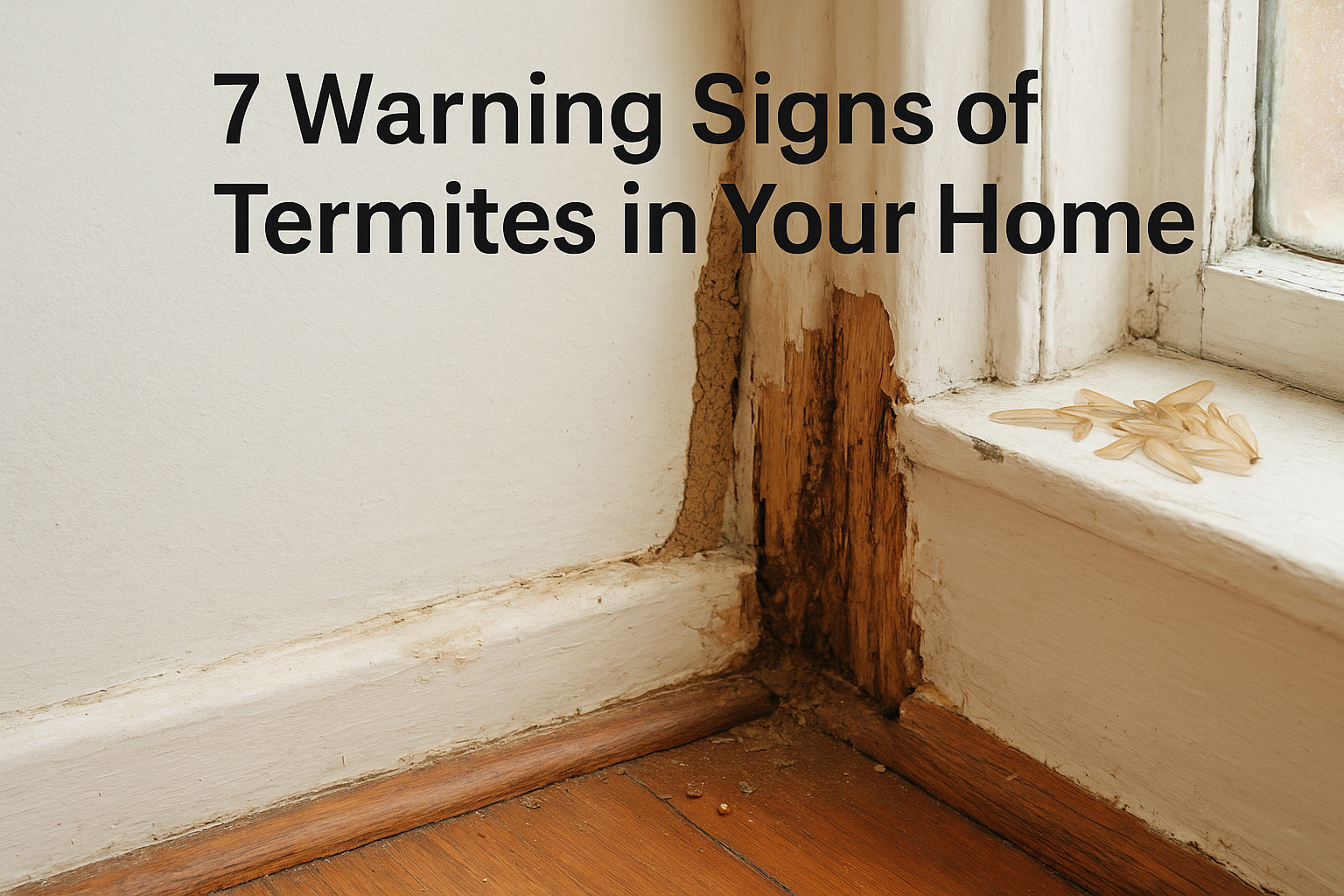
Termites work quietly. By the time you notice sagging wood or a hollow-sounding wall, they may have been feeding inside your home for months, sometimes years. That silence is exactly what makes them so costly to ignore, especially in Bangalore’s warm, humid climate where signs of termites show up in homes built from timber, plywood furniture, and even door frames.
If you’re checking your house right now because something feels off, here’s the direct answer: look for mud tubes along walls or foundations, discarded wings near windowsills, hollow or blistered wood, tiny pinholes in furniture, and sagging floors or ceilings. Any one of these on its own is a red flag. Two or three together usually mean an active infestation that needs professional attention, not a home remedy.
In this article, we walk through the seven clearest warning signs to check across your walls, furniture, and foundation, explained the way our technicians assess them on real inspections. You’ll learn what each sign actually looks like, why it appears, and when it’s time to stop guessing and call in an anti-termite treatment before the damage spreads further into your home’s structure.
1. Mud tubes on walls, foundations, or beams
What it looks like
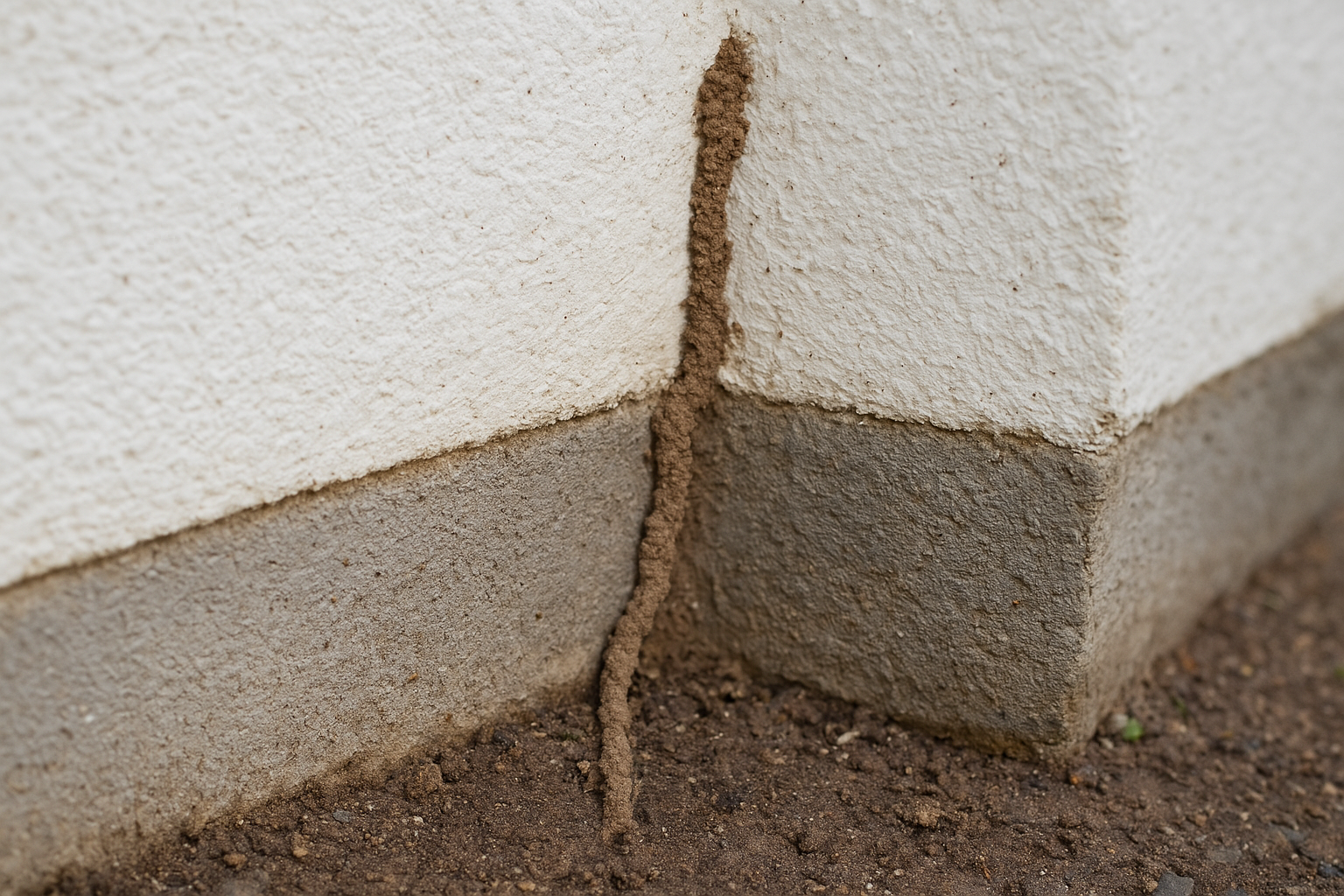
Walk the base of your exterior walls and look for pencil-thin trails of mud running from the soil up toward your foundation, skirting boards, or exposed beams. These mud tubes are usually brownish-grey, roughly the width of a pencil, and they trace a direct path from the ground to a food source, whether that’s a wooden door frame, a support beam, or furniture legs touching the floor. Some homes show a single short tube tucked in a corner; others have branching networks running the length of a wall, which is often the clearest of all signs of termites you’ll find during a walk-around inspection.
Why it happens
Subterranean termites, the species we treat most often in Bangalore homes, can’t survive long outside soil because they need constant moisture. They build these tubes as protected tunnels, shielding themselves from sunlight and dry air while traveling between their underground nest and whatever wood they’re feeding on above ground. The tube itself is made from soil, saliva, and chewed wood fibers, which is why it feels gritty and crumbles easily when you touch it.
A single mud tube rarely means a false alarm. It means termites already have a working route into your home.
How to confirm and respond
Break open a short section of the tube with a screwdriver or an old key. If you find live, cream-colored termites inside, or the tube reappears within a day or two of you clearing it, the colony nearby is active and feeding. Here’s how to handle it once you’ve confirmed activity:
- Photograph the tube’s location before disturbing it, this helps a technician trace the colony’s likely path.
- Avoid spraying random insecticide on the tube; it can scatter the colony instead of eliminating it.
- Check nearby wood, door frames, skirting boards, and furniture legs, for softness or hollow spots.
- Book a proper inspection rather than waiting for a swarm, since subterranean colonies can keep feeding unseen for months.
Our team at A to Z Pest Solutions traces these tubes back to entry points and follows up with targeted soil and wood treatment, not just a surface spray that leaves the colony intact underground.
2. Discarded wings after a termite swarm
What it looks like
Check your windowsills, door thresholds, and light fixtures for small, translucent wings scattered in tiny piles, often paired with a few dead or dying insects nearby. These wings are roughly the same size and shape, unlike moth or ant wings, which vary in length. Finding a cluster of them near a window after a warm, humid evening is one of the most reliable signs of termites because it points to a swarm that already happened inside or right next to your home.
Why it happens
Mature termite colonies release winged reproductives, called alates, during swarming season to start new colonies elsewhere. In Bangalore, this usually follows the first heavy rains, when humidity spikes and soil stays damp for days. The swarmers fly toward light, mate, then shed their wings within minutes of landing, which is why you see the wings but rarely the termites themselves for long.
Discarded wings tell you a colony nearby has matured enough to reproduce, not that termites just arrived.
How to confirm and respond
Collect a few wings in a sealed bag or take clear photos before cleaning up, since technicians use wing shape to confirm species and treatment approach.
- Note the exact spot, since it often marks a nearby entry point or nest.
- Check adjoining wood, frames, and skirting for mud tubes or soft spots.
- Skip DIY sprays; swarmers finding an entry point usually means an established colony feeds close by, and a proper inspection catches it before damage spreads.
3. Hollow-sounding or damaged wood
What it looks like
Tap along skirting boards, door frames, and furniture with the handle of a screwdriver and listen for a dull, papery sound instead of the solid thud you’d expect from healthy timber. Hollow-sounding wood often looks fine on the surface, maybe a shade darker or slightly warped, but underneath, termites have chewed out a honeycomb of tunnels running with the wood grain. This is one of the signs of termites homeowners miss for months because the damage stays hidden until the wood is nearly eaten through.
Why it happens
Termites feed from the inside out, following the softer spring-growth rings and leaving the harder outer layer mostly intact as camouflage. That’s why a beam can look structurally sound right up until it gives way under light pressure. Cellulose-rich timber, plywood, and pine furniture common in Bangalore homes are especially vulnerable since termites digest them faster than denser hardwoods.
If a knock on wood sounds hollow, the termites have already been feeding for a while.
How to confirm and respond
Press a screwdriver into the suspect area; wood that crumbles or gives way easily confirms internal damage.
- Check furniture legs, door frames, and window sills, not just visible beams.
- Mark damaged spots for the technician instead of patching them yourself.
- Book an inspection before replacing any wood, since new timber without treatment invites the same colony back.
4. Sagging floors, buckling wood, or stuck doors
What it looks like
Step onto your floor near a wall or corner and feel for a slight dip or spring underfoot, almost like walking on a mattress instead of solid timber. Sagging floors often show up alongside doors that suddenly stick in their frames or windows that no longer close flush, even though nobody touched the hardware. Buckling wood along skirting boards or door jambs, sometimes with a faint warp you can see from an angle, rounds out this group of signs of termites that homeowners usually blame on humidity or a shifting foundation first.
Why it happens
Behind these symptoms is structural wood that’s lost most of its internal strength from sustained termite feeding. Once a support beam, floor joist, or frame is hollowed out, it can no longer bear weight evenly, so the surrounding structure shifts just enough to misalign doors and create that spongy feel underfoot. Structural weakening like this usually means the colony has been active for a long stretch, not weeks.
A door that suddenly won’t shut properly is rarely a hinge problem, it’s often a termite problem.
How to confirm and respond
Press firmly on the suspect floor area or door frame; genuine give or crumbling confirms internal damage rather than normal settling.
- Check whether multiple doors or floor spots are affected, since that points to a wider colony.
- Avoid forcing doors or sanding frames until a technician inspects the wood.
- Book a structural pest inspection promptly, since delayed treatment risks costlier repairs later.
5. Termite droppings or pinholes in walls
What it looks like
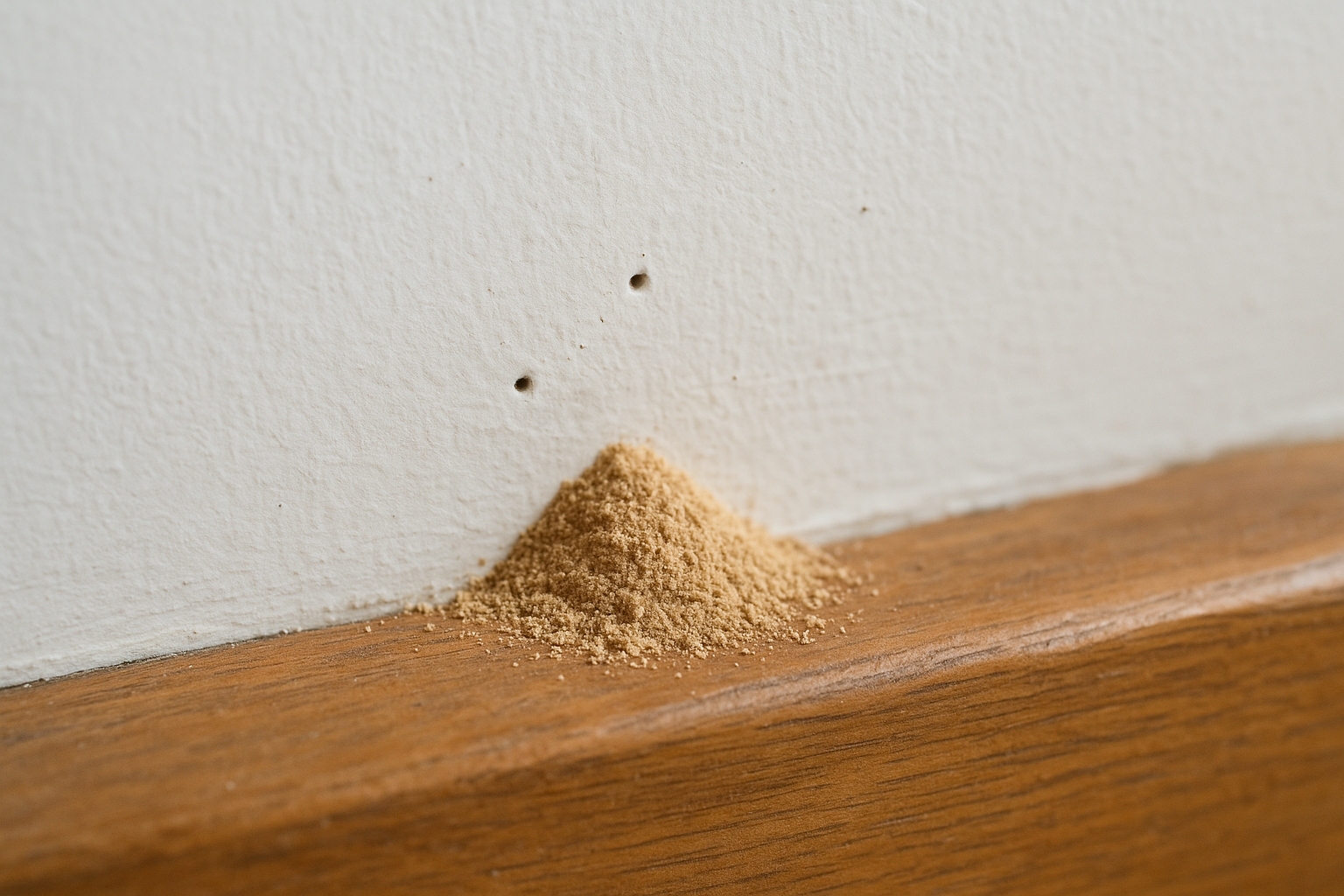
Look closely at wooden surfaces, skirting boards, and drywall for tiny holes no bigger than a pinhead, often with a fine, sand-like powder collecting just below them. This powder is termite droppings, called frass, and drywood termites push it out through these pinholes as they hollow out the wood behind the surface. You’ll usually spot small mounds on window sills, shelves, or the floor beneath furniture, which makes this one of the more overlooked signs of termites since homeowners mistake it for sawdust or plain dust.
Why it happens
Unlike subterranean termites that stay hidden in mud tubes, drywood colonies live entirely inside the timber they’re eating. They need somewhere to expel waste and dig fresh feeding tunnels, so they bore these exit pinholes to push frass out and keep their galleries clear. Finding fresh, light-colored droppings means the colony feeding right behind that wall is still active.
Tiny holes with sandy droppings underneath mean termites are hollowing out wood right behind that spot.
How to confirm and respond
Rub the powder between your fingers; frass feels grainy and slightly gritty, unlike soft sawdust from drilling or sanding.
- Wipe the area clean and check daily for new droppings, which confirms ongoing activity.
- Mark every pinhole location rather than filling them with putty.
- Get furniture and wall cavities inspected before the damage spreads to adjoining wood.
6. Blistering paint or peeling wallpaper
What it looks like
Scan painted walls, skirting boards, and wallpapered surfaces for bubbling, cracking, or peeling patches that look like water damage but never actually got wet. Blistering paint often appears in patches rather than one continuous stretch, sometimes with a slight ripple you can feel by running your hand across the surface. Wallpaper may lift at the seams or bulge outward in spots that don’t line up with any pipe or window nearby, which makes this one of the trickier signs of termites to catch since most people assume it’s a plumbing leak first.
Why it happens
Just below that painted or papered surface, termites are tunneling through the wood or drywall backing, and the moisture they carry into their tunnels softens the material enough to distort the finish above it. Moisture from termite activity builds up as the colony works, pushing paint away from the wall or loosening wallpaper glue without any actual water source involved.
Paint that bubbles with no leak in sight usually means termites, not water, are behind it.
How to confirm and respond
Press gently on the blistered area; a soft, giving feel without dampness points to termite damage rather than a leak.
- Rule out an actual plumbing leak first by checking for dampness or a musty smell.
- Peel back a small section carefully to check for tunneling or live termites underneath.
- Schedule an inspection promptly, since paint damage often means the wood behind it is already compromised.
Staying ahead of termite damage at home
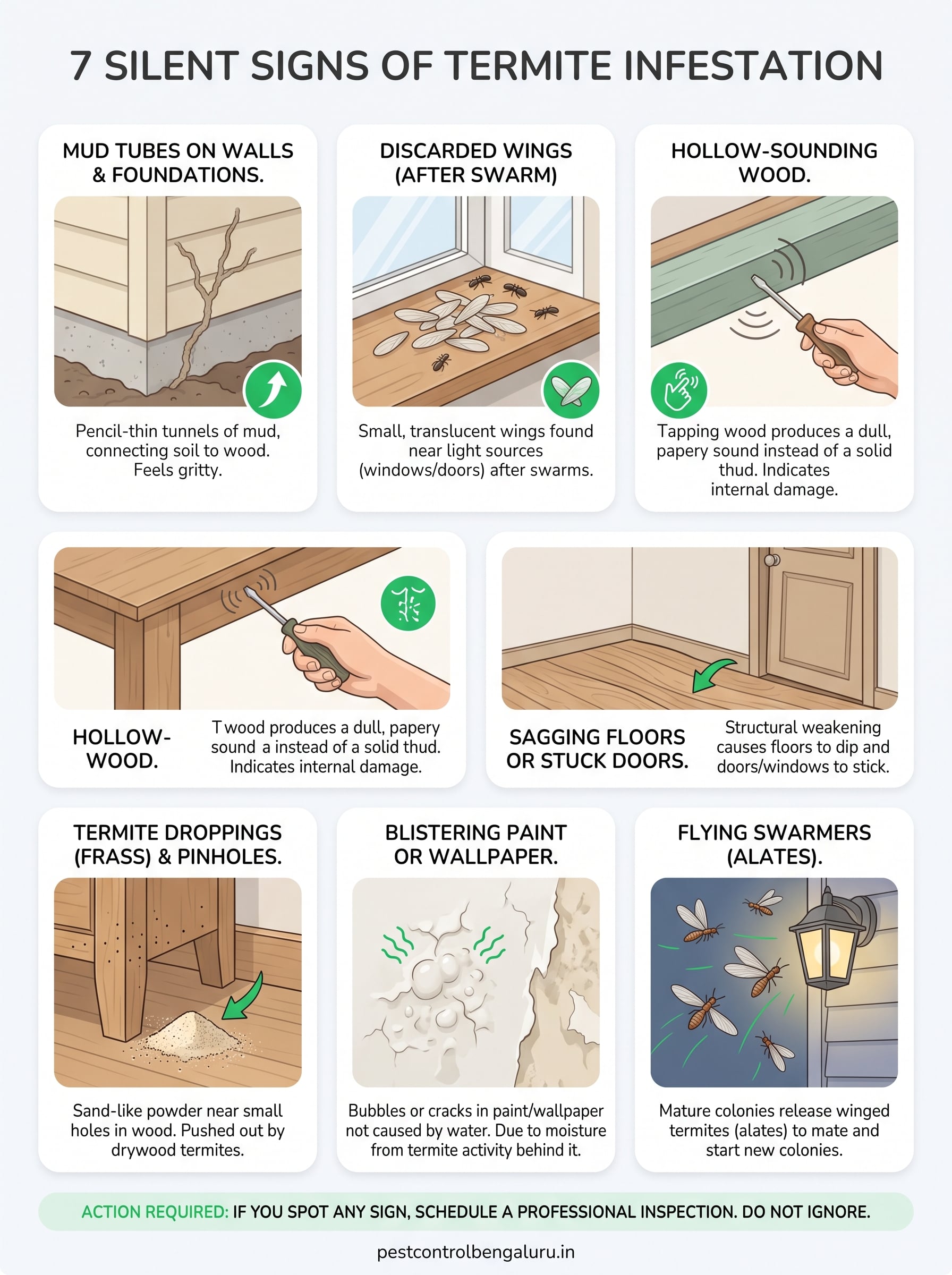
None of these seven signs need a trained eye to spot, just a few minutes walking your walls, tapping wood, and checking windowsills you’d otherwise ignore. Mud tubes, discarded wings, hollow wood, sagging floors, frass, and blistering paint each point to the same reality: a colony is feeding somewhere in your home right now, and waiting only lets it spread further into beams, furniture, and flooring you’ll eventually have to replace.
Quick action matters more than which sign you spotted first. Regular inspections catch early termite infestation before it becomes a structural repair bill, and that’s true whether you live in an apartment, a villa, or an independent house anywhere in Bangalore.
Spotted even one of these signs in your home? Don’t wait for the damage to spread. Reach out to A to Z Pest Solutions for a proper termite treatment inspection and stop the colony before it costs you more than a service call.