
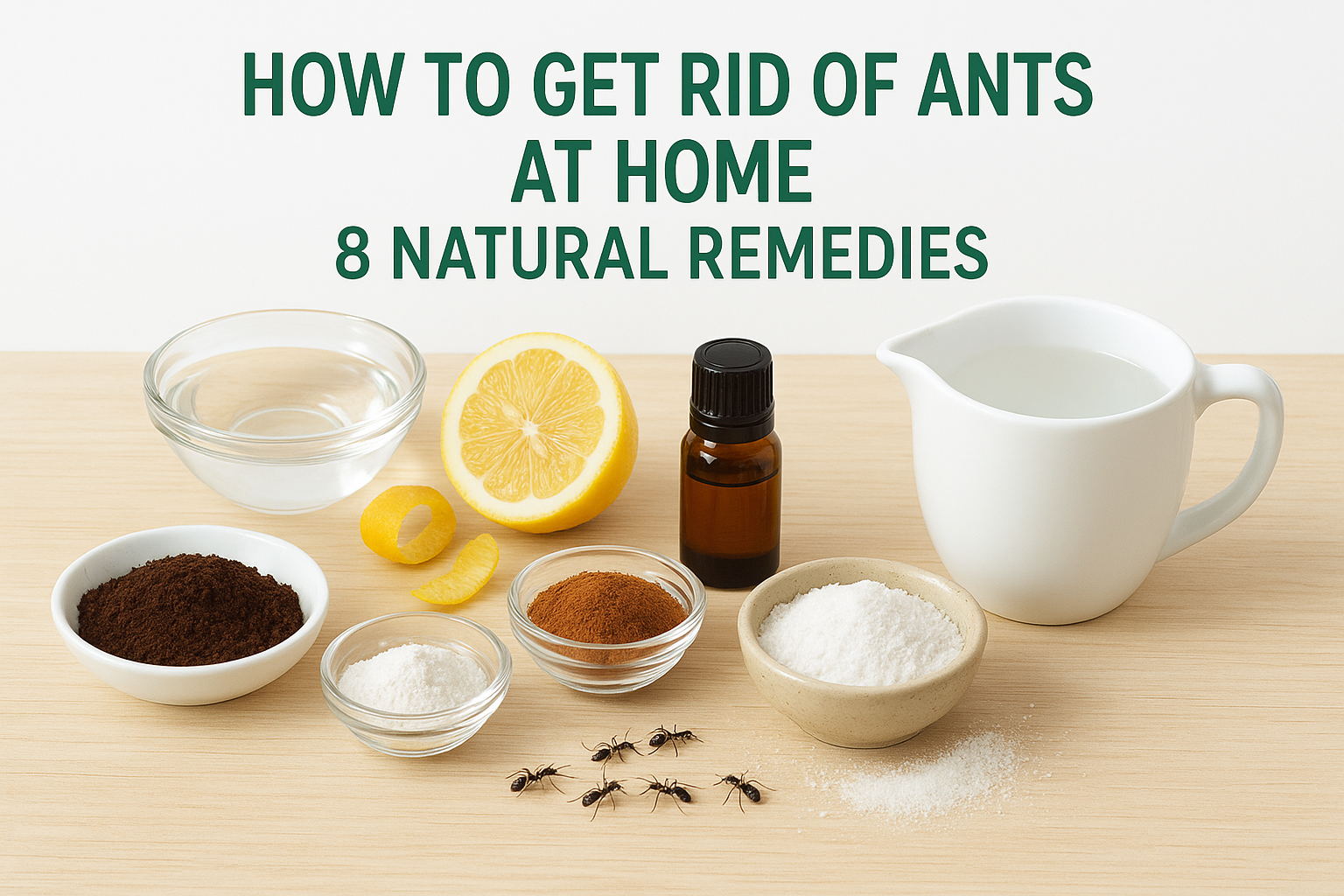
You wipe the kitchen counter clean, and an hour later there’s a fresh trail of ants marching toward the sugar jar again. If you’re searching for how to get rid of ants at home, you’ve probably already tried spraying whatever’s under the sink, and it worked for a day, maybe two, before the ants found a new route in. Learning how to get rid of ants at home for good means treating the trail and the colony behind it, not just the ants you can see. That’s because most sprays kill the ants you see and leave the colony behind them untouched.
The good news is you don’t need harsh chemicals to break that cycle. Simple kitchen staples like vinegar, lemon, and cinnamon disrupt the scent trails ants use to navigate your home, while a few natural bait and barrier tricks target the colony itself instead of just the scouts on your counter. These remedies are safe around kids and pets, and most use things already sitting in your pantry.
In this article, we’ll walk through 8 natural remedies that have worked for households across Bangalore dealing with everything from sugar ants in the kitchen to trails near windows and doors. We’ll also flag when a home remedy isn’t enough and a bigger infestation calls for professional treatment.
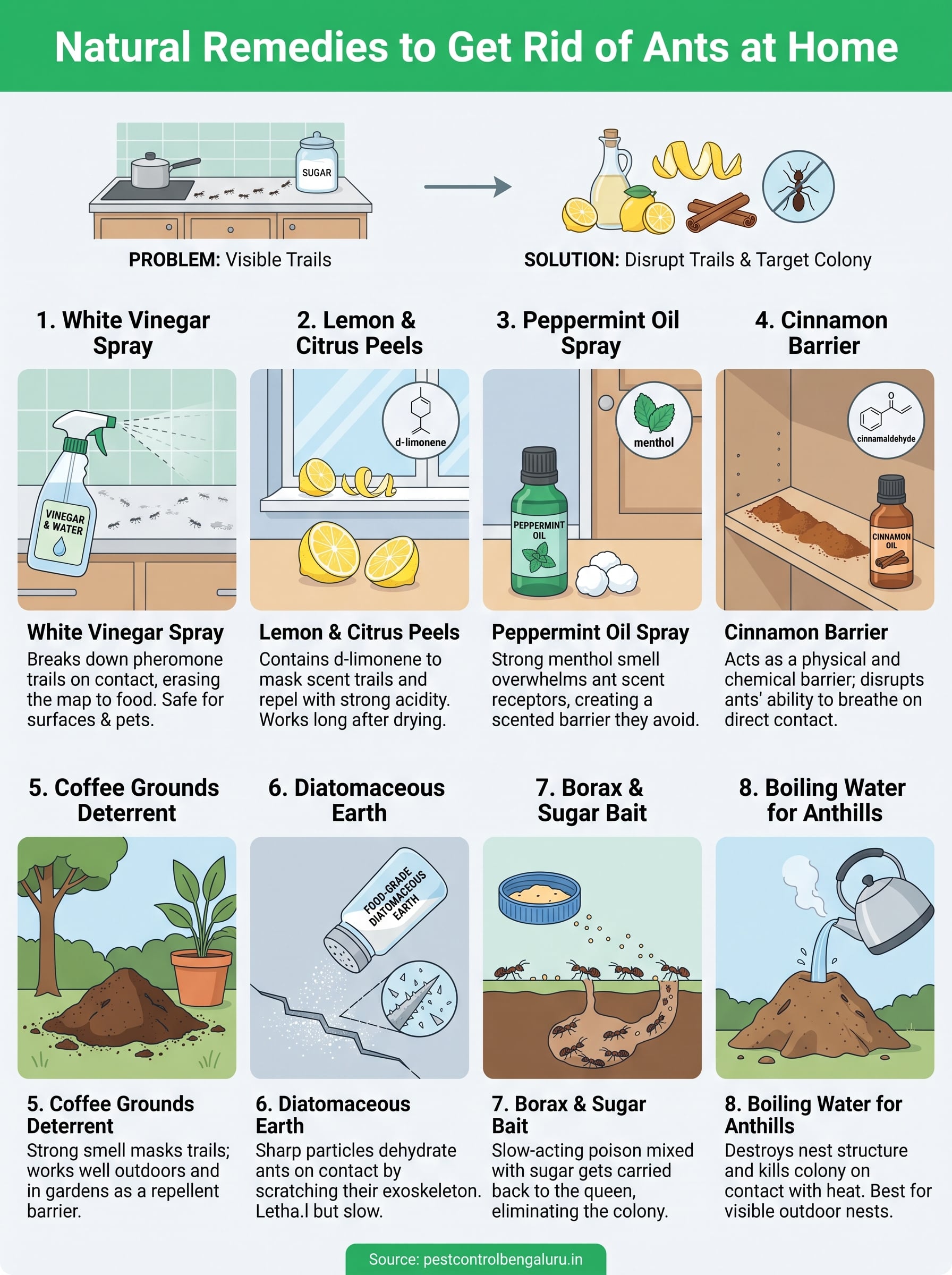
1. White vinegar spray
White vinegar is the first thing most people reach for when learning how to get rid of ants at home, and it’s usually the right call because it’s cheap, already in your kitchen, and works fast on visible trails. It won’t wipe out a nest buried behind your wall, but it stops the immediate problem of ants marching across your counter or floor.
How it works
Ants navigate using pheromone trails, invisible scent paths that scouts lay down to guide the rest of the colony to food. Vinegar’s acetic acid breaks down these chemical markers on contact, so ants crossing a sprayed surface suddenly lose the scent trail and scatter instead of marching in formation. It also acts as a mild repellent, since ants avoid the strong smell even after it dries down to something you can barely notice. This is why vinegar works best as damage control on trails you can already see, rather than as a way to reach the colony itself.
Vinegar doesn’t kill the colony, it erases the map the colony uses to find your kitchen.
How to use it at home
Mix equal parts white vinegar and water in a spray bottle and wipe down the areas where you’ve spotted ants.
- Spray directly on visible ant trails, countertops, and windowsills
- Wipe entry points like door thresholds, pipe gaps, and window frames
- Reapply every 2 to 3 days until trails stop reappearing
- Follow the trail backward to find where ants are entering, then treat that spot specifically
- Combine with a full kitchen wipe-down to remove food residue that’s drawing them in
The smell fades within an hour, so it won’t linger in a way that bothers your household.
Safety tips for kids and pets
Diluted white vinegar is one of the safest remedies on this list, since it’s food-grade and non-toxic if a curious toddler or pet licks a sprayed surface. Still, keep pets away from freshly sprayed floors until they’ve dried, since the strong smell alone can irritate a dog’s or cat’s sensitive nose. Avoid spraying it directly on wooden furniture or stone countertops repeatedly, since the acid can dull finishes over time. If you’re treating a kitchen where food prep happens daily, always wipe surfaces with plain water after the vinegar has done its job.
2. Lemon and citrus peels
Citrus is another pantry staple that does double duty against ants when you’re figuring out how to get rid of ants at home, and you’re probably already tossing the peels instead of using them. Bangalore households with a steady supply of lemons or oranges have an easy, zero-cost way to keep ants off counters without buying anything extra.
How it works
Citrus peels contain d-limonene, a compound that’s toxic to ants on contact and strong enough to mask the pheromone trails they rely on to move around your kitchen. The sharp acidity also disrupts their scent receptors, so scouts crossing a citrus-treated surface lose track of the path back to the nest. Unlike vinegar, citrus oil leaves a longer-lasting residue that keeps repelling ants for days rather than hours.
A few rubbed lemon peels do what a spray can’t, they keep working long after the smell fades.
How to use it at home
Rub fresh peels along entry points or leave citrus oil in problem areas.
- Rub lemon or orange peel directly along windowsills, door frames, and skirting boards
- Squeeze fresh lemon juice into cracks and gaps where ants enter
- Leave dried peels near the kitchen bin or pantry shelves as a passive deterrent
- Refresh peels every few days since dried-out citrus loses its potency
Safety tips for kids and pets
Lemon and orange peels are completely non-toxic, making this remedy one of the safest around toddlers who touch everything. The only caution is with cats, since some citrus oils can irritate their skin or digestive system if ingested in concentrated form, so keep peels out of reach of curious pets.
3. Peppermint oil spray
Peppermint oil sits somewhere between vinegar and citrus in this approach to how to get rid of ants at home, it repels on contact but also leaves a scent that most ants avoid crossing altogether. If you’ve got young kids crawling around and want something that smells pleasant rather than sharp and acidic, this is the remedy to reach for.
How it works
Peppermint’s active compound, menthol, overwhelms an ant’s scent receptors, the same ones it uses to follow pheromone trails back to food and the nest. The smell is strong enough to humans too, but it fades to background noise for us while remaining a wall ants won’t cross. Unlike vinegar, peppermint oil doesn’t need to touch the ant directly to work, just laying down a scented barrier is often enough to redirect traffic away from your kitchen.
Ants don’t need to touch peppermint oil to avoid it, the smell alone is the deterrent.
How to use it at home
Mix 10 to 15 drops of peppermint essential oil with a cup of water in a spray bottle.
- Spray along windowsills, door frames, and skirting boards
- Soak cotton balls in diluted oil and tuck them near entry points
- Reapply every 3 to 4 days as the scent weakens
- Combine with vinegar spray for a stronger one-two effect on stubborn trails
Safety tips for kids and pets
Peppermint oil is generally safe when diluted, but keep undiluted oil away from cats, since essential oils can be toxic to them even in small amounts. Ventilate the room after spraying if anyone in the house has sensitivities to strong scents.
4. Cinnamon barrier
Cinnamon is the remedy most people already have in their spice rack but never think to use outside baking. It works differently from vinegar or peppermint, since it doesn’t mask a trail so much as build a wall ants simply won’t cross, which makes it useful for protecting a specific doorway or shelf rather than treating a whole kitchen.
How it works
Ground cinnamon and cinnamon essential oil both contain cinnamaldehyde, a compound that disrupts an ant’s ability to breathe through its exoskeleton when it comes into direct contact. That’s different from simply confusing its sense of smell, cinnamon actually harms ants that walk through a thick enough layer of it, while a lighter dusting just repels them. Ants sense this danger before crossing, so a consistent line of cinnamon works as a physical and chemical barrier at once.
Cinnamon doesn’t chase ants away, it draws a line they won’t cross.
How to use it at home
Ground cinnamon works best as a dry barrier rather than a spray.
- Sprinkle a thin, unbroken line along windowsills, door thresholds, and pantry shelf edges
- Dab a few drops of cinnamon essential oil on cotton balls near entry points
- Refresh the barrier every few days, since humidity and foot traffic break down the line
- Focus on chokepoints like door gaps rather than spreading it across open floor space
Safety tips for kids and pets
Cinnamon is completely food-safe, so there’s no real risk if a toddler or pet licks a sprinkled surface. The only downside is mess, ground cinnamon stains grout and light-colored flooring if left down too long, so wipe it up before it settles in permanently.
5. Coffee grounds deterrent
Used coffee grounds are another zero-cost remedy, especially if you’re already brewing a pot every morning. Instead of tossing the grounds straight into the bin, spreading them near entry points gives you a second use out of something you’d otherwise throw away, and it works particularly well in gardens and balconies where ants build anthills close to the house.
How it works
The strong smell of coffee masks pheromone trails the same way vinegar and citrus do, making it harder for scout ants to guide the rest of the colony back to a food source. Some gardeners also swear coffee grounds are mildly toxic to certain ant species in concentrated amounts, though the science on that is thinner than the anecdotal evidence. What’s clear is that ants consistently avoid crossing a thick layer of grounds, which makes this remedy more of a repellent barrier than a killer.
Coffee grounds won’t wipe out a colony, but ants will go out of their way to avoid walking through them.
How to use it at home
Spread used, dried coffee grounds around problem areas rather than fresh, wet ones, since moisture reduces their effectiveness.
- Sprinkle grounds around outdoor anthills and garden beds
- Line balcony doors and window ledges where ants are entering from outside
- Dry grounds fully before use, since wet grounds mold and attract other pests
- Replace weekly, since the scent fades faster than cinnamon or citrus
Safety tips for kids and pets
Coffee grounds are safe for children to be around, but keep them away from dogs, since caffeine is toxic to pets even in small ingested amounts. If you have a dog that digs in garden beds, this remedy might not be the safest choice for outdoor use.
6. Diatomaceous earth
Diatomaceous earth looks like fine white powder, but it’s actually fossilized algae ground down to a texture that’s harmless to humans and lethal to insects, making it a solid option for how to get rid of ants at home once trails keep returning. It’s a step up from the pantry remedies above because it doesn’t just repel ants, it kills them, which makes it worth reaching for once trails keep coming back despite vinegar or cinnamon.
How it works
Under a microscope, diatomaceous earth is made of sharp, glass-like particles that scratch through an ant’s waxy exoskeleton as it crawls through the powder. That damage causes the ant to dehydrate and die within hours, since the protective coating that keeps moisture in is gone. Unlike sprays that mask a scent trail, this remedy works through direct physical contact, so it needs to touch the ant, not just sit nearby.
Diatomaceous earth doesn’t poison ants, it dries them out from the inside.
How to use it at home
Only food-grade diatomaceous earth is safe for indoor use, never the pool-grade version sold for filters.
- Dust a thin layer along skirting boards, cracks, and entry points
- Apply outdoors around anthills and foundation gaps
- Reapply after rain or mopping, since moisture clumps the powder and ruins its effect
- Wear a mask while applying indoors to avoid inhaling fine dust
Safety tips for kids and pets
Food-grade diatomaceous earth is non-toxic if ingested in small amounts, but the fine dust can irritate lungs if kids or pets inhale it directly during application. Keep the area clear until the dust settles, and avoid spreading it near food bowls or crawling infants.
7. Borax and sugar bait
Borax and sugar bait is the closest thing on this list to a real colony killer for how to get rid of ants at home, since it works by getting worker ants to carry poison straight back to the queen. Every other remedy so far has repelled or killed the ants you can see, but this one actually shrinks the nest itself, which makes it the strongest option before you call in professional help.
How it works
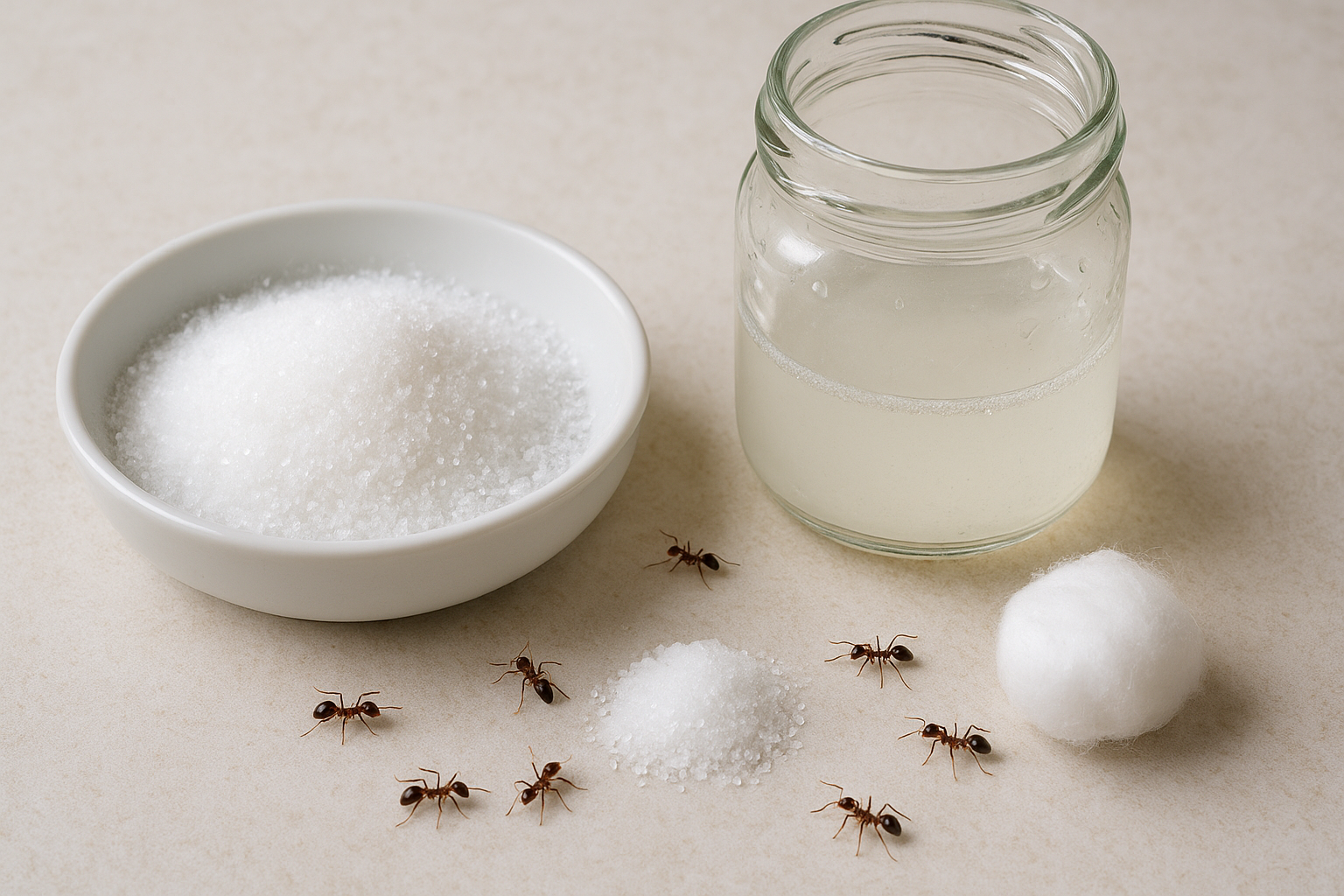
Sugar draws worker ants in, and the small amount of borax mixed into the bait gets carried back to the nest instead of killing the ant on contact. That delay matters, a fast-acting poison would just kill the scout before it reaches the colony, but borax works slowly enough that ants share the bait with nestmates and the queen before anyone dies. Over a week or two, this slow poisoning effect spreads through the whole colony instead of just picking off the ants on your counter.
A slow poison beats a fast one here, because dead ants can’t carry bait back to the queen.
How to use it at home
Mix 1 tablespoon of borax with 3 tablespoons of sugar and enough warm water to dissolve both, then soak cotton balls in the mixture.
- Place soaked cotton balls or bottle caps of the mixture near ant trails, not directly on food surfaces
- Refresh the bait every few days as it dries out
- Expect ant activity to increase briefly before it drops off, that’s the bait working
- Keep bait stations undisturbed for at least two weeks for full effect
Safety tips for kids and pets
Borax is toxic if ingested in any real quantity, so this remedy needs careful placement away from crawling toddlers and curious pets. Use covered bait stations or place mixtures inside cracks and behind appliances rather than in open trays.
8. Boiling water for anthills
Boiling water is the most direct remedy on this list, and it’s the one to use when you can actually see an anthill in your garden, driveway crack, or balcony corner. There’s no mixing or waiting involved, you’re attacking the nest itself rather than trails or scent barriers, which makes this a good finishing move after you’ve already used vinegar or cinnamon indoors.
How it works
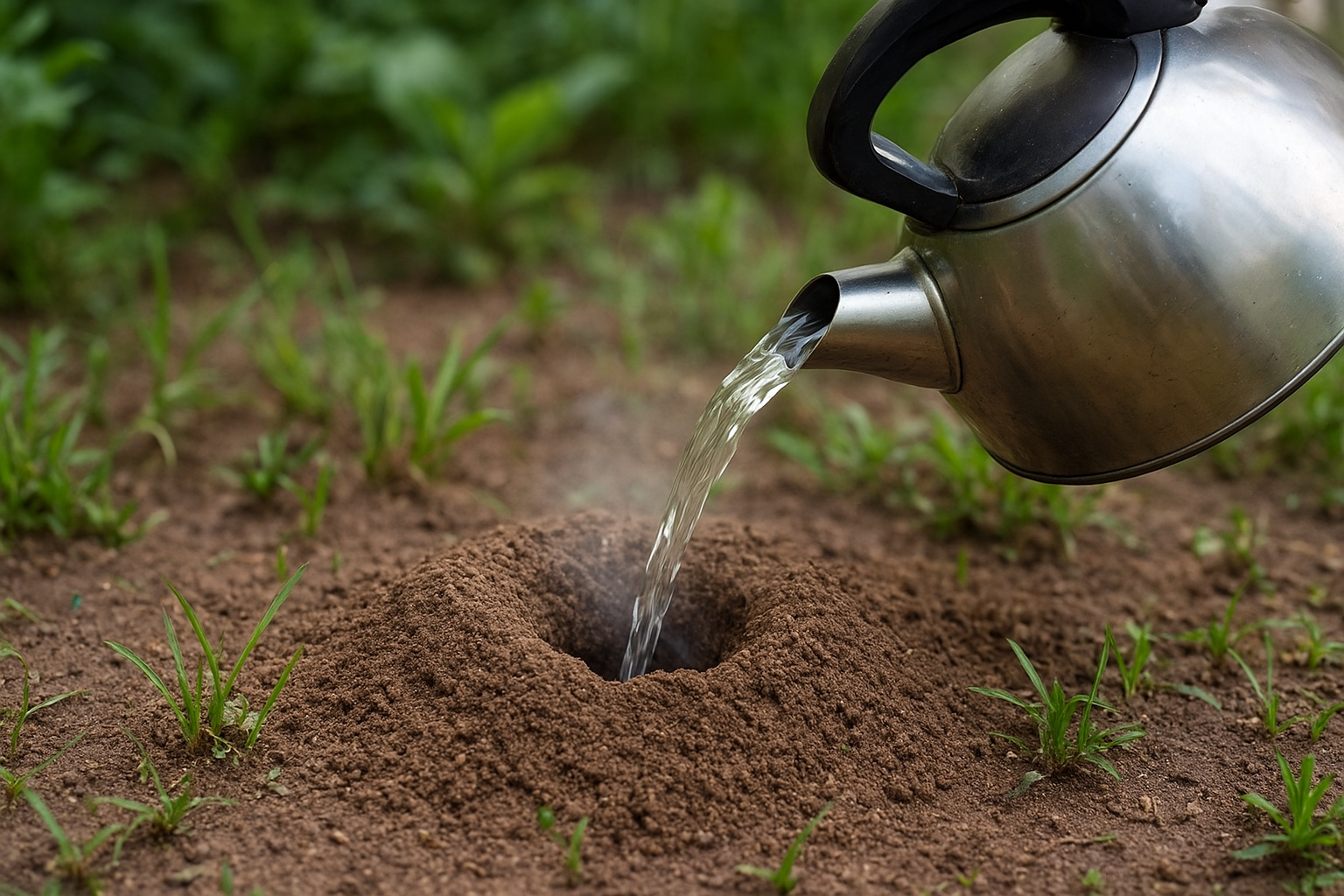
Pouring boiling water directly into an anthill kills ants on contact through heat, reaching workers, larvae, and often the queen if the water penetrates deep enough into the tunnel system. This is different from every remedy above it, since there’s no scent disruption or slow poisoning involved, just immediate physical destruction of the colony’s underground structure. The catch is depth, shallow pours only kill the ants near the surface, while deeper nests need repeated treatments to fully collapse.
Boiling water doesn’t confuse ants or repel them, it destroys the nest outright.
How to use it at home
Boil at least 2 to 3 liters of water and pour it slowly and directly into the visible entrance of the anthill.
- Pour in the early morning or evening when ants are most active near the surface
- Repeat over 2 to 3 days if activity continues
- Avoid pouring near plant roots, since boiling water kills vegetation too
- Use as a follow-up to coffee grounds or diatomaceous earth around the same anthill
Safety tips for kids and pets
Keep children and pets away from the area while pouring, since boiling water causes serious burns on contact with skin or paws. Let the treated area cool completely before letting anyone near it again, and mark the spot if it’s in a walkway kids might run across.
FAQs on how to get rid of ants at home
What is the fastest way to get rid of ants at home?
For a visible trail, spraying diluted white vinegar directly on the ants and wiping the path breaks the scent trail almost immediately and scatters the group. It won’t remove the colony, but it’s the quickest way to stop ants marching across a counter or floor right now.
What kills ants permanently instead of just repelling them?
Borax mixed with sugar is the strongest option covered here because worker ants carry the poison back to the nest, eventually killing the colony including the queen. Diatomaceous earth and boiling water also kill ants directly (through dehydration or heat), while vinegar, citrus, peppermint, cinnamon, and coffee grounds mainly repel or disrupt trails rather than eliminating the nest.
Why do ants keep coming back after I clean and spray?
Most sprays and natural remedies only affect the ants and trails you can see, not a hidden colony inside a wall void or under flooring. If trails keep reappearing weeks after consistent treatment, it usually points to a satellite colony that needs a professional inspection rather than more home remedies.
Are natural ant remedies safe to use around children and pets?
Most are, including vinegar, citrus peels, and cinnamon, which are non-toxic even if licked or touched. Borax and coffee grounds need more caution: borax is toxic if ingested in quantity, and coffee grounds’ caffeine content is harmful to dogs, so place both away from where kids or pets can reach them.
How long does it take for home remedies to get rid of ants at home?
Repellents like vinegar or peppermint oil show results within hours for visible trails, but need reapplication every few days to keep working. Colony-targeting methods like borax bait take one to two weeks to fully work through the nest, so expect a temporary uptick in ant activity before numbers drop off.
When natural remedies aren’t enough
These eight remedies for how to get rid of ants at home handle most everyday ant problems, especially when you catch a trail early or spot an anthill before it spreads. Vinegar, cinnamon, and borax bait solve the majority of kitchen and balcony infestations without any chemicals entering your home. But if you’re refilling bait stations every few days and still seeing new trails weeks later, you’re likely dealing with a satellite colony hiding somewhere in a wall void or under flooring that home remedies simply can’t reach.
That’s the point where DIY stops being worth the time. A recurring ant problem often signals a bigger structural issue, sometimes even overlapping with termite activity in the same walls or foundation. If you’ve hit that wall, get in touch with A to Z Pest Solutions for a professional inspection and let trained technicians find the nest your kitchen spray never could.