
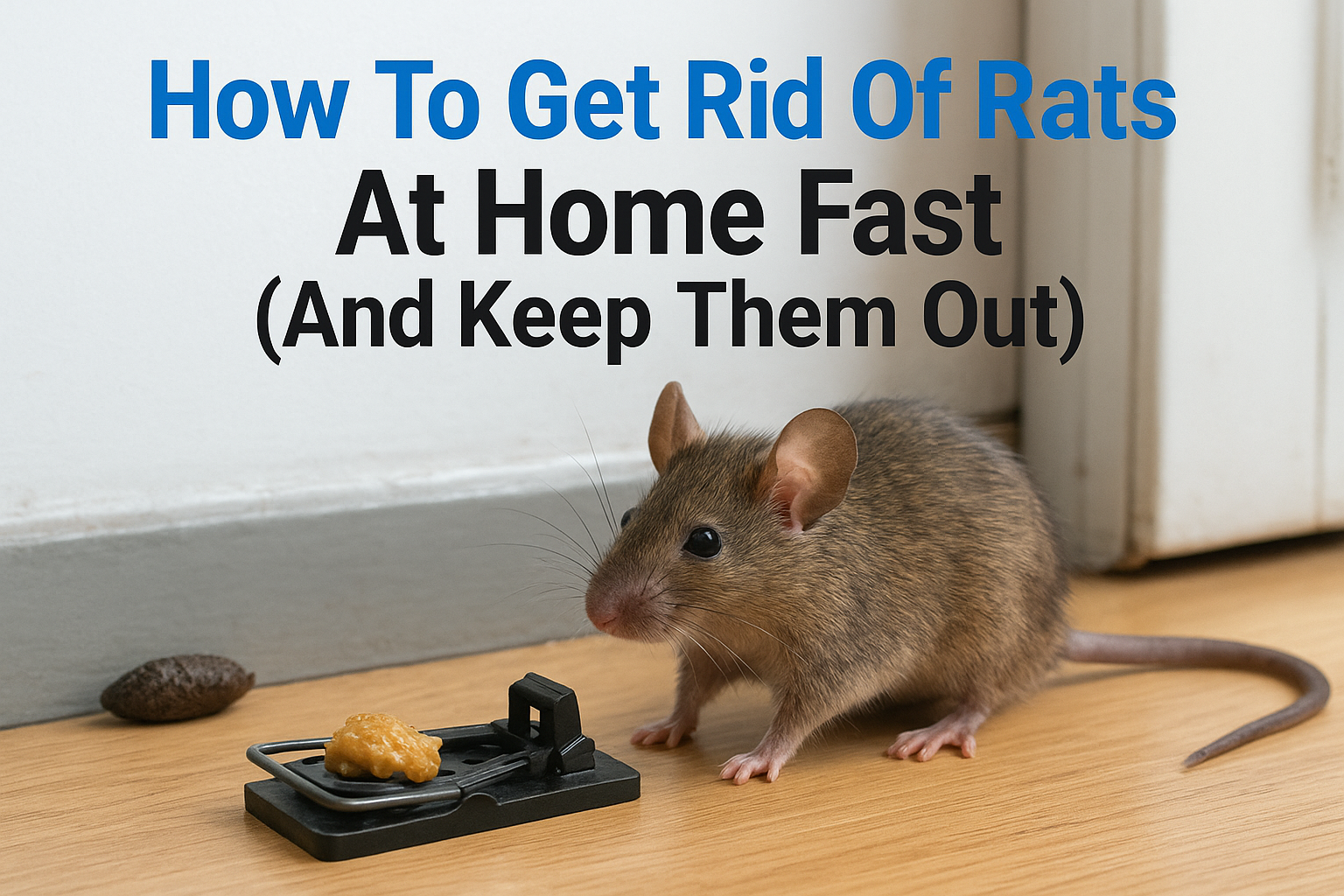
Scratching sounds in the walls at 2 AM. Droppings in the kitchen drawer. A gnawed hole in the rice bag you bought yesterday. If you’re searching for how to get rid of rats at home, chances are you’re already dealing with one or more of these signs, and you want it handled before the problem gets worse.
Rats aren’t just a nuisance. They contaminate food, damage electrical wiring, chew through wooden structures, and carry diseases like leptospirosis and salmonella. A single pair can produce over 1,000 offspring in a year under the right conditions, which means a small problem in July can become a full-blown infestation by October. Bangalore’s warm climate and dense residential layouts make homes here especially vulnerable.
At A to Z Pest Solutions, we’ve handled rodent infestations across Bangalore since 1993, in apartments, independent houses, villas, and gated communities. This guide draws from that hands-on experience to walk you through practical methods that actually work: from identifying entry points and choosing the right traps, to natural deterrents and long-term prevention strategies that keep rats out for good.
Know if you have rats and where they hide
Before you can learn how to get rid of rats at home, you need to confirm it’s actually rats and not mice, and figure out where they’re living. Rats are cautious animals that rarely move in open spaces during daylight hours. Most homeowners spot the evidence long before they ever see the rat itself, which means knowing what to look for is your first practical step.
Signs that confirm a rat infestation
Rats leave a clear trail of clues if you know where to look. Droppings are the most reliable indicator: Norway rat droppings are dark, capsule-shaped, and about 18-20 mm long, while roof rat droppings are slightly smaller and more pointed at the ends. Fresh droppings are soft and shiny; older ones turn hard and dry. If you find fresh droppings daily near your kitchen or storage areas, the infestation is active right now.
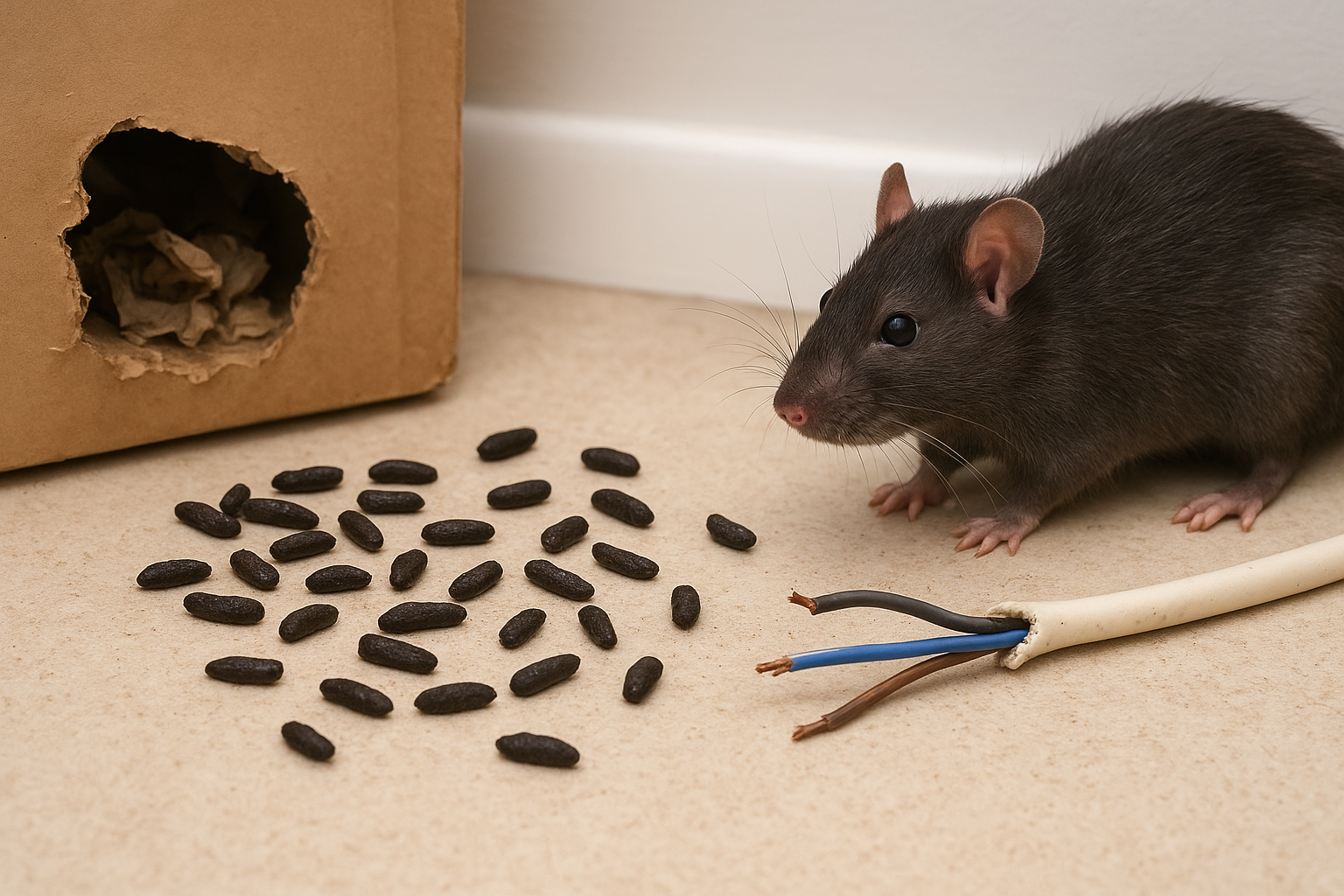
Finding droppings scattered across multiple areas of your home rather than one concentrated spot usually means you have more than one rat moving through the space.
Beyond droppings, check for gnaw marks on food packaging, electrical wires, wooden furniture, and PVC water pipes. Rats have continuously growing teeth, so they chew constantly on almost any material. You may also notice greasy smear marks along walls and skirting boards at floor level, since rats travel the same routes repeatedly and leave body oil on surfaces they rub against. Scratching or scurrying sounds inside walls or ceilings after dark are another strong signal worth taking seriously.
| Sign | What it tells you |
|---|---|
| Fresh droppings | Active infestation underway |
| Gnaw marks on wires or pipes | Structural and fire risk present |
| Grease marks on walls | Established rat runways in use |
| Shredded paper or cloth | Rats are nesting and possibly breeding |
| Scratching sounds at night | Rats moving through wall or ceiling cavities |
Where rats hide inside your home
Rats prefer dark, undisturbed spaces close to food and water. In Bangalore homes specifically, common hiding spots include under kitchen cabinets, inside false ceilings, behind refrigerators and washing machines, inside wall cavities, and inside cluttered storage rooms or lofts. Roof rats, which are especially common in multi-story buildings, tend to favor elevated areas like ceiling voids, top shelves, and loft spaces.
Outside, check along the perimeter of your home near drains, compost piles, and dense plants or shrubs. Rats build nests using shredded cardboard, old cloth, dried leaves, and insulation material. Locating a nest means a breeding pair is already established, and you need to act fast rather than wait to confirm the problem further. The faster you identify their hiding spots, the more targeted and effective your control efforts become.
Step 1. Remove food, water, and nesting spots fast
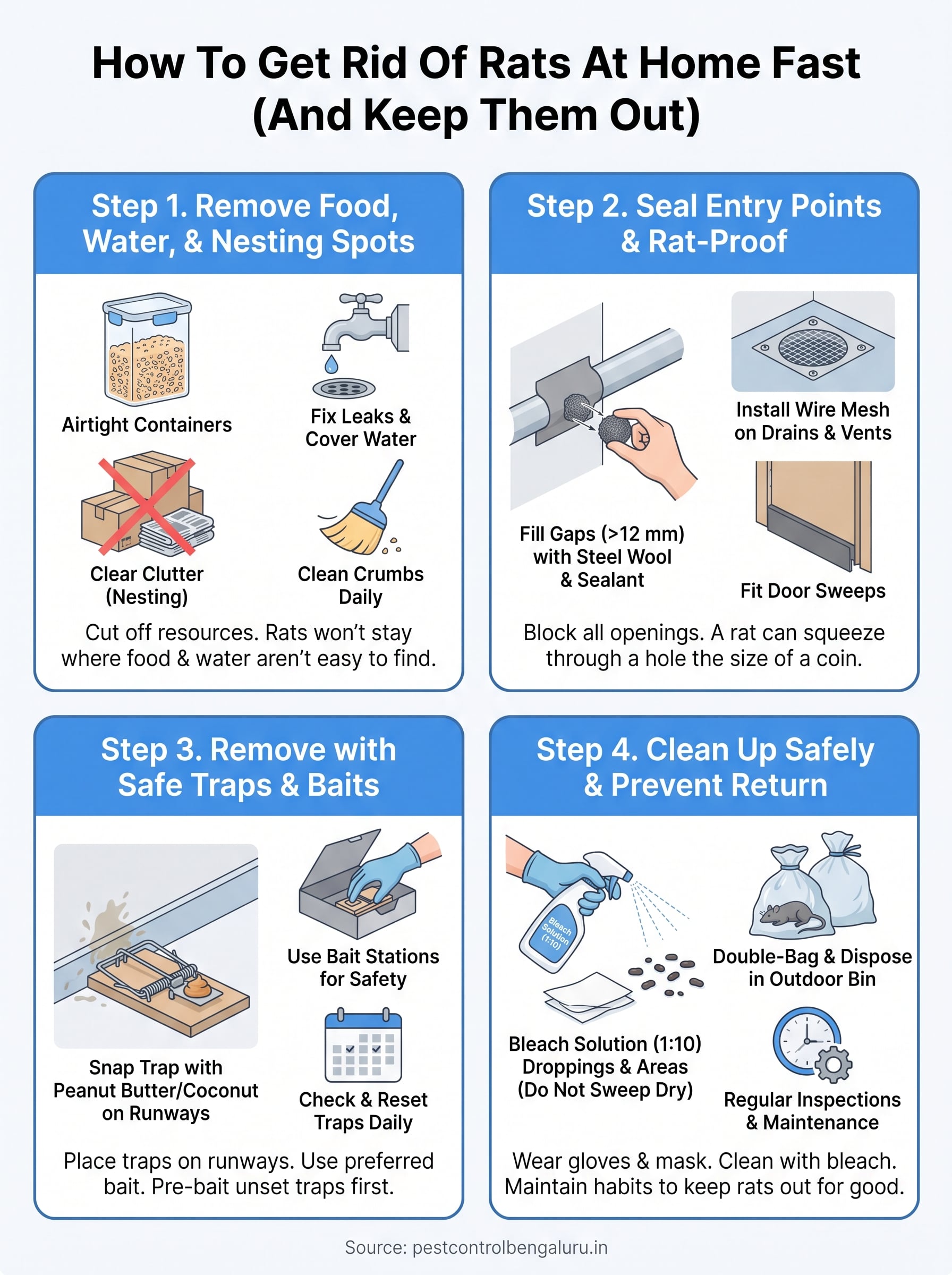
The first thing to understand about how to get rid of rats at home is that rats stay where resources are easy to find. Before you place a single trap, remove everything that makes your home worth living in for them. A well-fed rat with comfortable nesting material has no reason to enter your traps, no matter how well you set them up.
Cut off their food supply
Rats can survive on as little as 28 grams of food per day, which means even scattered crumbs and loosely stored grains are enough to sustain a colony through the week. Move all dry goods like rice, lentils, flour, and cereals into airtight containers made of glass or hard plastic. Don’t leave pet food sitting out overnight. Empty kitchen bins every evening and switch to bins with tight-fitting lids. Wipe down your countertops after every meal and sweep up crumbs immediately rather than leaving them until morning.
If you can smell food from across the room, a rat with a sense of smell many times sharper than yours already knows exactly where it is.
Remove water sources and nesting material
Standing water draws rats as reliably as exposed food does. Fix any leaking pipes under kitchen sinks, check for pooling water near your washing machine or refrigerator drain, and keep water vessels covered overnight. Alongside water, tackle the clutter that rats use for nesting material: stacked old newspapers, cardboard boxes, torn cloth, and unused jute bags are all ideal nest-building supplies. Do a thorough clear-out of storage rooms, spaces under beds, and loft areas. Removing these materials forces rats to seek shelter elsewhere and makes any traps you set in Step 3 significantly more effective.
Step 2. Seal entry points and rat-proof your home
Traps and bait alone won’t solve a rat problem if new rats keep walking in through the same gaps. Sealing entry points is one of the most important steps in how to get rid of rats at home permanently, because a rat can squeeze through any opening larger than 12 mm, which is roughly the size of a large coin. Until you close those gaps, you’re playing catch-up.
Find every gap rats use to get in
Walk the full perimeter of your home at floor level and inspect every point where pipes, cables, or wires pass through walls. Common entry points include gaps around water pipes under kitchen sinks, spaces where electrical conduit enters the wall, broken drainage grilles, and poorly fitted gaps at the base of exterior doors. In Bangalore apartments, shared walls and utility shafts are particularly common problem areas that most residents overlook entirely.
Rats follow the same routes repeatedly, so you’ll often find greasy smear marks or droppings right beside the entry point they use most.
Check your home against this list before buying any materials:
- Gaps around plumbing pipes entering walls or floors
- Cracks in exterior walls, especially near ground level
- Open gaps in false ceilings near utility shafts
- Broken or missing drain covers in the kitchen and bathroom
- Unscreened ventilation openings
Block the openings with the right materials
Once you locate the gaps, fill smaller holes and pipe gaps with steel wool packed tightly into the opening, then seal over it with cement or a waterproof filler. Rats cannot chew through steel wool or hardened cement. For larger openings like broken drain covers or ventilation gaps, install galvanized wire mesh with openings no larger than 6 mm and fix it firmly in place with screws rather than adhesive.
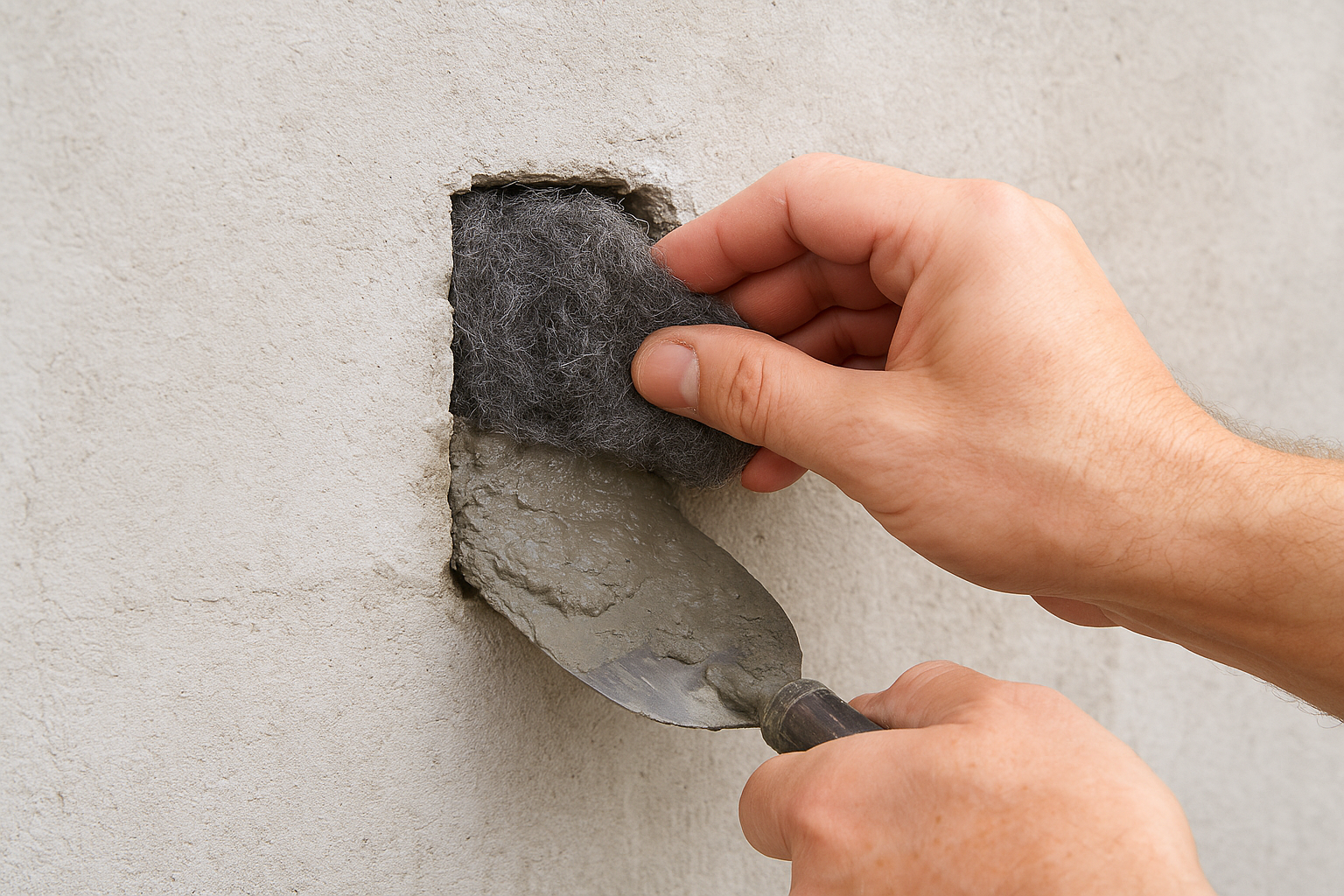
For exterior doors with gaps at the base, fit a solid door sweep that sits flush against the floor when the door is closed. Check every door in your home, not just the main entrance, since rats frequently enter through rear utility doors and bathroom ventilation gaps that get ignored for years.
Step 3. Remove rats with safe traps and baits
With food sources cut and entry points sealed, you’re ready to deal with the rats already inside. This is where most people make their first mistake: placing traps randomly and using the wrong bait. Effective trapping requires you to think like a rat. Rats are neophobic, meaning they avoid new objects in their space for the first few days. Place unset traps in your identified rat runways for two to three days before setting them, so rats grow comfortable moving around them before you trigger anything.
Choose the right trap for your situation
Not all traps work equally well in every home. Snap traps remain the most effective option for quick kills and are safe inside the home when placed where children and pets cannot reach them, such as inside a cardboard box with a small rat-sized entry hole cut into one end. Glue boards are far less reliable because a struggling rat can pull free, and they cause prolonged suffering that makes clean-up harder and more hazardous.
If you have pets or young children at home, place snap traps inside a wooden or plastic bait station so only a rat-sized animal can reach the trigger.
For a non-lethal approach, enclosed live-catch traps let you release the rat well away from your property. Check them at least every 12 hours to reduce health risks from a trapped, stressed animal.
Bait, placement, and timing
Use peanut butter or dried coconut as bait rather than cheese, which rats actually rank lower in preference. Fix bait firmly to the trigger so the rat must apply pressure to get it, which reliably sets off the mechanism. Follow these placement rules for best results:
- Position traps flush against walls with the trigger end facing the wall surface
- Place them directly on the greasy runways you identified earlier
- Check and reset traps every single day without exception
- Wear disposable gloves every time you handle traps or dead rats to avoid direct contact with pathogens
Step 4. Clean up safely and stop them coming back
After trapping, most people focus entirely on disposal and skip the cleaning step. That’s a serious mistake. Rat urine, droppings, and nesting material carry pathogens including Hantavirus and leptospirosis that remain infectious long after the rat is gone. Knowing how to get rid of rats at home means handling the aftermath with as much care as the trapping itself.
Dispose of dead rats without touching them
Put on disposable gloves and a face mask before handling anything a rat has touched. Place the dead rat and any soiled nesting material directly into a sealed plastic bag, then place that bag inside a second bag before tying it shut. Dispose of it in an outdoor bin rather than your household kitchen bin. Follow this sequence every time without exception:
- Glove up before touching traps or bait stations
- Double-bag the rat and any contaminated material
- Wash gloved hands thoroughly, then remove gloves and wash bare hands again with soap
- Disinfect the trap before resetting it for reuse
Never vacuum or sweep rat droppings dry, since this scatters contaminated dust into the air you breathe.
Disinfect rat-contaminated areas thoroughly
Spray any droppings, urine trails, or nesting areas with a bleach-and-water solution (1 part bleach to 10 parts water) and let it soak for five minutes before wiping up with disposable paper towels. Never scrub dry. Pay close attention to the greasy smear marks along walls and skirting boards, since these leave behind scent trails that attract new rats into the same paths.
Keep rats out long-term
Maintaining a rat-free home takes consistent weekly habits rather than one-time fixes. Check your entry point seals every month, especially after heavy monsoon rains that shift soil and open new gaps around foundation pipes. Inspect stored dry goods for gnaw marks fortnightly, keep drains covered at all times, and trim any dense plants or shrubs growing close to exterior walls, since these give rats cover to approach your home undetected.
FAQs about how to get rid of rats at home
What is the fastest way to get rid of rats at home?
The fastest results come from combining steps rather than doing them one at a time: cut off food and water access, seal entry points larger than 12 mm, and set snap traps baited with peanut butter or coconut along active runways, all in the same week. Doing all three at once, rather than sealing gaps first and trapping later, is what actually gets rats out fast.
Can I get rid of rats at home without chemicals or poison?
Yes. Snap traps, sealing entry points, and removing food and nesting material eliminate most home infestations without any rodenticide. This approach also avoids the risk of a poisoned rat dying inside a wall, which causes odor problems that are far harder to deal with.
How long does it take to get rid of rats at home once I start?
Most DIY efforts following the four steps in this guide show real results within one to two weeks, and fully resolve smaller infestations within three weeks. Larger or long-established infestations, especially with an active nest, can take longer and may need professional help to finish the job.
Do natural deterrents actually help get rid of rats at home?
Natural deterrents like peppermint oil or ultrasonic devices can make an area less appealing to rats, but they rarely resolve an existing infestation on their own. Use them alongside sealing and trapping, not as a replacement for those steps.
Quick recap
Getting rats out of your home comes down to four steps done in the right order. Cut off food, water, and nesting material first, so rats have no reason to stay. Then seal every gap larger than 12 mm to stop new ones entering. Once that’s done, set snap traps on active runways with peanut butter or dried coconut as bait, and check them daily. Finally, clean up contaminated areas with a bleach solution, double-bag all waste, and build habits that keep rats away for good.
Knowing how to get rid of rats at home is genuinely manageable when you treat it as a system rather than a single fix. Most infestations respond well to consistent effort across two to three weeks. However, if you have a large or persistent infestation, or simply want it handled correctly the first time, professional rodent control in Bangalore from A to Z Pest Solutions is one call away.