
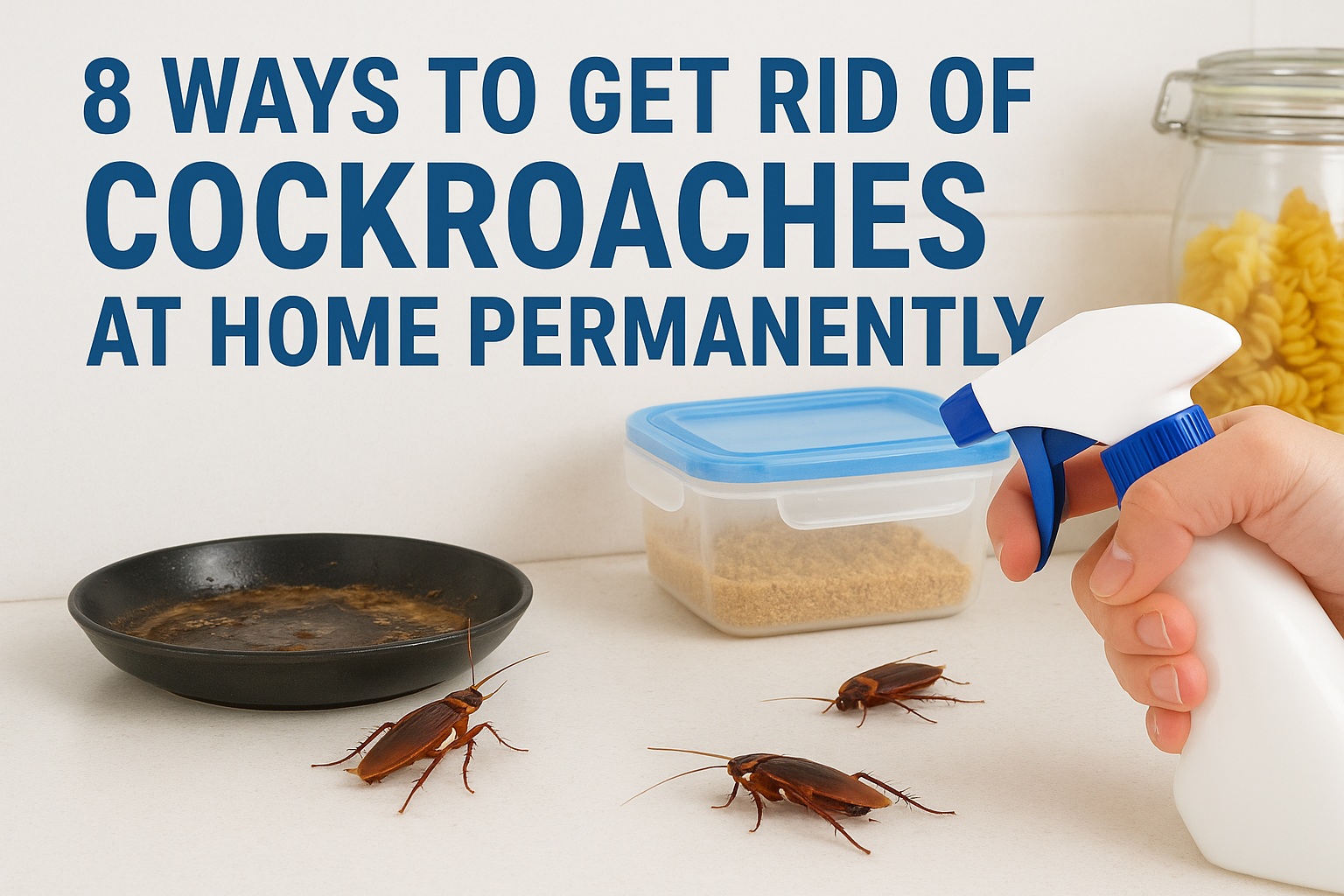
Nothing ruins a peaceful evening at home quite like a cockroach skittering across your kitchen counter. If you’re wondering how to get rid of cockroaches at home, you’re not alone, it’s one of the most common pest complaints we hear from homeowners across Bangalore, especially during the humid months when roach activity spikes indoors.
Cockroaches aren’t just unsettling to look at. They carry bacteria like Salmonella and E. coli, contaminate food, and can trigger allergic reactions and asthma, particularly in children. The longer you wait to act, the harder they are to remove, a single female cockroach can produce hundreds of offspring in a year.
At A to Z Pest Solutions, we’ve spent over 32 years helping Bangalore residents reclaim their homes from stubborn infestations. Drawing from that hands-on experience, we’ve put together eight proven methods, from simple home remedies to professional-grade solutions, that actually work. Whether you’re dealing with a few stragglers or a full-blown colony, this guide gives you a clear plan to eliminate cockroaches permanently and keep them from coming back.
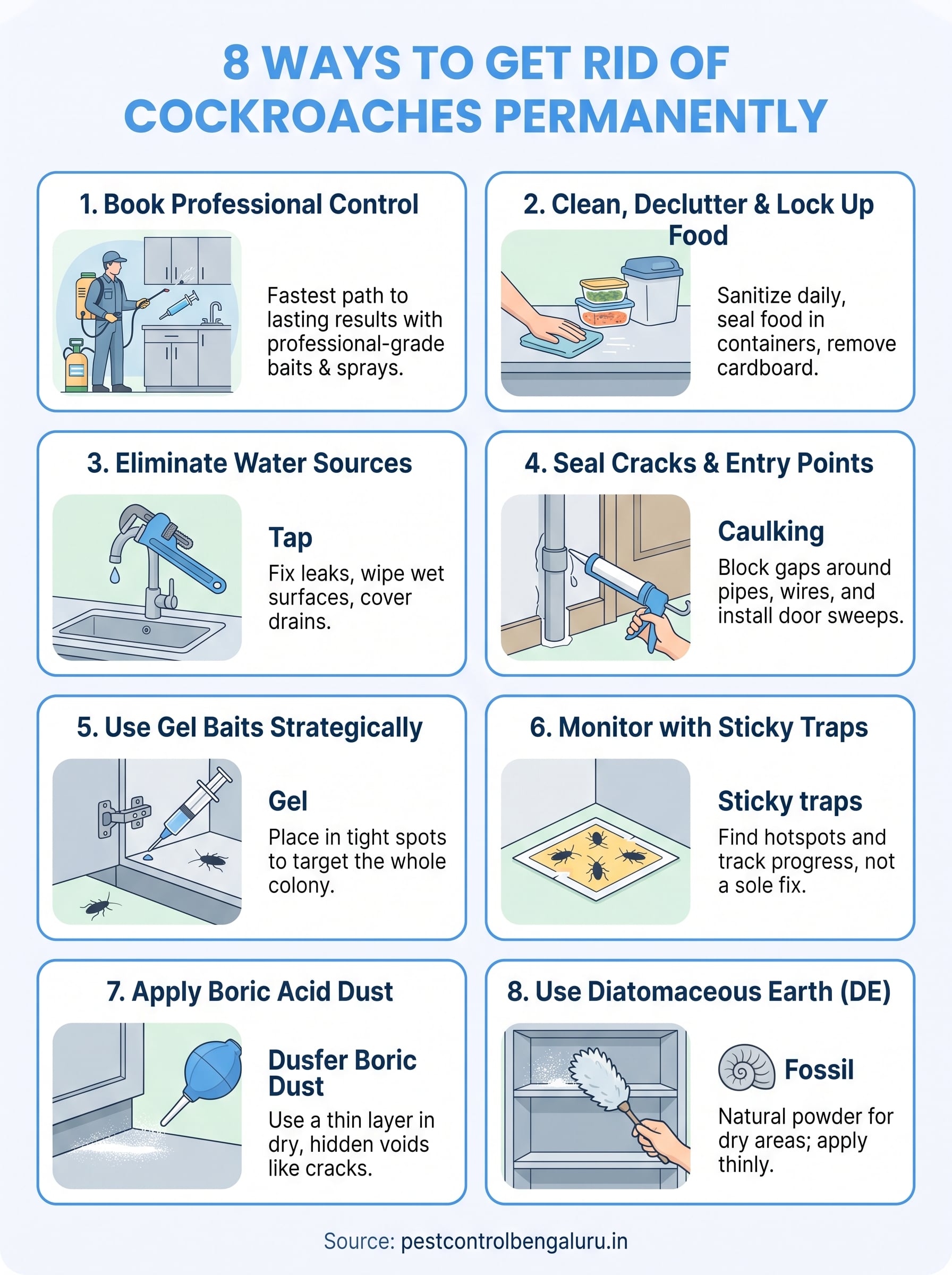
1. Book professional cockroach control in Bengaluru
When you’re working out how to get rid of cockroaches at home and nothing seems to be holding them back, calling a licensed pest control company is often the fastest path to lasting results. Professionals use products and application methods not available in retail stores, which makes a real difference when roaches are nesting deep inside walls and cabinet voids.
When DIY won’t cut it
Visible roaches during the day, egg cases behind appliances, or a musty odor in your kitchen are clear signs the population is too established for home remedies alone. At that point, professional-grade gel baits and targeted insecticides are the most reliable way to break the breeding cycle before numbers grow further.
What a professional treatment includes
A standard cockroach treatment typically covers gel bait application in cracks and crevices, a targeted spray along wall junctions and under appliances, and sometimes a residual insecticide in wall voids. Your technician will also identify entry points and recommend fixes you can handle yourself between visits.
How to prepare your home before the visit
Clear out under-sink cabinets and kitchen shelves before the technician arrives so they can reach hiding spots directly. Store food in sealed containers, empty the dustbin, and keep pets in a separate room during the treatment.
How long results take and how many visits you may need
Most homeowners notice a significant drop in roach activity within 7 to 10 days. A follow-up visit at three to four weeks is common for heavy infestations, targeting newly hatched eggs that survived the first round. Two visits typically resolve most moderate infestations in Bangalore apartments.
One visit alone rarely eliminates a mature colony. A follow-up is not a sign the first treatment failed.
Safety, pets, and kids: what to ask the technician
Ask your technician which active ingredients they are using and how long you should keep children and pets away from treated surfaces. Most gel-based treatments are low-odor and dry quickly, making treated areas safe for your household within a few hours.
Typical pricing in Bangalore homes
Professional cockroach treatment in Bangalore generally runs from ₹800 to ₹2,500 depending on property size and infestation severity. A to Z Pest Solutions offers transparent pricing with no hidden charges, so you know exactly what you’re paying before the technician steps through the door.
2. Clean, declutter, and lock up food
Sprays and baits work faster when roaches have nothing to eat or hide behind. Sanitation removes the foundation that supports a growing colony, making every other treatment you apply significantly more effective.
Why sanitation beats sprays for long-term control
Cockroaches can survive on crumbs smaller than a grain of rice and water from a damp sponge or leaky tap. Without removing food and shelter, sprays only push roaches to a different corner of your home rather than eliminating them.
Clean first, spray second. Every product you use works harder on a home that gives roaches nothing to fall back on.
Kitchen non-negotiables: crumbs, grease, dishes, and bins
Wipe stovetop grease and counter crumbs every night before bed. Wash dishes immediately after meals, because a single soiled pan left overnight gives a colony enough food to keep reproducing. Use a lidded bin and empty it daily.
Pantry fixes: airtight storage for staples and pet food
Move rice, flour, sugar, and lentils into sealed glass or hard plastic containers as soon as you bring them home. Store pet food in a lidded container and never leave a bowl out overnight, especially near the floor.
Declutter rules: cardboard, paper piles, and storage areas
Roaches nest inside corrugated cardboard boxes, particularly in dark storage rooms or under beds. Replace cardboard with sealed plastic bins and clear out newspaper stacks, paper bags, and old magazines regularly.
Daily and weekly checklist that actually fits real life
Keep this routine simple enough to sustain and it will do more than any single spray product:
- Daily: wipe counters, wash dishes, empty the bin, put pet food away
- Weekly: sweep behind appliances, inspect pantry containers for gaps, and remove any cardboard from storage areas
3. Eliminate water and moisture
Cockroaches can survive for weeks without food, but they die within days without water. If you are working out how to get rid of cockroaches at home, cutting off their water supply is one of the fastest ways to make your space hostile to them before applying any product.
Why roaches survive on tiny water sources
Roaches pull moisture from sources most people overlook: condensation on pipes, a slow drip under the sink, or a wet sponge left on the counter. Even a small, consistent water source is enough to sustain a colony through otherwise dry conditions.
Fast fixes: leaks, dripping taps, and AC drain lines
Fix dripping taps and leaky pipes as soon as you spot them. Check your AC drain line regularly, since a blocked line creates a steady puddle near your unit, exactly the kind of water source roaches seek out at night.
A dripping tap you ignore for a week gives roaches all the water they need to keep breeding.
Bathroom and kitchen moisture control in humid weather
Run your exhaust fan during and after showers to reduce surface moisture. Wipe down wet counters and sinks before bed, since Bangalore’s humidity keeps indoor surfaces damp longer than you might expect.
Drain and sink habits that remove nightly water access
Cover open drains with a mesh stopper each night. Dry your sink basin after the last use so roaches find nothing to drink during their most active hours.
Signs you missed a moisture source
If roaches keep appearing near one spot despite treatment, check for hidden condensation on cold pipes or a slow leak inside a cabinet wall. Persistent activity in a single area almost always points back to a water source you have not found yet.
4. Seal cracks and block travel routes
Cockroaches do not appear from nowhere. They enter through gaps you probably haven’t noticed and travel through your walls every night without any resistance. Sealing those routes makes every other method you use work harder.
How roaches move through Indian apartments and buildings
In most Bangalore apartments, cockroaches move through shared pipe chases, wall voids, and gaps behind kitchen tiles. A roach on the fifth floor likely entered from a neighboring flat or the utility shaft, not from outside. Blocking those internal travel routes matters as much as sealing your front door.
Where to seal first: under sinks, cabinets, and skirting gaps
Start under the kitchen sink, where pipe openings are often left unsealed from installation. Check skirting boards along the floor where they meet the wall, since small gaps along that junction are a primary highway for roaches moving between rooms.
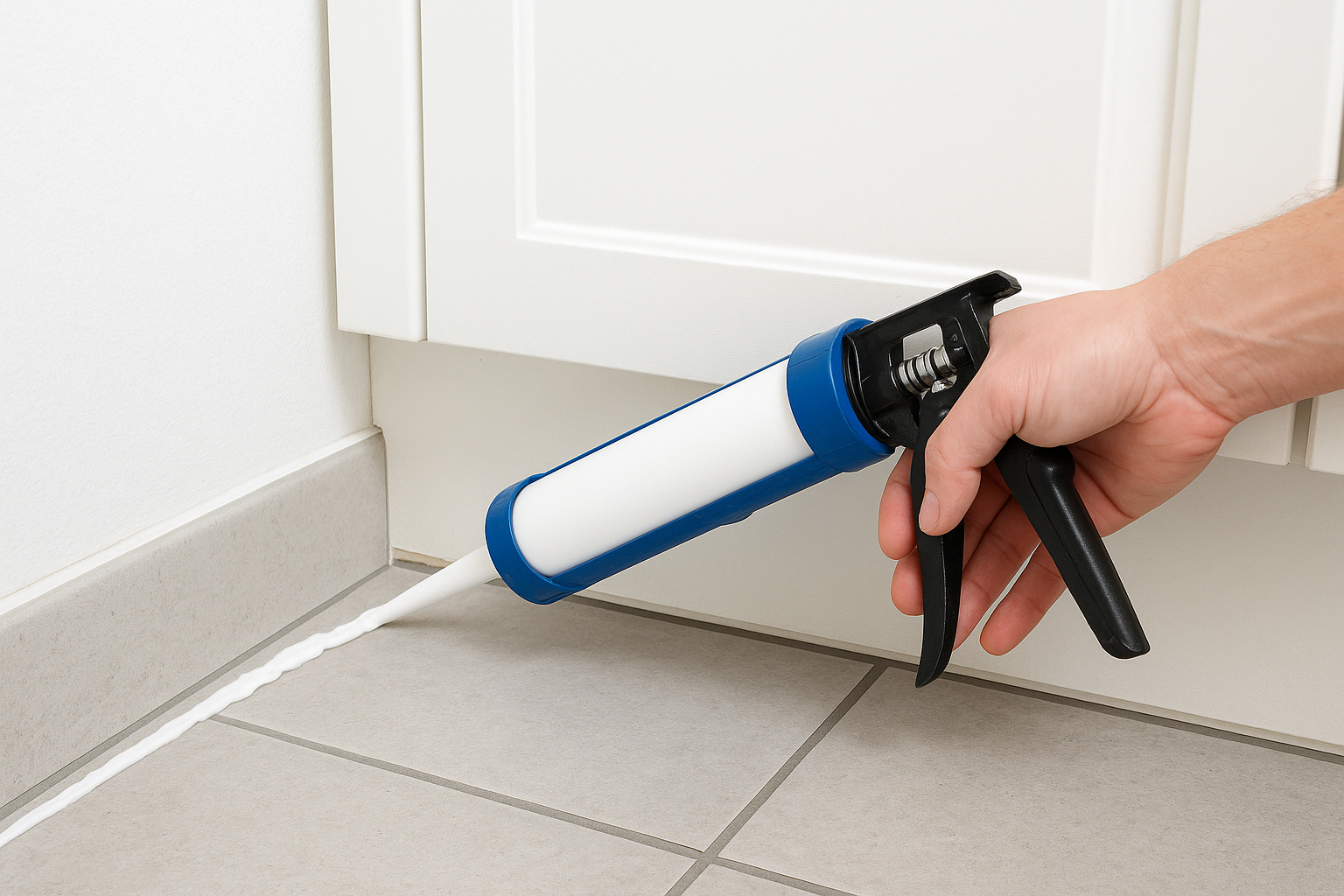
Sealing entry points before applying any treatment locks roaches out and stops new ones from replacing the ones you eliminate.
Utility entry points: pipes, wires, and wall voids
Anywhere a pipe or electrical wire passes through a wall is a gap roaches exploit. Fill those openings with caulk or fire-rated foam before you do anything else.
Door sweeps, window mesh, and ventilation covers
Fit door sweeps on exterior-facing doors and check that window mesh sits flush with no tears. Cover ventilation holes with fine mesh grilles to block entry without restricting airflow.
What to use: caulk, foam, and mesh, and when each works
Use silicone caulk for thin gaps around tiles and skirting boards. Use expanding foam for larger pipe openings where a rigid seal is needed. Reserve mesh for ventilation points where airflow must continue but roaches must not.
5. Use gel baits strategically
Gel baits are one of the most effective tools for how to get rid of cockroaches at home, but most people skip them in favor of sprays. That’s a mistake. Gel baits target the whole colony, not just the roaches you can see.
Why baits work better than random spraying
Sprays kill on contact but leave no lasting effect once they dry, so roaches that avoided the wet surface survive and keep breeding. Gel baits work differently: a roach eats the bait, returns to the nest, and spreads the active ingredient to others through contact and feces, which wipes out roaches you never directly treated.
A single bait placement can eliminate dozens of roaches you will never see.
Choosing the right bait format for homes and apartments
Syringe-style gel baits like Maxforce or Advion are the most practical option for home use. They let you place small, precise dots in tight spots without making a mess.
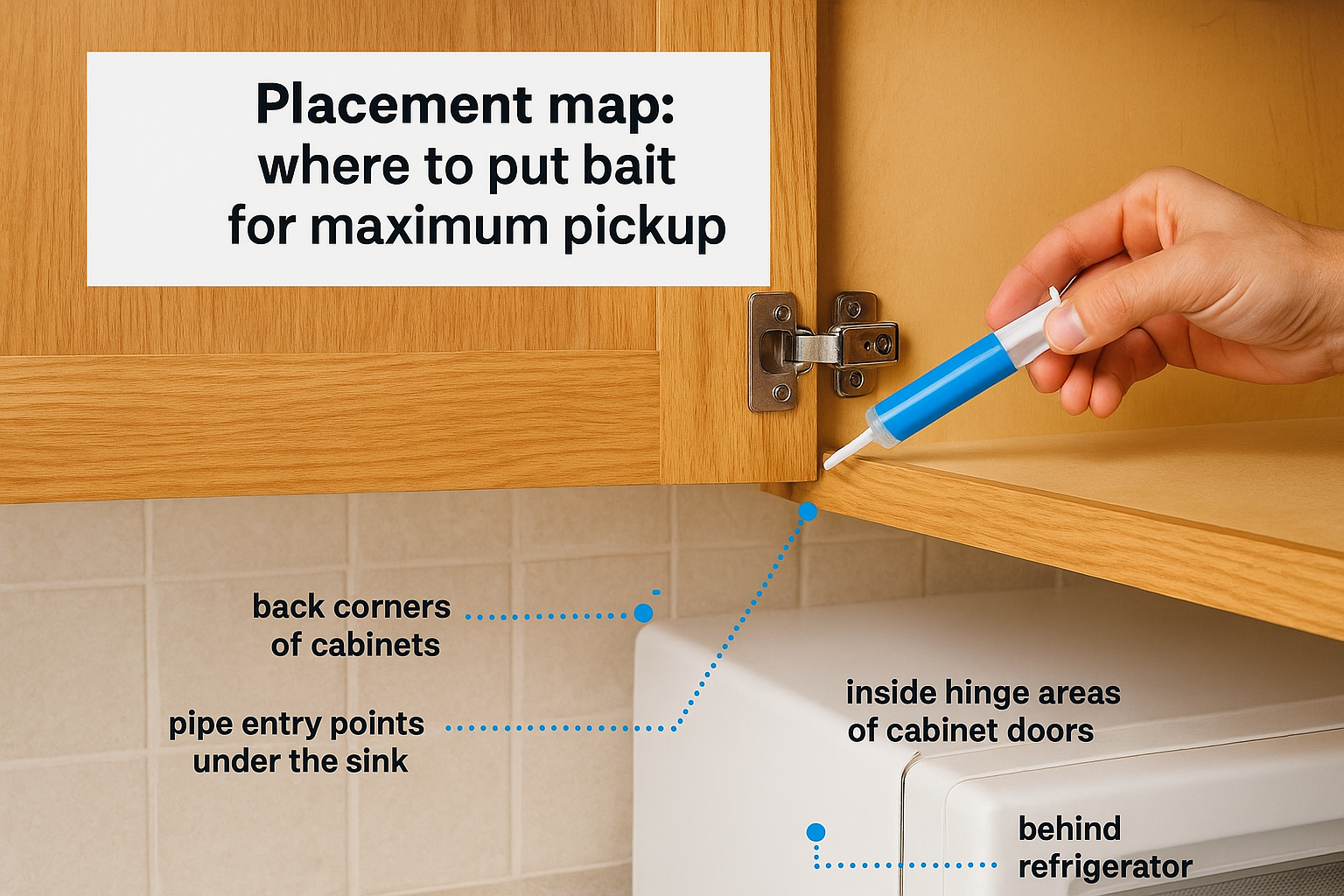
Placement map: where to put bait for maximum pickup
Apply small dots of gel in the back corners of cabinets, along pipe entry points under the sink, inside hinge areas of cabinet doors, and behind your refrigerator and stove. Avoid open surfaces where bait will dry out fast.
Bait rules: keep it clean, keep it dry, don’t contaminate it
Never spray insecticides near bait placements, since the repellent effect of sprays stops roaches from approaching the bait entirely. Keep placements dry and away from cleaning products.
Timeline: what you should see in week 1, 2, and 4
You may actually see more roaches in the first week as affected roaches move before dying. By week two, activity drops noticeably. By week four, a well-placed bait application should show a significant and sustained reduction in roach sightings.
6. Use sticky traps to find hotspots and track progress
Sticky traps are not a standalone fix for how to get rid of cockroaches at home, but they give you information no other tool can. Use them alongside baits and sanitation to understand where roaches concentrate and whether your other methods are actually producing results.
What traps can and can’t do
Sticky traps capture individual roaches that cross them, but they won’t eliminate a colony on their own. Their real value is as a monitoring tool that shows you which areas need more attention and confirms when activity is dropping.
Best trap placement in kitchens, bathrooms, and bedrooms
Place traps flat against walls and in corners rather than in open floor space, since roaches follow wall edges when they travel. Good locations include under the sink, inside cabinet corners, behind the toilet, and along the back wall behind your refrigerator.
How to read trap results to pinpoint the nest area
The trap with the highest catch count points directly toward your heaviest infestation zone. Focus your bait placements and sealing efforts in that area first before working outward.
Your highest-count trap is the clearest signal of where roaches are nesting or traveling most frequently.
How many traps you need for a typical flat
A standard two or three bedroom apartment needs at least six to eight traps spread across the kitchen, bathrooms, and storage rooms. Check and replace them every two weeks to keep counts accurate.
When trap counts mean you should escalate to pro help
If traps are filling up within three to four days of placement, the infestation is large enough that professional treatment is the most practical and efficient next step.
7. Use boric acid dust carefully in hidden voids
Boric acid is one of the most cost-effective and long-lasting tools in a cockroach control plan, but it only works when you apply it correctly in the right locations.
How boric acid kills roaches over time
When a roach walks through boric acid dust, the particles cling to its legs and body. The roach ingests the compound while grooming, which damages its digestive system and nervous system and kills it within a few days.
Where it works best: cracks, crevices, and dry cabinet voids
Boric acid performs best in dry, undisturbed voids such as the space behind kick panels under kitchen cabinets, inside wall gaps around pipes, and along the inside edges of false ceilings. Moisture reduces its effectiveness quickly, so humid spots are the wrong place to apply it.
Dry and dark voids give boric acid the stable environment it needs to stay active for weeks at a time.
How to apply a thin dusting without making it repellent
Use a squeeze bulb duster to puff a light, barely visible layer into target voids. A thick pile of powder actually repels roaches, so less is always more with every application.
Safety rules for homes with children and pets
Keep boric acid away from food preparation surfaces and open floor areas where children crawl or pets walk. Apply it only in sealed voids that are genuinely inaccessible to your household.
Common mistakes that make boric acid fail
Applying it in wet or frequently cleaned areas removes the dust before roaches encounter it. Piling it too thick or placing it in visible open spaces means roaches simply walk around it instead of through it.
8. Use food-grade diatomaceous earth in dry areas
Food-grade diatomaceous earth (DE) is a naturally derived powder made from fossilized algae. It kills through physical action rather than chemical toxicity, making it a practical option when you are working out how to get rid of cockroaches at home with minimal chemical exposure in sensitive areas.
How diatomaceous earth works and where it fits in the plan
DE scratches the waxy outer layer of a roach’s exoskeleton, causing it to dehydrate and die within 24 to 72 hours. It works best as a supplementary tool alongside baits and sanitation rather than as a stand-alone solution for a full infestation.
Where to apply it so it stays dry and effective
Apply DE along the back edges of cabinet shelves, inside wall gaps around pipes, and under appliances where surfaces stay consistently dry. Moisture neutralizes DE immediately, so wet or regularly mopped areas are the wrong spot every time.
DE stops working the moment it absorbs moisture, so placement in dry voids is non-negotiable.
How to apply it without creating a mess or breathing dust
Use a squeeze bulb duster to apply a thin, barely visible layer. Wear a dust mask during application to avoid inhaling fine particles, which can irritate your lungs with repeated exposure.
DE vs boric acid: when to pick one over the other
Choose DE near food storage areas where a chemical-free option matters most. Reserve boric acid for deeper wall voids where a longer-lasting residual effect outweighs the preference for natural composition.
What results look like and how long it takes
You will find dead roaches near treated areas within two to four days of consistent contact. Full results take one to two weeks, and you will need to reapply after any cleaning or moisture exposure resets the treated surface.
What to do if roaches keep coming back
If you’ve worked through every step on how to get rid of cockroaches at home and roaches are still showing up, the problem is almost always a hidden entry point or moisture source you haven’t found yet. Check shared walls, utility shafts, and any pipe gaps you skipped in your first round of sealing. Persistent activity in a specific spot is a signal, not bad luck, so follow the pattern and investigate that area more closely before applying more product.
Recurring infestations in Bangalore apartments are often building-wide problems rather than single-unit issues, which means your neighbors’ habits directly affect your home. At that point, professional treatment is the most reliable reset. A trained technician identifies the source fast and applies products that break the cycle for good. Book a visit with A to Z Pest Solutions and get your home back under control.