
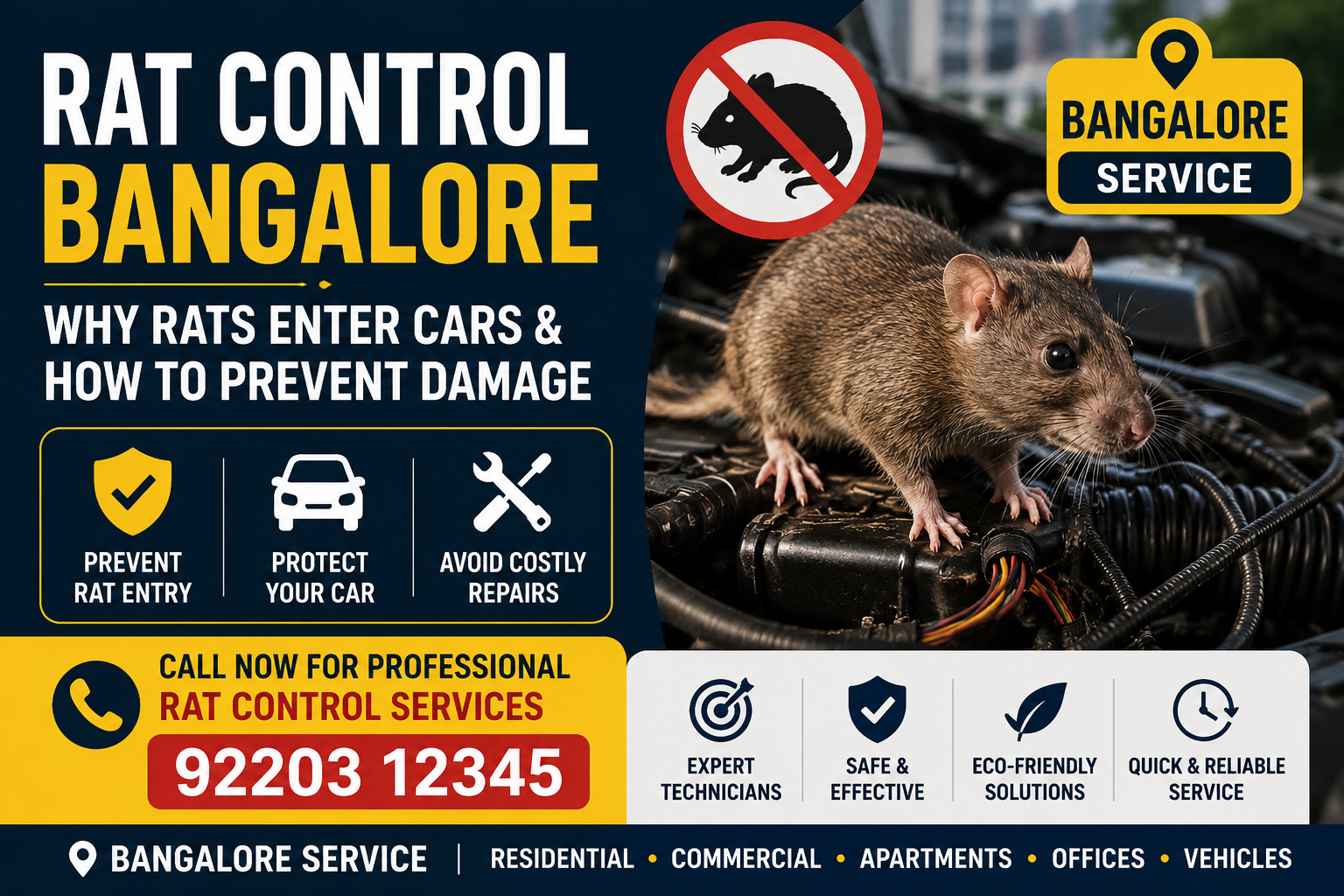
Finding rat droppings under the bonnet, hearing strange noises from the engine compartment, or discovering that your car won’t start because rodents have chewed through the wiring can be frustrating and expensive. Unfortunately, this has become an increasingly common problem for vehicle owners across Bangalore.
If you’re searching for the best rat control in car solutions, you’re not alone. Residents living in apartments, gated communities, independent houses, and office complexes frequently report rat infestations inside parked vehicles, especially during the monsoon and cooler months.
Rats are highly adaptable pests. They seek warm, protected spaces where they can hide, build nests, and find food. A parked vehicle—particularly one left unused for several days—offers the perfect environment. Modern engine compartments provide warmth, shelter, insulation, and numerous materials that rats can use for nesting.
Ignoring the problem can lead to expensive repairs. Rats are capable of chewing electrical wiring, hoses, insulation, plastic components, and even air filter materials. In severe cases, rodent damage may leave a vehicle unsafe to drive or result in unexpected breakdowns.
This complete guide explains why rats enter vehicles, the warning signs to watch for, practical prevention tips, the benefits of an ultrasonic car repellent, and when to seek rat control services for car to protect your vehicle.
Why Are Rats Entering Cars in Bangalore?
Bangalore’s rapid urban development, combined with overflowing garbage bins, open drains, dense residential areas, and abundant food sources, has contributed to a growing rodent population.
Cars parked overnight often become attractive hiding places because they offer:
- Warm engine compartments
- Protection from predators
- Shelter during rain
- Quiet nesting spaces
- Easy access through the engine bay
- Nearby food waste in parking areas
Apartment basements, office parking lots, independent house garages, and roadside parking areas are all common locations where rats may enter vehicles.
For many vehicle owners, rat control in car becomes a recurring concern because the surrounding environment continues to support rodent activity.
Why Modern Cars Attract Rats
Many drivers are surprised that newer vehicles appear to experience rodent problems more frequently than older models. While no car is completely rat-proof, modern vehicles contain several features that can attract rodents.
Warm Engine Bay
After driving, the engine remains warm for several hours.
This warmth provides a comfortable resting place, particularly during cool evenings or rainy weather.
Safe Hiding Places
Modern vehicles contain numerous enclosed spaces where rats can remain hidden, including:
- Engine compartment
- Battery housing
- Underbody panels
- Air filter housing
- Cabin filter area
- Dashboard cavities
These areas offer protection from predators and human activity.
Nesting Materials
Rats collect soft materials to build nests.
Inside vehicles they may use:
- Insulation
- Leaves
- Paper
- Cloth
- Foam
- Plastic fibres
Once nesting begins, the risk of wiring damage increases significantly.
Limited Disturbance
Cars that remain parked for several days are particularly vulnerable.
Vehicles used infrequently provide rats with enough time to establish nests and reproduce.
Regular vehicle movement can help reduce the likelihood of long-term rodent occupation.
Why Rats Chew Car Wiring
One of the most expensive consequences of rodent infestations is damaged electrical wiring.
Rats constantly chew because their teeth grow throughout their lives. Gnawing helps keep their teeth at a manageable length.
Inside vehicles, rats may chew:
- Engine wiring harness
- Ignition cables
- Fuel sensor wires
- ABS sensor wiring
- Air conditioning wiring
- Battery cables
- Plastic connectors
- Rubber hoses
Damage to these components can result in:
- Engine warning lights
- Starting problems
- Sensor failures
- Electrical malfunctions
- Reduced vehicle performance
- Costly repairs
Professional rat control services for car can help reduce the risk of repeated rodent damage by addressing both the vehicle and the surrounding environment.
Common Signs That Rats Are Living in Your Car
Early detection can prevent expensive repairs.
Look for these warning signs:
Rat Droppings
Small black droppings around the engine compartment, battery, or parking space are one of the clearest signs of rodent activity.
Chewed Wires
Inspect visible wiring under the bonnet.
Gnaw marks or damaged insulation should never be ignored.
Nesting Material
Leaves, shredded paper, insulation, cloth, or plastic pieces inside the engine bay often indicate active nesting.
Strange Smell
A musty or unpleasant odour inside the vehicle may result from nesting material, urine, or food brought into the engine compartment.
Scratching Sounds
If you hear scratching noises shortly after parking or when starting the vehicle, rodents may still be inside.
Dashboard Warning Lights
Unexpected warning lights can sometimes be caused by rats chewing electrical wiring.
Although warning lights have many possible causes, rodent damage should be considered if accompanied by other signs.
Why Basement Parking Areas Have More Rat Problems
Many apartment complexes in Bangalore provide basement parking, which unfortunately creates favourable conditions for rodents.
Basements often contain:
- Poor lighting
- Drainage systems
- Garbage collection points
- Water leakage
- Utility rooms
- Limited human activity during the night
These conditions allow rats to move freely between parking spaces and enter multiple vehicles.
Residents searching for rat control in car frequently discover that the root cause lies not only in the vehicle but also in the parking environment. Coordinating with apartment associations to improve sanitation and implement rodent control measures can significantly reduce infestations.
How Much Damage Can Rats Cause to a Car?
Many people assume rat damage is limited to a few chewed wires, but the actual cost can be much higher.
Rodents may damage:
- Engine wiring harnesses
- Fuel lines
- Air intake components
- Cabin filters
- Bonnet insulation
- Rubber hoses
- Sensor cables
- Plastic covers
- Sound insulation
- Battery wiring
Repair costs can range from a few thousand rupees for minor wiring repairs to substantially higher amounts if major electrical systems require replacement.
More importantly, damaged wiring can affect critical vehicle systems, making prompt inspection essential if rodent activity is suspected.
Does Monsoon Increase Rat Problems in Cars?
Yes. During Bangalore’s monsoon season, rats often leave flooded drains, sewers, and outdoor burrows in search of dry shelter.
Parked vehicles become an attractive refuge because they provide warmth and protection from heavy rainfall.
Vehicle owners should be especially vigilant during the rainy months by checking the engine bay regularly and considering preventive measures such as improved parking hygiene and appropriate rat control in car solutions.
How to Prevent Rats from Entering Your Car
Finding rats inside your vehicle can be frustrating, but the good news is that several preventive measures can significantly reduce the chances of an infestation. The most effective rat control in car strategy combines good parking habits, regular vehicle inspections, professional rodent control, and preventive devices such as ultrasonic car repellents. Relying on a single method rarely provides long-term protection, especially in cities like Bangalore where rodent activity is common.
Best Ways to Prevent Rats from Entering Your Car
Park in a Clean Area
Your parking location plays a major role in preventing rodent infestations. Rats are attracted to places where food, water, and shelter are easily available.
Avoid parking near:
- Garbage collection points
- Open drains
- Overgrown vegetation
- Scrap storage areas
- Food waste disposal zones
- Unused storage rooms
If you park in an apartment basement, encourage your apartment association to maintain cleanliness and conduct regular rodent control treatments.
Drive Your Car Regularly
Cars left unused for several days become ideal nesting places for rats.
Starting and driving your vehicle regularly creates movement, heat, and vibration that discourage rodents from settling inside the engine compartment.
If you’re travelling for several weeks, ask someone to start the vehicle every few days.
Inspect the Engine Bay Frequently
A quick visual inspection every week can help you detect rodent activity before major damage occurs.
Check for:
- Rat droppings
- Chewed wiring
- Leaves or nesting material
- Food particles
- Gnaw marks
- Unusual odours
Early detection is one of the most effective rat control in car practices and can save thousands of rupees in repair costs.
Keep Food Away From Your Vehicle
Many people unknowingly attract rodents by leaving food inside their cars.
Avoid storing:
- Snacks
- Biscuits
- Fruits
- Pet food
- Grocery bags
- Food wrappers
Even small food crumbs under seats can attract rats, especially when vehicles remain parked overnight.
Keep Parking Areas Clean
Rodents thrive where food waste accumulates.
Whether you park in a home garage or apartment basement, ensure that:
- Garbage bins remain covered.
- Food waste is removed daily.
- Standing water is eliminated.
- Storage clutter is minimized.
A clean parking environment greatly improves the effectiveness of rat control services for car.
Do Ultrasonic Car Repellents Really Work?
One of the most searched solutions today is the ultrasonic car repellent.
These devices emit high-frequency sound waves that are intended to discourage rodents from entering the engine compartment. Since the frequencies are generally beyond the hearing range of humans, they operate silently for vehicle owners.
While ultrasonic repellents can be a useful preventive tool, they should not be considered a complete solution for an existing rat infestation.
They work best when combined with:
- Regular engine inspections
- Clean parking areas
- Professional rodent control
- Vehicle maintenance
- Entry point monitoring
Think of an ultrasonic repellent as part of a broader rat control in car strategy rather than a standalone cure.
Benefits of an Ultrasonic Car Repellent
Many vehicle owners install ultrasonic devices because they offer several advantages.
Non-Toxic Solution
Unlike chemical sprays or poison, ultrasonic repellents do not use harmful substances.
Easy Installation
Most models connect directly to the vehicle battery or operate using rechargeable power sources.
Continuous Protection
When properly installed, the device provides ongoing deterrence while the vehicle is parked.
Low Maintenance
Most ultrasonic devices require very little maintenance beyond occasional inspection.
Suitable for Various Vehicles
Ultrasonic repellents can be installed in:
- Cars
- SUVs
- Luxury vehicles
- Commercial vehicles
- Vans
- Pickup trucks
Limitations of Ultrasonic Car Repellents
Although useful, ultrasonic devices have certain limitations.
They may not:
- Eliminate existing rat nests.
- Remove rodents already living inside the vehicle.
- Solve severe infestations.
- Control rats in the surrounding parking area.
If rats have already damaged your vehicle, professional rat pest control for car is recommended before relying on preventive devices.
Rat Spray vs Ultrasonic Car Repellent
Many car owners wonder which option provides better protection.
| Rat Spray | Ultrasonic Car Repellent |
|---|---|
| Uses scent-based deterrents | Uses high-frequency sound |
| Requires regular reapplication | Works continuously once installed |
| Effectiveness reduces over time | Provides ongoing deterrence |
| Can wash away during cleaning | Less affected by weather |
| Best used as temporary support | Best used as a preventive measure |
The most effective rat control in car solution often combines multiple preventive methods rather than depending on only one product.
Rat Mesh vs Ultrasonic Repellent
Some workshops recommend installing a rat mesh beneath the vehicle or around entry points.
Rat Mesh
Advantages:
- Physical barrier
- Prevents larger rodents from entering certain areas
- Long-lasting
Limitations:
- Cannot block every entry point
- Installation varies by vehicle model
- Does not remove existing rats
Ultrasonic Repellent
Advantages:
- Easy to install
- Continuous operation
- Chemical-free
Limitations:
- Works as a deterrent rather than a guaranteed solution
For maximum protection, many vehicle owners use both a rat mesh and an ultrasonic car repellent, along with periodic inspections.
DIY Rat Control Tips for Your Car
If you’ve recently noticed signs of rodent activity, these practical tips can help reduce the risk of further damage.
Open the Bonnet Occasionally
Leaving the bonnet open while the car is parked safely at home allows more light into the engine bay, making it less attractive to rodents.
Remove Nesting Material Immediately
If you find leaves, paper, cloth, or insulation inside the engine compartment, have the area cleaned and inspected before rats return.
Wash the Engine Bay Carefully
A clean engine compartment removes food residues and scent trails that may attract rodents.
Always follow manufacturer recommendations or have the engine cleaned professionally.
Check the Cabin Air Filter
Rats sometimes build nests inside the cabin filter housing.
Replacing contaminated filters improves both hygiene and vehicle performance.
Inspect Wiring Regularly
Even minor bite marks should be repaired promptly before they develop into major electrical failures.
Common Mistakes That Attract Rats to Cars
Many infestations occur because of simple habits that unintentionally attract rodents.
Avoid these common mistakes:
- Leaving food inside the vehicle.
- Parking near overflowing garbage bins.
- Ignoring small rat droppings.
- Delaying repairs after minor wiring damage.
- Leaving the vehicle unused for long periods.
- Allowing clutter to accumulate in garages.
- Ignoring rodent activity in apartment basements.
- Depending only on sprays without addressing the source.
Correcting these habits significantly improves the effectiveness of any rat control in car program.
When Should You Call Professional Rat Control Services?
If you repeatedly find rat droppings, damaged wiring, or nesting material despite preventive measures, it’s time to seek professional help.
A professional rat control service for car can:
- Inspect the vehicle thoroughly.
- Identify rodent entry points.
- Recommend the best preventive measures.
- Treat surrounding parking areas.
- Reduce the risk of recurring infestations.
- Advise on long-term vehicle protection.
Professional rodent management is particularly valuable for apartment complexes, office parking facilities, independent house garages, and commercial parking areas where rats affect multiple vehicles.
Professional Rat Control Services for Car, Parking Area Solutions & Costly Damage Prevention
While preventive measures such as cleanliness, regular vehicle use, and ultrasonic devices can reduce the risk of rodent infestations, they may not completely solve the problem when rats are already active in your parking area. In many cases, vehicle owners repeatedly experience wiring damage because the source of the infestation remains untreated.
This is where professional rat control in car services become essential. Instead of focusing only on the vehicle, experts address the surrounding rodent population, nesting sites, entry points, and environmental conditions that attract rats.
Why Professional Rat Control for Cars Is Important
Many people assume that removing rats from a vehicle is enough. Unfortunately, rodents often live in nearby locations and simply return to the same vehicle or move to another car parked nearby.
Professional rat control services for car focus on:
- Identifying rodent nesting areas
- Controlling rat populations
- Eliminating food sources
- Treating parking areas
- Preventing future infestations
- Protecting multiple vehicles
This comprehensive approach provides more reliable long-term protection.
Professional Rat Inspection for Vehicles
Before recommending treatment, professionals perform a detailed inspection.
Vehicle Inspection
Technicians check:
- Engine compartment
- Wiring harnesses
- Battery area
- Air filter housing
- Cabin filter compartment
- Underbody panels
- Parking location
This helps identify the extent of rodent activity and existing damage.
Parking Area Inspection
Experts also inspect:
- Basement parking
- Garbage collection zones
- Drainage systems
- Utility rooms
- Garden areas
- Storage spaces
- Building perimeters
Since rodents rarely live inside vehicles permanently, identifying their primary nesting locations is critical.
Basement Parking Rat Control
Basement parking areas are one of the biggest reasons people require rat control in car services in Bangalore.
Many residential and commercial basements provide ideal conditions for rodents:
- Limited human activity at night
- Poor lighting
- Water leakage
- Drainage lines
- Garbage storage areas
- Utility shafts
- Warm hiding places
Rats often travel through service ducts, pipes, and cable routes before entering parked vehicles.
Effective Basement Parking Solutions
Professional rodent control may include:
- Rodent monitoring stations
- Bait stations
- Entry point sealing
- Sanitation improvements
- Drain management
- Routine inspections
Apartment associations that implement regular rodent management programs often experience a significant reduction in vehicle-related rat complaints.
Apartment Parking Rat Prevention
Many Bangalore residents park their vehicles in apartment basements where rodent activity affects multiple cars.
If one vehicle becomes infested, nearby vehicles may also be at risk.
To improve rat control in car efforts within apartment communities:
Maintain Proper Waste Management
Garbage should be collected regularly and stored in covered containers.
Repair Water Leaks
Persistent moisture attracts rodents and supports nesting activity.
Conduct Regular Rodent Control
Professional rodent treatments should be scheduled periodically throughout the property.
Encourage Resident Awareness
Residents should report rat sightings, droppings, or vehicle damage immediately.
Garage Rat Control for Independent Houses
Vehicle owners with private garages face different challenges.
Rats commonly enter garages seeking shelter and nesting materials.
Common attractions include:
- Stored cardboard boxes
- Pet food
- Bird seed
- Garden supplies
- Firewood
- Cluttered storage areas
Reducing clutter and scheduling professional rodent control can significantly lower infestation risks.
How Much Rat Damage Can Cost
One reason rat control in car has become such an important topic is the increasing cost of vehicle repairs.
Modern vehicles rely heavily on complex electrical systems. Even a small amount of chewing can result in expensive repairs.
Minor Damage
Examples:
- Small wiring repairs
- Air filter replacement
- Cleaning nests from the engine compartment
Estimated Cost:
₹1,000 – ₹5,000+
Moderate Damage
Examples:
- Sensor wiring replacement
- Electrical connector repairs
- Ignition cable replacement
Estimated Cost:
₹5,000 – ₹20,000+
Major Damage
Examples:
- Wiring harness replacement
- ECU-related wiring damage
- Extensive electrical repairs
Estimated Cost:
₹20,000 – ₹1,00,000+ depending on vehicle model
Luxury vehicles and imported cars often incur significantly higher repair expenses.
Does Car Insurance Cover Rat Damage?
This is one of the most common questions asked by vehicle owners.
The answer depends on:
- Insurance provider
- Policy type
- Coverage details
- Add-on protection purchased
Some comprehensive motor insurance policies may provide coverage for rodent damage under specific conditions, while others exclude it.
Because policy terms vary widely, vehicle owners should review their insurance documents carefully or consult their insurer directly.
Regardless of insurance coverage, preventing rodent damage through proper rat control in car measures remains the most cost-effective approach.
Professional Rat Control vs DIY Methods
Many vehicle owners initially attempt DIY solutions before seeking professional help.
Let’s compare both approaches.
| DIY Methods | Professional Rat Control |
|---|---|
| Limited effectiveness | Comprehensive treatment |
| Focuses on vehicle only | Treats source of infestation |
| Temporary relief | Long-term prevention |
| Trial and error | Expert inspection |
| Repeated expenses | Structured rodent management |
DIY methods can be useful for minor prevention, but recurring infestations usually require professional intervention.
Long-Term Car Protection Maintenance Checklist
Following a simple maintenance routine can significantly reduce rodent risks.
Weekly Checklist
✔ Check for droppings under the bonnet
✔ Look for nesting material
✔ Inspect visible wiring
✔ Remove food items from the vehicle
✔ Verify parking area cleanliness
Monthly Checklist
✔ Deep-clean the engine bay
✔ Check cabin air filter housing
✔ Inspect parking area for rodent activity
✔ Review ultrasonic repellent operation
✔ Remove clutter from nearby storage areas
Seasonal Checklist
Before monsoon season:
✔ Inspect basement parking
✔ Seal garage entry points
✔ Conduct preventive rodent treatment
✔ Inspect vehicle wiring thoroughly
✔ Address water leakage problems
This proactive approach supports effective rat control in car throughout the year.
Why Bangalore Vehicle Owners Face Higher Rat Problems
Bangalore’s growing urban environment creates favorable conditions for rodents.
Factors include:
- Dense residential developments
- Large apartment complexes
- Underground parking
- Open drainage systems
- Construction activity
- Food waste accumulation
- Seasonal rainfall
As a result, many residents search for rat control Bangalore, rodent control Bangalore, and rat control in car solutions throughout the year.
Benefits of Professional Rat Control Services
Professional rodent management offers several advantages:
Reduced Vehicle Damage
Protects wiring, sensors, hoses, and other critical components.
Improved Safety
Reduces risks associated with electrical failures caused by rodent chewing.
Lower Repair Costs
Preventive treatment is usually far less expensive than repairing extensive wiring damage.
Long-Term Protection
Professional programs focus on preventing recurring infestations.
Better Parking Area Hygiene
Treatment often improves overall cleanliness and pest management within residential and commercial properties.
Areas We Serve Across Bangalore
Our professional rat control in car services are available across Bangalore, including:
- Whitefield
- Electronic City
- HSR Layout
- Koramangala
- Bellandur
- Marathahalli
- Sarjapur Road
- Indiranagar
- JP Nagar
- Jayanagar
- Hebbal
- Yelahanka
- BTM Layout
- Banashankari
- RR Nagar
- Rajajinagar
- Malleshwaram
- Vijayanagar
- Nagarbhavi
- Kengeri
- Mahadevapura
- KR Puram
- Hennur
- Thanisandra
- Nagawara
- Brookefield
- Hoodi
- Varthur
- Bommanahalli
- Bannerghatta Road
- Kanakapura Road
- Peenya
- Manyata Tech Park
- Basaveshwar Nagar
- Basavanagudi
- RT Nagar
- Domlur
- Ulsoor
- Richmond Town
- MG Road
- and surrounding areas.
Whether you own a hatchback, sedan, SUV, luxury vehicle, commercial vehicle, or fleet, professional rodent management can help protect your investment from costly rat damage.
FAQs, Expert Tips & Conclusion
A rat infestation inside your vehicle can lead to expensive repairs, unexpected breakdowns, and significant inconvenience. Fortunately, with the right combination of preventive measures, regular inspections, and professional rat control in car services, you can greatly reduce the risk of rodent damage.
Below are answers to some of the most frequently asked questions by car owners in Bangalore.
Frequently Asked Questions (FAQs)
1. How do I know if rats are living in my car?
Common signs include:
- Rat droppings in the engine bay
- Chewed electrical wires
- Nesting materials like leaves or paper
- Strange scratching sounds
- Unpleasant odours
- Dashboard warning lights caused by damaged wiring
If you notice any of these signs, arrange a professional inspection immediately.
2. Why do rats enter parked cars?
Rats look for warm, safe, and undisturbed places to build nests. A parked car provides warmth, protection from predators, and plenty of hiding spots, especially if it remains unused for several days.
3. Which cars are most affected by rats?
Rodents can enter any vehicle, but they are more commonly found in:
- Cars parked for long periods
- Vehicles in apartment basements
- Cars parked near garbage bins
- Vehicles stored in garages
- Cars parked close to gardens or drains
Luxury and premium vehicles are not immune to rodent infestations.
4. Do ultrasonic car repellents really work?
Ultrasonic car repellents can help discourage rodents by emitting high-frequency sound waves. They are most effective as a preventive tool and should be combined with good parking hygiene, regular inspections, and professional rat control in car services for the best results.
5. What is the best rat repellent for a car engine?
There is no single solution that guarantees complete protection. The most effective approach combines:
- Ultrasonic car repellent
- Clean parking areas
- Regular engine inspections
- Professional rodent control
- Timely repairs of damaged wiring
Using multiple preventive measures provides better long-term protection than relying on one product.
6. Can rats damage my car’s engine?
Rats generally do not damage the engine block itself, but they frequently chew:
- Wiring harnesses
- Sensor cables
- Rubber hoses
- Plastic connectors
- Bonnet insulation
- Air filter components
These damages can affect vehicle performance and lead to costly repairs.
7. How much does rat damage to a car cost?
Repair costs vary depending on the extent of the damage. Minor wiring repairs may cost a few thousand rupees, while replacing a complete wiring harness or repairing advanced electrical systems can be significantly more expensive.
Early rat control in car measures are usually much more economical than major repairs.
8. Is rat damage covered under car insurance?
Some comprehensive insurance policies may cover rodent-related damage, while others exclude it. Coverage depends on the insurer and policy terms. Always check your policy documents or speak with your insurance provider for clarification.
9. How often should I inspect my car for rats?
If your vehicle is parked outdoors or in a basement parking area, inspect the engine compartment at least once a week. During the monsoon season, more frequent checks are recommended because rodent activity tends to increase.
10. Can I remove rats from my car myself?
If the infestation is minor, cleaning the engine bay and removing nesting materials may help. However, if rats continue to return or have already damaged wiring, professional rat control services for car are recommended to address both the vehicle and the surrounding environment.
11. Does keeping the bonnet open help?
Some vehicle owners leave the bonnet open while the car is safely parked at home to reduce the dark, enclosed environment that rats prefer. While this may discourage rodents in some situations, it should be used only as a supplementary measure rather than a complete solution.
12. How can apartment residents prevent rats from entering cars?
Apartment residents can reduce the risk by:
- Keeping parking areas clean.
- Reporting rodent sightings promptly.
- Ensuring garbage is disposed of properly.
- Supporting regular rodent control programs in the building.
- Inspecting their vehicles routinely.
Community-wide pest management is often more effective than individual efforts.
Quick Rat Prevention Checklist
Use this checklist to help protect your vehicle:
✔ Drive your car regularly.
✔ Keep food and wrappers out of the vehicle.
✔ Inspect the engine bay weekly.
✔ Remove nesting materials immediately.
✔ Install an ultrasonic car repellent if appropriate.
✔ Maintain a clean parking area.
✔ Repair damaged wiring without delay.
✔ Schedule professional rodent control if rats are repeatedly seen.
Why Choose Professional Rat Control for Your Car?
Professional rat control in car services offer advantages that DIY methods cannot provide.
Our trained technicians:
- Conduct a detailed inspection of your vehicle.
- Identify signs of rodent activity and nesting.
- Recommend preventive solutions based on your parking environment.
- Help reduce the risk of recurring infestations.
- Advise on long-term protection strategies for both residential and commercial parking areas.
Whether you own a hatchback, sedan, SUV, luxury car, or commercial vehicle, timely rodent management can save you from unexpected repair bills and vehicle downtime.
Conclusion
Rats are more than just a nuisance—they can seriously damage your vehicle’s electrical system, hoses, insulation, and other critical components. Because modern cars contain complex wiring and electronic systems, even minor rodent activity can result in expensive repairs.
The best rat control in car strategy is prevention. Regular inspections, clean parking habits, proper vehicle maintenance, and professional rodent management work together to keep your vehicle safe. If your parking area has recurring rat problems, treating only the vehicle is unlikely to solve the issue. Addressing the surrounding environment is equally important.
If you’ve noticed rat droppings, chewed wires, nesting material, or unusual noises from your engine compartment, don’t wait until the damage becomes more severe.
Our experienced technicians provide reliable rat control in car services across Bangalore for apartments, independent houses, office parking areas, commercial buildings, and residential communities. We use effective rodent management techniques to help protect your vehicle and minimize the risk of future infestations.
Book a professional inspection today and safeguard your car from costly rodent damage.