


Have you recently spotted hundreds of tiny winged insects flying around your balcony lights, windows, or living room after a rainy evening in Bangalore? If yes, you’re not alone. Every monsoon season, thousands of homeowners search for answers about Flying Termites Bangalore and whether they pose a threat to their homes and families.
Many people assume these insects are flying ants or harmless bugs attracted to light. Unfortunately, that assumption can prove costly. The sudden appearance of flying termites is often one of the earliest warning signs of an active termite colony nearby or, in some cases, hidden inside your property.
During Bangalore’s rainy season, termite activity increases significantly because of the city’s warm temperatures and rising humidity levels. Whether you live in an apartment in Whitefield, an independent house in Jayanagar, or a villa in Sarjapur Road, termites can invade almost any property if conditions are favourable.
The biggest concern is that termites are silent destroyers. They can cause extensive damage to wooden furniture, wardrobes, modular kitchens, false ceilings, wooden flooring, and even structural timber without showing obvious signs until the infestation becomes severe. By the time homeowners realise there is a termite problem, repair costs can run into thousands of rupees.
The good news? Early identification and professional termite treatment can help protect your property before termites cause irreversible damage.
In this comprehensive guide on Flying Termites Bangalore, you’ll learn:
- Why flying termites suddenly appear during Bangalore’s monsoon season.
- How to identify flying termites correctly.
- Whether flying termites are dangerous.
- The warning signs of termite infestation.
- How termites damage homes and apartments in Bangalore.
- The best termite treatment options available.
- Effective termite prevention tips for Bangalore homeowners.
- When to call professional termite control experts.
If you’ve seen flying termites in your home, this guide will help you understand exactly what they mean and what steps you should take immediately.
What Are Flying Termites?
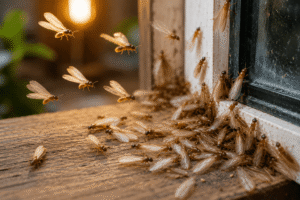
Flying termites are reproductive termites, scientifically known as “alates” or “swarmers.” They are winged members of a mature termite colony that leave their nests to reproduce and establish new colonies.
Unlike worker termites that remain hidden inside wooden structures or underground, flying termites emerge in large numbers during specific seasons, particularly after rainfall. This phenomenon is commonly known as termite swarming.
When people search for Flying Termites Bangalore, they are usually referring to these winged termites that suddenly appear around lights, balconies, and windows during humid evenings.
Flying termites have only one purpose:
To leave an existing colony, mate, and establish a brand-new termite colony elsewhere.
This is why spotting flying termites should never be ignored. Their presence often indicates that:
- A mature termite colony already exists nearby.
- Termites are actively reproducing.
- New infestations may soon develop.
- Your property may already be at risk.
In many cases, homeowners only discover a termite infestation after noticing flying termites indoors. Unfortunately, termite colonies don’t become mature overnight. A colony typically takes several years to develop enough reproductive termites for swarming.
Therefore, seeing flying termites may indicate that termite activity has been present long before they became visible.
Why Are Flying Termites Common in Bangalore?
There are several reasons why Bangalore experiences increased termite activity every year.
Bangalore’s Climate is Ideal for Termites
The climate in Bangalore provides perfect conditions for termite survival and reproduction throughout much of the year.
Factors that contribute include:
- Moderate temperatures
- High humidity levels during monsoon
- Wet soil conditions
- Extensive urban construction
- Abundance of wooden interiors in modern homes
Unlike cities with extreme summers or harsh winters, Bangalore maintains relatively favourable weather conditions that support termite colonies year-round.
High Humidity During Monsoon
Humidity plays a crucial role in termite survival.
Termites lose moisture quickly and thrive in damp environments. During the rainy season, humidity levels increase substantially, creating ideal conditions for termite swarming and colony expansion.
This is one of the primary reasons why Flying Termites Bangalore homeowners encounter are particularly common between June and September.
Rapid Construction Activity
Bangalore’s continuous urban development contributes significantly to termite activity.
New construction projects often disturb underground termite colonies. Additionally, construction materials, soil movement, and untreated wood can unintentionally create suitable habitats for termites.
Areas experiencing rapid residential development frequently report increased termite infestations.
Wooden Interiors Are Highly Vulnerable
Modern Bangalore homes often feature:
- Modular kitchens
- Wooden wardrobes
- Wooden flooring
- Decorative wall panelling
- False ceilings
- Designer furniture
All of these materials provide potential food sources for termites if left untreated.
This is why termite control Bangalore services have become increasingly important for homeowners and builders alike.
Why Do Flying Termites Appear During the Rainy Season?
If you’ve noticed flying termites appearing immediately after rainfall, there’s a scientific explanation behind their behaviour.
Moisture Encourages Swarming
Rain softens the soil surrounding subterranean termite colonies, making it easier for reproductive termites to emerge.
Moist conditions also improve their chances of survival while establishing new colonies.
Warm Evenings Trigger Flight Activity
Flying termites are particularly active during:
- Warm evenings
- Humid weather conditions
- Light rainfall periods
- Calm winds
These environmental conditions help reproductive termites travel safely while searching for suitable nesting locations.
Increased Survival Rates
The monsoon season provides:
- Better moisture retention
- Improved soil conditions
- Increased availability of nesting sites
As a result, termites time their reproductive cycles to maximise colony survival.
This seasonal behaviour explains why searches related to Flying Termites Bangalore tend to increase significantly during monsoon months.
When Are Flying Termites Most Active in Bangalore?
Flying termites are usually most active during Bangalore’s monsoon season.
Peak Months Include:
- June
- July
- August
- September
Some termite species may remain active into October depending on weather patterns.
Flying Termites Are Commonly Seen:
- After evening rainfall
- Around balcony lights
- Near tube lights and LED lighting
- Around window frames
- Near garden lights
- Inside apartments and villas
Many Bangalore residents report seeing hundreds of flying termites gathering around lights within minutes of switching them on during humid evenings.
The sudden appearance of flying termites can be alarming, especially when they enter homes in large numbers.
However, their behaviour follows predictable seasonal patterns that pest control professionals understand well.
Are Flying Termites Dangerous?
One of the most common concerns among homeowners is whether flying termites are dangerous to people.
Fortunately, flying termites do not pose any direct health risks.
They:
- Do not bite humans.
- Do not sting.
- Do not spread diseases.
- Are not poisonous.
- Do not contaminate food.
From a medical standpoint, flying termites are relatively harmless.
However, they can be extremely dangerous for your property.
The real danger lies in what flying termites represent—a mature termite colony that may already be damaging wooden structures within your home.
A single termite colony can contain:
- Thousands of worker termites.
- Soldiers.
- Reproductive termites.
- Future queens and kings.
Worker termites feed continuously and can remain hidden for years while causing extensive structural damage.
Ignoring flying termites may lead to:
- Damaged wooden furniture.
- Infested wardrobes.
- Destroyed modular kitchens.
- Hollow wooden doors.
- Structural weakening.
- Expensive repairs.
This is why termite infestation Bangalore homeowners experience should always be addressed promptly.
Do Flying Termites Mean You Have a Termite Infestation?
Not necessarily—but they should always be treated as a warning sign.
There are generally three possibilities when flying termites appear:
Scenario 1: Nearby Colony
Flying termites may have emerged from:
- Neighbouring properties
- Construction sites
- Garden areas
- Underground colonies nearby
Scenario 2: Active Infestation
Flying termites may indicate that termites are already present inside:
- Walls
- Wooden furniture
- Flooring
- Foundations
Scenario 3: Future Infestation Risk
Flying termites that successfully establish colonies near your property can lead to future infestations.
Repeated sightings of Flying Termites Bangalore homes experience should never be ignored.
Professional termite inspections are recommended if:
- Flying termites appear multiple times.
- Wings are found indoors.
- Wooden furniture shows damage.
- Mud tubes are visible.
- Termite droppings are discovered.
Early termite detection significantly reduces treatment costs and prevents extensive property damage.
Flying Termites vs Flying Ants: How to Identify Them
Many homeowners mistakenly identify flying termites as ants.
Here’s how you can tell the difference.
| Feature | Flying Termites | Flying Ants |
|---|---|---|
| Waist | Straight | Narrow |
| Wings | Equal-sized | Unequal-sized |
| Antennae | Straight | Bent |
| Body Shape | Uniform | Segmented |
| Damage Potential | Severe | Minimal |
Flying Termites Have:
- Four wings of equal length.
- Straight antennae.
- Soft bodies.
- Thick waists.
Flying Ants Have:
- Larger front wings.
- Pinched waists.
- Bent antennae.
- Harder body structures.
Proper identification is extremely important because termite infestations require specialised treatment methods that differ entirely from standard pest control procedures.
Signs of Termite Infestation in Bangalore Homes
One of the biggest challenges with termites is that they work silently and remain hidden for months or even years. Most homeowners in Bangalore don’t realise they have a termite problem until significant damage has already occurred.
If you’ve recently noticed Flying Termites Bangalore residents commonly encounter during the monsoon season, it’s important to inspect your property for early warning signs of termite activity.
Discarded Wings Around Your Home
After termites complete their mating flight, they shed their wings before establishing a new colony.
Look for discarded wings around:
- Window sills
- Balcony doors
- Living room lights
- Bedroom windows
- Staircases
- Bathroom ventilation openings
Finding termite wings repeatedly is one of the clearest signs that termite activity is occurring nearby.
Hollow Sounding Wooden Furniture
Termites consume wood from the inside out, often leaving the external surface intact. This makes termite infestations difficult to detect in the early stages.
Inspect:
- Wooden wardrobes
- Beds
- Dining tables
- Wooden cupboards
- Shoe racks
- TV units
- Wooden partitions
Tap lightly on wooden surfaces. If they sound hollow or produce a papery sound, termites may already be feeding inside.
Mud Tubes on Walls and Wooden Structures
Subterranean termites build mud tubes to protect themselves while travelling between their colonies and food sources.
Mud tubes are commonly found on:
- Walls
- Wooden doors
- Foundation areas
- Kitchen cabinets
- External walls
- Pillars
These mud tunnels help termites retain moisture and protect them from predators and environmental conditions.
Bubbling or Peeling Paint
Termites create moisture pockets inside walls and wooden structures.
Common signs include:
- Paint bubbling
- Paint peeling
- Swollen wooden surfaces
- Damp patches
- Small cracks
Many homeowners mistakenly assume these are water damage issues when they may actually indicate a termite infestation.
Tight Doors and Windows
Wood damaged by termites may expand or lose its structural integrity.
You may notice:
- Doors becoming difficult to close.
- Window frames swelling.
- Misaligned wooden panels.
These issues often occur gradually, making them easy to overlook.
Flying Termites in Apartments in Bangalore
Many people assume termites only affect independent houses or villas. Unfortunately, this is far from true.
Termites are increasingly becoming a problem in apartments across Bangalore.
Areas that frequently report termite issues include:
- Whitefield
- Electronic City
- Sarjapur Road
- HSR Layout
- JP Nagar
- Hebbal
- Yelahanka
- Bellandur
- Marathahalli
- RR Nagar
Modern apartments contain extensive wooden interiors that termites find extremely attractive.
Common Apartment Areas Prone to Termite Infestation
Termites are frequently found in:
- Modular kitchens
- Wooden wardrobes
- Bathroom cabinets
- Wooden flooring
- False ceilings
- Door frames
- Utility areas
Flying termites can easily enter apartments through:
- Balcony openings
- Ventilation shafts
- Electrical ducts
- Window gaps
- Plumbing ducts
Even apartments on the 15th or 20th floor are not immune to termite infestations.
This is why professional termite inspection Bangalore services are becoming increasingly popular among apartment owners.
Flying Termites in Villas and Independent Homes
Independent houses and villas face an even greater termite risk due to their direct contact with soil.
Subterranean termites usually originate underground and travel towards wooden structures.
Properties with:
- Gardens
- Wooden decks
- Landscaping
- Outdoor storage areas
- Wooden pergolas
are particularly vulnerable.
Common infestation areas include:
- Ground floor wardrobes
- Staircase woodwork
- Wooden ceiling panels
- Kitchen cabinets
- Garage storage units
- Wooden window frames
Flying termites in villas often indicate mature colonies hidden within the property’s foundation or surrounding soil.
For villa owners, regular anti termite treatment Bangalore services can significantly reduce infestation risks.
Flying Termites in Wooden Furniture
Termites don’t discriminate between expensive imported furniture and locally manufactured woodwork.
They can infest:
- Beds
- Wardrobes
- Modular kitchens
- Study tables
- Dining tables
- Wooden flooring
- Bookshelves
- Office furniture
- Decorative wooden panels
Some of the most expensive termite infestations occur in luxury modular kitchens and customised wardrobes.
Signs of Furniture Infestation
Watch out for:
- Hollow sounds
- Tiny holes
- Powder-like residue
- Swollen wooden surfaces
- Mud deposits
- Broken edges
- Loose laminates
If you observe flying termites near wooden furniture, immediate termite inspection is recommended.
How Much Damage Can Flying Termites Cause?
Homeowners are often surprised by how destructive termites can be.
A mature termite colony can contain hundreds of thousands of termites feeding continuously on cellulose-based materials.
Termites can cause damage to:
Residential Properties
- Wooden doors
- Window frames
- Wardrobes
- Furniture
- Flooring
- False ceilings
Commercial Properties
- Office furniture
- Wooden partitions
- Conference tables
- Reception desks
- Storage cabinets
Structural Components
Although less common, severe termite infestations may weaken structural wooden elements over time.
The cost of termite-related repairs often exceeds the cost of professional termite treatment many times over.
Where Do Flying Termites Hide?
Flying termites themselves are relatively easy to spot during swarming season.
However, termite colonies usually remain hidden.
Common hiding locations include:
Inside Walls
Termites can travel unnoticed through wall cavities for years.
Under Wooden Flooring
Moisture trapped beneath flooring provides ideal termite conditions.
Behind Modular Kitchen Cabinets
Dark and humid spaces attract termites.
Under Staircases
Wooden staircase structures are highly susceptible.
Ceiling Panels
False ceilings often contain wooden supports vulnerable to termite attacks.
Soil Near Foundations
Subterranean termite colonies may exist underground for several years before becoming visible.
Understanding where termites hide can significantly improve early detection efforts.
Why Are Flying Termites Attracted to Lights?
One of the most common observations among Bangalore homeowners is that flying termites gather around lights.
Flying termites are naturally attracted to light sources during their swarming phase.
Common attractions include:
- LED lights
- Tube lights
- Balcony lights
- Outdoor garden lighting
- Ceiling lights
- Decorative lighting
This behaviour explains why termite swarms often appear suddenly during humid evenings.
If you notice hundreds of winged insects around lights during monsoon, avoid assuming they are harmless flying ants.
Proper identification is essential before ignoring the problem.
Do Flying Termites Bite Humans?
No.
Flying termites are completely harmless to humans.
They do not:
- Bite
- Sting
- Spread infections
- Cause allergic reactions in most individuals
However, their appearance should still be taken seriously because of the potential property damage they indicate.
The real danger isn’t the termite itself—it’s the colony hidden behind the swarm.
DIY Solutions for Flying Termites in Bangalore
If you’ve spotted Flying Termites Bangalore homeowners frequently encounter during the monsoon season, it’s natural to look for quick DIY remedies. While some methods can help reduce termite activity temporarily, it’s important to understand that DIY treatments rarely eliminate an established termite colony.
Flying termites are only the visible part of a much larger problem. The actual colony may contain thousands or even hundreds of thousands of termites hidden inside walls, furniture, or underground.
Turn Off Unnecessary Lights
Flying termites are strongly attracted to light sources during their swarming phase. During humid evenings and immediately after rainfall, consider turning off unnecessary outdoor lights.
Pay special attention to:
- Balcony lights
- Garden lights
- Decorative lighting
- Window-side lamps
This simple step can significantly reduce the number of flying termites entering your home.
Seal Entry Points
Flying termites can enter homes through surprisingly small openings.
Inspect and seal:
- Window gaps
- Balcony door openings
- Ventilation ducts
- Utility pipe openings
- Electrical conduits
Proper sealing can help minimise termite entry during swarming season.
Reduce Moisture Levels
Termites thrive in damp and humid environments.
Homeowners should regularly inspect for:
- Leaking pipes
- Damp walls
- Roof seepage
- Water accumulation near foundations
- Poor ventilation
Reducing moisture levels is one of the most effective long-term termite prevention strategies.
Vacuum Visible Termites
If you notice termite swarms indoors, vacuuming can quickly remove visible insects.
Dispose of the vacuum bag immediately after use to prevent termites from escaping.
Avoid Storing Wood Near Moist Areas
Wood stored near damp walls or garden spaces can attract termites.
Avoid keeping:
- Wooden crates
- Cardboard boxes
- Plywood sheets
- Firewood
- Old furniture
in humid environments.
While these DIY methods may help temporarily, they are not substitutes for professional termite control Bangalore solutions.
Professional Termite Treatment Bangalore Solutions
If flying termites continue to appear or if termite damage is visible, professional treatment becomes necessary.
Modern termite control techniques are highly effective when performed by trained professionals.
Post Construction Termite Treatment Bangalore
This treatment is designed for existing properties that are already occupied.
Suitable for:
- Apartments
- Villas
- Independent homes
- Commercial buildings
- Offices
The process generally involves:
- Chemical injection methods
- Wall treatment
- Soil treatment
- Perimeter treatment
- Furniture treatment
Post construction termite treatment is particularly effective for eliminating active termite infestations.
Pre Construction Anti Termite Treatment Bangalore
Builders and property owners can significantly reduce termite risks through pre-construction treatment.
This treatment is applied before construction begins and provides long-term termite protection.
Suitable for:
- Residential projects
- Villas
- Commercial developments
- Apartment projects
Benefits include:
- Prevention of underground termite entry.
- Enhanced structural protection.
- Reduced future maintenance costs.
Many builders in Bangalore now consider pre-construction anti termite treatment an essential investment.
Wood Termite Treatment Bangalore
Wood treatment is commonly recommended for:
- Modular kitchens
- Wardrobes
- Wooden flooring
- Furniture
- Wooden partitions
- Office interiors
This specialised treatment helps protect valuable wooden assets from termite damage.
Termite Treatment Cost Bangalore
One of the most frequently asked questions by homeowners is:
“How much does termite treatment cost in Bangalore?”
The cost varies depending on several factors.
These include:
- Size of the property.
- Severity of infestation.
- Treatment method required.
- Construction type.
- Area of termite activity.
For example, treatment costs for:
- Apartments
- Villas
- Commercial offices
- Independent houses
will differ significantly.
Professional termite inspection services are usually recommended before providing accurate quotations.
While termite treatment may seem like an additional expense, it is often far more economical than replacing termite-damaged furniture or undertaking structural repairs.
How to Prevent Flying Termites in Bangalore
Prevention is always more affordable than termite treatment.
Here are some practical steps homeowners can take.
Schedule Annual Termite Inspections
Regular inspections help identify termite activity before major infestations develop.
Annual termite inspections are highly recommended for:
- Apartments
- Villas
- Commercial properties
- Newly purchased homes
Maintain Proper Ventilation
Ensure:
- Kitchens remain dry.
- Bathrooms are well ventilated.
- Utility areas remain moisture-free.
Good ventilation significantly reduces termite-friendly conditions.
Inspect Wooden Furniture Regularly
Check furniture periodically for:
- Small holes
- Hollow sounds
- Swollen surfaces
- Mud deposits
- Discarded termite wings
Protect Wooden Structures
Consider professional anti termite treatment for:
- Wardrobes
- Doors
- Wooden flooring
- Kitchen cabinets
Eliminate Water Leakage
Moisture remains one of the primary contributors to termite infestations.
Repair leaking:
- Pipes
- Roofs
- Bathroom fixtures
- Water tanks
without delay.
When Should You Call Pest Control Experts?
You should immediately consider professional termite control services if:
- Flying termites appear repeatedly.
- You notice discarded wings indoors.
- Wooden furniture sounds hollow.
- Mud tubes are visible.
- Doors and windows become difficult to operate.
- Paint begins bubbling unexpectedly.
- Furniture damage becomes noticeable.
Ignoring termite activity almost always results in higher repair costs later.
Early intervention is essential.
Why Choose Professional Termite Control Services Bangalore?
Professional termite treatment offers several advantages over DIY methods.
Benefits include:
- Complete termite colony elimination.
- Long-term protection.
- Professional inspection.
- Advanced treatment techniques.
- Preventive termite solutions.
- Reduced property damage risks.
Experienced termite control professionals can identify hidden infestations that homeowners may easily overlook.
Whether you’re dealing with flying termites in an apartment or a severe termite infestation in a villa, professional treatment provides the safest and most effective solution.
Frequently Asked Questions (FAQs)
1. Why do Flying Termites Bangalore homes experience appear during monsoon?
Flying termites emerge during warm and humid weather conditions to reproduce and establish new colonies. Bangalore’s monsoon season provides ideal conditions for termite swarming.
2. Are flying termites dangerous to humans?
No. Flying termites do not bite, sting, or spread diseases. However, they can indicate a serious termite infestation within your property.
3. Can termites damage modular kitchens?
Yes. Modular kitchens are one of the most common areas affected by termite infestations due to their wooden construction.
4. Are termites common in Bangalore apartments?
Yes. Apartments across Bangalore frequently experience termite infestations, particularly in wooden wardrobes and kitchen cabinets.
5. What attracts flying termites?
Flying termites are attracted to:
- Light
- Moisture
- Humid weather
- Wooden structures
6. Can termites destroy furniture?
Yes. Termites can severely damage wooden furniture if infestations remain untreated.
7. What is anti termite treatment?
Anti termite treatment is a professional pest control process designed to eliminate termite colonies and prevent future infestations.
8. Is termite treatment safe?
Modern termite treatments performed by licensed professionals are generally safe when applied according to industry standards.
9. How often should termite inspections be conducted?
Annual termite inspections are recommended for most residential and commercial properties in Bangalore.
10. Can termites return after treatment?
Properly executed termite treatments offer long-lasting protection. However, periodic inspections are advisable to ensure continued termite control.
Final Thoughts
The appearance of Flying Termites Bangalore homeowners encounter every monsoon season should never be ignored. While these winged insects may seem harmless at first, they are often a clear indication that a mature termite colony is nearby or already active within your property.
Bangalore’s climate, rapid urban development, and widespread use of wooden interiors make homes particularly vulnerable to termite infestations. Whether you own an apartment, villa, or commercial property, early detection remains the most effective way to prevent costly termite damage.
If you’ve noticed flying termites around your lights, discarded wings near your windows, or signs of termite activity in wooden furniture, it’s important to act quickly. Professional termite inspection and treatment can protect your home, preserve your valuable wooden assets, and provide long-term peace of mind.
Don’t wait until termites silently destroy your property—take preventive action and safeguard your home before a minor termite problem becomes a major expense.