
You spot a few cockroaches near the kitchen sink, or termite dust along a wooden frame, and suddenly you’re searching for pest control services at midnight. Bangalore’s climate, with its mix of humidity and warm spells, keeps pests active almost year round, and a single infestation can spread through an apartment block or office fast if it’s ignored. Knowing what actual treatment involves helps you avoid wasting money on quick fixes that don’t last.
Professional pest control isn’t just spraying chemicals in corners. It covers inspection, targeted treatment, and follow-up visits for specific pests like termites, bed bugs, rodents, cockroaches, and mosquitoes, each requiring a different method and product. A good provider tailors the plan to your property type, whether it’s a villa, a rented flat, or a restaurant kitchen, and gives you a clear treatment plan with pricing upfront instead of vague promises.
In this article, we break down exactly what pest control services typically include, how treatments differ by pest type, and what questions to ask before hiring a company. After 32 years of treating homes and businesses across Bangalore, we’ve seen what separates lasting results from temporary relief, and we’ll show you how to spot that difference.
Why professional pest control services matter
Bangalore’s warm, humid stretches give pests exactly the conditions they need to breed fast, and that’s why treating an infestation properly, not just spraying and hoping, actually matters. A cockroach problem left unchecked for a few weeks in a kitchen can turn into a health hazard, while a termite colony quietly chewing through a wooden beam can take down a door frame or window sill before anyone notices. Professional treatment addresses the source of the problem, not just the pests you can see.
Health risks that pests bring into your home
Mosquitoes in Bangalore carry dengue and chikungunya, and both have spiked in the city during monsoon months. Cockroaches leave behind droppings and shed skin that trigger asthma and allergies in children, and rodents contaminate stored grains and kitchen surfaces with urine and droppings that spread salmonella. Bed bugs don’t transmit disease directly, but their bites cause skin infections and sleepless nights, especially for families with young kids. None of these risks disappear with a can of spray from the local store; they need targeted treatment that reaches nesting sites, not just visible pests.
The real cost of ignoring an infestation
Termites cause more financial damage over time than almost any other household pest in India, because they work silently inside wood, wallpaper, and even books for months before you spot the damage. A rental property with an active rodent problem can lose tenants fast, and a restaurant with visible cockroaches risks a health inspection failure or a one-star review that scares off customers for months. Compare what happens when you rely on shortcuts versus professional treatment:
| Approach | Typical outcome | Long-term cost |
|---|---|---|
| Store-bought sprays | Kills visible pests only, nest survives | Repeat purchases, ongoing infestation |
| One-time DIY treatment | Temporary relief, pests return in weeks | Property damage continues unnoticed |
| Professional pest control | Targets nests and breeding sites | Lower repair and health costs over time |
Ignoring a pest problem never makes it smaller, it just moves the cost from a service bill to a repair bill.
Why DIY treatments often fall short
Hardware store sprays kill the pests you see standing in front of you, but they rarely reach the colony behind the wall or under the flooring where the real problem lives. Trained technicians use gel baiting systems, targeted soil treatments, and equipment that identifies termite activity inside walls without tearing anything open, tools that aren’t sold to households. Licensed providers also know which chemicals are safe around children and pets and which application methods actually last, since a treatment that fades in two weeks isn’t solving anything.
Qualified pest control also protects you from a problem many homeowners don’t think about until it’s too late: liability and safety. Applying the wrong concentration of chemical near food storage or using an unapproved product around pets can cause more harm than the pest itself. The Centers for Disease Control and Prevention notes that improper pesticide use at home is a recognized source of accidental poisoning, which is exactly why professional application, correct dosing, and proper ventilation matter as much as the treatment itself (see the Bengaluru Urban District Health Department. Choosing a trained provider isn’t about convenience alone, it’s about getting a result that actually holds and keeping your household safe while you get there.
What pest control services typically include
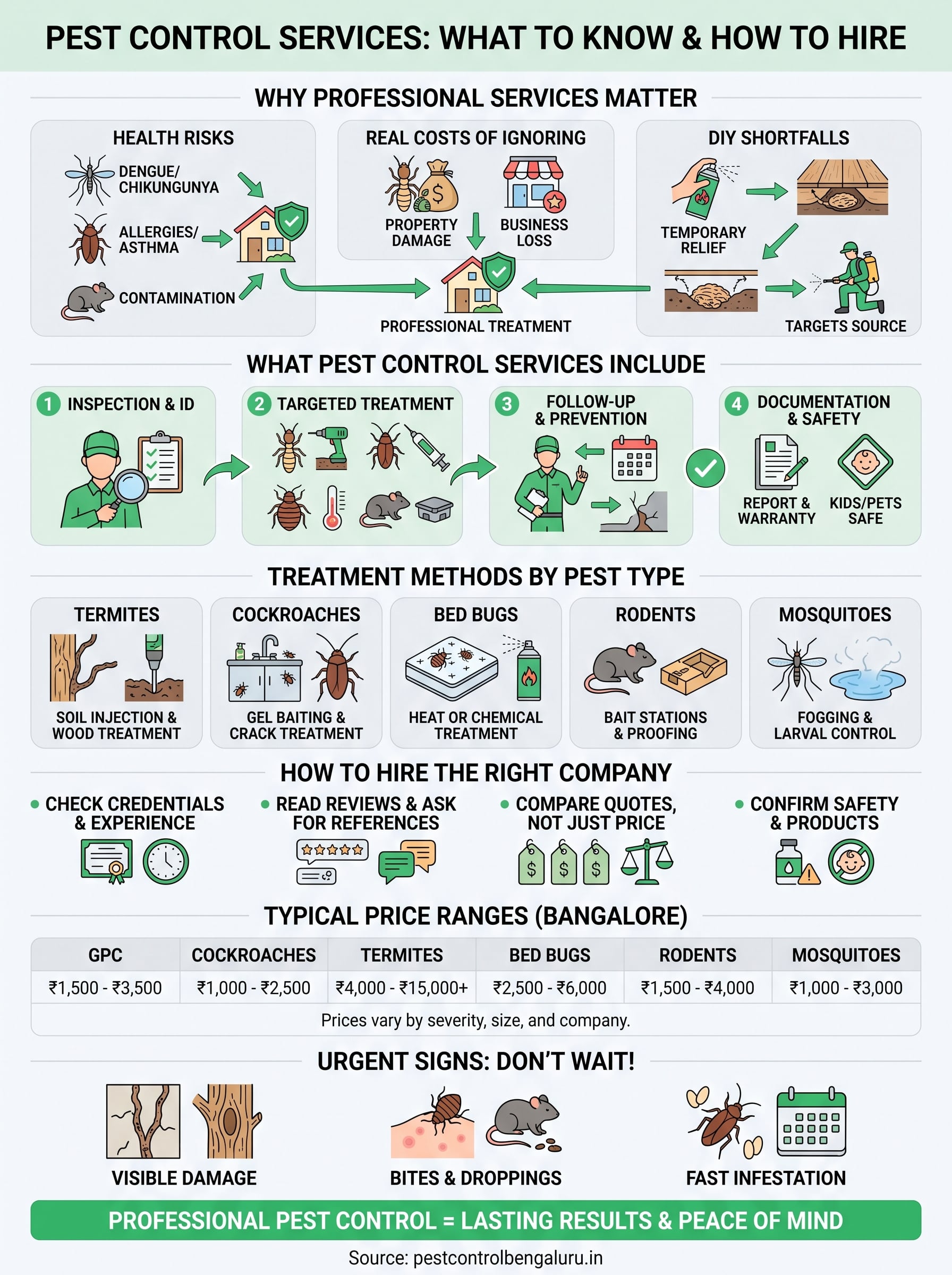
A proper pest control visit follows a structured process, not a random spray-and-go routine. Every reputable company starts with an inspection, moves into a targeted treatment plan, and finishes with a follow-up schedule to confirm the pests are actually gone. Knowing this sequence helps you spot the difference between a technician doing real work and one rushing through a job to get to the next appointment.
Inspection and identification
Before any chemical touches your property, a trained technician walks through the space to identify the pest species, entry points, and the extent of the infestation. This step matters because treatment differs by pest: a termite problem needs soil and wood treatment, while a cockroach infestation calls for gel baiting in kitchen cracks and behind appliances. Skipping inspection is how homeowners end up paying for a generic spray that never touches the actual nest.
Treatment methods by pest type
Different pests demand different tools, and a serious provider adjusts the method accordingly instead of using one product for everything.
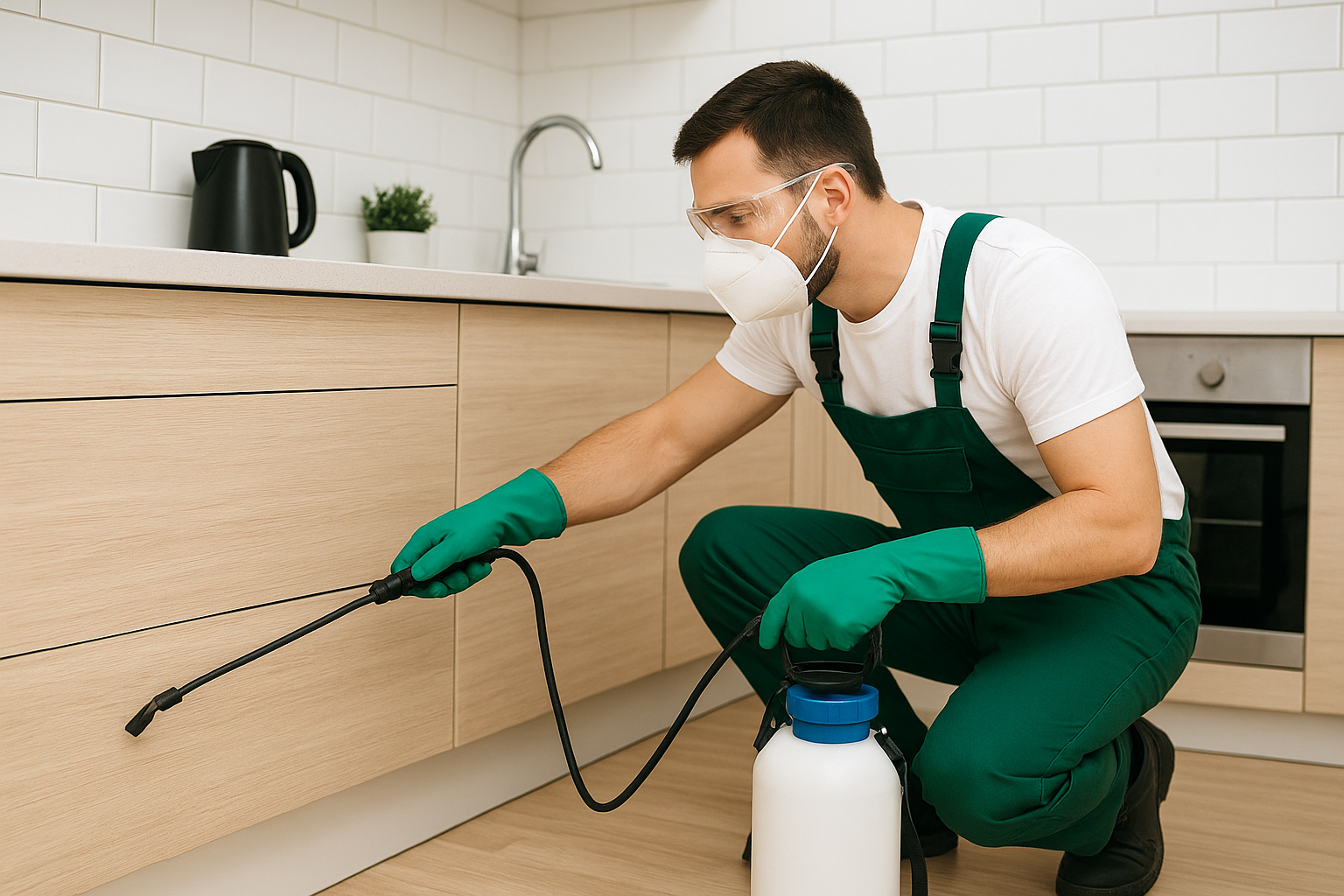
- Termites: soil treatment, wood injection, and pre-construction barriers
- Cockroaches: gel baiting and targeted crack-and-crevice treatment
- Bed bugs: heat or chemical treatment on mattresses, furniture, and seams
- Rodents: baiting stations, proofing recommendations, and trap placement
- Mosquitoes: fogging, residual spraying, and breeding site removal
A treatment plan that ignores the specific pest is really just guesswork with a service invoice attached.
Follow-up visits and prevention advice
One visit rarely finishes the job, especially with termites and bed bugs, which is why follow-up inspections are a standard part of any legitimate service package. Good companies schedule a return visit within a few weeks to check for surviving activity and re-treat if needed, rather than treating the first visit as the end of the relationship. Prevention advice, like sealing gaps around pipes, fixing standing water, or storing food properly, should come with the service too, since it reduces the chance you’ll be calling again in three months.
Documentation and safety information
Expect a written record of what was applied, where it was applied, and how long you need to keep children or pets away from treated areas. This isn’t paperwork for its own sake; it protects your household and gives you something to reference if the problem returns and you need a warranty visit. A company that hands you a receipt with no details about products or safety windows is skipping a step that matters.
How to hire the right pest control company
Finding a name on Google is easy; finding a company that actually solves your pest problem takes a bit more digging. Credentials and experience separate a reliable provider from someone with a sprayer and a van, so start by checking how long the company has operated in your city and whether their technicians are trained on the specific pest you’re dealing with. A company that’s handled termite jobs in Bangalore for decades understands local soil conditions and building styles in a way a newer outfit simply hasn’t had time to learn.
Check credentials and experience first
Ask how long the company has been in business, whether technicians hold formal training or certification, and whether they carry insurance in case something goes wrong during treatment. Years in the field matter more than a flashy website, since pest behavior in older independent houses differs from what you’ll see in a new-build apartment complex. A provider who’s treated thousands of homes will spot a termite entry point or a rodent burrow faster than one still learning the basics.
Read reviews and ask for references
Online reviews tell you how a company handles real customers, not just how they market themselves. Look past the star rating and read what people actually wrote about follow-up visits, technician punctuality, and whether the problem stayed gone.
- Search for reviews mentioning the specific pest you’re dealing with
- Ask the company for two or three references from recent customers
- Check if complaints mention repeat infestations after treatment
A pest control company with no reviews mentioning follow-up visits probably isn’t doing follow-up visits.
Compare quotes without choosing on price alone
Get at least two or three quotes before booking, and compare what’s actually included, not just the final number. A cheap quote that skips soil treatment or follow-up visits will cost you more when the pests return in six weeks. Ask each company to break down the treatment plan, the products used, and how many visits are included in the price.
Confirm safety practices and product transparency
A trustworthy provider tells you exactly what chemicals they’re using and whether they’re safe around children, pets, and food storage areas without you having to ask twice. If a company hesitates to name their products or explain the safety window before you can re-enter a treated room, that’s a red flag worth taking seriously. Reputable pest control services in Bangalore will walk you through this before the technician even arrives, not after the treatment is already done.
Pest control costs in Bangalore explained
Pricing for pest control services in Bangalore varies widely depending on the pest, the size of the property, and how severe the infestation has become. A one-bedroom flat with a minor cockroach problem costs far less to treat than a three-story independent house with active termite colonies in the foundation. Understanding what drives the price helps you spot a quote that’s too good to be true and one that’s simply priced fairly for the work involved.
What drives the price of a treatment
Square footage matters, but so does the pest type, since termite treatment involves drilling and injecting chemical into walls and soil, while a cockroach job might only need gel baiting in a kitchen. Severity of infestation also plays a role; a property with visible termite mud tubes across multiple rooms needs more product and labor than a single affected corner. Access to the property, whether furniture needs to be moved, and how many follow-up visits are included in the package all factor into the final number too.
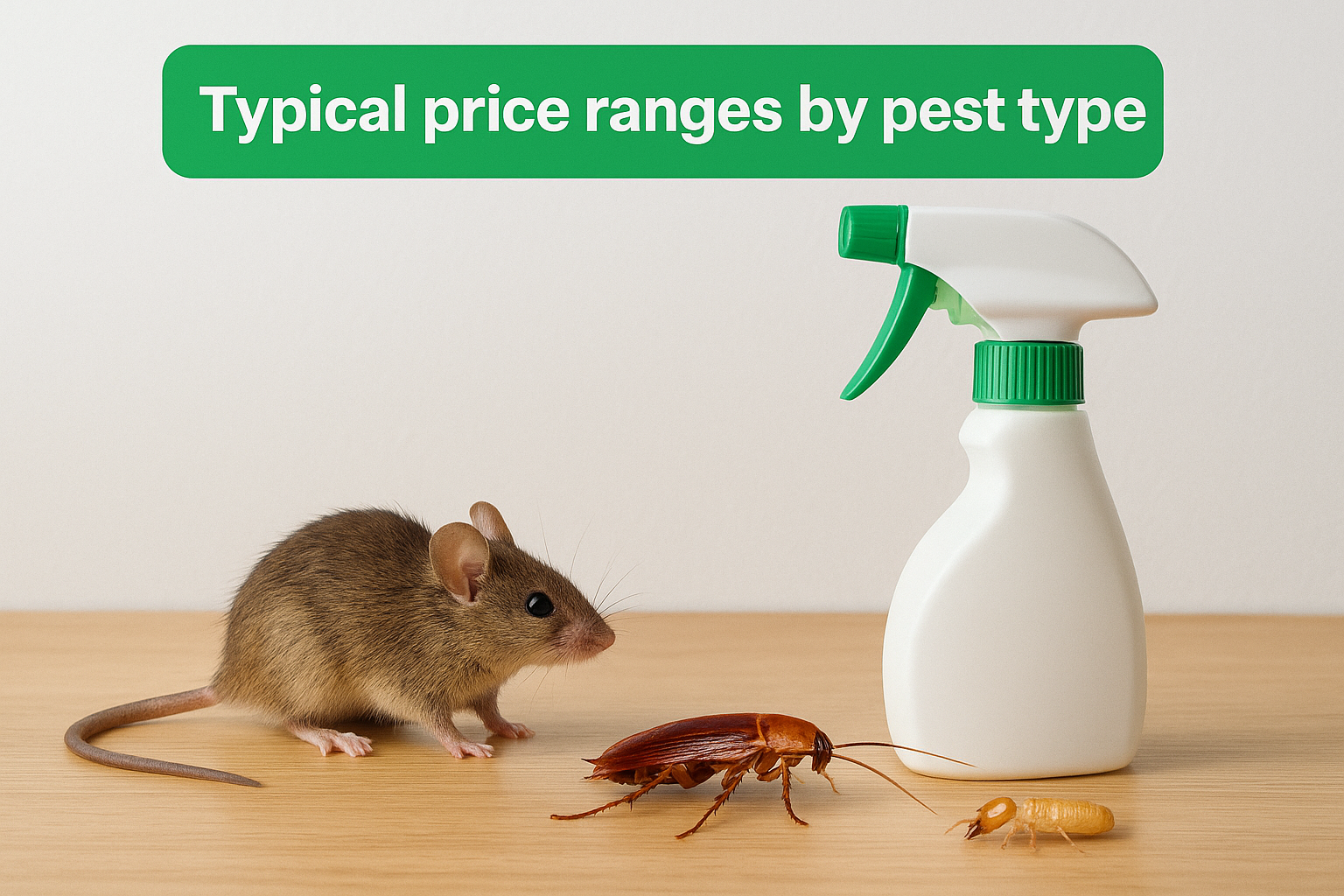
Typical price ranges by pest type
Rates shift based on the company and the property, but this gives you a rough sense of what to expect in Bangalore:
| Pest type | Typical price range (per treatment) | Notes |
|---|---|---|
| General pest control (GPC) | ₹1,500 – ₹3,500 | Covers common household pests, often quarterly |
| Cockroach control | ₹1,000 – ₹2,500 | Gel baiting, usually includes one follow-up |
| Termite treatment | ₹4,000 – ₹15,000+ | Depends on property size and soil vs wood treatment |
| Bed bug treatment | ₹2,500 – ₹6,000 | Varies by number of rooms and furniture pieces |
| Rodent control | ₹1,500 – ₹4,000 | Baiting stations plus proofing advice |
| Mosquito control | ₹1,000 – ₹3,000 | Fogging and residual spray, often seasonal |
The cheapest quote rarely covers the treatment your property actually needs, and that gap shows up as a repeat infestation a few months later.
One-time treatment vs annual maintenance contracts
Single visits work for isolated problems like a one-off ant trail or a small wasp nest, but termites and general pest issues call for a maintenance contract with scheduled visits every few months. Annual plans usually cost less per visit than booking one-time treatments repeatedly, and they catch new activity before it turns into a full infestation again. Ask any provider to break down whether their quote covers a single job or ongoing protection, since that distinction changes the real cost over a year, not just the invoice you see today.
Signs you need pest control right away
Some pest problems can wait a week for a scheduled visit, but others need attention the same day you notice them. Waiting too long on termites or bed bugs almost always costs more than acting fast, since both spread quietly and multiply while you’re deciding whether the problem is serious enough to call someone. Knowing which signs demand urgency helps you avoid the kind of damage that turns a small treatment into a major repair bill.
Visible damage that signals an active infestation
Mud tubes running along a wall or foundation, wood that sounds hollow when tapped, or door frames that suddenly stick are classic termite warnings, and none of them go away on their own. Hollow-sounding wood almost always means termites have been feeding inside for weeks already, so the damage you see is usually just the visible edge of a much bigger problem underneath. Small piles of what looks like sawdust near skirting boards or window frames are another giveaway, since that’s termite waste, not construction debris.
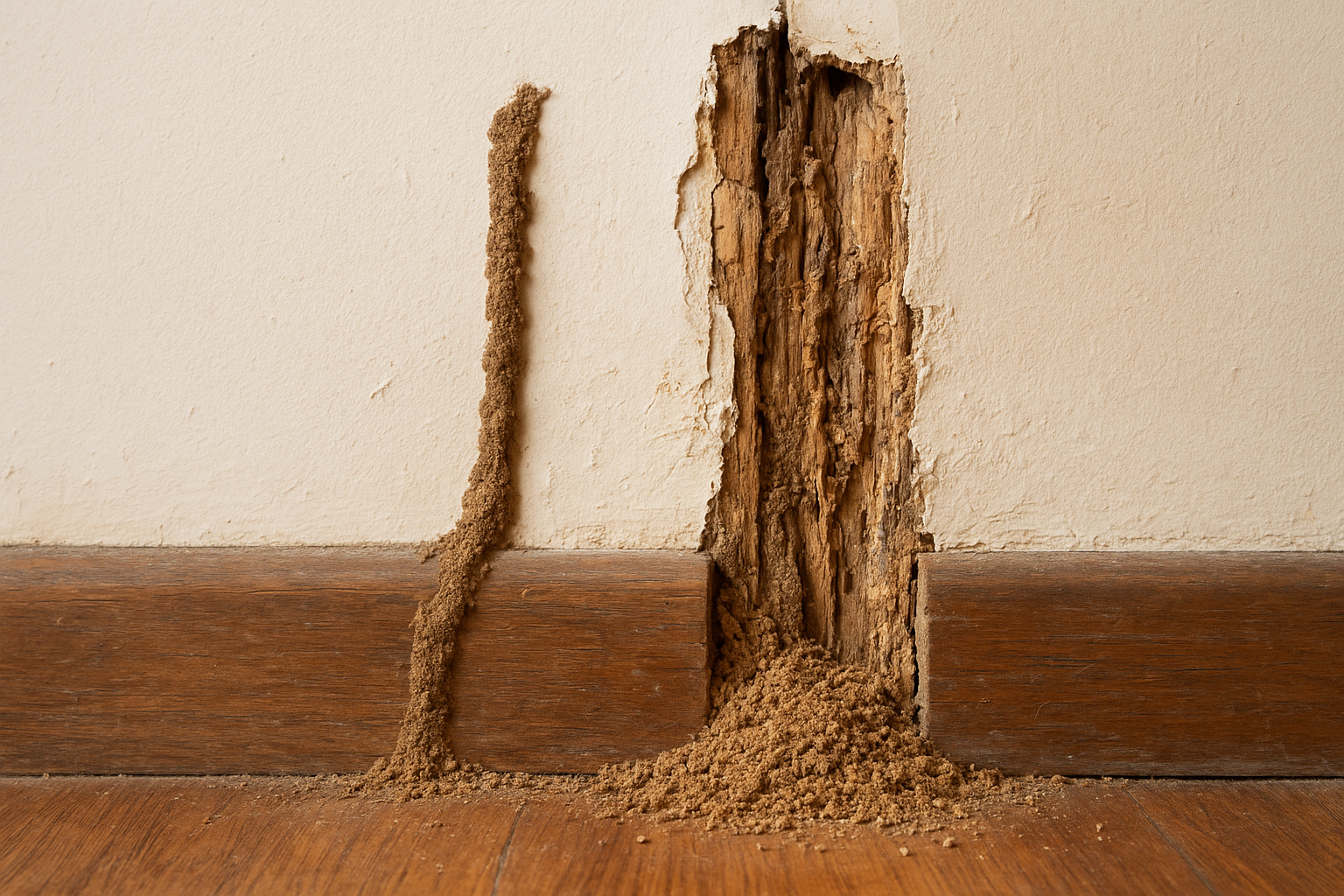
By the time you see mud tubes on a wall, termites have usually been active inside it for months already.
Bite marks, droppings, and other physical clues
Waking up with small, itchy bite marks in a line or cluster usually points to bed bugs, especially if you also spot tiny reddish-brown stains on your mattress seams. Rodent droppings near kitchen cabinets, chewed food packaging, or a strange scratching sound in the ceiling at night all mean rodents have already made a home somewhere in your walls or attic. Cockroach droppings, which look like small dark specks near the stove or sink, along with a musty smell in the kitchen, usually mean the population has grown well beyond what a single can of spray can handle.
When a small problem can turn into a major infestation fast
A few points to keep in mind about timing:
- Bed bugs double their numbers roughly every two to three weeks if untreated
- Termite colonies can number in the tens of thousands before visible damage appears
- Cockroach egg cases hatch in about a month, so delays multiply the problem quickly
- Mosquito breeding sites near standing water can produce new adults within a week
Standing water around your property after monsoon rains, a sudden jump in mosquito bites indoors, or a musty smell from a damp corner are all worth a same-day call rather than a wait-and-see approach. Acting on these signs early is almost always cheaper than waiting for the infestation to announce itself with visible damage.
Questions to ask before booking a service
A short phone call before you book tells you more about a pest control company than any website ever will. Direct questions force a company to show its hand, whether that’s a vague answer about "standard treatment" or a clear breakdown of products, visits, and guarantees. Asking the right things upfront saves you from discovering gaps in the service only after the pests come back.
Questions about the treatment plan
Begin by asking exactly what the technician will do on-site, not just which pest they’re treating. Specific methods matter here, since "we’ll spray the house" tells you nothing about whether they’re using gel baiting, soil injection, or fogging, and each of those suits a different pest.
- Which products or chemicals will you use, and are they safe for children and pets?
- How many visits are included, and what happens if pests return between visits?
- Will you treat the source (nest, colony, breeding site) or just visible activity?
- Do you provide a written report after each visit?
If a company can’t explain its treatment plan in plain language, it probably doesn’t have one.
Questions about guarantees and safety
Every legitimate provider should offer some form of written guarantee, even if it’s just a free re-treatment within a set number of weeks if pests reappear. Ask how long you need to keep the treated area closed off, whether you need to leave the house during application, and what to do if someone in the household has a respiratory condition or allergy.
Here’s a quick script you can use over a call or WhatsApp message before booking:
Hi, before I book, can you confirm:
1. What treatment method will you use for [pest]?
2. Is it safe for kids/pets, and how long should we stay out?
3. How many follow-up visits are included?
4. Do you offer a written guarantee if the pest returns?
5. What's the total cost, including any follow-ups?
Questions about scheduling and communication
Finally, confirm how the company handles scheduling and follow-up, since a provider that’s hard to reach after the first visit isn’t much use if the problem persists. Ask whether weekend or evening slots are available, how quickly they respond to a callback request, and who to contact if you notice activity again before the next scheduled visit. A company that answers all of this clearly, without hesitation, is usually the one that shows up when it matters.
Frequently asked questions about pest control services
**How often should I book pest control services for my home?**Most homes benefit from pest control services every three to six months as part of a general maintenance plan, though termite-prone properties or homes with a recent infestation may need more frequent visits. Restaurants and food businesses often schedule pest control services monthly to stay compliant with hygiene standards.
**Are pest control services safe for homes with children?**Reputable pest control services use products and application methods designed to be safe once treated areas have dried, and a good provider will tell you the exact safety window before starting. Always ask this directly rather than assuming it’s covered.
**What’s included in a standard pest control service visit?**A proper pest control services visit includes an inspection, a treatment plan tailored to the specific pest, the treatment itself, and a written record of what was applied. Follow-up visits are typically included for pests like termites and bed bugs that need more than one treatment to fully clear.
**How do I know if I’m getting good value from pest control services?**Compare quotes for pest control services based on what’s included, not just the price. A cheaper quote that skips follow-up visits or soil treatment for termites usually costs more in the long run when the infestation returns.
**Do pest control services come with any guarantee?**Most legitimate pest control services include a written guarantee, often a free re-treatment if pests return within a set period. Ask for this in writing before booking rather than assuming it’s standard.
Keeping your home pest-free for good
A pest-free home isn’t a one-time fix, it’s the result of proper inspection, targeted treatment, and follow-up visits that actually confirm the problem is gone. Professional pest control services cost more upfront than a can of spray from the local store, but they save you from repair bills, health risks, and the frustration of watching the same infestation return in a few weeks. Whether you’re dealing with termites chewing through a door frame or bed bugs disrupting sleep for the whole family, the pattern holds: hire someone who inspects first, treats the source, and stands behind the work with a written guarantee.
If you’re noticing warning signs at home right now, don’t wait for them to get worse. A to Z Pest Solutions has treated homes and businesses across Bangalore since 1993, and you can book a professional termite treatment today to stop the damage before it spreads further.