
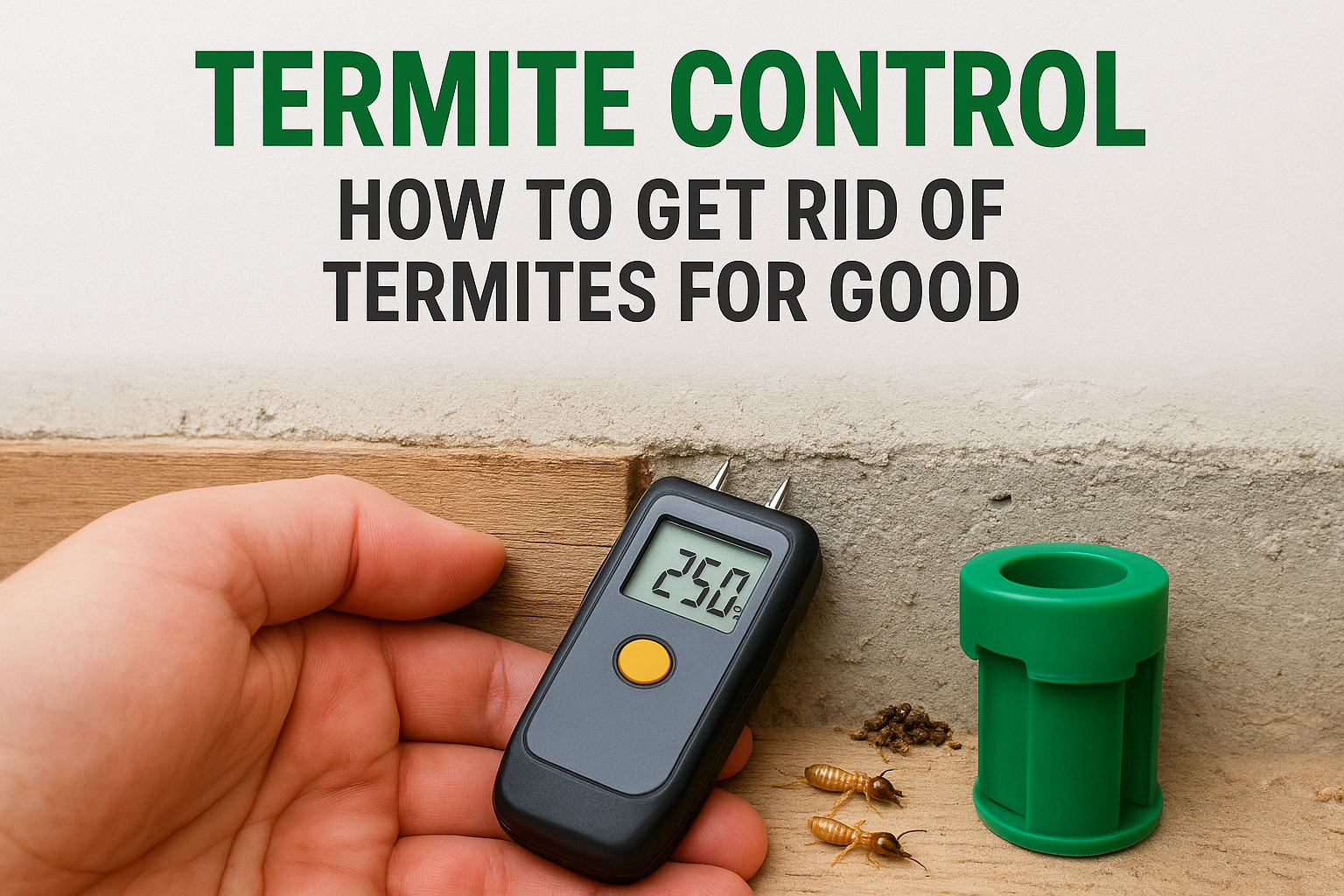
You spot small mud tubes running up a wall, or a wooden door frame that sounds hollow when you tap it. That sinking feeling is familiar to almost every Bangalore homeowner at some point, because termite control is not optional here. Our soil and climate practically invite subterranean termites into foundations, furniture, and false ceilings, and by the time you notice damage, colonies have usually been feeding for months.
If you’re searching for a real fix rather than a temporary spray, you’re in the right place. This guide covers how to spot an infestation early, which treatments actually work, and when a DIY approach simply won’t cut it against an established colony.
We’ll walk through termite identification, the difference between chemical barriers and baiting systems, and why pre-construction treatment matters if you’re building or renovating. You’ll also learn what a professional inspection involves and how long-term prevention plans keep termites from coming back after treatment. Drawing on over three decades of pest control work across Bangalore homes, this article gives you a practical, step-by-step path to getting rid of termites for good, not just for a season.
Why termites are hard to spot until it’s too late
Termites in Bangalore rarely announce themselves. Subterranean termites, the species behind most infestations here, build colonies underground and travel through soil-shielded mud tubes to reach wood, so you almost never see the insects themselves. They avoid light and open air, feeding inside walls, door frames, and furniture where moisture and darkness let them work undisturbed for years. A single colony can house hundreds of thousands of workers, and the damage stays hidden behind paint, plaster, or laminate until the wood underneath is little more than a shell.
A termite colony can hollow out a wooden beam for years before the surface shows a single crack.
Bangalore’s climate makes things worse
Our red laterite soil holds moisture well, and the mix of monsoon humidity and warm temperatures year-round creates near-perfect breeding conditions. Older independent houses with wooden window frames and exposed foundations are especially vulnerable, but newer apartments with false ceilings and modular wood furniture aren’t safe either. Termites don’t care whether your building is ten years old or ten months old; they care about moisture, wood, and an undisturbed path from soil to structure.
The signs homeowners usually miss
Most people only notice termites once a door won’t close properly or a shelf collapses under light weight. By then, the colony has usually been active for six months to two years. Watch for these early indicators instead of waiting for visible damage:
| Sign | What it looks like | What it means |
|---|---|---|
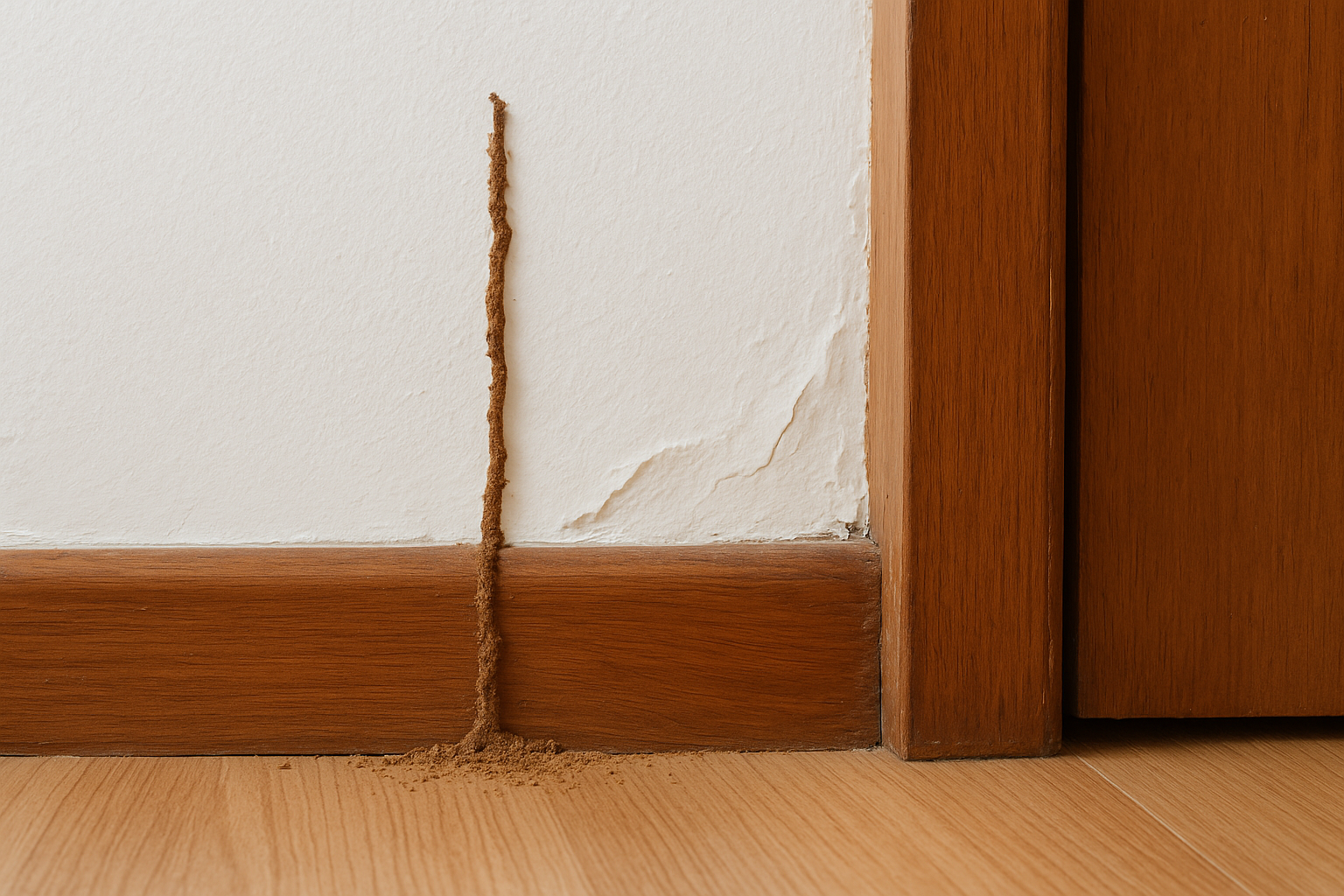
| Mud tubes | Thin brown tunnels on walls or foundations | Termites traveling between soil and wood |
| Hollow-sounding wood | Dull thud when tapped, instead of a solid knock | Internal tunneling has already begun |
| Discarded wings | Small piles near windows or light fixtures | A swarm recently established a new colony |
| Sagging or bubbling paint | Paint that looks water-damaged but isn’t | Moisture and feeding activity underneath |
| Frass or wood dust | Fine, sawdust-like droppings near wood | Active feeding close to that spot |
Recognizing even one of these signs early is the difference between a targeted treatment and a full structural repair bill. That’s exactly why the next step matters so much: confirming what you’re actually dealing with before you decide on a treatment plan.
문 Damage adds up quietly
Unlike a cockroach or rodent problem, termite damage doesn’t show up as an obvious mess. It shows up as a weakened beam, a soft skirting board, or a wardrobe that suddenly feels lighter than it should. Every month you wait, the repair cost climbs, and the colony spreads further into adjoining wood.
Step 1. Confirm you actually have termites
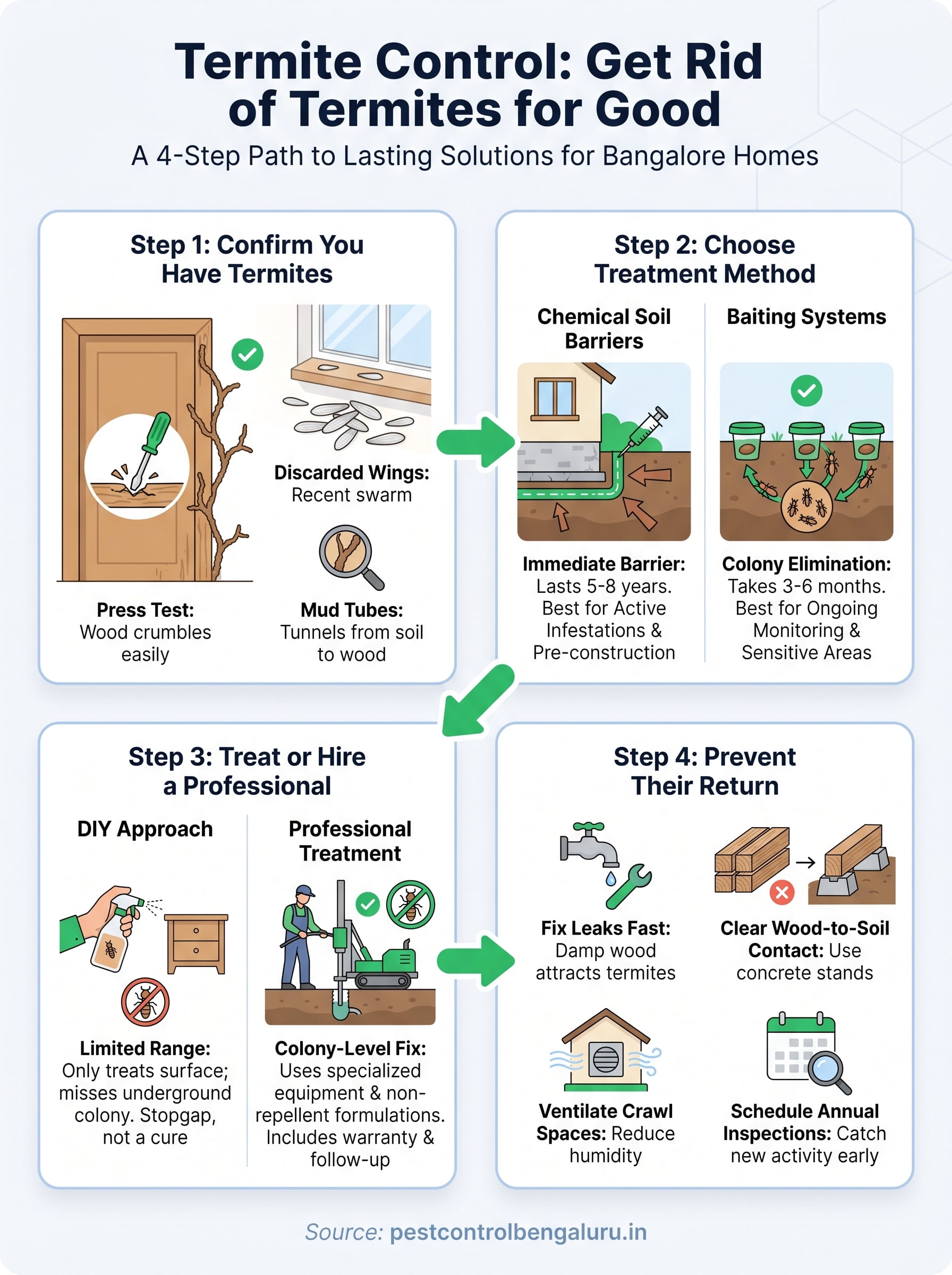
Before you buy a single can of spray, verify what you’re dealing with. Carpenter ants and wood-boring beetles leave damage that looks similar to termite activity, but the treatment for each is completely different, so misidentifying the pest wastes money and time. Start by checking the signs from the table above, then narrow things down with a few simple physical tests you can do yourself.
Treating the wrong pest is worse than treating nothing at all, because the real colony keeps growing while you waste weeks on the wrong fix.
Do a physical check
Grab a screwdriver and a flashlight and walk your home’s foundation, skirting boards, and any exposed wooden furniture. Look for these specific clues:
- Press test: Push a screwdriver into suspect wood. If it sinks in easily or the wood crumbles, termites have likely hollowed it out.
- Mud tube check: Break open a small section of any mud tube you find. Active tubes contain live termites and moist mud; abandoned ones are dry and empty.
- Wing piles: Discarded wings near windowsills or light fittings mean a swarm recently landed and started a new colony nearby.
- Sound test: Tap wood with a coin. A hollow, papery echo usually means internal tunneling.
When to call in a professional inspection
If even one test comes back positive, don’t wait for more damage to confirm it. A professional termite inspection uses moisture meters and sometimes borescopes to check inside walls and under flooring without demolition, giving you a full picture of how far the colony has spread before you choose a treatment method.
Step 2. Choose the right termite treatment method
Once you’ve confirmed an infestation, the next decision shapes everything else: which termite treatment actually fits your situation. Bangalore homes generally need one of two approaches, a chemical soil barrier or a baiting system, and picking the wrong one wastes months while the colony keeps feeding. Your choice depends on whether termites are already inside your walls, whether you’re treating an existing structure or a new build, and how much disruption you can tolerate during treatment.
Chemical barriers versus bait systems
Soil treatment creates a chemical barrier around your foundation that termites can’t cross without picking up a lethal dose, while baiting systems use slow-acting stations that worker termites carry back to the colony, killing it from the inside out.
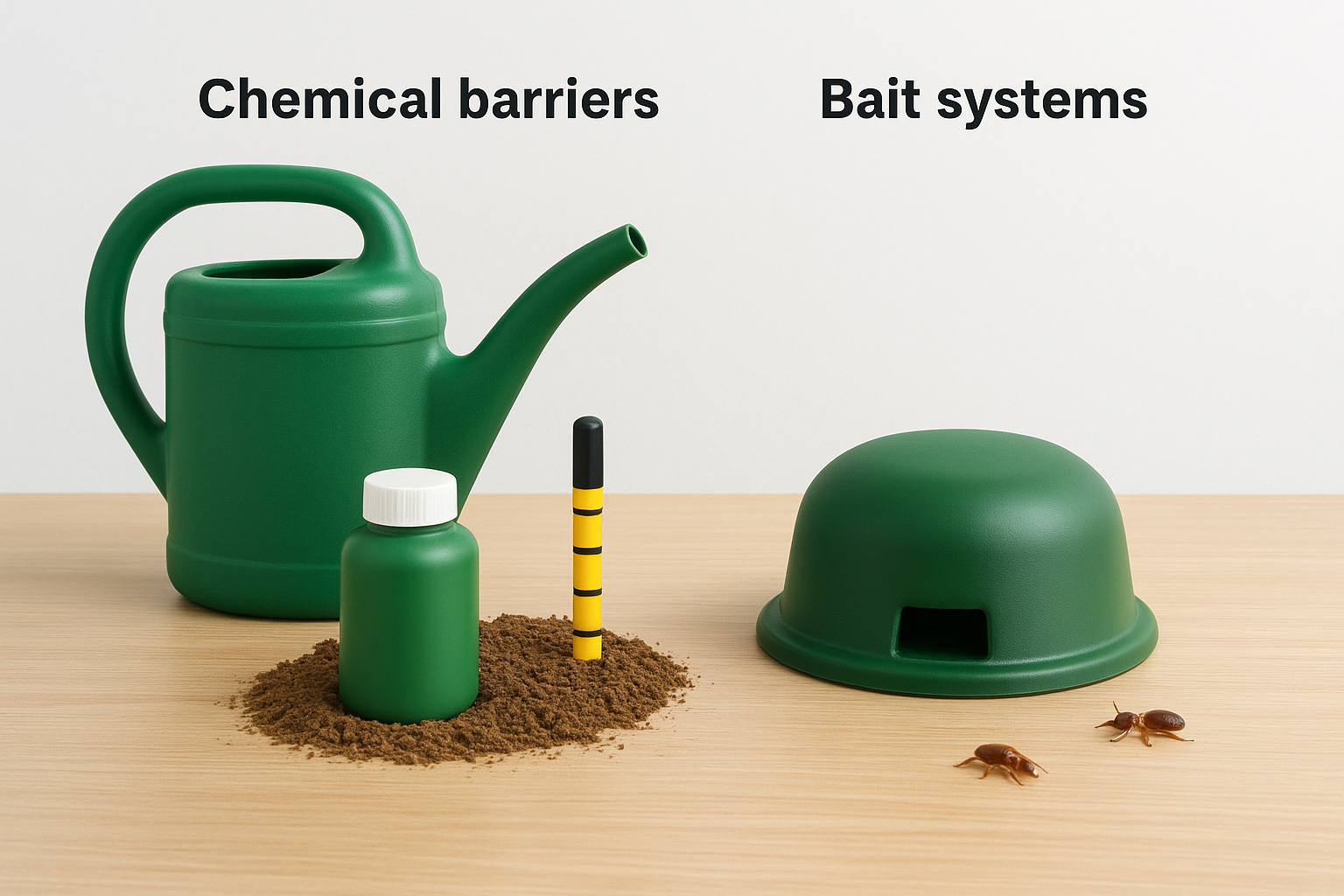
A barrier stops termites from entering, but a bait system convinces the whole colony to destroy itself.
| Method | Best for | Typical timeline |
|---|---|---|
| Chemical soil treatment | Active infestations, pre-construction, older homes | Immediate barrier, lasts 5-8 years |
| Baiting systems | Ongoing monitoring, sensitive interiors, apartments | 3-6 months for colony elimination |
| Wood treatment (injection) | Isolated furniture or beams | Days to weeks |
Matching treatment to your situation
Under construction? Insist on pre-construction soil treatment before the foundation is poured, since it’s far cheaper than retrofitting later. Living in an existing home with visible mud tubes and structural wood? Chemical soil treatment around the perimeter usually gives faster relief. Worried about chemicals near pets or children, or dealing with a slow-building infestation in furniture? Baiting stations work quietly over a few months with minimal disruption to daily life.
Step 3. Treat the infestation or hire a professional
Once you know which method fits your situation, you face the real question: tackle it yourself or bring in a licensed team. DIY termite control can work for a small, isolated infestation in a single piece of furniture, but it rarely reaches a colony that’s already spread through your foundation and wall cavities. Store-bought sprays kill the termites they touch, not the thousands still feeding underground, which is why so many homeowners see termites return within weeks of a DIY treatment.
Killing the termites you can see does nothing to the colony you can’t.
What DIY can realistically handle
If the press test only picked up damage in one wooden shelf or a small furniture piece, localized wood injection treatments sold at hardware stores can slow things down temporarily. Treat this as a stopgap, not a cure, and keep monitoring for mud tubes or hollow sounds elsewhere in the house.
Why most infestations need a professional
A professional termite treatment service brings equipment and chemicals that aren’t available over the counter, including drilling rigs for injecting termiticide directly into foundation soil and access to non-repellent formulations that let termites carry the poison back to the colony. Technicians also know how to treat around plumbing, electrical conduits, and load-bearing walls without weakening the structure. Before you hire anyone, ask a few direct questions:
- How many years of termite-specific experience does the team have?
- What treatment method do they recommend for your exact situation, and why?
- Does the service include a written warranty period?
- What follow-up inspections are included after treatment?
A company that’s been treating Bangalore homes since 1993 has seen nearly every version of this problem, and that experience shows up in faster, more accurate diagnosis.
Pre-construction vs. post-construction termite control
When you get termite control done matters almost as much as which method you choose. Pre-construction termite control and post-construction termite control solve the same underlying problem, keeping termites out of a structure, but they work in completely different ways and at very different costs.
Pre-construction termite control
Pre-construction termite control happens before the foundation is poured, while the plot is still open. Technicians treat the soil itself with a chemical barrier, then treat again at each stage, the plinth, backfill, and the foundation trench, so the barrier surrounds the building from the ground up rather than being added on afterward. Because there’s no existing structure to work around, pre-construction termite control is faster to apply, cheaper overall, and creates a more complete barrier than anything possible once walls and flooring are in place. If you’re building a new home or extension in Bangalore, insist on this treatment before construction starts; retrofitting the same protection later costs significantly more and never seals the foundation as thoroughly.
Post-construction termite control
Post-construction termite control is what most homeowners actually need, since it applies to a building that’s already standing. Technicians drill small holes at intervals along the foundation, skirting, and affected walls, then inject termiticide directly into the soil beneath and around the structure to rebuild the barrier a pre-construction treatment would have created from scratch. This method also covers active infestations, so it combines both treatment and prevention in one visit. Expect some drilling and minor patching afterward, and plan for a follow-up inspection to confirm the barrier is holding, especially in Bangalore’s moisture-heavy soil.
Pre-construction termite control prevents the problem before it starts; post-construction termite control fixes it once the building is already home to a colony.
Step 4. Prevent termites from coming back
Treatment kills the current colony, but nothing stops a new swarm from landing near your foundation next monsoon. Termite prevention is an ongoing habit, not a one-time task, and it’s far cheaper than paying for another round of treatment two years from now. Fix moisture problems, remove wood-to-soil contact, and keep an eye on the areas termites love most.
Prevention costs a fraction of treatment, but only if you actually do it before the next swarm arrives.
Cut off moisture and wood contact
Termites need moisture and a direct path from soil to wood, so removing either one makes your home a much harder target.
- Fix leaks fast: Repair leaking pipes, taps, and AC drainage lines within days, not weeks, since damp wood attracts termites faster than dry wood.
- Clear wood-to-soil contact: Keep firewood, lumber, and wooden furniture legs off bare soil; use concrete or metal stands instead.
- Ventilate crawl spaces: Improve airflow under raised flooring and in basements to keep humidity down.
- Clean gutters regularly: Blocked gutters push water toward the foundation, exactly where termites want it.
Schedule annual inspections
Even after a full treatment, book a professional inspection every 12 months. Technicians catch early mud tubes or moisture buildup before they turn into another infestation, and most treatment warranties actually require this follow-up to stay valid. If you’re in an older independent house with wooden frames, consider inspections every six months instead, since those structures give termites more entry points than a modern apartment does.
Keeping your home termite-free for the long run
Termites don’t wait for a convenient time to invade, and neither should your response. Getting rid of termites for good means confirming the infestation early, choosing a treatment that matches how deep the colony has spread, and following through with the moisture control and inspections that keep swarms from settling back in. Skip any of these steps and you’re just buying time before the next repair bill.
Owning a home in Bangalore means accepting that termites are a recurring risk, not a one-time scare. Annual inspections and a solid treatment warranty do more to protect your foundation and furniture than any spray you’ll find on a store shelf. If you’ve spotted mud tubes, hollow wood, or discarded wings, don’t wait for the damage to spread further. Book a professional termite treatment with A to Z Pest Solutions and get a colony-level fix backed by three decades of local experience.