
You flip on the kitchen light at night and watch two or three cockroaches scatter behind the sink. It happens once, then it happens every week, and soon you’re wondering if your home has a real infestation. Bangalore’s warm, humid climate keeps cockroaches breeding year round, which is why so many households here fight the same battle on repeat. If you’re searching for how to get rid of cockroaches, you’re not looking for another spray that works for three days. You want something that actually breaks the cycle.
The honest answer is that how to get rid of cockroaches isn’t a one-step process: lasting cockroach control needs more than one trick, and effective roach control almost always means combining several of the home remedies below with professional help when needed. You need sanitation habits that remove their food and water sources, targeted gel baits or boric acid placed where they hide, and sealing of the cracks and gaps they use to move between units. Skipping any one of these steps usually means they come back within a month.
In this article, we walk through seven methods that genuinely work, starting with simple home remedies and moving up to professional-grade treatments. We’ll tell you which ones suit a mild problem and which ones you need for a heavy German cockroach infestation, so you can pick the right approach for your home instead of guessing. However you approach it, the goal is the same: get rid of cockroaches for good, not just for a few days.
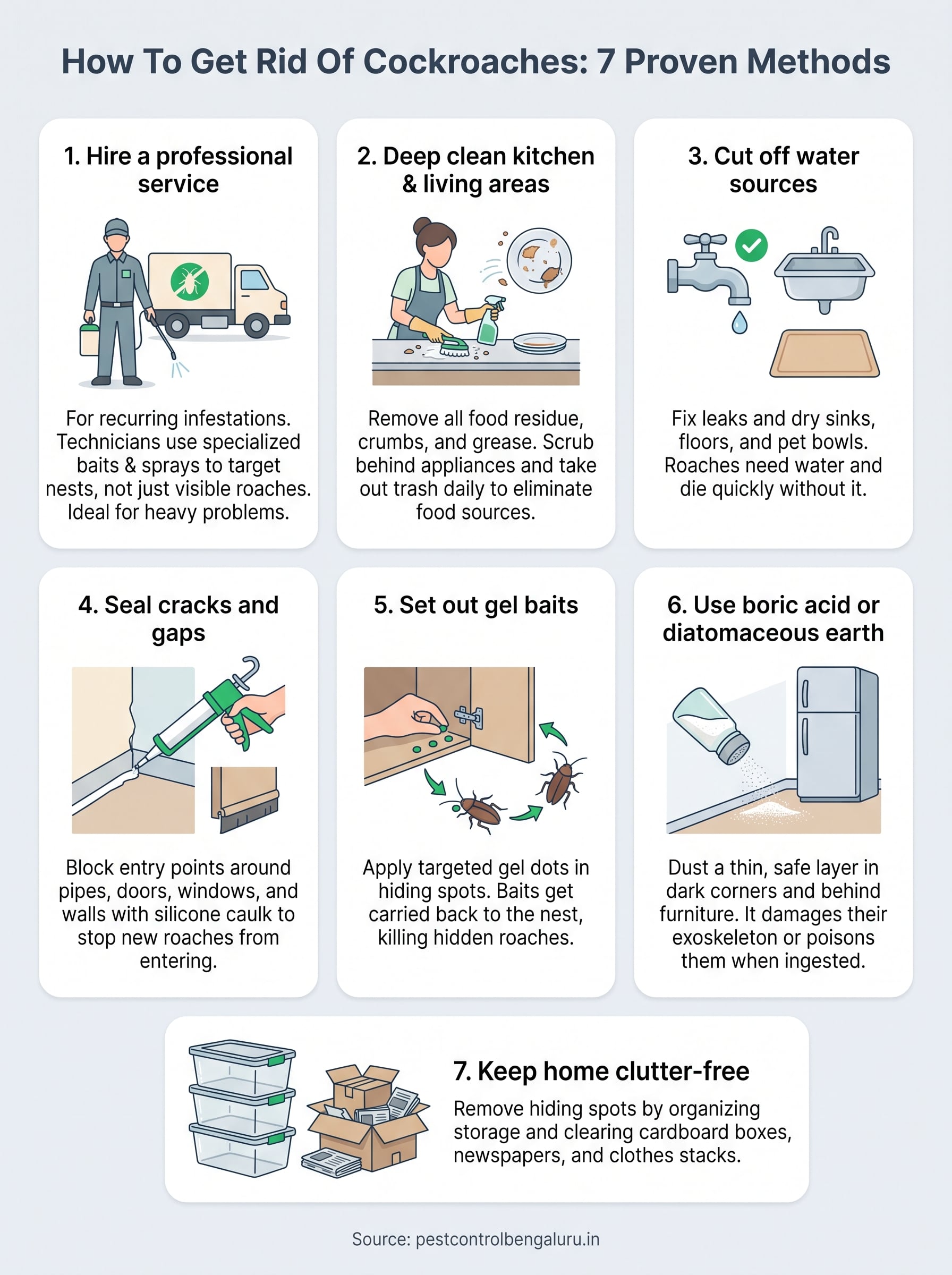
1. Hire a professional pest control service
When the roaches keep coming back no matter how many cans of spray you go through, calling in a professional is the fastest way to actually get rid of cockroaches for good. Companies like A to Z Pest Solutions have handled cockroach infestations and helped homeowners kill cockroaches for good across Bangalore since 1993, and that experience matters because a technician can tell within minutes whether you’re dealing with a small German cockroach colony behind the fridge or a larger infestation spreading through wall voids and drain pipes.
How it works
A trained technician starts with a full inspection of your kitchen, bathrooms, and any shared walls with neighboring units, since cockroaches travel through plumbing gaps and electrical conduits. They then apply a combination of gel baiting technology, targeted crack-and-crevice spraying, and sometimes an insect growth regulator that stops eggs from hatching. Unlike a supermarket spray that only kills what it touches, professional-grade baits get carried back to the nest, wiping out roaches you never even saw.
A professional treatment targets the nest, not just the roaches you happen to spot crossing the floor.
Who it’s for
This option suits anyone dealing with a recurring infestation that home remedies haven’t fixed, especially families with young children or pets who want a treatment that’s been applied safely rather than guessed at. It’s also the right call for apartment residents in gated communities where roaches migrate between units, tenants moving into a new place who want a clean start, and restaurant or hotel owners who can’t risk a visible infestation. If you’ve already tried boric acid and sealing cracks and you’re still seeing roaches after a few weeks, it’s time to bring in a professional.
Cost and effort
Professional cockroach control in Bangalore typically involves one initial treatment followed by a scheduled follow-up visit within a few weeks to catch any eggs that have since hatched. Pricing depends on your property size and infestation severity, and most providers, including A to Z Pest Solutions, offer transparent quotes with no hidden charges before starting work. Your effort is minimal: clear out kitchen cabinets and drawers before the visit, keep pets away during application, and let the technician handle the rest. Many services also offer annual maintenance plans so you never have to deal with a full-blown infestation again.
2. Deep clean your kitchen and living areas
If you’re trying to figure out how to get rid of cockroaches naturally, start in the kitchen: cockroaches move into a home because it’s offering them a free buffet. Grease on the stovetop, crumbs under the toaster, and food residue in the sink are exactly what draws them out at night, so a thorough cleaning session is often the first real dent you can make in an infestation before you ever reach for a spray or call a technician.
How it works
Start by scrubbing behind and under appliances like the fridge, stove, and dishwasher, since these are prime hiding spots roaches use during the day. Wipe down cabinet interiors, wash dishes immediately instead of letting them sit overnight, and vacuum crumbs from tight corners and skirting boards. Take out the trash daily and keep the bin lid tightly closed, because an open bin is basically an invitation.
Remove the food, and you remove the reason roaches want to stay in your kitchen.
Who it’s for
This method works best for anyone noticing just one or two roaches occasionally, particularly renters and apartment dwellers who want a quick, chemical-free first step. It’s also a smart habit for pet owners who’d rather not spray near food bowls, and for families with small children crawling on kitchen floors.
Cost and effort
Deep cleaning costs nothing beyond your usual dish soap and degreaser, though it does demand real time, expect an hour or two for a thorough kitchen pass. The effort pays off fastest when you repeat it weekly rather than treating it as a one-time fix, since roaches will return the moment food sources reappear.
3. Cut off the water sources roaches need
Cockroaches can survive weeks without food, but they die within a few days without water. That single fact makes moisture control one of the most underrated parts of how to get rid of cockroaches, and a core part of any roach infestation prevention plan, especially in Bangalore homes where humid weather and leaky pipes create the exact damp conditions roaches need to survive.
How it works
Check under your kitchen sink, around the washing machine, and behind the fridge for slow drips, since even a small puddle of standing water is enough to sustain a colony. Fix leaking taps and pipe joints, wipe down the sink basin before bed, and don’t leave wet dish towels bunched up overnight. Bathrooms need attention too, dry the floor after showers and check that the drain trap isn’t holding stagnant water.
Cut the water supply, and you starve a cockroach colony faster than any spray can.
Who it’s for
This step matters most for anyone living in older buildings with aging plumbing, ground-floor flats prone to dampness, and households near drains or water tanks where humidity stays high year round. It’s also worth prioritizing if you’ve already cleaned your kitchen thoroughly but keep spotting roaches near the bathroom or utility area.
Cost and effort
Fixing a leaking tap might cost you a small plumber’s visit or a washer replacement, usually under a few hundred rupees. The daily habit of wiping surfaces dry takes minutes, and pairing it with regular ventilation, like running an exhaust fan after cooking or showering, keeps humidity down without any ongoing expense at all.
4. Seal cracks and gaps to block their entry
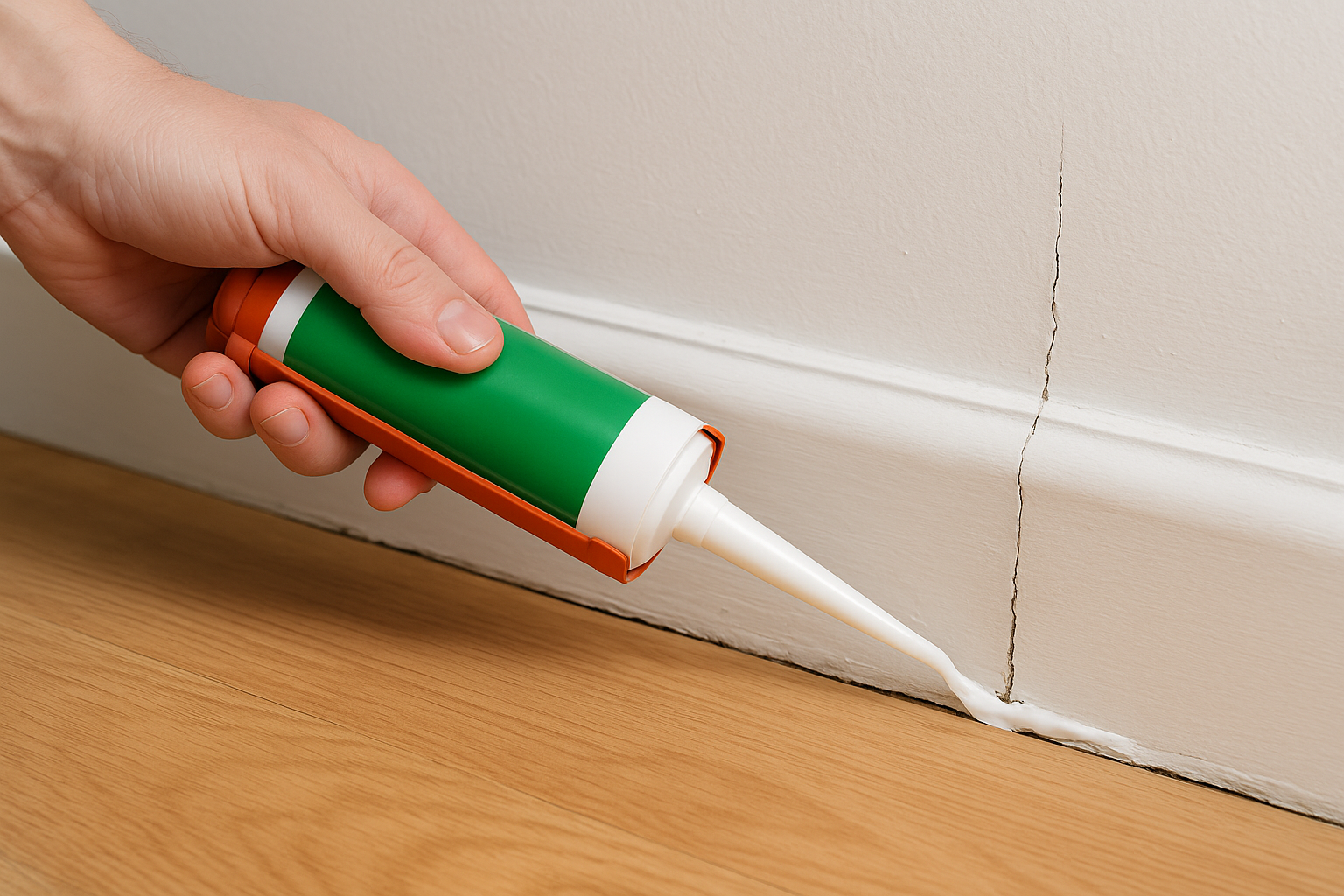
Every cockroach in your home got in somehow, and that entry point is usually a gap you’ve never noticed. Sealing these openings stops new roaches from wandering in from a neighbor’s flat, a drain pipe, or the gap under your front door, and it’s one of the few methods that gives you permanent results instead of a temporary dip in numbers. It’s a step worth taking whether you want to kill cockroaches already inside or simply keep new ones out.
How it works
Grab a flashlight and check the usual suspects: gaps around pipes under the sink, spaces where cables enter the wall, cracks along skirting boards, and the thin strip under doors leading to shared corridors. Use silicone caulk or a door sweep to close these off permanently.
- Pipe entry points under sinks and behind the washing machine
- Gaps around window frames and exhaust fan vents
- Cracks in tiles or where the wall meets the floor
- Spaces under front and balcony doors
Block the entry points, and you stop refilling the colony you just cleared out.
Who it’s for
Anyone in an apartment complex benefits most here, since roaches travel freely between units through shared plumbing shafts and wall cavities. Ground-floor residents near drains, and households that have just finished a professional treatment and want to keep results lasting, should treat this as a non-negotiable next step.
Cost and effort
Silicone caulk tubes and door sweeps cost very little at any hardware store, and a full round of sealing takes a weekend afternoon at most. Once sealed, maintenance is minimal, just a yearly check for new cracks after monsoon season when walls tend to shift and settle.
5. Set out cockroach baits and gel treatments
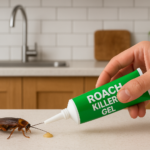
Once your kitchen is clean and the leaks are fixed, gel baits give you a targeted way to finish off roaches hiding in spots you can’t reach with a spray, another essential piece of how to get rid of cockroaches for good. Cockroach gel bait works differently from a can of insecticide because it doesn’t just kill on contact, it gets carried back to the nest and wipes out roaches you’ll never see.
How it works
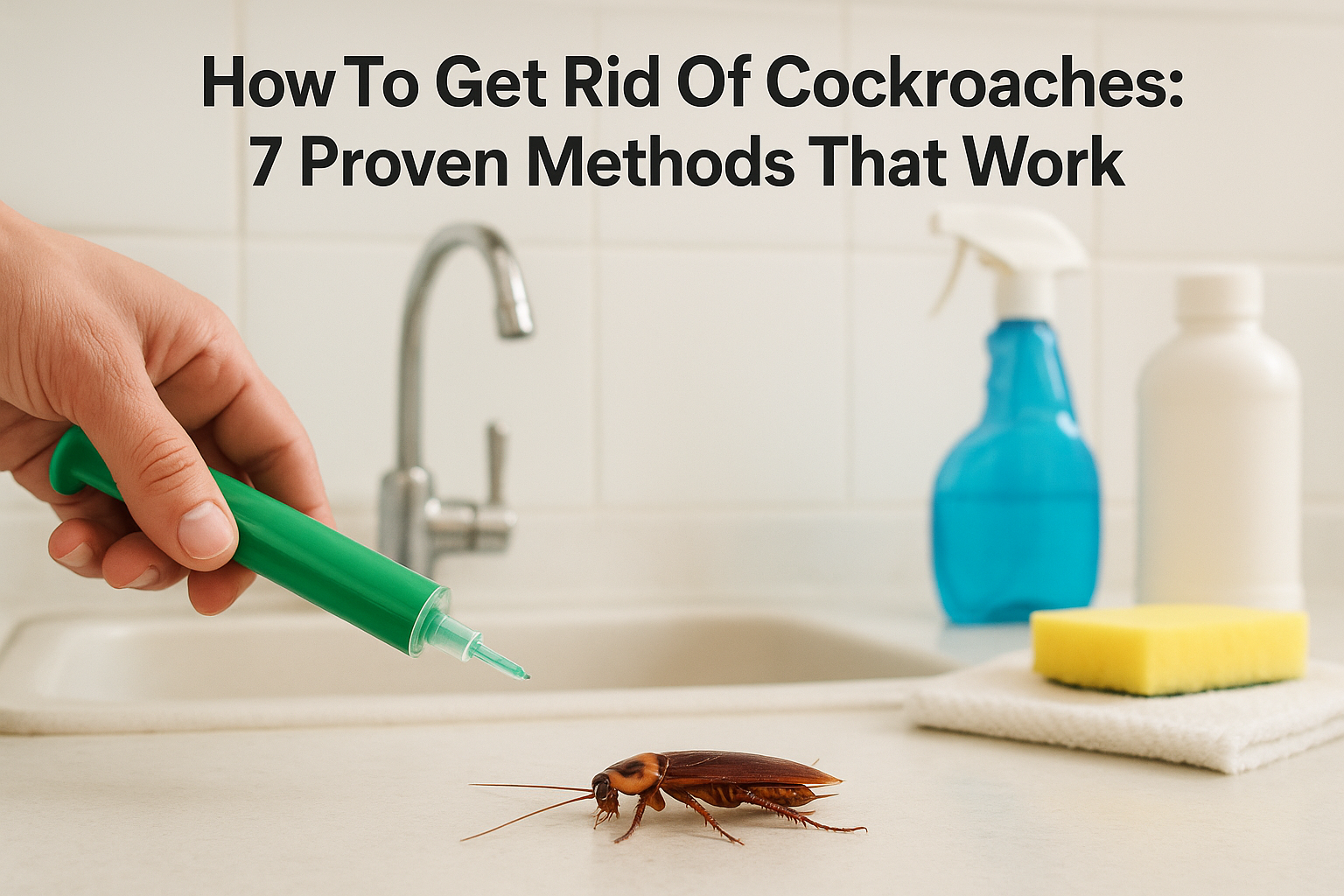
You place small dots of gel bait along cabinet hinges, behind appliances, near pipe entry points, and inside drawer corners, anywhere you’ve spotted roach droppings or activity at night. A roach eats the bait, returns to the nest, and dies there, and other roaches that feed on its remains die too. This chain reaction is why gel baits often outperform sprays for a hidden colony, and it’s one of the most effective home remedies for a cockroach infestation that’s already spread out of sight.
A single dab of gel bait placed correctly does more than an entire can of spray.
Who it’s for
This method suits households seeing roaches regularly, not just an occasional stray one, and it works well for anyone who wants a low-odor treatment they can apply themselves without evacuating the kitchen for hours. It’s also a smart middle step between DIY cleaning and calling a professional, especially if you’re waiting to see whether the infestation clears on its own.
Cost and effort
A gel bait syringe costs relatively little and covers an entire kitchen, sometimes with product left over for touch-ups. Applying it takes fifteen minutes, but expect to reapply every few weeks since bait effectiveness fades with exposure to dust, heat, and humidity, especially during Bangalore’s wetter months.
6. Use boric acid and diatomaceous earth safely
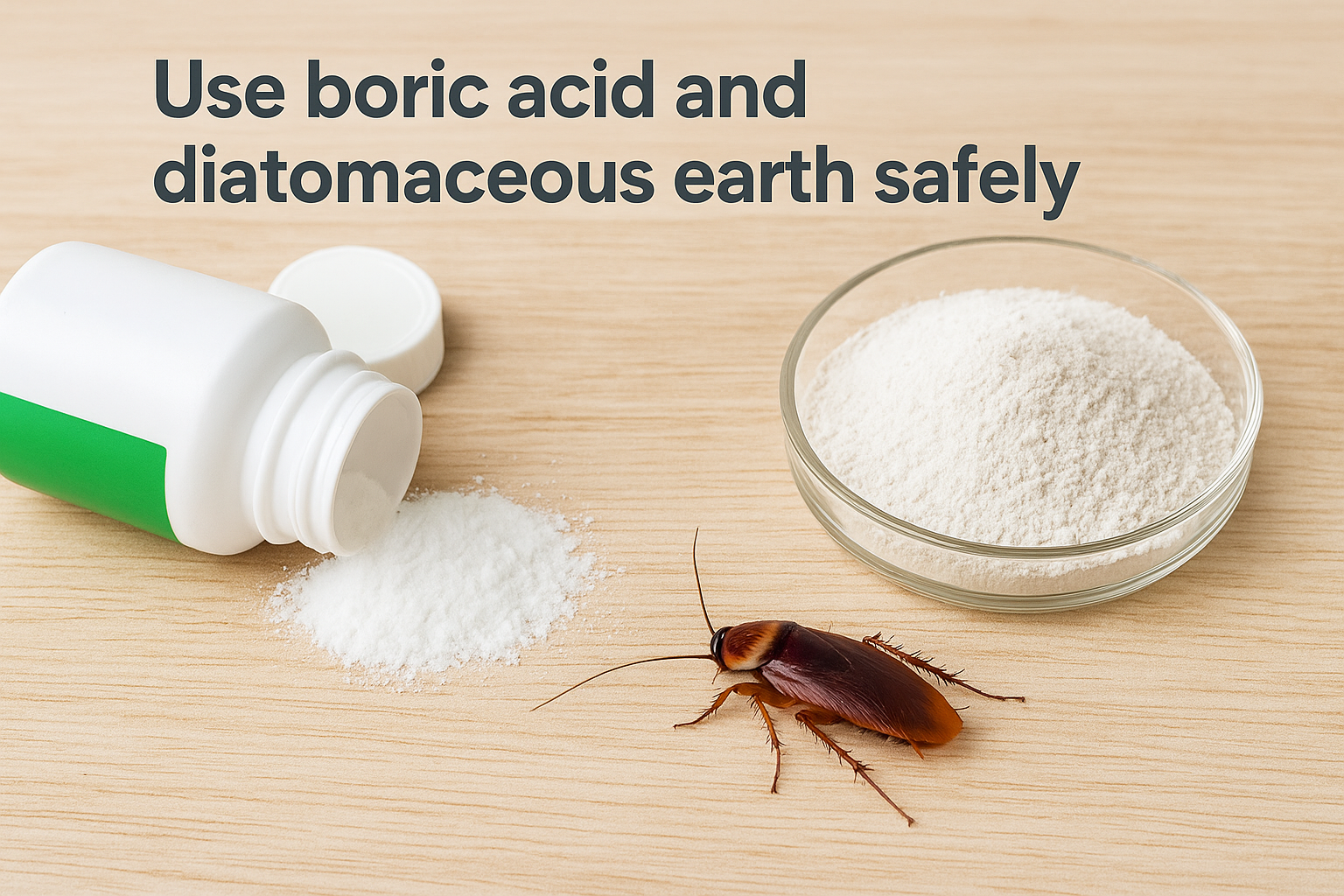
Boric acid has been a go-to home remedy for cockroaches for decades, and it still works when you apply it correctly, making it one of the most trusted natural ways to get rid of cockroaches without chemicals. Diatomaceous earth is the gentler cousin of the two, a fine powder made from fossilized algae that kills roaches by damaging their outer shell rather than poisoning them. Both are cheap, both last a long time once applied, and both need a bit of care around kids and pets.
How it works
Boric acid works when a roach walks through it, ingests it while grooming, and dies within a day or two, while diatomaceous earth cuts into the roach’s exoskeleton and dries it out from the inside. Dust a thin layer, thick powder actually repels roaches instead of killing them, along baseboards, under the fridge, inside cabinet corners, and behind the stove.
A thin, invisible layer of powder does more damage to a roach than a visible pile ever will.
Who it’s for
This method suits budget-conscious households who want a DIY option beyond gel bait, and anyone dealing with roaches in spots too damp or greasy for gel to stick properly. It’s also useful in storage rooms, meter boxes, or under furniture where you won’t need to clean the area daily.
Cost and effort
A small container of either powder costs very little and covers your whole home with room to spare. Reapply after mopping or heavy rain since moisture ruins both powders, and always keep them in areas away from where children or pets can reach, since ingestion in large amounts isn’t safe. The EPA’s guidance on boric acid safety is a useful reference if you want the full precautions before using it around a home with kids or pets.
7. Keep your home clutter-free to prevent hiding spots
Stacks of newspapers, cardboard boxes stuffed in the storeroom, and piles of clothes on the floor give cockroaches exactly what they want: dark, undisturbed spaces to breed. Clutter control doesn’t kill roaches directly, but it removes the shelter that lets a small problem grow into a full infestation and eventually a full-blown roach infestation, which is why pest control veterans always mention it alongside cleaning and sealing when explaining how to get rid of cockroaches for good.
How it works
Roaches prefer tight, dark gaps where they feel protected, so a cluttered home multiplies the number of hiding spots available to them. Clearing out cardboard boxes, which roaches actually feed on and lay eggs inside, and organizing storage areas so nothing sits untouched for months takes away that shelter. Go through kitchen cabinets, under-bed storage, and utility rooms every few months, and switch cardboard for plastic bins wherever you can.
Fewer hiding spots mean fewer places for a colony to establish itself unnoticed.
Who it’s for
Households with home offices, storage-heavy garages, or kids’ rooms full of toys and books benefit most from this step, since these areas often go unchecked for weeks. It also matters for anyone who’s completed a professional treatment or applied gel bait and wants to stop a fresh infestation from starting somewhere new.
Cost and effort
This step costs nothing beyond maybe a few plastic storage bins, and the effort is mostly a recurring habit rather than a one-time job. Spend an hour every couple of months going through storage areas, and you’ll catch potential hiding spots long before roaches do.
Frequently asked questions about how to get rid of cockroaches and roach infestations
What’s the fastest way to get rid of cockroaches at home?
Combining gel bait with a thorough kitchen clean gives the fastest visible drop in activity. If you want to get rid of cockroaches for good rather than just temporarily, pair that with sealing entry points and cutting off water sources so new roaches can’t move back in.
How long does it take to get rid of cockroaches completely?
Most light infestations clear within two to three weeks when you combine cleaning, baiting, and sealing. To get rid of cockroaches from a heavier infestation, especially German cockroaches breeding in wall voids, expect four to six weeks with a professional follow-up visit included.
Can I get rid of cockroaches without calling a professional?
Yes, for mild infestations. DIY methods like gel bait, boric acid, and deep cleaning are often enough to get rid of cockroaches when you catch the problem early. Recurring or heavy infestations usually need a technician to target the nest directly.
Do home remedies actually get rid of cockroaches, or just repel them?
Gel baits, boric acid, and diatomaceous earth all kill roaches rather than just repelling them, which is why they’re more reliable than sprays alone if your goal is to get rid of cockroaches permanently instead of scattering them to another room.
What keeps cockroaches from coming back after treatment?
Sealing cracks, fixing leaks, and staying on top of kitchen cleaning are what keep a home roach-free after you get rid of cockroaches the first time. Skipping any one of these usually means a new colony moves in within a few months.
Making your home roach-free for good
Knowing how to get rid of cockroaches for good rarely comes down to one product or one lucky spray. Combining methods works best: clean your kitchen, fix the leaks, seal the gaps, and back it up with gel bait or boric acid in the spots you can’t reach. Skip a step and roaches find their way back in through whatever gap you left open.
Heavy infestations, especially German cockroaches breeding in wall voids or shared plumbing, usually need more than home remedies to fully clear out, and a dedicated cockroach control visit targets the nest that DIY methods can’t reach. That’s when a trained technician earns their fee, targeting the nest directly instead of just the roaches you see at night.
If you’ve tried cleaning, sealing, and baiting and you’re still spotting roaches, don’t wait for the problem to grow. Book a cockroach treatment with A to Z Pest Solutions and get your kitchen back for good.
A quick recap on how to get rid of cockroaches
If you only remember one thing from this guide, remember this: to get rid of cockroaches for good, you need to remove what they need to survive (food, water, and hiding spots), block how they get in, and back it up with bait or a professional treatment for anything already inside. Households that get rid of cockroaches successfully almost always combine at least three of the seven methods above rather than relying on a single product. Pick the combination that fits your infestation level, and revisit sealing and cleaning every few months to keep roaches from finding their way back in.