
If you have spotted mud tunnels along your wall or noticed wooden furniture crumbling from the inside, you already know why you are searching for how to get rid of white ants. White ants are not actually ants at all. They are termites, and by the time you see visible damage, the colony has usually been feeding for months, sometimes years, right under your feet.
This guide walks you through both DIY treatments you can try today and the professional methods that give lasting results. You will learn how to spot early warning signs, which home remedies actually slow termites down, and when a small infestation has crossed into territory that needs chemical soil treatment or bait systems.
We have handled termite problems across Bangalore homes and gardens since 1993, so this is not theory. We will cover identification tips, garden and soil-level prevention, DIY options like borax and orange oil, and the point at which calling in trained technicians for anti-termite treatment saves you far more money than it costs.
What are white ants and why they invade your home
White ants get their nickname from their pale, soft bodies, but they belong to a completely different insect order than true ants. Termites are closer relatives of cockroaches, and in Bangalore you will mostly deal with subterranean termites that build their colonies underground and travel up through mud tunnels to reach wood, paper, and even fabric inside your home. A single mature colony can hold hundreds of thousands of workers, all quietly chewing through anything cellulose-based while staying hidden from view.
Why your property attracts them
Termites need three things to thrive: moisture, warmth, and a food source. Bangalore’s mix of monsoon humidity and older housing stock with wooden door frames, furniture, and roof structures makes for near-ideal conditions. Leaky pipes, poor drainage around the foundation, mulch piled against exterior walls, and firewood stacked near the house all give termites an easy bridge from soil to structure.
Termites don’t announce themselves with noise or smell, they announce themselves with structural damage you can’t undo.
Common entry points around Bangalore homes
| Entry Point | Why It Matters |
|---|---|
| Foundation cracks | Direct soil-to-wood access |
| Untreated wooden frames | Easy feeding source |
| Garden beds touching walls | Moisture retention near foundation |
| Unsealed utility pipes | Hidden tunnel routes indoors |
| Old furniture in storage | Introduces termites already inside |
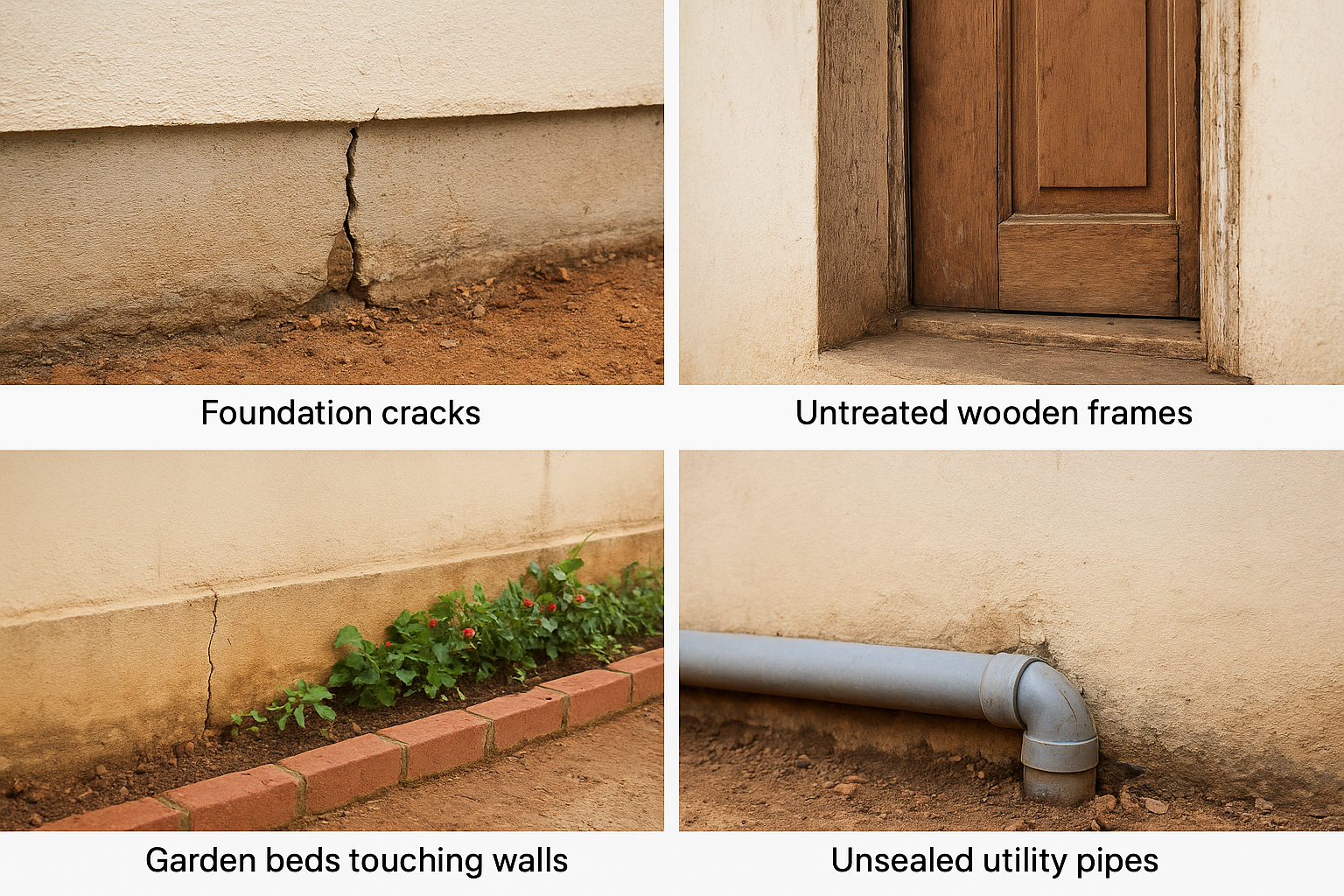
Understanding these entry points matters because most DIY termite control efforts fail when they only treat the visible mud tunnel and ignore the soil conditions feeding the colony. Before you touch a spray bottle, walk your property and note every spot where wood meets soil or water collects. That inspection sets up everything you do in the next steps.
How a termite colony actually spreads through a house
A single mud tunnel on an outside wall rarely means the infestation stops there. Worker termites tunnel through soil in every direction from the main nest, and a colony can maintain several active feeding tubes at once, some visible on exterior walls, others hidden behind cupboards, under flooring, or inside wall cavities you never inspect during a casual walkthrough. This is why treating one visible tunnel often looks like a fix for a few weeks before activity reappears somewhere else in the house: the colony itself was never disrupted, only one of its feeding routes was blocked. Knowing this changes how you should think about DIY treatment, as damage control on what you can see, not a guarantee that the colony feeding your home is actually gone.
Step 1. Confirm the infestation and identify the species
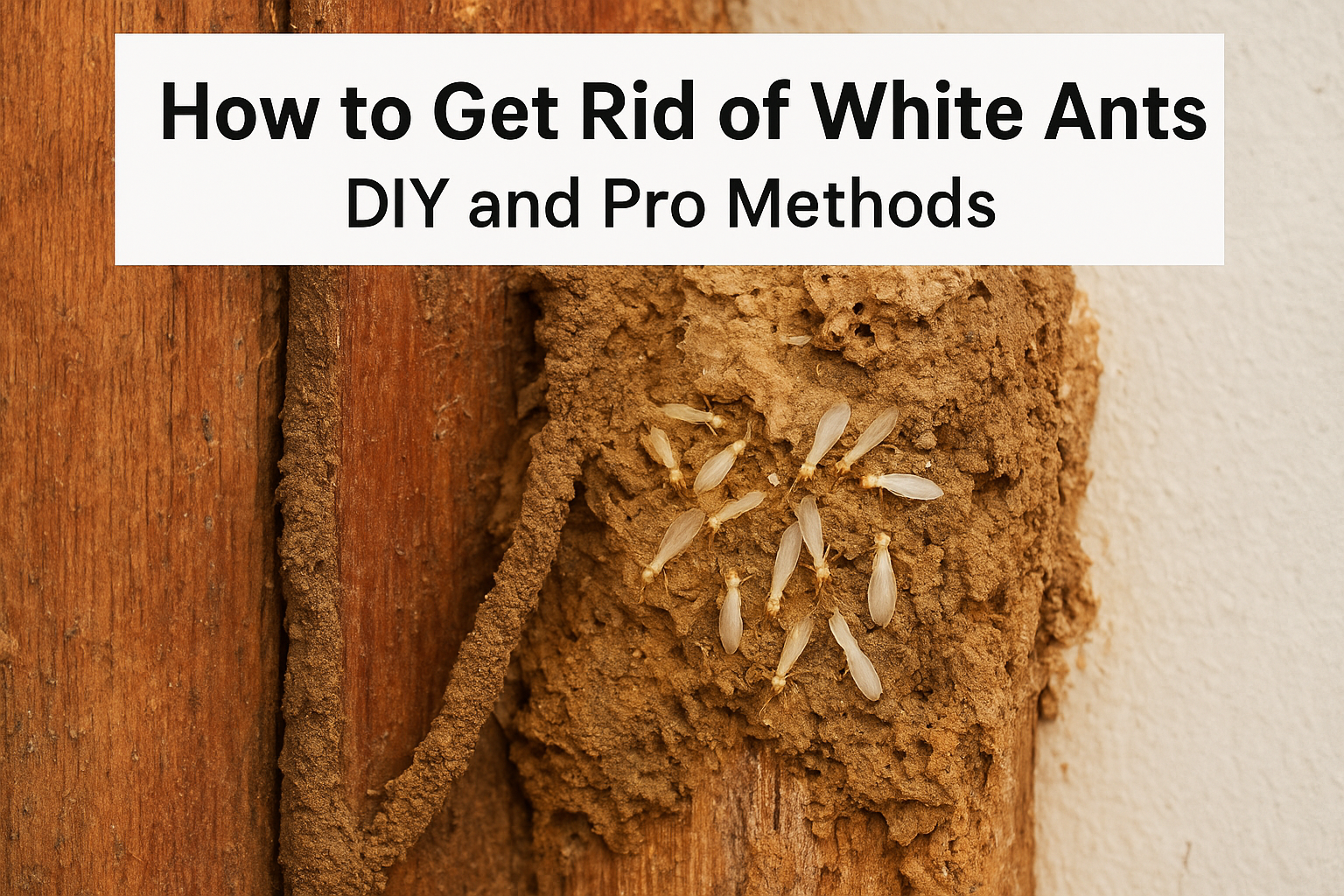
Before you treat anything, confirm you are actually dealing with white ants and not flying ants or wood-boring beetles. Mud tunnels running up a wall, hollow-sounding timber when you tap it, and discarded wings near windowsills after swarming season are the clearest giveaways. Squeeze a section of suspect wood; if it crumbles or feels papery, termites have likely been feeding inside for a while.
What to check during your inspection
Grab a flashlight and a screwdriver, then work through this checklist room by room and around the foundation outside:
- Tap wooden beams, skirting boards, and furniture legs for a hollow sound
- Look for pencil-thin mud tubes on walls, pillars, or foundation edges
- Check window sills and light fixtures for discarded termite wings
- Press a screwdriver into door frames to test for softness
- Inspect garden beds and firewood stacks touching the house
A hollow tap on a beam tells you more than any spray ever will.
Subterranean versus drywood termites
Most Bangalore infestations involve subterranean termites, which need soil contact and build visible mud tunnels. Drywood termites are less common locally but live entirely inside timber, leaving pellet-like droppings instead of tunnels. Knowing which type you have decides whether soil treatment or wood-injection methods come next.
Step 2. Try natural and DIY white ant treatments
Natural remedies work best on small, early-stage infestations, not colonies that have already hollowed out a beam. If you caught the problem while it is still confined to one mud tunnel or a single piece of furniture, these methods can buy you time or even solve the problem outright.
Borax, orange oil, and sunlight
Borax powder dusted along known trails dehydrates termites and disrupts their digestion when they carry it back to the colony. Orange oil injected into small holes in infested wood kills termites on contact because d-limonene dissolves their exoskeletons. Moving infested furniture into direct sunlight for a full day also works, since termites cannot survive heat and light exposure.
A simple DIY routine to follow
- Mix borax with water and paint it onto exposed wood surfaces
- Drill small holes into infested furniture and inject orange oil
- Set out damp cardboard traps, then burn them once termites gather
- Fix leaking taps and improve drainage away from the foundation
DIY treatments slow termites down, they rarely stop a colony for good.
Treat these steps as damage control while you decide whether the infestation needs stronger measures.
Step 3. Use chemical termiticides and bait stations
Once termites have spread beyond one visible tunnel, borax and orange oil stop being enough. This is where chemical termiticides and bait stations take over, targeting the colony at the soil level instead of just the wood you can see. These products create a barrier or poison trail that worker termites carry back to the queen, collapsing the colony from the inside.
Liquid termiticides versus bait stations
Each method suits a different situation, so match the treatment to your property layout when deciding how to get rid of white ants for good.
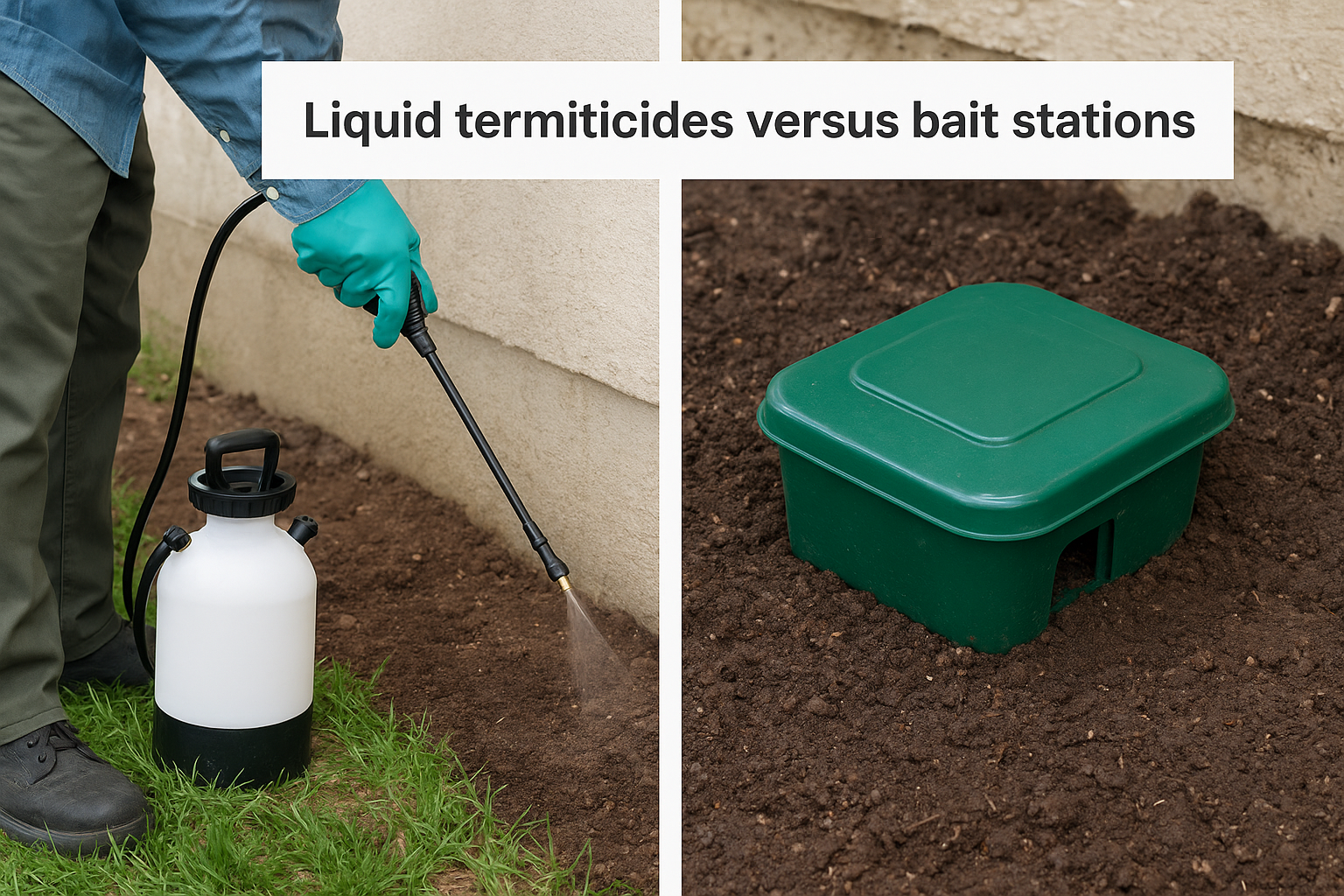
| Method | Best For | How It Works |
|---|---|---|
| Liquid termiticide (soil trenching) | Perimeter protection, pre-construction | Creates a chemical barrier termites can’t cross |
| Bait stations | Ongoing colony elimination | Termites feed on bait, carry poison back to nest |
| Wood injection treatment | Isolated furniture or beams | Kills termites already inside timber |
Handling termiticides safely
Products like fipronil and imidacloprid based termiticides are effective at killing white ants, but they demand careful handling around children, pets, and drinking water sources. Overdosing or trenching too shallow often means the white ant treatment fails within a year.
A poorly placed termiticide barrier gives you a false sense of safety, not real protection.
If drilling foundations or handling concentrated chemicals feels beyond your comfort level, that’s your signal to move to professional treatment.
Step 4. Call a professional pest control service
Some white ant infestations outgrow anything a homeowner can safely fix. If mud tunnels reappear after treatment, if multiple rooms show damage, or if the colony is nesting under a slab you cannot access, professional termite treatment is the only realistic option left. Trained technicians use pre-construction and post-construction methods, soil injection rigs, and monitored bait systems that reach depths and concentrations no DIY kit can match.
What a professional visit actually involves
A proper service call to get rid of white ants follows a set process, not a quick spray and exit.
- Full inspection of foundation, garden beds, and interior woodwork
- Species identification to choose soil treatment or wood injection
- Drilling and injecting termiticide along the foundation perimeter
- Installing bait stations for ongoing monitoring
- A follow-up visit within weeks to confirm the colony is gone
Professional treatment costs more upfront but saves you from repeating the same fight every rainy season.
Why experience matters here
We have handled termite jobs across Bangalore since 1993, and the pattern is consistent: homes that skip professional soil treatment call us back within a year with worse damage. A technician who has seen hundreds of local infestations knows where termites hide that a first-time inspector would miss entirely.
FAQs on how to get rid of white ants
What is the fastest way to get rid of white ants at home?
For a small, isolated tunnel or piece of furniture, painting borax solution onto the wood or injecting orange oil into drilled holes kills termites within a day or two on contact. This works only for early-stage, contained problems; a spreading colony needs soil-level termiticide or bait stations to actually collapse the nest.
Do natural remedies actually get rid of white ants for good?
Rarely on their own. Borax, orange oil, sunlight, and damp cardboard traps kill or repel the termites they directly touch, but they don’t reach a colony living underground or deep inside a wall. If mud tunnels reappear a few weeks after treatment, the DIY approach only slowed the colony down rather than eliminating it.
How do I know if it’s white ants (termites) and not just ants or beetles?
Look for pencil-thin mud tubes running up a wall, wood that sounds hollow when tapped or crumbles under a screwdriver, and discarded wings near windowsills after a swarm. Wood-boring beetles leave small round exit holes and fine dust instead of mud tunnels, which is the easiest way to tell the two apart.
Are DIY white ant treatments safe around children and pets?
Borax and orange oil are relatively low-risk but should still be kept away from areas where kids or pets can lick or chew treated wood. Chemical termiticides used in soil trenching or bait stations carry more risk and are best handled by a trained technician who knows safe placement around a home with children or animals.
How often should I inspect my home for white ants in Bangalore?
A seasonal check before and after monsoon catches new mud tunnels while the problem is still small, since Bangalore’s humidity keeps termite colonies active nearly year-round. Homes with wooden frames, firewood storage, or a history of past infestations benefit from a professional inspection at least once a year even without visible signs.
What it costs to ignore the problem
Homeowners searching for how to get rid of white ants often delay treatment by a season or two, hoping the mud tunnel they spotted was a one-off. In practice, a termite colony left untreated does not slow down: it keeps expanding along moisture and wood, so the repair bill grows every month the infestation goes unaddressed. Knowing how to get rid of white ants early, while the damage is still confined to one beam or one wall, is what keeps the fix a DIY-sized job instead of a floor-replacement job.
Keeping your home white ant free for good
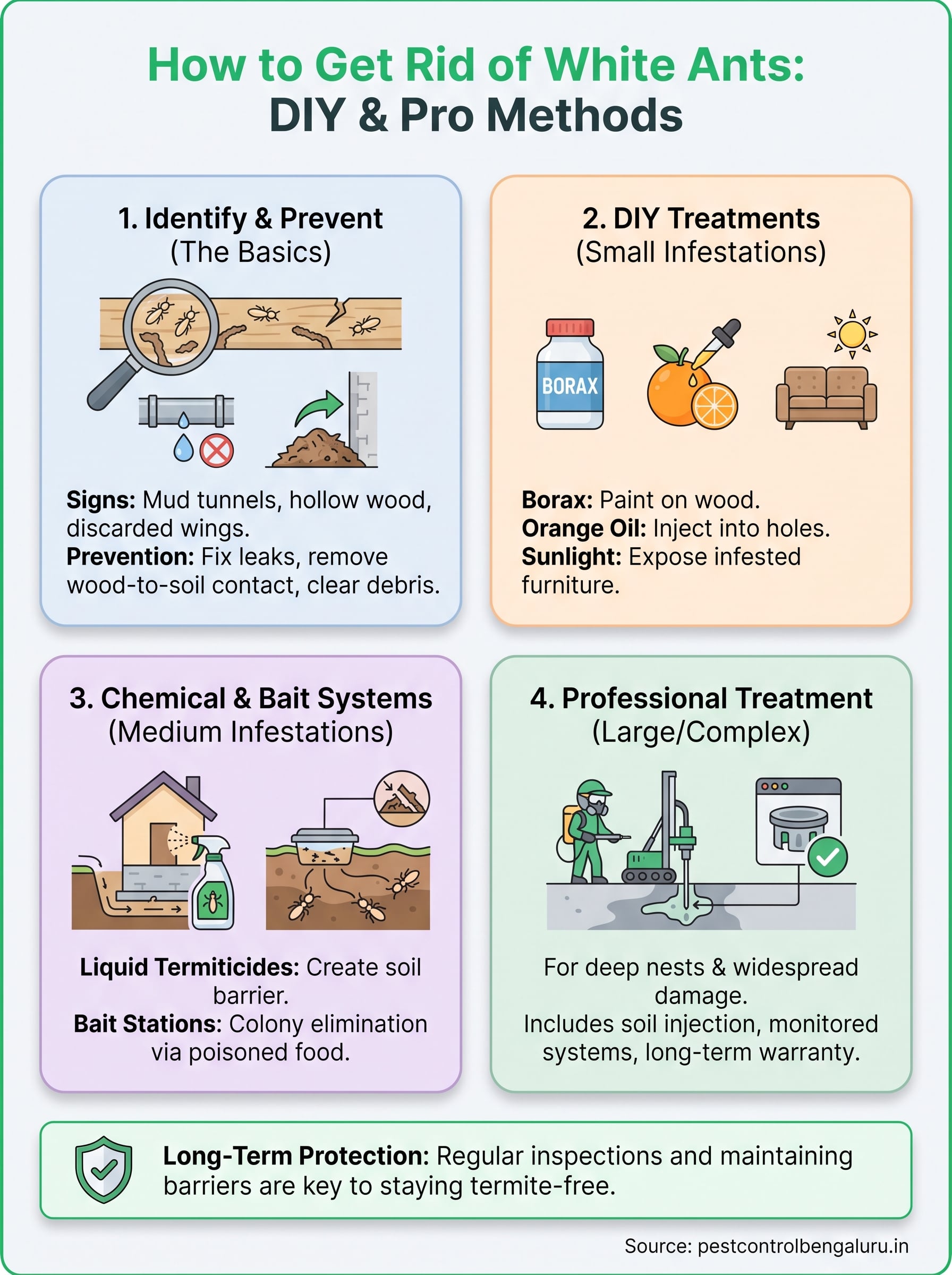
Getting rid of white ants is rarely a one-step job. You confirm the infestation, try DIY fixes like borax and orange oil on small problems, move to termiticides and bait stations when the colony spreads, and bring in professionals once the damage outgrows what you can safely handle. Skipping steps just delays the inevitable call to a technician, usually after more of your home has been eaten through.
The real work after treatment is prevention. Fix leaks, keep firewood and mulch away from your walls, and inspect wooden fixtures every monsoon season before mud tunnels reappear. Regular inspections catch new activity while it’s still a one-tunnel problem, not a structural one.
If you have already spotted tunnels or soft wood and want the job done right the first time, talk to our team about professional termite treatment and get your home properly protected before the next monsoon. Whether you handle it yourself or call in a technician, knowing how to get rid of white ants at the first sign of trouble is what separates a quick fix from a major repair.