
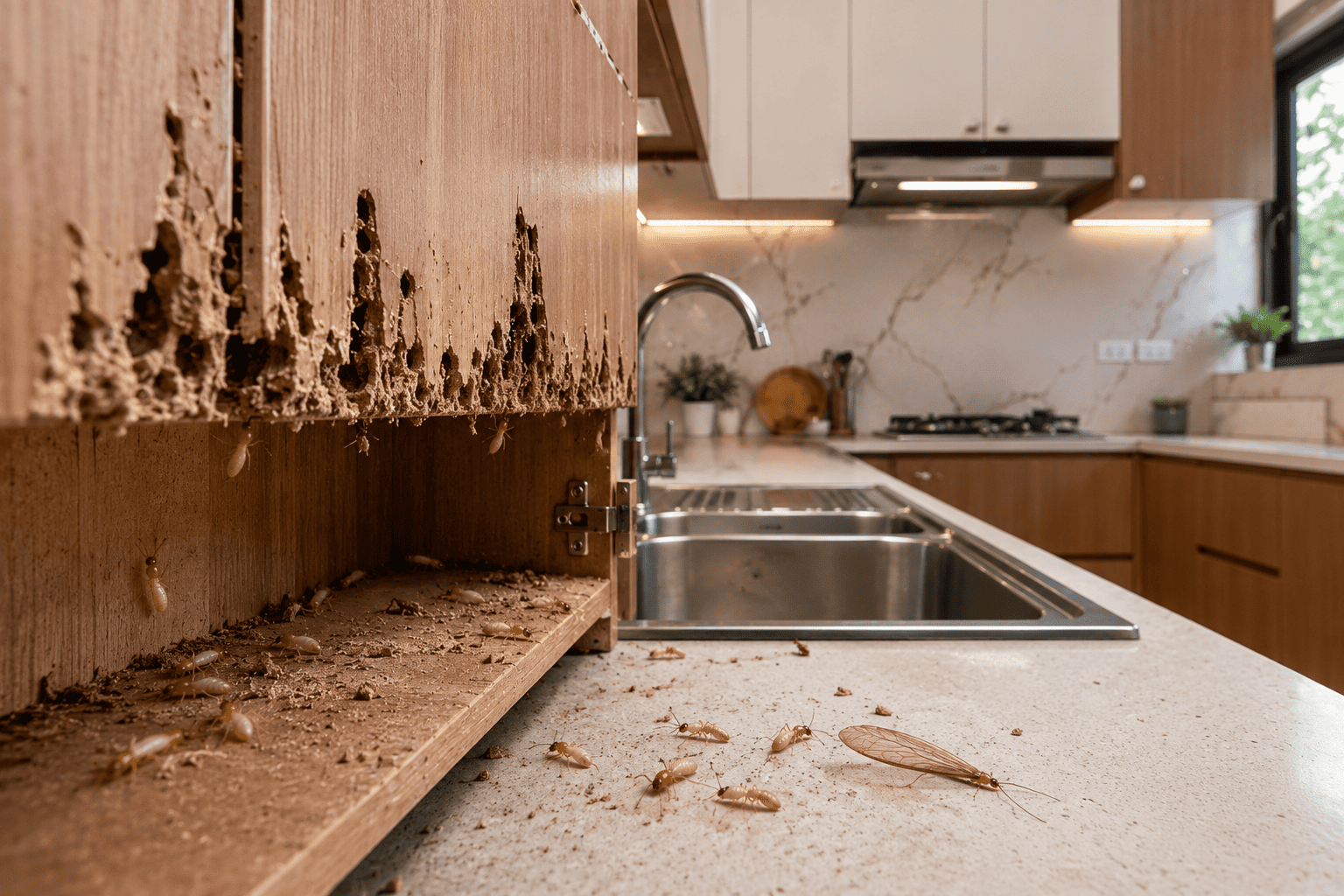
Your modular kitchen is one of the most expensive and frequently used spaces in your home. From premium plywood cabinets and wooden shelves to beautifully designed storage units, modern kitchens are a significant investment for homeowners in Bangalore. Unfortunately, they are also one of the favourite hiding places for termites.
If you’ve recently noticed tiny holes in your kitchen cabinets, hollow wooden surfaces, mud-like deposits, or winged insects around your kitchen windows, you may be dealing with a termite infestation. Every year, thousands of homeowners search for termite-related problems after discovering that termites have silently damaged their modular kitchens.
The biggest problem with termites is that they don’t announce their presence. They can remain hidden inside wooden cabinets and kitchen structures for months or even years before visible damage becomes apparent. By the time most homeowners realise they have termites, the infestation has often spread extensively throughout the kitchen.
In Bangalore, termite infestations have become increasingly common due to the city’s humid weather conditions, rapid urban development, and widespread use of wooden interiors in modern apartments and villas. Modular kitchens are particularly vulnerable because they combine wood, moisture, and concealed spaces—three things termites absolutely love.
Many homeowners assume that only old houses are affected by termites. However, even newly constructed apartments and luxury villas with modern modular kitchens can develop termite problems if proper anti-termite treatment has not been carried out during or after construction.
In this comprehensive guide, we’ll explain everything you need to know about termites in modular kitchens, including:
- What causes termites in modular kitchens?
- How termites enter kitchen cabinets.
- Early signs of termite infestation.
- Whether termites can damage expensive modular kitchens.
- Common places where termites hide.
- The best termite treatment options available in Bangalore.
- Prevention tips for homeowners.
- When you should call professional termite control experts.
If you’ve invested lakhs of rupees in your modular kitchen, understanding termite behaviour can help you protect your home from costly repairs and replacements.
What Causes Termites in Modular Kitchens?
Termites are often referred to as “silent destroyers” because they feed continuously on cellulose-based materials such as wood and paper without obvious external signs.
Several factors contribute to termite infestations in modular kitchens.
Moisture and Humidity
Termites thrive in damp environments. Even small amounts of moisture can attract termite activity.
Common sources of moisture include:
- Leaking sink pipes
- Damp kitchen walls
- Poor ventilation
- Water seepage
- Plumbing issues
- Wet cabinets beneath kitchen sinks
Bangalore’s monsoon season further increases humidity levels, creating ideal conditions for termite colonies to flourish.
Wooden Kitchen Cabinets
Many modular kitchens use materials such as:
- Plywood
- MDF boards
- Particle boards
- Wooden laminates
- Hardwood frames
Although laminates provide an attractive finish, termites can easily feed on the wooden material hidden underneath if left untreated.
This is one of the reasons termite control Bangalore services frequently receive complaints involving modular kitchens.
Lack of Anti-Termite Treatment
Many homeowners invest heavily in premium modular kitchens but overlook anti-termite protection.
Without proper treatment, termites can invade:
- Cabinets
- Wooden shelves
- Storage units
- Wooden frames
- False ceiling structures
Professional anti termite treatment Bangalore services provide long-term protection against termite infestations.
Are Modular Kitchens Vulnerable to Termites?
The simple answer is:
Yes, absolutely.
Modular kitchens are among the most vulnerable areas in modern homes when it comes to termite infestations.
This is because they typically offer:
- Wooden materials
- Hidden cavities
- Warm temperatures
- Moist conditions
- Minimal disturbance
Termites are highly efficient at locating suitable food sources. Once they gain access to your kitchen cabinetry, they can spread rapidly if left untreated.
Some of the most common kitchen components affected by termites include:
- Sink cabinets
- Wooden drawers
- Pantry units
- Wall-mounted cabinets
- Breakfast counters
- Wooden partitions
- Decorative wooden panels
Homeowners are often surprised to learn that termites can infest brand-new modular kitchens within just a few months if environmental conditions are favourable.
Why Are Modular Kitchens in Bangalore More Prone to Termite Problems?
There are several reasons why termite infestations are becoming increasingly common in Bangalore homes.
Bangalore’s Climate Supports Termite Activity
Bangalore’s weather is ideal for termites because it offers:
- Moderate temperatures throughout the year.
- Seasonal humidity during monsoon.
- Sufficient moisture levels.
- Extensive residential construction activity.
Unlike cities with extremely dry climates, Bangalore provides termites with suitable living conditions for most of the year.
Modern Apartment Construction
Many residential projects incorporate:
- Wooden interiors.
- Designer modular kitchens.
- Built-in wardrobes.
- False ceilings.
- Utility storage spaces.
If anti-termite treatment is not performed during construction, termite colonies may eventually spread into these wooden structures.
Plumbing and Water Leakage Issues
Kitchen sink areas are particularly susceptible to termite activity.
Leaking:
- Water pipes
- Drainage systems
- Dishwasher connections
- RO water systems
can create the moisture termites require for survival.
How Do Termites Enter Modular Kitchens?
One of the most common questions homeowners ask is:
“How did termites enter my kitchen when everything looks perfectly sealed?”
The truth is termites require only tiny openings to enter your home.
Underground Colonies
Subterranean termites are the most common termite species found in Bangalore.
They typically live underground and build mud tunnels to access food sources.
These termites may enter through:
- Foundation cracks
- Plumbing lines
- Wall openings
- Floor joints
- Expansion gaps
Through Wooden Structures
Termites can easily travel through:
- Wooden door frames
- False ceilings
- Storage cabinets
- Utility areas
Once termites establish themselves in one part of the house, they may spread silently into adjacent wooden structures.
Construction Materials
Untreated construction materials occasionally contribute to termite infestations.
This is particularly true when:
- Wood is stored improperly.
- Anti-termite treatment is skipped.
- Low-quality materials are used.
Early Signs of Termites in Modular Kitchens
Identifying termites early can save homeowners thousands of rupees in repair costs.
Watch for the following warning signs.
Tiny Holes in Kitchen Cabinets
Small holes in wooden surfaces may indicate termite activity inside.
These holes are often mistaken for normal wear and tear.
Hollow Wooden Sounds
Tap your cabinets gently.
If they sound hollow or papery, termites may have consumed the internal wood.
Mud Deposits
Mud tubes are one of the clearest signs of termite infestation.
They may appear:
- Behind cabinets
- Near kitchen walls
- Around sink units
- Beneath storage areas
Swollen or Damaged Laminate
Laminate may begin to:
- Peel
- Crack
- Bubble
- Separate from the wooden surface
These are often signs of termite damage rather than manufacturing defects.
Discarded Wings
Flying termites shed their wings after swarming.
If you find wings near:
- Kitchen windows
- Ventilation openings
- Storage areas
it may indicate an active termite colony nearby.
White Ants vs Termites: Are They the Same?
Many homeowners use the term “white ants” when referring to termites.
In reality:
White ants are termites.
The term is commonly used because worker termites are pale in colour and resemble ants.
However, termites differ significantly from ants in their:
- Behaviour
- Colony structure
- Feeding habits
- Treatment requirements
If you notice white ants inside your kitchen cabinets, professional termite treatment should be considered immediately.
Damage Caused by Termites in Modular Kitchens
Many homeowners underestimate how destructive termites can be until they are forced to replace expensive kitchen cabinets or undergo complete modular kitchen renovations.
Termites don’t simply eat wood—they silently weaken the structural integrity of your kitchen interiors. Unlike other pests, termites work from the inside out, which means visible damage often appears only after significant destruction has already occurred.
If left untreated, termites can cause extensive damage to:
- Modular kitchen cabinets
- Wooden drawers
- Pantry units
- Wooden shelves
- Kitchen partitions
- Decorative wooden panels
- Storage compartments
- False ceiling structures
- Wooden breakfast counters
One of the biggest concerns with termite infestations is their ability to remain hidden for several months or even years.
By the time homeowners notice signs such as bubbling laminate or hollow cabinet doors, termites may have already damaged large portions of the kitchen.
How Quickly Can Termites Damage a Modular Kitchen?
Many homeowners assume termite damage takes years to occur. In reality, termite colonies work continuously, 24 hours a day.
A mature termite colony can contain:
- Thousands of worker termites
- Soldier termites
- Reproductive termites
- Future queens and kings
Worker termites feed constantly and can rapidly expand their food sources if conditions are favourable.
Factors that influence termite damage include:
- Colony size
- Moisture levels
- Wood quality
- Weather conditions
- Construction materials
- Treatment history
The longer termites remain undetected, the greater the financial loss.
Professional termite treatment Bangalore experts recommend immediate inspections if termite activity is suspected.
Common Places Where Termites Hide in Modular Kitchens
One reason termite infestations are difficult to detect is that termites prefer concealed spaces.
Some of their favourite hiding spots include:
Under the Kitchen Sink
Sink cabinets are particularly vulnerable because they are frequently exposed to:
- Water leakage
- Condensation
- Moisture accumulation
Even minor plumbing issues can attract termite activity.
Behind Wall-Mounted Cabinets
Wall cabinets provide termites with:
- Darkness
- Warm temperatures
- Minimal disturbance
These conditions allow termite colonies to expand unnoticed.
Inside Wooden Drawers
Termites often infest:
- Cutlery drawers
- Utility storage units
- Pantry compartments
Homeowners rarely inspect the internal wooden structures hidden beneath laminates.
Behind Decorative Panels
Modern modular kitchens frequently include decorative wooden panels that can become ideal termite feeding grounds.
Kitchen Flooring and Skirting Areas
Termites may enter modular kitchens through:
- Expansion joints
- Flooring gaps
- Wall cracks
- Plumbing openings
Subterranean termites often travel through concealed mud tunnels before reaching wooden structures.
Can PVC Modular Kitchens Get Termites?
This is one of the most commonly searched questions among homeowners.
The good news is:
Pure PVC materials do not attract termites.
However, the answer isn’t always straightforward.
Many modular kitchens marketed as PVC kitchens contain:
- Wooden supports
- Plywood backing
- Hybrid materials
- Wooden partitions
If termites gain access to these components, infestations can still occur.
Even if your cabinets are termite-resistant, termites may infest:
- Door frames
- False ceilings
- Kitchen walls
- Adjacent wardrobes
- Utility areas
Therefore, termite prevention should always extend beyond kitchen cabinets alone.
Flying Termites in Your Kitchen: Should You Be Worried?
If you’ve suddenly noticed winged insects flying near your kitchen lights during Bangalore’s rainy season, there’s a possibility you’re dealing with flying termites.
Flying termites are reproductive members of mature termite colonies.
They are usually seen:
- After rainfall
- During humid evenings
- Around kitchen windows
- Near lights
- Around ventilators
Flying termites indicate one of the following:
- An active termite colony nearby.
- A hidden infestation within your property.
- A new colony attempting to establish itself.
Many homeowners first discover termite problems after noticing flying termites around their kitchen lighting.
If you repeatedly observe flying termites indoors, professional termite inspection Bangalore services are highly recommended.
Signs That Your Modular Kitchen Needs Professional Inspection
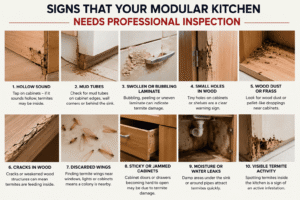
You should immediately consider termite inspection if you notice:
- Hollow cabinet doors.
- Peeling laminate.
- Mud deposits.
- Swollen wooden surfaces.
- Flying termites.
- Discarded termite wings.
- Small holes in cabinets.
- Damaged storage units.
- Cracked wood.
- Persistent moisture issues.
Early inspections can significantly reduce repair costs and prevent extensive termite damage.
DIY Solutions for Termites in Modular Kitchens
Many homeowners attempt DIY termite treatments after discovering termites in kitchen cabinets.
While DIY methods may temporarily reduce visible termite activity, they rarely eliminate entire termite colonies.
Popular DIY solutions include:
Vinegar Spray
Although vinegar may kill a few termites upon contact, it cannot penetrate deep termite colonies hidden inside wooden structures.
Boric Acid
Boric acid is often recommended for termite control. However, improper application limits its effectiveness.
Large termite infestations usually require specialised treatment techniques.
Neem Oil
Neem oil is occasionally used as a natural pest repellent but is insufficient for active termite infestations.
Salt Water Treatments
Saltwater solutions are commonly suggested online but provide only temporary relief.
Vacuuming Flying Termites
If flying termites appear indoors:
- Vacuum visible termites.
- Dispose of the contents immediately.
- Monitor the affected areas.
Remember that eliminating visible termites does not eliminate the colony itself.
DIY methods may delay termite activity temporarily but should not replace professional termite treatment when infestations are severe.
Why DIY Treatments Often Fail
Termite colonies can remain hidden in:
- Soil.
- Wall cavities.
- Foundations.
- Kitchen structures.
- Furniture.
Without targeting the entire colony, termites simply continue feeding and expanding.
Professional termite control Bangalore services use specialised treatment techniques that are designed to eliminate termites at their source rather than treating only visible symptoms.
Professional Termite Treatment Is Always More Cost-Effective
Replacing an entire modular kitchen can be significantly more expensive than investing in termite treatment.
Professional termite treatment offers:
- Long-term protection.
- Colony elimination.
- Preventive treatment options.
- Property preservation.
- Reduced maintenance costs.
Homeowners often delay treatment in an attempt to save money, only to discover that termite-related repairs cost substantially more later.
Professional Termite Treatment for Modular Kitchens in Bangalore
If termites have already entered your kitchen cabinets, DIY solutions are unlikely to solve the problem permanently. Termites usually remain hidden inside wooden structures and can spread silently to adjacent areas of your home if left untreated.
Professional termite treatment is the most effective way to eliminate termite colonies and prevent future infestations. Depending on the severity of the infestation, pest control experts may recommend one or more treatment methods for your modular kitchen.
Whether you live in an apartment, villa, or independent house, investing in professional termite treatment Bangalore services can save you from expensive kitchen renovations in the future.
Best Termite Treatment Options for Modular Kitchens
There is no one-size-fits-all approach when it comes to termite control. Professional pest control companies usually conduct a detailed inspection before recommending the most suitable treatment.
1. Wood Treatment for Kitchen Cabinets
Wood treatment is ideal for:
- Modular kitchen cabinets
- Wooden drawers
- Pantry units
- Wooden shelves
- Decorative wooden panels
- Kitchen storage units
This treatment protects wooden structures from termite attacks and helps preserve the life of expensive kitchen interiors.
2. Post Construction Termite Treatment Bangalore
Post construction termite treatment is one of the most commonly recommended solutions for existing homes and apartments.
It is suitable for:
- Apartments
- Villas
- Independent homes
- Commercial properties
- Newly purchased homes
The treatment process may include:
- Drilling and injection treatment
- Chemical barrier creation
- Soil treatment
- Wall treatment
- Wooden structure treatment
This method effectively targets active termite infestations that have already entered the property.
3. Anti Termite Treatment Bangalore
Anti termite treatment is a preventive as well as corrective termite control solution.
It helps:
- Eliminate existing termite colonies.
- Protect wooden interiors.
- Reduce future infestation risks.
- Improve long-term termite protection.
Many homeowners opt for anti termite treatment immediately after renovating their modular kitchens to safeguard their investment.
4. Pre Construction Anti Termite Treatment Bangalore
If you’re planning to build a new home or villa, pre-construction anti termite treatment should never be overlooked.
This treatment is performed before construction begins and provides an effective protective barrier against termite activity.
Benefits include:
- Long-term termite protection.
- Reduced maintenance costs.
- Better structural safety.
- Improved property value.
Pre-construction treatment is especially recommended for:
- Individual house construction.
- Luxury villas.
- Residential projects.
- Commercial buildings.
Termite Treatment Cost in Bangalore
One of the most common questions homeowners ask is:
“How much does termite treatment cost in Bangalore?”
The answer depends on several factors, including:
- Property size
- Severity of termite infestation
- Kitchen dimensions
- Type of treatment required
- Construction material used
- Accessibility of affected areas
Termite treatment costs can vary significantly between:
- 2 BHK apartments
- 3 BHK apartments
- Villas
- Independent houses
- Commercial kitchens
A professional termite inspection is usually required to determine the most appropriate treatment plan and cost estimate.
Remember, replacing an entire modular kitchen can cost several lakhs of rupees, making professional termite treatment a far more cost-effective investment.
How to Prevent Termites in Modular Kitchens
Preventive measures play a critical role in keeping termites away from your home.
Fix Plumbing Issues Immediately
Regularly inspect:
- Sink pipes
- RO water connections
- Dishwasher lines
- Kitchen drainage systems
Even small leaks can create favourable conditions for termite activity.
Maintain Proper Ventilation
Ensure your kitchen receives adequate ventilation to minimise moisture buildup.
Proper ventilation helps:
- Reduce humidity.
- Prevent dampness.
- Improve cabinet longevity.
Inspect Wooden Cabinets Regularly
Perform periodic inspections for:
- Hollow sounds
- Mud deposits
- Tiny holes
- Swollen laminates
- Discarded termite wings
Early detection significantly reduces treatment costs.
Avoid Excess Moisture
Never allow water to accumulate:
- Under sink cabinets
- Near wooden skirting
- Behind kitchen appliances
Keeping wooden structures dry is one of the simplest termite prevention techniques.
Schedule Annual Termite Inspections
Annual termite inspections are highly recommended for Bangalore homeowners, especially if your home contains:
- Modular kitchens
- Wooden wardrobes
- Wooden flooring
- False ceilings
Professional inspections can identify termite activity long before visible damage occurs.
When Should You Call a Pest Control Expert?
You should immediately seek professional assistance if you notice:
- Flying termites in your kitchen.
- White ants inside cabinets.
- Hollow wooden sounds.
- Damaged laminate.
- Mud tubes.
- Swollen wooden surfaces.
- Recurring termite activity.
- Water leakage combined with termite signs.
The earlier termite infestations are treated, the easier and more affordable they are to eliminate.
Why Professional Termite Control Services Are Worth It
Professional termite control Bangalore services offer several advantages over DIY methods.
These include:
- Advanced termite detection techniques.
- Complete colony elimination.
- Long-term termite protection.
- Professional anti termite treatment.
- Reduced repair costs.
- Better property preservation.
Experienced termite control specialists understand termite behaviour and can identify hidden infestations that homeowners often miss.
Investing in professional termite treatment is ultimately an investment in protecting your home’s value.
Frequently Asked Questions (FAQs)
1. Can termites completely destroy a modular kitchen?
Yes. If left untreated, termites can severely damage kitchen cabinets, drawers, and wooden structures over time.
2. Are modular kitchens termite-proof?
No. Unless termite-resistant materials and anti termite treatments are used, modular kitchens remain vulnerable to infestations.
3. What attracts termites to kitchen cabinets?
Termites are attracted to:
- Moisture
- Wood
- Damp environments
- Hidden spaces
- Water leakage
4. Can PVC modular kitchens get termites?
Pure PVC materials do not attract termites. However, supporting wooden structures can still become infested.
5. How do termites enter apartments in Bangalore?
Termites may enter through:
- Plumbing lines
- Wall cracks
- Foundation gaps
- Wooden structures
- Utility ducts
6. Is termite treatment safe for modular kitchens?
Yes. Professional termite treatments are generally safe when carried out according to industry standards.
7. Can termites return after treatment?
Proper termite treatment provides long-lasting protection. Regular inspections are recommended to maintain termite-free conditions.
8. How often should termite inspections be conducted?
Annual inspections are ideal for most Bangalore homes.
9. What is the best termite treatment for kitchen cabinets?
Professional wood treatment combined with anti termite treatment is usually recommended for modular kitchens.
10. Are white ants and termites the same?
Yes. The term “white ants” is commonly used to describe termites.
Conclusion
Your modular kitchen is one of the most valuable and frequently used spaces in your home. Unfortunately, it is also highly susceptible to termite infestations if proper preventive measures are not taken.
From moisture accumulation and plumbing leaks to untreated wooden materials, several factors can contribute to termite activity in modern kitchens. The hidden nature of termite infestations often means that significant damage has already occurred before homeowners become aware of the problem.
If you’ve noticed white ants, flying termites, mud tubes, or hollow kitchen cabinets, it’s important to act quickly. Early termite detection and professional termite treatment can save you from costly repairs and complete kitchen replacements.
Whether you’re moving into a new apartment, renovating your existing kitchen, or building your dream home, investing in professional termite control and anti termite treatment is one of the smartest decisions you can make to protect your property.
A termite-free modular kitchen not only preserves your investment but also provides peace of mind for years to come.