
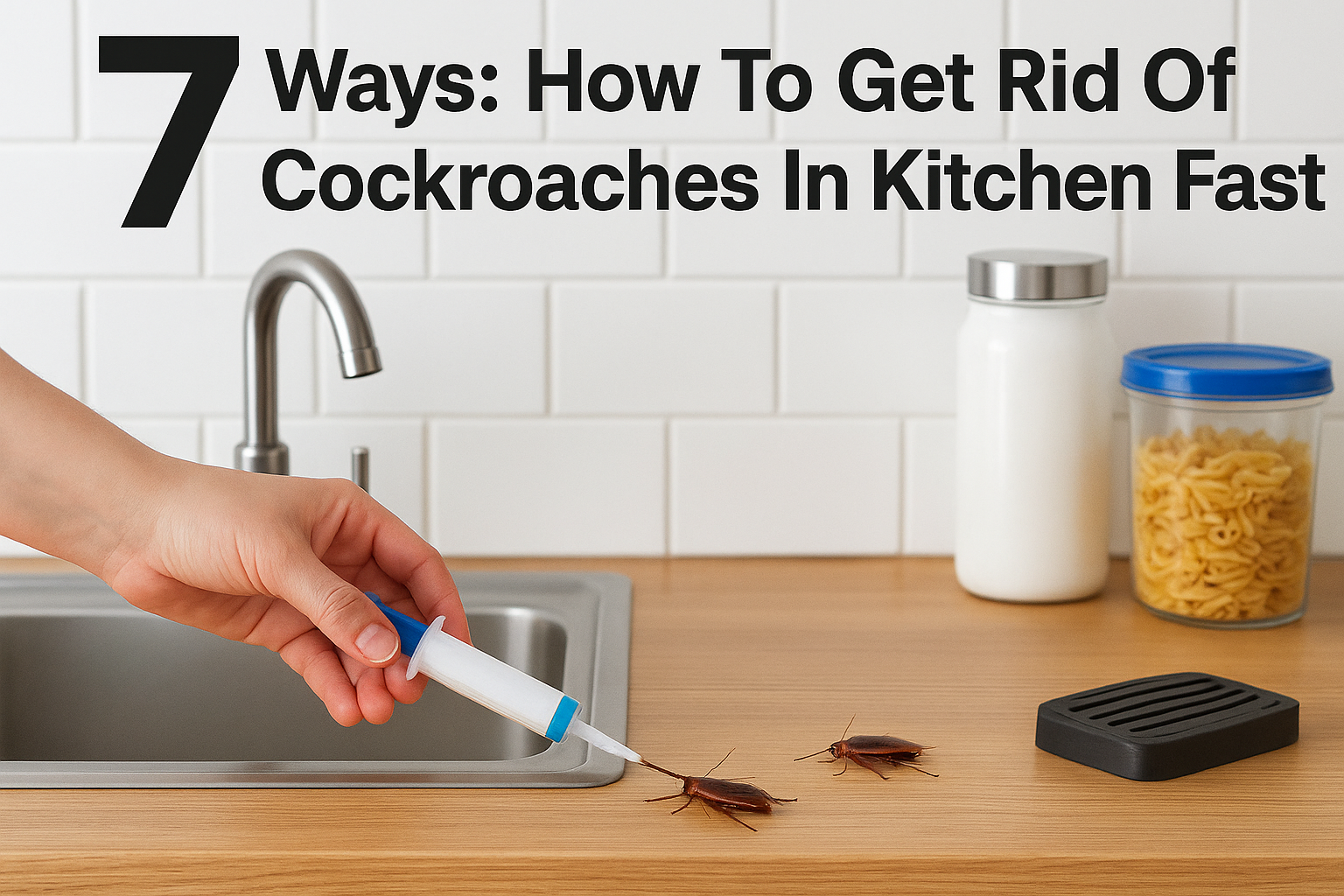
You spot one scurrying across the counter at night, and suddenly your kitchen feels anything but clean. If you’re searching for how to get rid of cockroaches in kitchen spaces, you’re not alone, it’s one of the most common pest problems households in Bangalore deal with year-round, especially during warmer and humid months.
Cockroaches aren’t just unsettling to look at. They carry bacteria like Salmonella and E. coli, contaminate food, trigger allergies, and spread disease through your cooking and food prep areas. A kitchen gives them everything they need, warmth, moisture, and easy access to food scraps, which is why they keep coming back even after you think you’ve handled the problem.
At A to Z Pest Solutions, we’ve been eliminating cockroach infestations across Bangalore homes since 1993. Over 32+ years of hands-on experience, we’ve seen what works and what doesn’t. This article breaks down seven practical methods, from simple home remedies to targeted treatments, that you can start using right away to clear cockroaches out of your kitchen and keep them from returning.
1. Book a professional kitchen cockroach treatment
If you’ve been searching for how to get rid of cockroaches in kitchen spaces for a while and nothing has worked, professional treatment is usually the fastest reset. A trained technician brings the right products, knows exactly where to look, and targets the colony, not just the roaches you can see.
When professional treatment makes the most sense
Call a professional if you spot cockroaches during the daytime. Roaches are nocturnal, so daytime sightings signal a large, overcrowded infestation. You should also bring in a technician if you live in an apartment building, since cockroaches travel between units through shared walls and drainage pipes, making a solo treatment largely ineffective.
What a technician targets in a kitchen infestation
A technician inspects the spots that most DIY products never reach, including behind the refrigerator, under the stove burners, inside cabinet hinges and joints, around plumbing entry holes, and along the gap where walls meet the floor. These harborage zones are where colonies actually live and breed.
How gel baiting works for German cockroaches
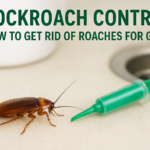
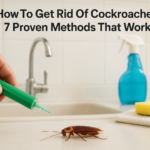
Gel bait is the most effective tool for German cockroaches, the small brown species most commonly found in Bangalore kitchens. Small dots of bait are placed directly inside cracks and near nesting areas. Roaches eat the bait, return to the group, and pass the active ingredient to others through contact, which collapses the entire colony without broad chemical spraying.
Gel baiting eliminates the colony at the source, not just the individuals you see on the counter.
What to expect before, during, and after the visit
Before the visit, clear out items from under the sink and pull appliances slightly away from the wall. The treatment itself takes 30 to 60 minutes for a standard kitchen. After the visit, avoid mopping the treated zones for at least 48 hours and leave bait placements completely undisturbed.
Safety rules for kids, pets, and food prep areas
Gel bait is applied in tiny, targeted amounts inside cracks rather than sprayed across open surfaces. Keep children and pets out of the kitchen during application and for one hour after. Before the technician arrives, cover all food and store utensils and cutting boards inside closed drawers.
Typical cockroach control pricing in Bangalore
Professional cockroach treatment in Bangalore typically costs between ₹800 and ₹2,500 for a standard kitchen or 1-2 BHK flat, depending on infestation severity. Signing up for a quarterly or annual maintenance plan brings the per-visit cost down and keeps populations from rebuilding.
2. Deep clean and remove food sources
Cleaning alone won’t solve a heavy infestation, but it removes the food supply that keeps roaches coming back. When you combine this step with other methods for how to get rid of cockroaches in kitchen areas, you cut off one of their key survival resources.
The fastest kitchen clean that actually reduces roaches
Start with a thorough wipe-down of all surfaces, including the insides of cabinets and the floor along baseboards. Focus on areas you normally skip, since roaches feed on tiny particles invisible to the eye. Even a single crumb-covered shelf can sustain a colony.
Cabinet and pantry checklist for crumbs and spills
Pull everything out of your pantry and lower cabinets once a week. Wipe shelves with a damp cloth and check for open packets, split bags, or sticky spills from sauces and oils. These are the spots roaches return to every night.
A clean cabinet with no food residue gives roaches no reason to nest there.
Stove and fridge grease zones that feed roaches
Grease buildup under burner grates and along the back panel of your stove is one of the richest food sources roaches exploit. Pull your refrigerator out monthly and clean the drip tray and compressor area, both collect debris roaches actively seek out.
Trash, recyclables, and compost setup that blocks roaches
Use bins with tight-fitting lids and empty your kitchen trash daily. Rinse recyclables before storage and keep compost containers sealed or outside.
Food storage upgrades that stop reinfestation
Transfer dry goods like rice, dal, and flour into hard-sided, airtight containers. Roaches chew through paper and thin plastic packaging with ease.
Cost range for DIY cleaning supplies
Airtight containers, a basic caulk gun, and cleaning supplies together cost between ₹500 and ₹1,500 at most hardware or grocery stores in Bangalore.
3. Cut off water and moisture
Water is often what keeps a cockroach colony alive after you’ve eliminated the food supply. Understanding how to get rid of cockroaches in kitchen areas completely means tackling moisture problems with the same focus you give cleaning.
Why roaches survive longer on water than food
Cockroaches can survive weeks without food but only a few days without water. Moisture availability keeps a colony alive and active, which means your kitchen’s wet surfaces are just as critical to address as your food storage habits.
Under-sink leaks, faucet drips, and pipe condensation
Check under your sink right now for slow drips or pooled water around drain connections. Even minor pipe condensation on cold water lines creates enough daily moisture to sustain a cockroach colony long-term.
Fixing a single dripping pipe can do more to reduce roach activity than three rounds of spraying.
Drain and sink habits that remove overnight water
Wipe your sink basin dry before bed and pour a cup of boiling water down the drain to flush the pipe interior. Roaches use drain openings as access points and water sources, so a dry sink removes both in one step.
Ventilation fixes for humid kitchens in Bangalore
Bangalore’s humidity, especially during monsoon months, keeps kitchens damp longer than expected. Run your exhaust fan during and after cooking and open windows when weather permits to lower ambient moisture levels throughout the day.
What to do about wet mops, dishcloths, and sponge trays
Wring out mops and dishcloths completely and hang them to dry rather than leaving them bunched on the floor or counter. Empty sponge trays and drying racks every night since standing water in these spots feeds roaches directly.
Cost range for basic repairs and moisture control
Basic repairs including plumber visit fees and replacement tap washers typically run between ₹200 and ₹800 in Bangalore. Adding a small exhaust fan costs ₹500 to ₹1,500 depending on the model and installation complexity.
4. Seal entry points and hiding gaps
Sealing your kitchen is one of the most overlooked steps in how to get rid of cockroaches in kitchen spaces for good. You can eliminate every roach visible today, but if the entry points stay open, a new group moves in within weeks through the exact same gaps.
The kitchen gaps roaches use most often
Cockroaches enter through surprisingly small openings, including the gap around water pipes under the sink, the space behind your stove where it meets the wall, and the cutouts in cabinet backs where plumbing and wiring pass through. A gap as thin as 1.5mm is wide enough for a young cockroach to pass through.
How to seal around pipes, outlets, and cabinet cutouts
Use silicone or acrylic caulk to close gaps around pipe entry points and cabinet cutouts. For larger openings, press copper mesh or steel wool into the gap first and then caulk over it, since roaches chew through plain sealant.
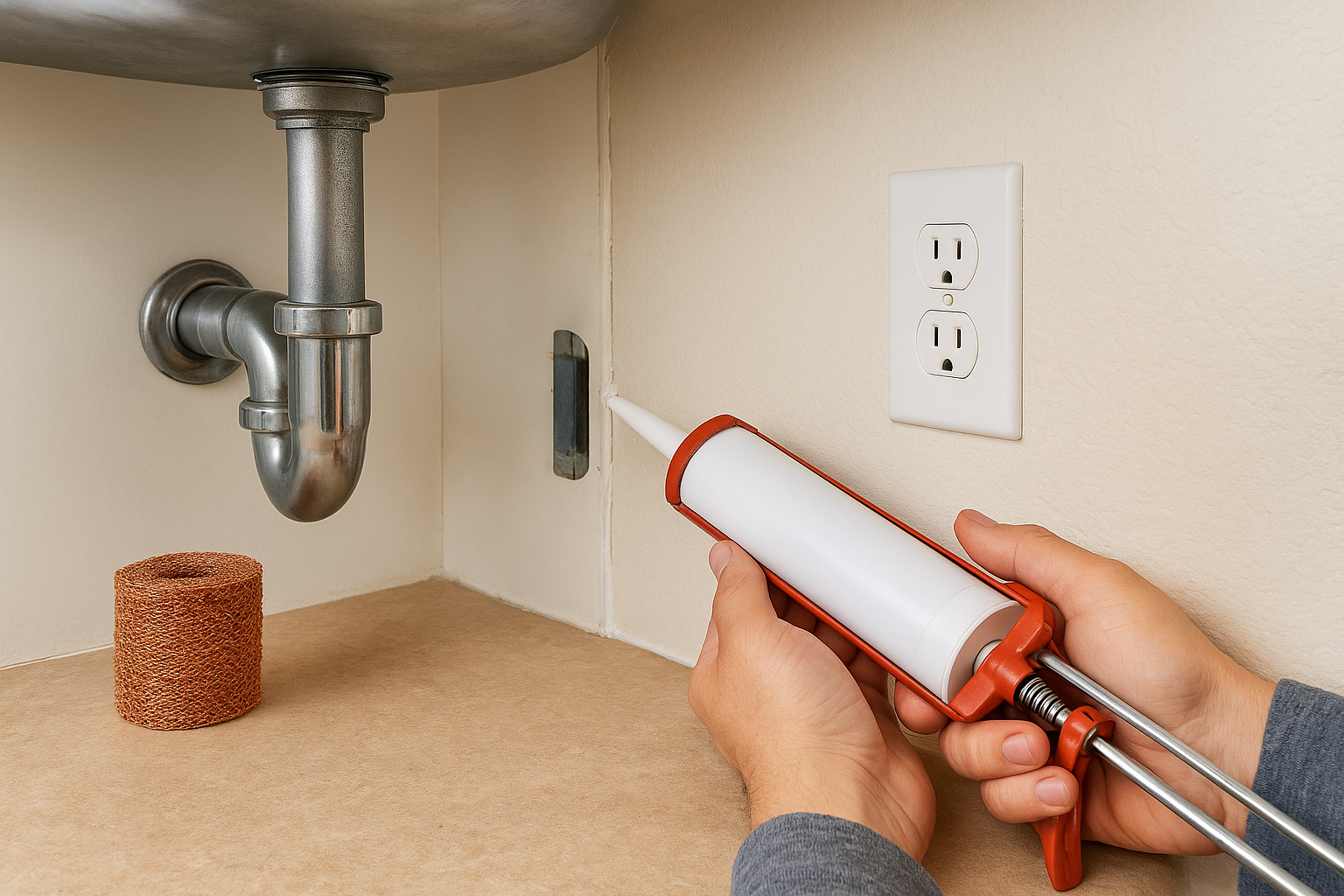
Sealing the pipe gap under your sink takes fifteen minutes and blocks one of the most-used roach entry points in any kitchen.
Door sweeps, window screens, and balcony entry checks
Fit door sweeps on kitchen doors that open to balconies or corridors. Roaches walk in flat against the floor, so even a small gap at the base of a door is a reliable entry route. Check window screens for tears and replace any that no longer sit flush.
Storage choices that reduce nesting in cardboard clutter
Replace cardboard boxes with hard plastic bins for groceries and dry goods. Roaches nest and lay egg cases inside corrugated cardboard, so removing it eliminates a common breeding site directly inside your cabinet.
Quick inspection routine for renters and apartment kitchens
Walk your kitchen once a month and run your hand along baseboards and cabinet back panels to feel for new gaps. In apartment buildings, shared walls and drainage pipes create new cracks regularly as structures settle.
Cost range for caulk, mesh, and simple hardware
A tube of silicone caulk costs ₹150 to ₹400. Door sweeps run ₹300 to ₹800, and a roll of copper or steel mesh costs ₹200 to ₹500 at most hardware stores in Bangalore.
5. Use gel baits and monitor with sticky traps
Gel baits and sticky traps are two of the most reliable tools in any strategy for how to get rid of cockroaches in kitchen spaces. Used together, they both eliminate the colony and show you exactly where activity is concentrated.
Why baits work better than sprays for long-term results
Sprays kill roaches on contact but leave no lasting effect once the residue dries. Gel bait works differently by targeting the entire colony through a transfer effect, where one roach feeds on the bait and passes the active ingredient to others through direct contact back at the nest.
Bait eliminates the colony you cannot see, not just the individual roaches crossing your counter.
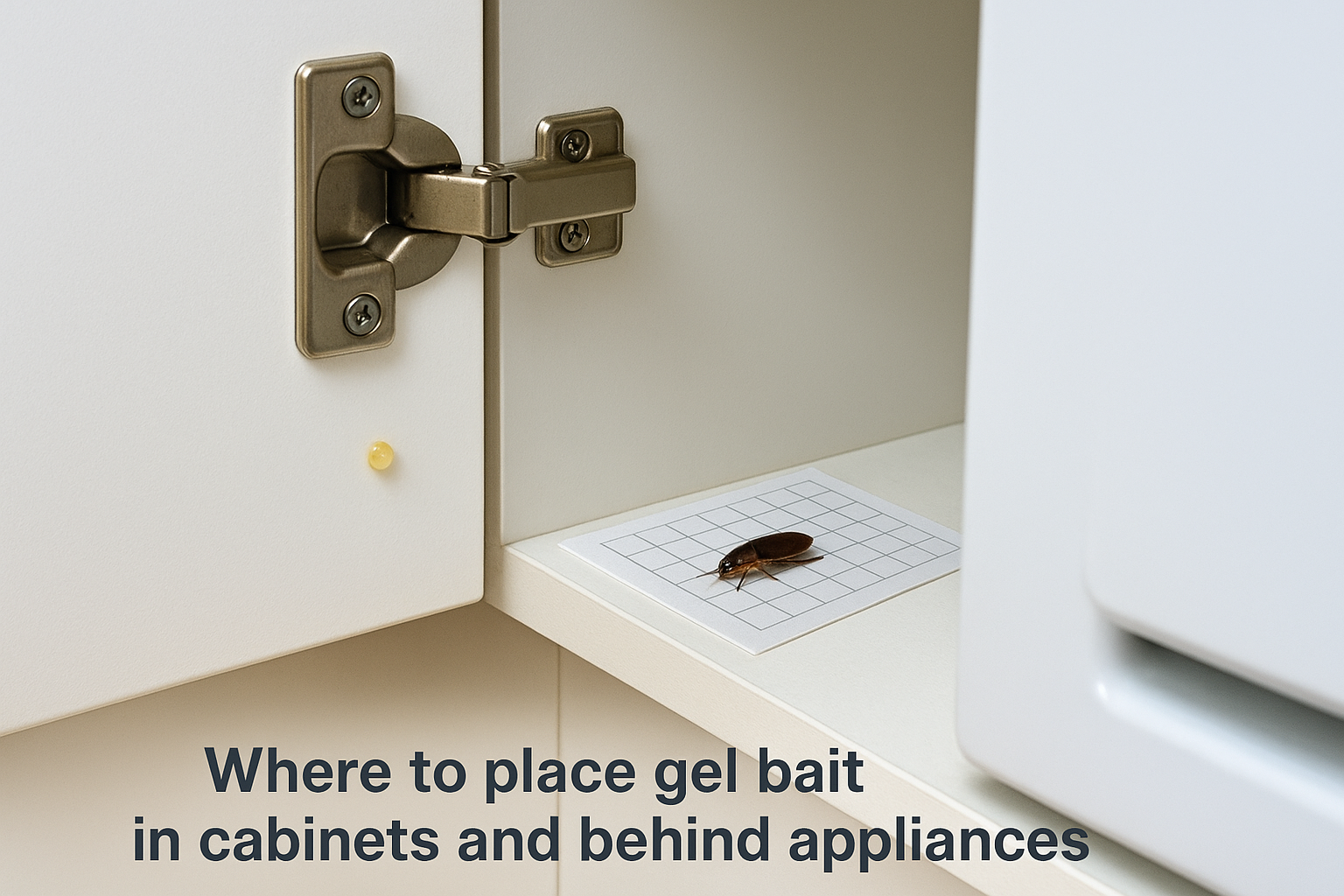
Where to place gel bait in cabinets and behind appliances
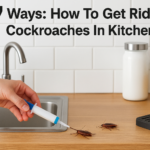
Apply small dots of gel bait, roughly the size of a pea, inside cabinet hinges, along the back wall of lower cabinets, and behind your refrigerator and stove. Place bait close to harborage zones rather than in open areas where roaches rarely spend time.
How to use sticky traps to find hotspots fast
Place sticky traps flat against walls in corners, under the sink, and near the back of cabinets. Check them after 48 hours and the trap with the highest roach count tells you exactly where to focus your bait placements.
How long baits take to work and what results look like
Expect to see reduced activity within 5 to 7 days. Full colony collapse from a quality gel bait typically takes two to three weeks, after which trap counts drop to zero.
Mistakes that make baits fail
- Placing bait near insecticide sprays, which repel roaches from the bait entirely
- Using old or dried-out gel that loses its attractant
- Cleaning treated areas before the bait has worked
Cost range for gel baits and traps in India
A quality gel bait syringe costs ₹300 to ₹700, and a pack of sticky monitoring traps runs ₹150 to ₹400 at hardware stores or online retailers across India.
6. Apply low-tox dusts and targeted sprays
Dusts and targeted sprays fill the gaps left by baits and cleaning when you need additional support in your overall strategy for how to get rid of cockroaches in kitchen spaces. Used in the right locations, they add another layer of control without putting food prep surfaces at risk.
When boric acid makes sense and when it does not
Boric acid powder works well in dry, undisturbed voids like inside wall cavities, behind appliances, and along the back of lower cabinet shelves. Skip it near the stove or sink where moisture clumps the powder into lumps and renders it useless. Apply a thin, barely visible layer since a heavy deposit repels roaches instead of drawing them in.
How to use food-grade diatomaceous earth safely
Food-grade diatomaceous earth (DE) damages the outer coating of cockroaches, causing them to dehydrate and die within 48 hours. Dust a thin layer along baseboards and behind appliances, keeping it well away from open food surfaces. Wear a dust mask during application since fine airborne particles irritate your airways.
DE leaves no toxic residue and works well as a low-risk support layer alongside gel baiting.
Crack and crevice treatment rules near food areas
Direct any spray treatment into cracks and crevices only, never across open countertops or shelves. A straw applicator nozzle puts the product precisely where roaches travel, limiting exposure to surfaces you actually use.
What kills cockroaches instantly and why it rarely solves it
Contact sprays kill individual roaches on the spot but leave the colony completely untouched. They also scatter roaches away from bait placements, which actively undermines the longer-term work your gel bait is doing.
Smells roaches avoid and how to use them as support
Roaches dislike peppermint oil and dried bay leaves. Place bay leaves inside dry-goods cabinets as a low-cost deterrent that complements your main treatment without replacing it.
Cost range for dusts, applicators, and spot treatments
Boric acid powder costs ₹150 to ₹400, and food-grade DE runs ₹300 to ₹600 at health and hardware stores across Bangalore.
Next steps
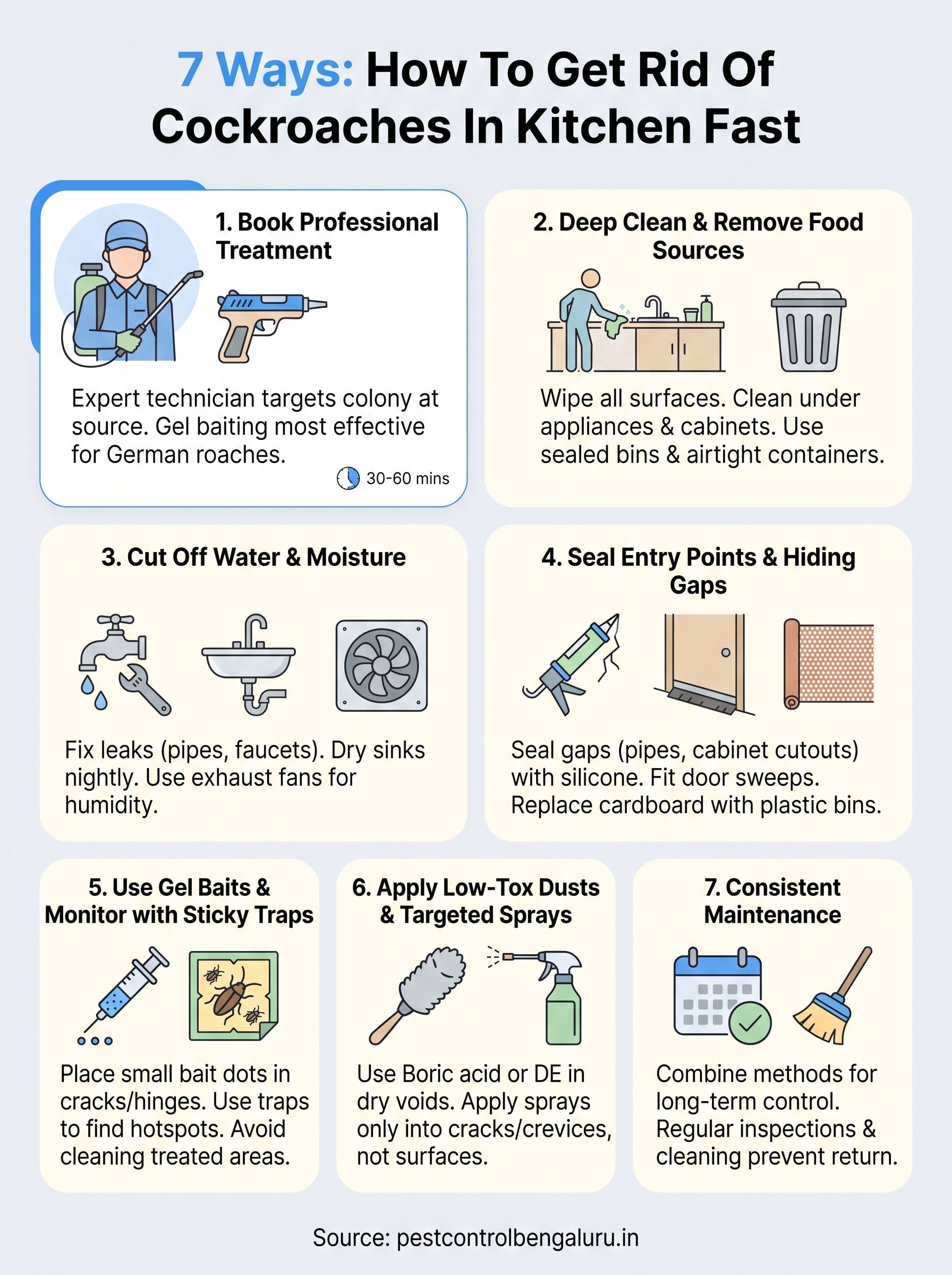
You now have a clear set of options for how to get rid of cockroaches in kitchen spaces, from sealing entry points and cutting off moisture to using gel baits and low-tox dusts. Each method works better when you combine it with the others rather than relying on a single fix. Start with the quick wins, deep cleaning, fixing drips, and placing sticky traps, so you can identify where the activity is heaviest before applying bait or dust.
If the infestation is already established or keeps returning despite your efforts, a professional treatment is the fastest way to collapse the colony at its source. Our team at A to Z Pest Solutions has been handling kitchen cockroach infestations across Bangalore since 1993, using targeted gel baiting and safe, odorless treatments suited for homes with children and pets. Book a cockroach treatment in Bangalore and get your kitchen back under control.