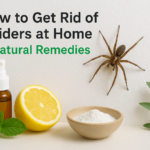

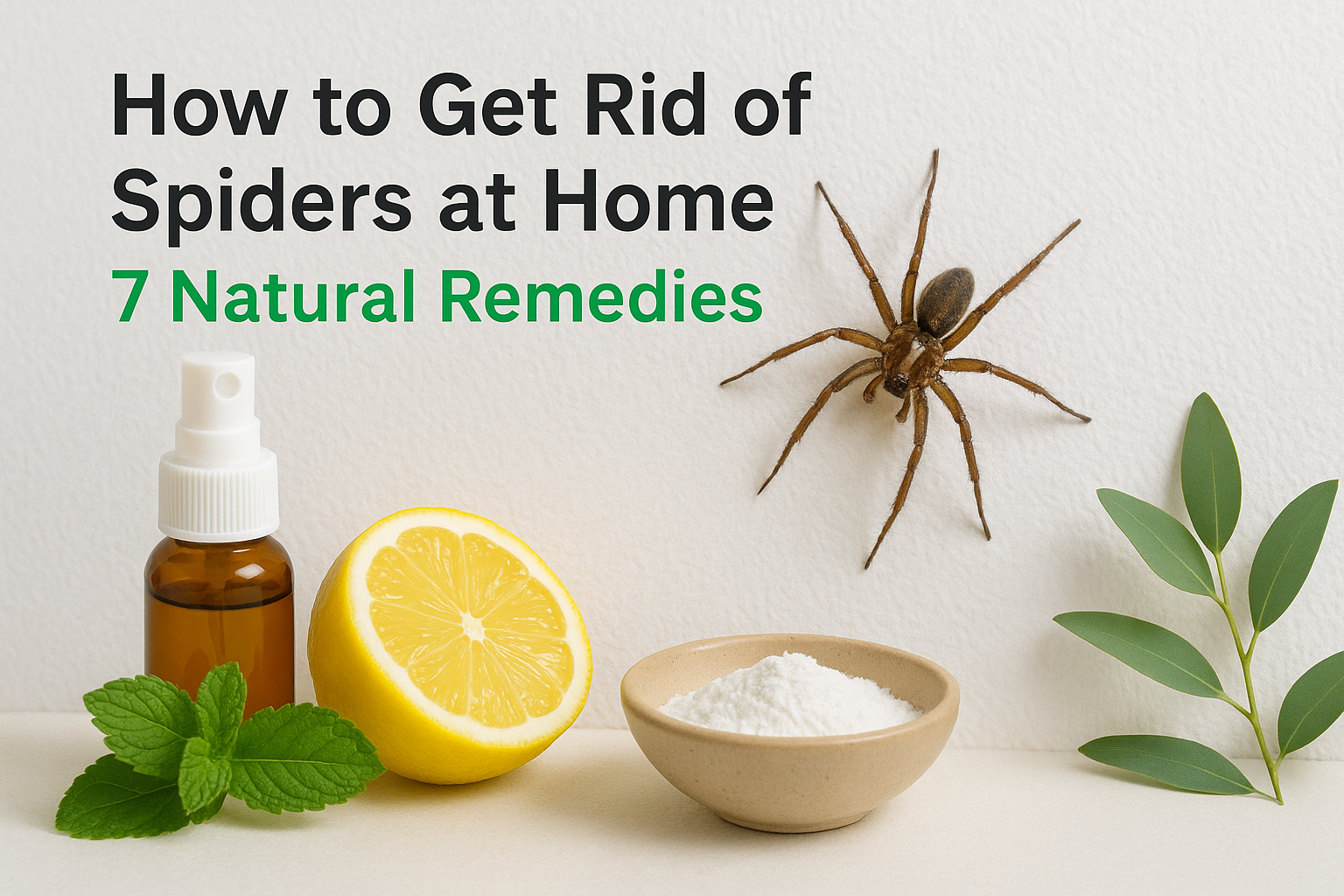
Spiders show up in corners, behind furniture, and near windows the moment Bangalore’s humidity rises, and most homeowners want them gone without spraying harsh chemicals around kids or pets. If you’ve been searching for how to get rid of spiders at home using safe, natural methods, you’re in the right place. Spiders usually move indoors chasing food, meaning other insects, so tackling them often means addressing your home’s bigger pest picture, not just the webs you can see.
The good news is that you don’t need toxic sprays to keep spiders away. Simple ingredients like peppermint oil and vinegar, combined with a few cleaning habits, disrupt the conditions spiders need to settle in. These remedies work well for light to moderate spider activity and are worth trying before you consider anything stronger.
Below, we walk through seven natural remedies that have worked for homeowners across Bangalore, from essential oil sprays to sealing entry points. We’ll also flag the warning signs that suggest DIY methods won’t be enough, like recurring infestations or venomous species, so you know when it’s time to call in trained pest control professionals instead of relying on home fixes alone.
Common signs you have a spider problem, not just a stray visitor
Before figuring out how to get rid of spiders at home, it helps to know whether you’re dealing with the occasional spider wandering in or an actual spider infestation. The signs are usually easy to spot once you know what to look for, and they also tell you how aggressively to treat the problem.
- Fresh webs reappearing within a day or two of cleaning: a single spider rebuilding occasionally is normal, but webs returning in the same spots daily point to an active, breeding population.
- Multiple egg sacs in corners, closets, or storage areas: each sac can hold dozens of spiderlings, so finding more than one is a strong sign numbers will climb fast.
- Spiders appearing in living areas, not just garages or balconies: this usually means they’re following an insect food source that has moved indoors with them.
- An increase in other insects like ants, moths, or silverfish: since spiders follow prey, more insects around your home often means more spiders will follow.
- Spotting the same species repeatedly in different rooms: this points to an established population rather than a one-off visitor from outside.
If you’re only seeing one or two of these signs occasionally, the natural remedies below are usually enough. If several show up together, treat your home more thoroughly with a combination of the remedies, and keep an eye on whether the activity settles down over the following two to three weeks.
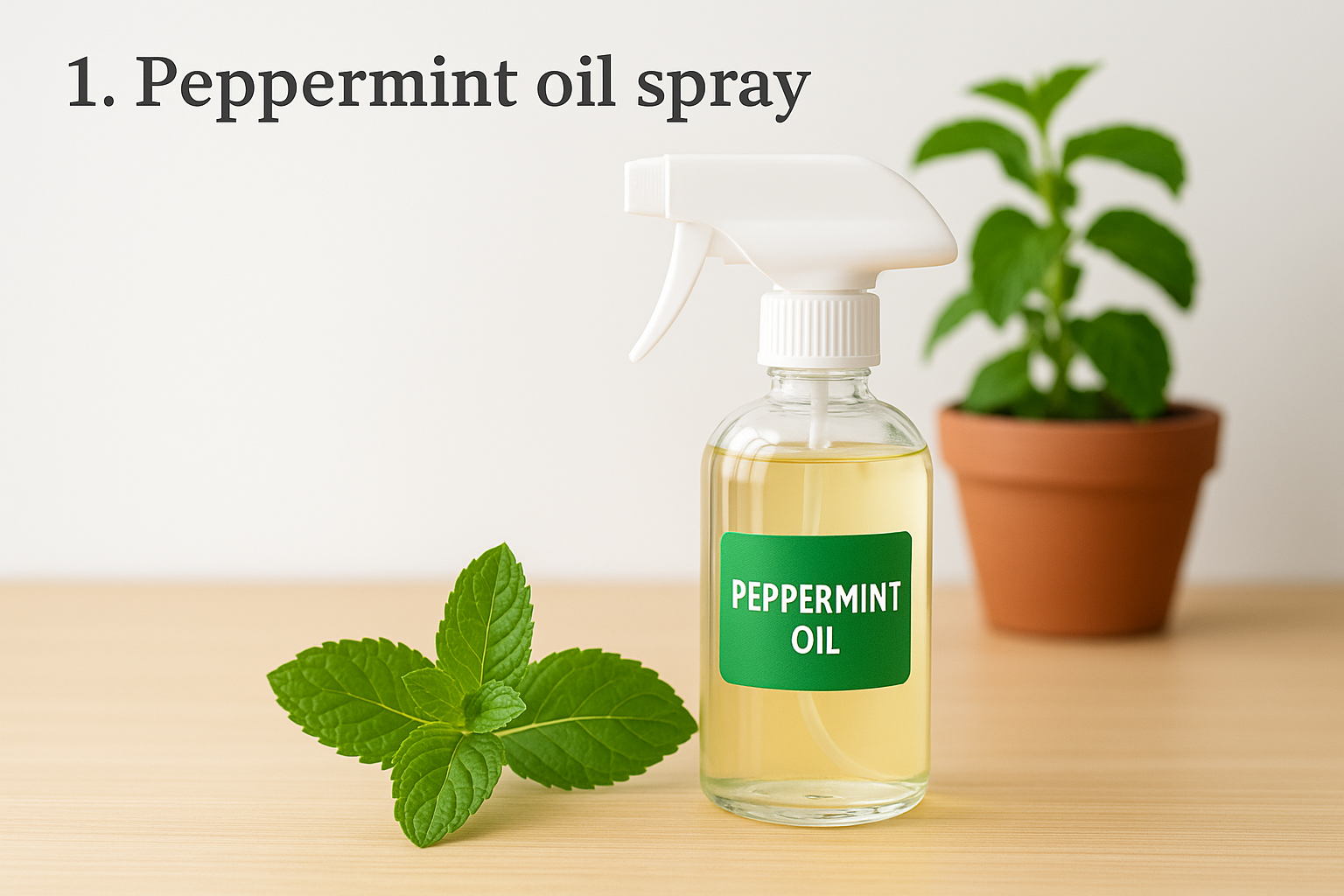
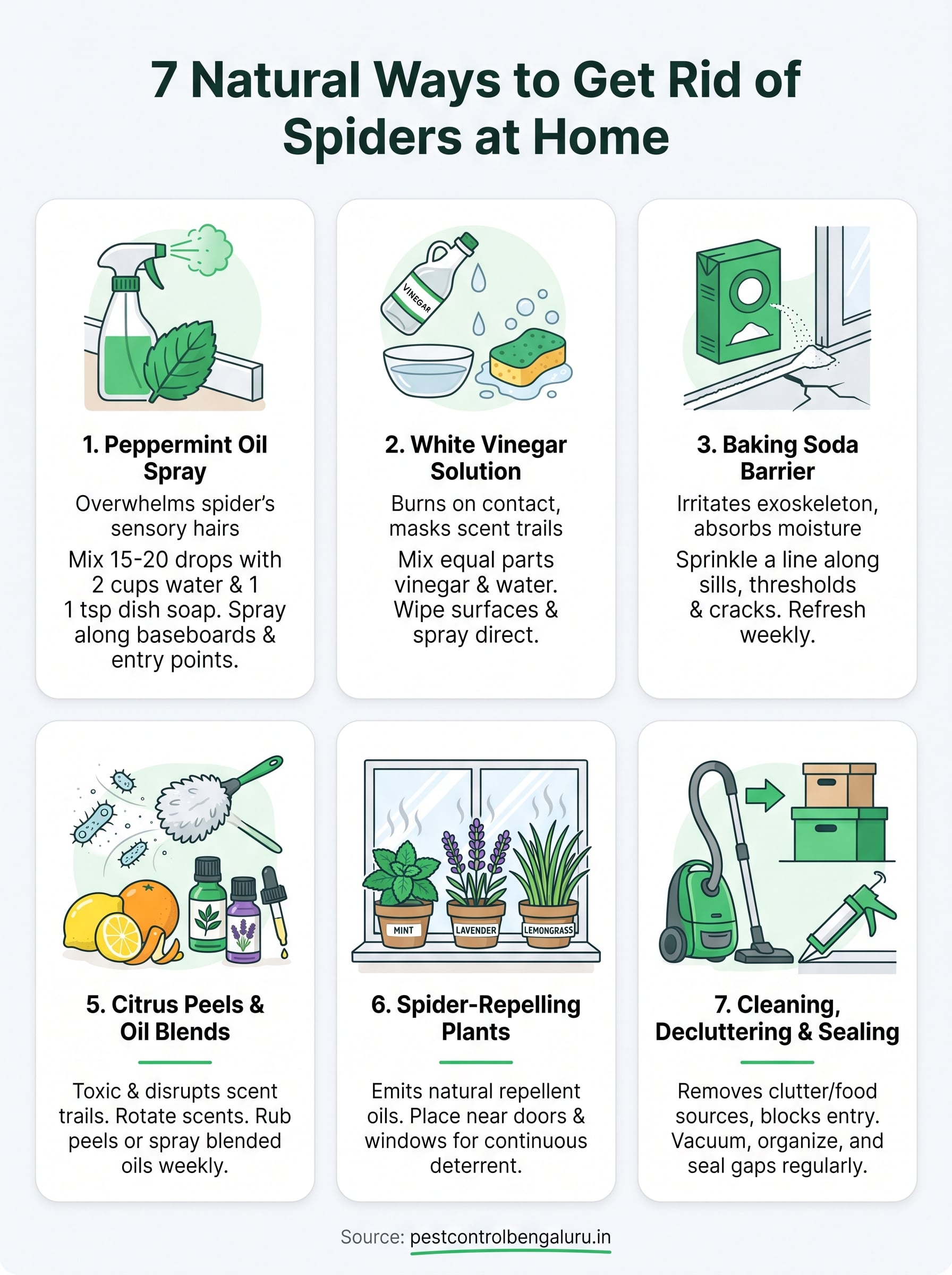
1. Peppermint oil spray
Peppermint oil sits at the top of most natural pest lists for good reason when you’re figuring out how to get rid of spiders at home: it’s cheap, it smells great to humans, and spiders genuinely hate it. If you want a low-effort first move against a web-filled corner or a windowsill that keeps attracting visitors, this is where to start.
How it works
Spiders navigate and hunt using sensory hairs on their legs that detect vibration and scent. Peppermint oil overwhelms those receptors with a smell so strong it disrupts their ability to sense prey and danger nearby. Menthol, the active compound in peppermint, is also mildly toxic to spiders and many of the insects they feed on, so a well-placed spray does double duty by discouraging both the spiders and their food source.
A strong peppermint scent doesn’t kill spiders outright, but it makes your home feel unsafe enough that they’d rather live elsewhere.
How to use it at home
Mixing your own spider spray takes five minutes and uses ingredients most kitchens already have. Combine the following in a spray bottle and shake well before each use:
- 15-20 drops of pure peppermint essential oil
- 2 cups of water
- 1 teaspoon of dish soap (helps the oil bind with water)
Spray this mixture along baseboards, window frames, door thresholds, behind furniture, and inside cupboards where spiders tend to hide. Focus on entry points like gaps under doors and around pipes, since that’s where spiders and their prey slip in from outside. Reapply every three to four days, and more often during Bangalore’s humid monsoon months when spider activity picks up.
Precautions and effectiveness
Peppermint oil is generally safe around children and pets in the diluted concentrations used here, but keep sprayed surfaces out of reach of curious toddlers or cats until the mixture dries completely. Test a small patch on wooden furniture or painted walls first, since essential oils can occasionally leave marks on certain finishes.
Realistically, this remedy works best as a deterrent and repellent rather than a killer. It won’t eliminate an existing infestation or address egg sacs already tucked into corners, and its effect fades once the scent dissipates. For an occasional spider or two, though, a consistent peppermint routine keeps your home noticeably less inviting to them without any chemical residue lingering around your living spaces.
2. White vinegar solution
White vinegar is the remedy most Bangalore households already have under the kitchen sink, making it an easy second step for how to get rid of spiders at home once you’ve tried peppermint oil. It’s acidic, cheap, and doesn’t leave the lingering chemical smell that store-bought sprays do.
How it works
Acetic acid, the main component of white vinegar, burns on contact with a spider’s legs and body, which is why spiders avoid crossing surfaces treated with it. The strong sour smell also masks the pheromone trails spiders and their prey leave behind, making a treated area feel less like a reliable hunting ground. Unlike peppermint oil, vinegar can actually harm a spider directly if sprayed on it, not just repel it.
Vinegar doesn’t just mask scent, it actively burns on contact, giving you a natural remedy that repels and kills in one step.
How to use it at home
Mix equal parts white vinegar and water in a spray bottle and apply directly to spiders you spot, along with webs, corners, and cracks around windows and doors. For spider prevention, wipe down countertops, skirting boards, and door frames with the solution once a week, focusing on damp areas like bathrooms and kitchens where spiders and their insect prey gather. Reapply after mopping or heavy cleaning since the scent fades quickly.
Precautions and effectiveness
Undiluted vinegar can dull certain stone surfaces, waxed wood, and some tile grout, so always test an inconspicuous spot first and stick to diluted mixtures on finished surfaces. It’s safe around pets and children once dry, unlike many synthetic pesticides. Vinegar works well against small numbers of spiders and as a routine wipe-down habit, but it won’t reach spiders nesting deep in wall voids or attics, so pair it with sealing and cleaning steps for lasting results.
3. Baking soda barrier
Baking soda rarely makes anyone’s list of spider remedies, but it’s worth trying if you want something dry, dust-free in a different way from diatomaceous earth, and already sitting in your pantry. It works best as a barrier method rather than a spray, so it suits homeowners who want a set-and-forget layer of protection along entry points.
How it works
The sharp, slightly abrasive texture of baking soda irritates a spider’s exoskeleton and leg receptors when they cross it, which discourages them from walking over treated lines again. It also absorbs moisture from the air around cracks and thresholds, and since many spiders are drawn indoors by humidity and the insects that thrive in it, drying out these micro-environments makes the area less appealing to both.
A thin line of baking soda along entry points does more to discourage spiders from crossing than it does to harm them outright.
How to use it at home
Sprinkle a thin, continuous line of baking soda along windowsills, door thresholds, skirting boards, and any visible cracks in walls or flooring. Focus on areas with poor ventilation, like under sinks or behind wardrobes, since spiders favor these damp, undisturbed spots. Refresh the barrier every one to two weeks, and immediately after mopping or rainy days when moisture washes it away.
Precautions and effectiveness
Baking soda is non-toxic and safe around pets and children, though it can leave a faint white residue on dark flooring or carpets, so vacuum it up if it’s visible in high-traffic areas. As a standalone remedy, it’s mild and slower-acting than vinegar or peppermint oil, so treat it as a supporting layer in your broader spider prevention routine rather than your main defense against an active infestation.
4. Diatomaceous earth
Diatomaceous earth looks like fine white powder, but it’s actually fossilized remains of tiny aquatic organisms called diatoms, and it’s a favorite among homeowners researching how to get rid of spiders at home naturally. It’s one of the few natural remedies on this list that physically kills spiders and their prey rather than just repelling them, which makes it worth adding to your routine if peppermint and vinegar haven’t fully solved the problem.
How it works
At a microscopic level, diatomaceous earth is sharp and abrasive, cutting through the waxy outer layer that protects a spider’s exoskeleton and that of the insects it feeds on. Once that layer is compromised, the spider loses moisture and dehydrates over the following hours or days. Because it works mechanically rather than through scent or chemicals, spiders can’t build resistance to it the way they might tolerate a fading essential oil smell.
Diatomaceous earth kills by dehydration, not poison, which is exactly why it’s safer to use indoors than most chemical alternatives.
How to use it at home
Use food-grade diatomaceous earth only, never the pool-grade version, since that contains additives unsafe for indoor use. Dust a thin layer along baseboards, behind furniture, in crawl spaces, and near window frames where spiders travel. A small handheld duster or an old flour sifter works well for even application. Leave it undisturbed for a few days, then vacuum and reapply as needed, particularly after cleaning or rain.
Precautions and effectiveness
Wear a mask while applying it, since inhaling the fine dust can irritate lungs, even though it’s non-toxic once settled. Keep it away from pets’ food and water bowls, and out of reach of small children who might disturb the powder. It’s most effective in dry areas, since moisture reduces its abrasive power, making it less useful in Bangalore’s humid bathroom corners.
5. Citrus peels and essential oil blends
Citrus peels get thrown away in most kitchens, but saving them for a few days gives you another free, natural spider deterrent. Combined with other essential oils, they round out a rotation of scents that keeps spiders from settling into a routine around any single smell.
How it works
The d-limonene compound found in citrus peels, especially lemon and orange, is toxic to spiders and disrupts the scent trails they use to track prey. Blending citrus with oils like tea tree, lavender, or eucalyptus creates a layered smell that’s harder for spiders to adapt to than a single repellent used on its own. This matters because spiders can grow somewhat tolerant of one recurring scent over weeks, so mixing things up keeps your defenses fresh.
Rotating citrus and essential oil blends stops spiders from getting used to any one smell, which is exactly why relying on a single spray often stops working over time.
How to use it at home
Rub fresh citrus peels directly along windowsills, skirting boards, and cabinet edges, or simmer peels in water and use the cooled liquid as a spray. For a blend, combine 10 drops each of citrus, tea tree, and lavender oil with two cups of water in a spray bottle, and apply weekly to entry points and corners.
Precautions and effectiveness
Citrus oils are generally safe around pets and children once dry, though undiluted oils can irritate skin, so avoid direct contact. Effectiveness fades within days as the scent weakens, and this remedy works best as a rotating supplement to peppermint or vinegar rather than a standalone solution against established infestations.
6. Spider-repelling plants
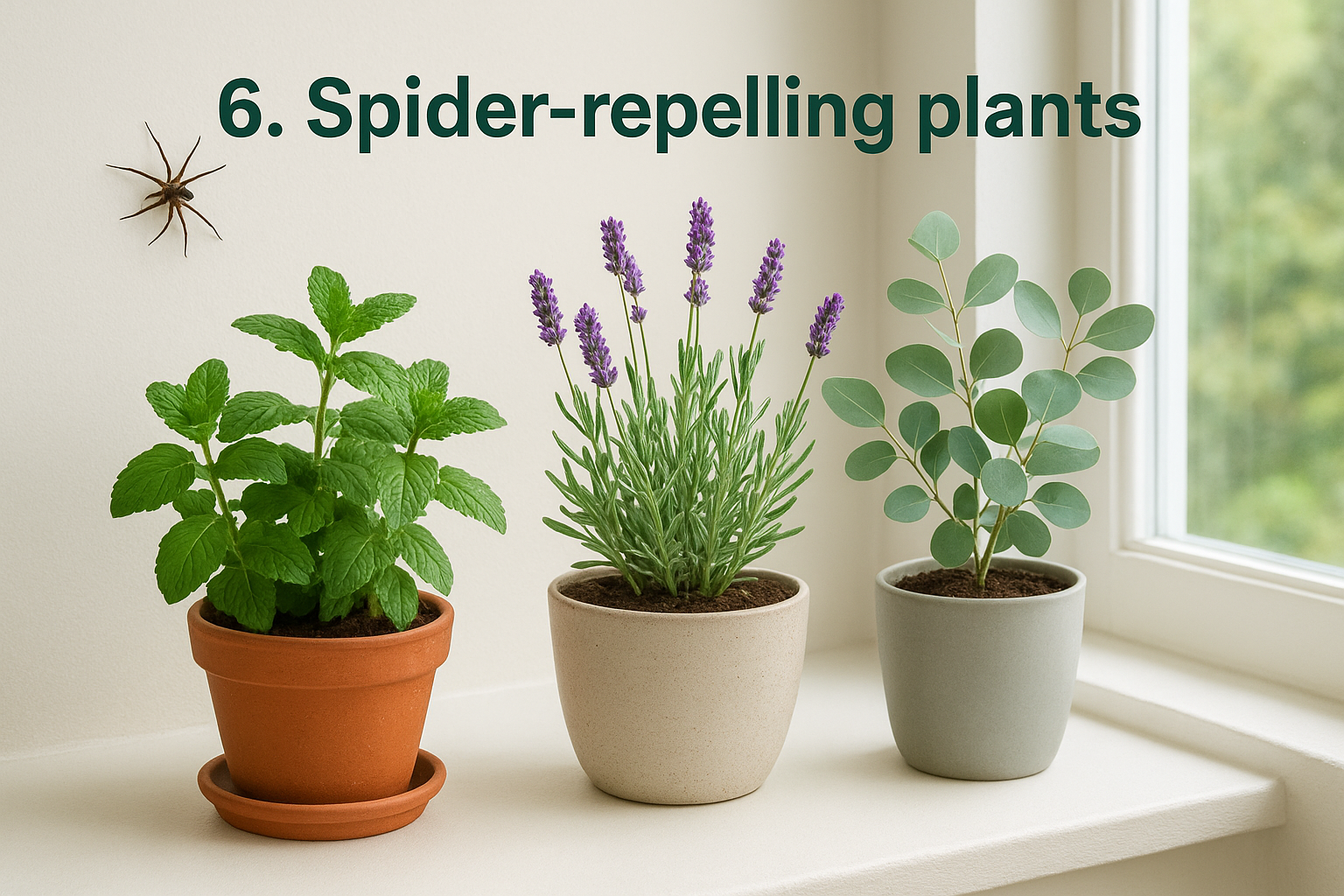
Growing a few pots on your balcony or windowsill does more than brighten up the house, it also makes the air around your entry points less inviting to spiders. This remedy suits homeowners who want a low-maintenance, chemical-free layer of defense that keeps working without weekly spraying.
How it works
Certain plants release natural oils and scents that spiders find overwhelming, much like the essential oils covered earlier in this list. Spider-repelling plants such as mint, lavender, lemongrass, and eucalyptus continuously emit these compounds into the air, creating a low-level deterrent zone around windows, doors, and balconies without any manual reapplication.
Living plants work like a slow-release version of essential oil sprays, giving you round-the-clock protection without lifting a spray bottle.
How to use it at home
Position potted plants near common entry points for the best results:
- Mint or lemongrass near doors and windows
- Lavender pots on balconies and ledges
- Eucalyptus near kitchen and bathroom windows
Trim and crush a few leaves occasionally to release more oil into the air, especially during Bangalore’s monsoon when humidity draws spiders indoors more aggressively. Group two or three varieties together near the same entry point for a stronger combined effect.
Precautions and effectiveness
These plants are safe around pets and children in general, though check individual plant toxicity if you have cats, since some varieties like eucalyptus can be harmful if chewed. Spider-repelling plants work best as a preventive layer rather than a fix for an existing infestation, and they need consistent sunlight and watering to stay potent, so a neglected, wilting plant won’t offer much protection at all.
7. Cleaning, decluttering and sealing entry points
Every remedy above works better once you remove what actually attracts spiders in the first place: clutter, food sources, and easy access into your home. This final step isn’t a spray or powder, it’s the habit that makes every other treatment last longer, and it’s often the difference between a one-time fix and lasting spider prevention.
How it works
Understanding how to get rid of spiders at home for good means addressing why they showed up. Spiders follow insects indoors, and cluttered corners, stacked boxes, and piles of clothes give both spiders and their prey undisturbed places to breed. Gaps around pipes, window frames, and door thresholds act as open doors, so sealing them physically blocks entry rather than just discouraging it with scent.
You can spray peppermint oil every week, but if the entry points stay open, spiders will keep finding their way back in.
How to use it at home
Work through your home methodically with this checklist:
- Vacuum corners, ceilings, and behind furniture weekly
- Declutter storage rooms, garages, and under-bed spaces
- Seal gaps around windows, pipes, and door frames with silicone caulk
- Fix damaged window screens and door sweeps
- Reduce outdoor lighting near entrances, since it attracts insects spiders feed on
Doing this monthly, alongside your chosen essential oil or powder remedy, keeps both spiders and their food supply from re-establishing themselves.
Precautions and effectiveness
Sealing and decluttering carry no safety risks and suit every household, including homes with pets and children. This step won’t remove spiders already inside overnight, but it’s the most reliable long-term method on this list, since it removes the underlying conditions rather than just masking them with scent or texture.
Frequently asked questions
What is the fastest natural way to get rid of spiders at home?
A vinegar solution acts fastest since acetic acid burns on contact with a spider’s body, unlike peppermint oil or citrus blends, which repel rather than kill. For quick relief in a specific corner, mix equal parts white vinegar and water and spray it directly on visible spiders and webs.
Do essential oils actually keep spiders away permanently?
No single essential oil keeps spiders away forever, since the scent fades within days and spiders can grow somewhat tolerant of one recurring smell over time. Rotating peppermint, citrus, and lavender blends, and reapplying every three to four days, keeps the deterrent effect from wearing off.
Why do I keep finding spiders even after cleaning and spraying?
Spiders follow their insect prey indoors, so if cockroaches, ants, or other pests are still active in your home, spiders will keep returning regardless of how often you spray or clean. Addressing the underlying insect problem, not just the spiders themselves, is usually what breaks the cycle.
Are natural spider remedies safe for homes with pets and children?
Most of the remedies on this list, including diluted peppermint oil, vinegar, baking soda, and diatomaceous earth, are safe once dry or settled, though food-grade diatomaceous earth should be kept away from pets’ food and water bowls and applied with a mask on. Always test a small patch on furniture or flooring first and keep sprayed areas out of reach until fully dry.
When should I stop trying DIY methods and call a pest control professional?
Call a professional once you’re seeing multiple spiders daily, finding egg sacs in several rooms, or spotting a species you can’t identify and suspect might be venomous. These signs usually point to an infestation feeding on a deeper insect problem in wall voids or attics, which DIY sprays and powders can’t reach.
When it’s time to call in the professionals
Knowing how to get rid of spiders at home with natural remedies handles the occasional spider wandering in from the garden, but they have limits. If you’re spotting multiple spiders daily, finding egg sacs in several rooms, or dealing with species you can’t identify and suspect might be venomous, that’s your signal to stop experimenting and get expert help. Recurring infestations usually point to a bigger issue hiding in wall voids, attics, or damp crawl spaces that no amount of vinegar or peppermint spray will reach.
Generally, most Bangalore homes never need more than the steps above. But when spiders keep coming back despite consistent effort, or when their presence signals a heavier insect problem feeding them, it’s worth bringing in trained technicians who can inspect, treat, and seal your property properly.
What makes professional treatment worth it for most households:
- Odorless pest control: treatments use low-odor, professional-grade formulations instead of the sharp chemical smell associated with older sprays.
- No lingering smell after treatment: unlike some DIY sprays, there’s nothing pungent left behind in your rooms once the technician finishes.
- No need to vacate your home: the process is safe enough that you and your family, including pets, can stay in the house during and after treatment.
A to Z Pest Solutions has managed exactly these situations across Bangalore since 1993, and you can get in touch with our pest control experts whenever DIY methods stop being enough.