
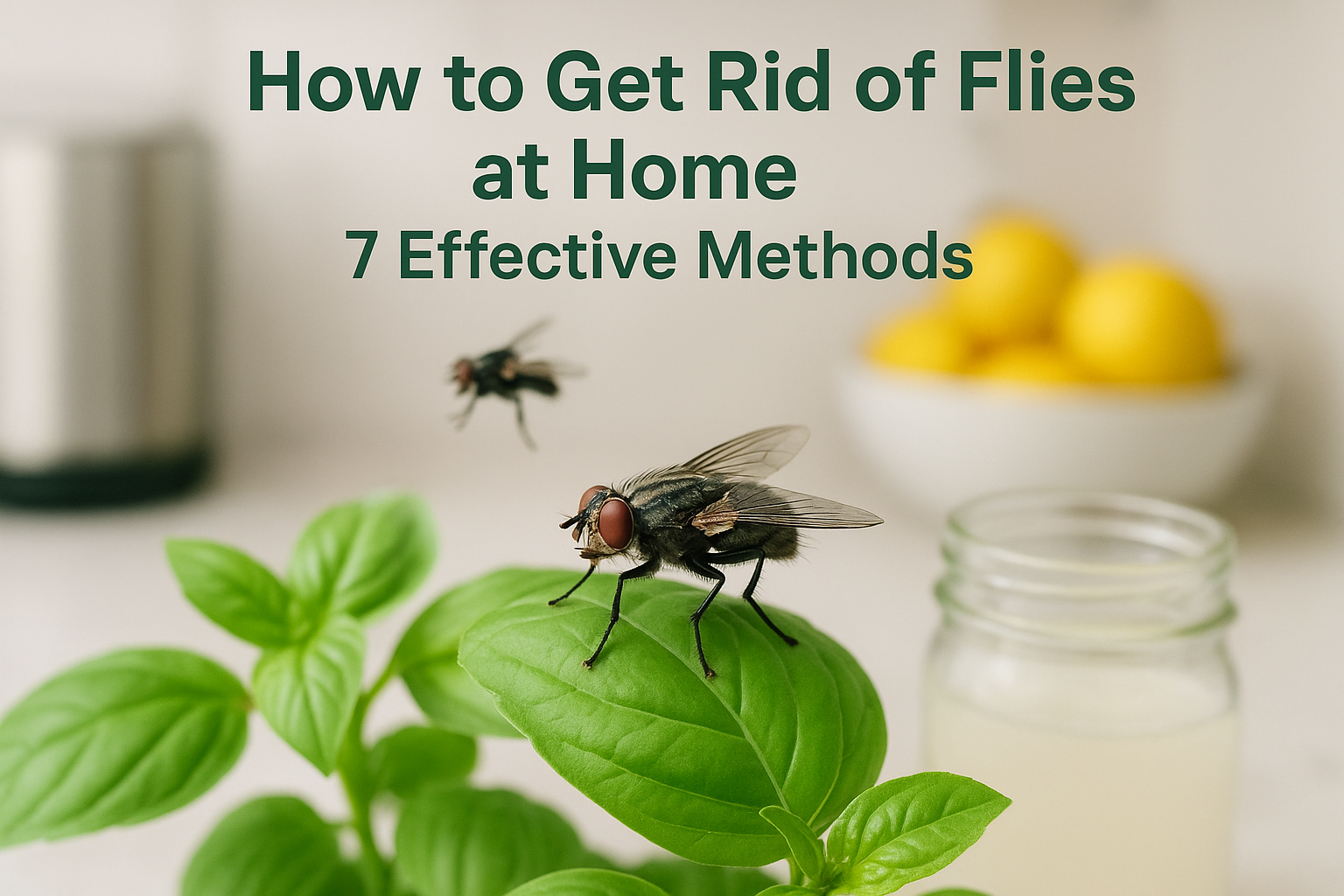
Flies show up the moment you leave a plate uncovered or the kitchen bin sits out too long, and once a few get in, they multiply fast. If you’re searching for how to get rid of flies at home, you’ve probably already tried a rolled-up newspaper or a scented candle, and neither worked for more than an hour. Bangalore’s warm, humid climate makes matters worse, giving flies ideal breeding conditions almost all year.
This guide skips the guesswork and gives you methods that actually work, from natural repellents you can make with kitchen ingredients to targeted chemical treatments for infestations that won’t quit. We cover why flies keep coming back even after you swat the visible ones, and what actually breaks that cycle.
You’ll find seven practical steps below, covering everything from source elimination around drains and bins to professional pest control when the problem is bigger than a spray bottle can handle. Whether you’re dealing with a handful of houseflies or a recurring infestation near your kitchen, you’ll know exactly which method fits your situation and when it’s time to call in trained technicians instead.
1. Book a professional pest control service
When flies keep returning no matter how many surfaces you wipe down, you’re likely dealing with a breeding source you can’t see, like a cracked drain pipe, a dead rodent behind a wall, or a compost pile next door. Professional pest control targets the source instead of the symptom, which is why it’s the first method on this list, not the last resort.
How it works
A trained technician starts with an inspection to locate breeding sites, drains, garbage chutes, and moisture pockets that spray bottles never reach. At A to Z Pest Solutions, our General Pest Control (GPC) program combines residual spraying, gel treatments, and larvicide application at breeding points, followed by a follow-up visit to confirm the population has actually dropped, not just scattered temporarily.
A fly problem that returns weekly almost always points to a breeding site, not a swatting problem.
Who it’s best for
This approach suits households with a persistent fly problem near kitchens, bins, or bathrooms that hasn’t responded to cleaning and traps after a week or two. It’s also the right call for families with young children or elderly members, since professional-grade larvicides and baits are applied precisely at breeding points rather than sprayed loosely around living spaces. Restaurants, cafes, and apartment common areas dealing with recurring complaints should treat this as a first step, not a backup plan.
Cost in Bangalore
Pricing depends on property size, infestation severity, and whether it’s a one-time visit or a scheduled maintenance plan.
| Service type | Typical range (INR) |
|---|---|
| One-time GPC treatment (1-2 BHK) | ₹800 – ₹1,500 |
| One-time GPC treatment (3 BHK+) | ₹1,500 – ₹2,500 |
| Quarterly maintenance plan | ₹3,000 – ₹6,000/year |
| Commercial premises (per visit) | ₹2,000 and above |
Actual rates vary based on your locality and the extent of the infestation, so it’s worth requesting a free inspection before committing to a plan.
2. Clean up food and waste that attract flies
Flies don’t show up randomly. They follow odor trails from rotting food, dirty dishes, and overflowing bins straight to your kitchen. Removing what attracts them cuts the population fast, often within a day or two, without a single chemical.
How it works
Houseflies lay eggs in decomposing organic matter, so a bin left open overnight or a sink full of dishes gives them exactly what they need. Empty kitchen bins daily, rinse recyclables before storing them, and wipe down countertops after every meal. Cover fruit bowls, don’t let pet food sit out for hours, and clean drains weekly with a mix of hot water and vinegar to clear the organic buildup flies breed in.
Flies breed where food waste sits, not where you spray.
Who it’s best for
This method suits households with a mild, occasional fly problem, usually a handful of flies rather than a swarm. It’s also the right starting point for renters and apartment dwellers who want results before considering treatment.
Cost in Bangalore
This costs nothing beyond what you already spend on cleaning supplies. Vinegar, dish soap, and a tight-lidded bin, all items most kitchens already have, are enough. Budget ₹100-₹200 if you need to buy a sealed bin or drain cleaner.
3. Seal doors, windows, and other entry points
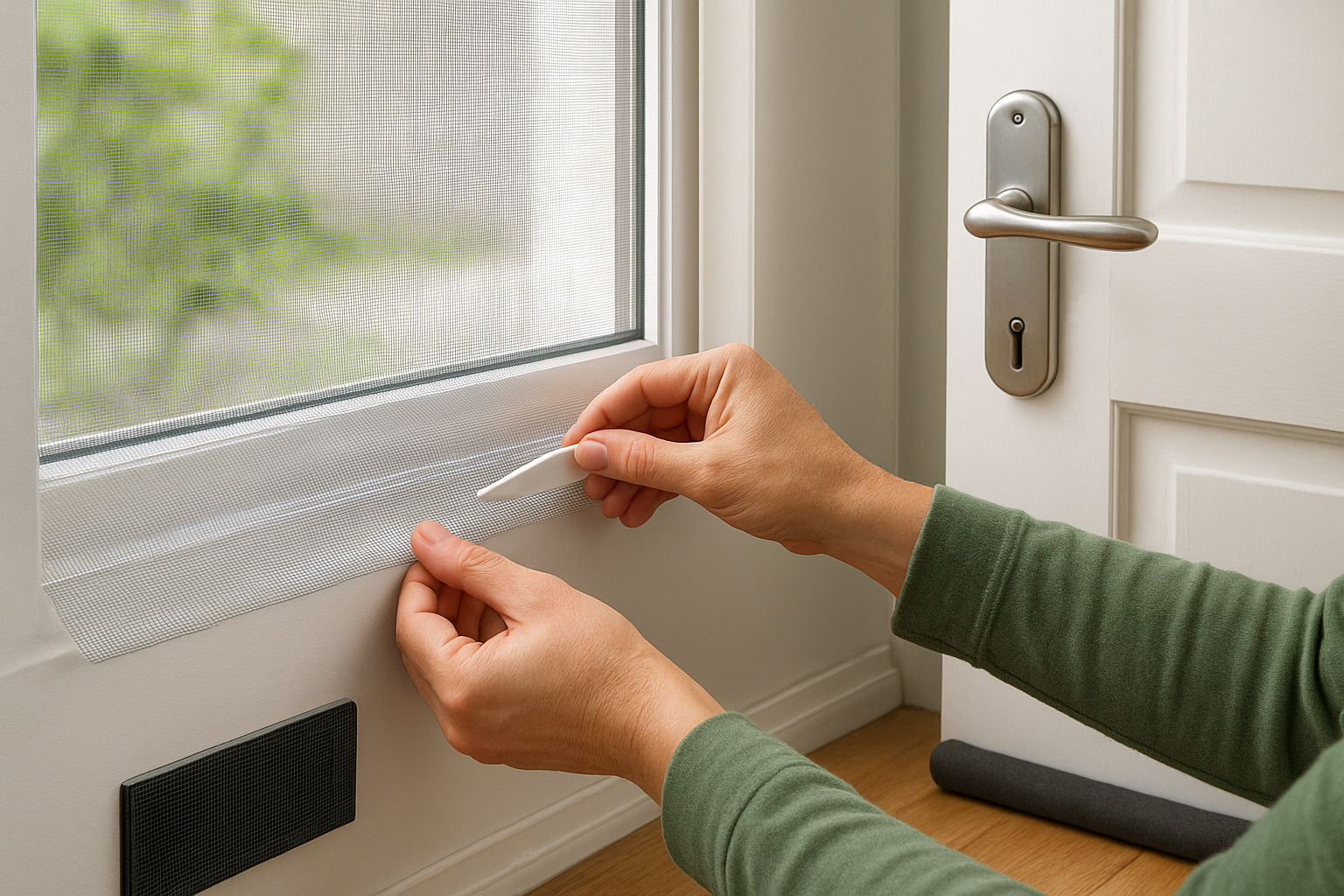
Even a spotless kitchen won’t stay fly-free if your front door stays propped open or a window screen has a tear you keep ignoring. Flies need only a small gap to get in, and once indoors, they head straight for whatever smells like food. Sealing entry points stops the problem before it starts, which matters more in Bangalore homes that keep windows open for ventilation during warmer months.
How it works
Check window and door screens for holes, and patch or replace any that let light through gaps. Install a door closer or a simple draft stopper so the door doesn’t sit ajar during deliveries or when kids run in and out. Fit mesh screens on kitchen exhaust vents and seal gaps around pipes where they enter through walls, since flies squeeze through spaces smaller than you’d expect.
If a fly can see daylight through a gap, it can fly through it too.
Who it’s best for
This step suits homeowners in older buildings with worn screens or gaps around window frames, and ground-floor units near gardens, bins, or drains where flies are already active outside.
Cost in Bangalore
Mesh screen repair runs ₹150-₹400 per window. Door draft stoppers cost ₹200-₹500, and a full screen door installation runs ₹2,000-₹5,000 depending on size.
4. Use natural fly repellents around your home
Some kitchen ingredients repel flies without a single chemical spray, and they work well as a first line of defense alongside cleaning. Natural fly repellents won’t clear a heavy infestation, but they keep small numbers from settling in your kitchen or dining area in the first place.
How it works
Flies avoid strong scents like basil, mint, cloves, and eucalyptus. Place potted basil or mint near windows and doors, or set out small bowls with clove-studded lemon halves on countertops. A mix of apple cider vinegar and a few drops of dish soap in an open jar also draws flies in and traps them, working double duty as both repellent and trap.
Flies dislike strong natural scents, so a few pots of basil near your kitchen window do real work for free.
Who it’s best for
This suits households wanting a chemical-free approach, especially homes with young children, pets, or family members sensitive to sprays. It also works well as a maintenance step after professional treatment, keeping new flies from settling back in once the breeding source is gone.
Cost in Bangalore
Basil and mint saplings cost ₹30-₹80 each at any local nursery. Cloves and lemons cost under ₹50 for enough to make several repellent bowls, making this the cheapest method on this list besides basic cleaning.
5. Set homemade or store-bought fly traps
Traps catch the flies already inside your home, which matters once repellents and cleaning have cut off new arrivals but a few stragglers remain. Fly traps work best as a cleanup step, not a standalone fix, since they catch adult flies without touching eggs or larvae hiding in drains or bins.
How it works
A simple bottle trap uses sugar water or overripe fruit as bait: cut a plastic bottle in half, invert the top into the base like a funnel, and add bait so flies enter but can’t find their way out. Store-bought sticky traps and hanging fly ribbons work the same way, using a scent lure instead of visible bait, and cost little to run for weeks at a time.
A trap only works once the breeding source is gone; otherwise you’re just catching today’s batch before tomorrow’s hatches.
Who it’s best for
Traps suit households finishing off a small, lingering population after cleaning or treatment, and kitchens where a window stays open during cooking hours. They’re a poor fit for anyone dealing with a swarm, since traps catch dozens, not hundreds.
Cost in Bangalore
Homemade bottle traps cost next to nothing, just a used bottle and kitchen scraps. Store-bought sticky traps run ₹50-₹150 for a pack of four, and hanging fly ribbons cost ₹30-₹60 each at most general stores.
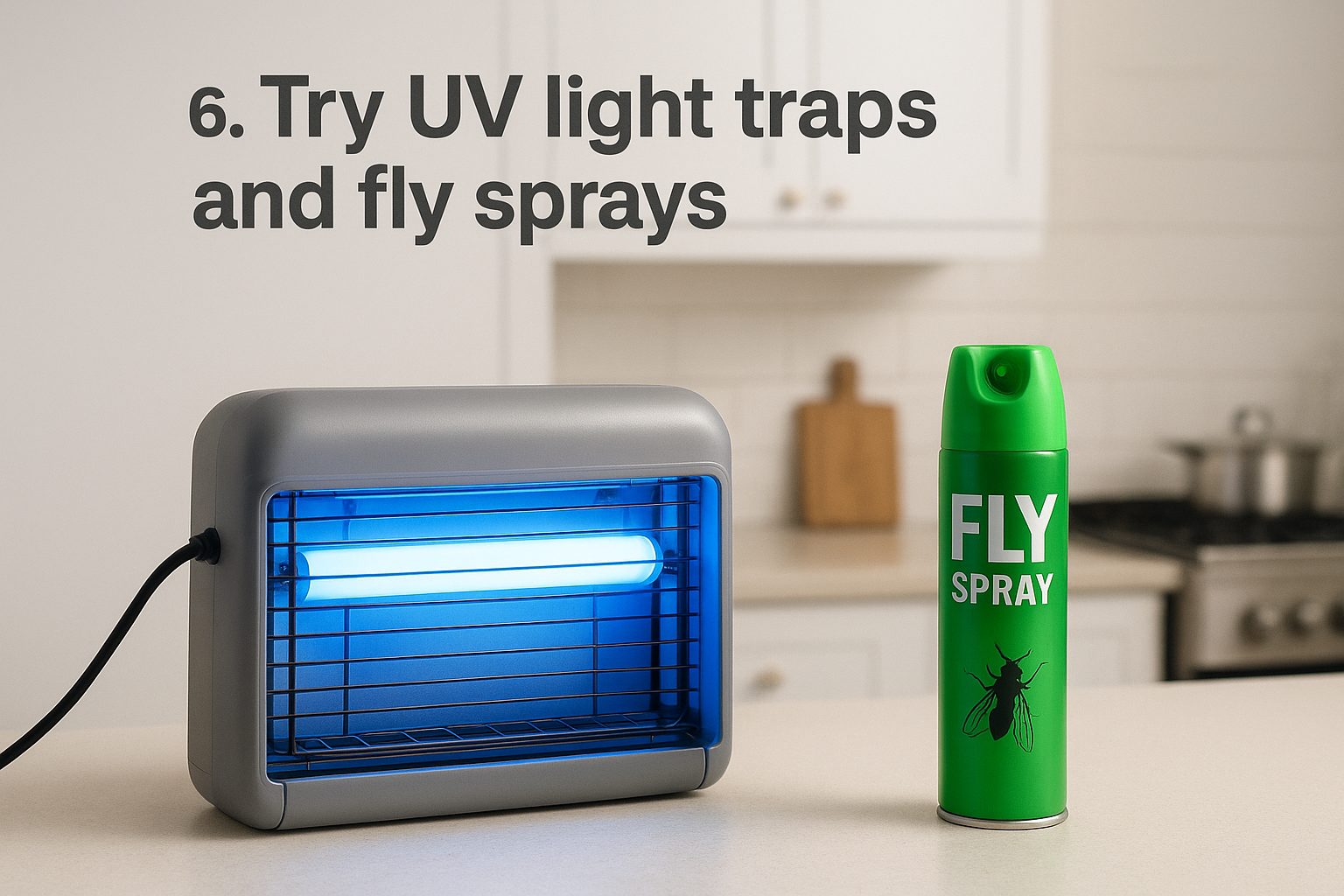
6. Try UV light traps and fly sprays
When you need faster results than repellents and traps can deliver, UV light traps and fly sprays step in as active control tools rather than passive prevention. These work well in larger rooms, kitchens with high fly activity, or spaces where you can’t monitor bottle traps constantly.
How it works
UV light traps use ultraviolet bulbs to attract flies toward a sticky pad or electrified grid, killing them on contact without any odor or residue in the room. Aerosol fly sprays with pyrethrin-based formulas knock down flying insects within seconds, best used in closed rooms with doors shut for a few minutes before ventilating. Plug UV units near kitchens or dining areas, away from competing light sources like windows, since flies gravitate toward the strongest UV source in the room.
UV traps work around the clock without chemicals, making them a solid backup between professional visits.
Who it’s best for
This method suits commercial kitchens, restaurants, and warehouses needing continuous fly control, plus homeowners with larger fly numbers than a bottle trap can handle. Fly sprays suit quick knockdowns before guests arrive, though they shouldn’t replace source treatment for recurring problems.
Cost in Bangalore
UV light traps cost ₹800-₹2,500 for home units, with commercial-grade traps running ₹3,000-₹6,000. Aerosol fly sprays cost ₹150-₹300 per can and last several weeks with occasional use.
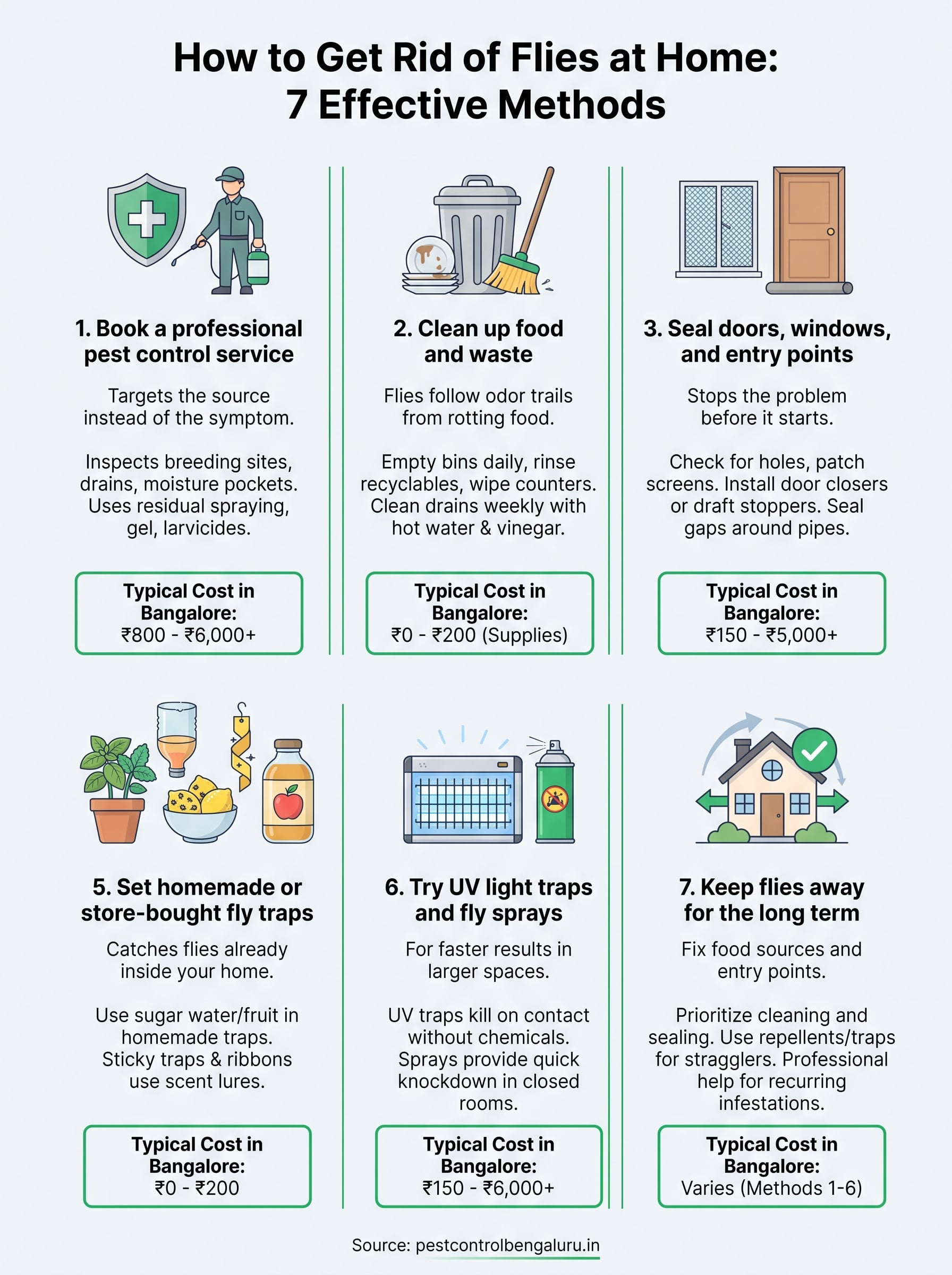
Keeping flies away for the long term
Most fly problems come down to two things: a food source they can reach and an entry point they can use. Fix both, and the six methods above will keep your home fly-free through Bangalore’s warmest, most humid months. Start with cleaning and sealing, since they cost nothing and cut off most of the problem within days. Add repellents and traps for anything that slips through, and reserve UV traps or sprays for rooms with heavier activity.
If flies keep returning despite your best efforts, that’s a sign of a breeding source you can’t reach on your own, a cracked drain, a gap behind a wall, or a compost pile nearby. That’s exactly where professional treatment earns its cost. A to Z Pest Solutions has handled fly infestations across Bangalore homes since 1993, and our technicians know where flies actually breed. Book a professional pest control inspection and get a fly-free home that stays that way.