

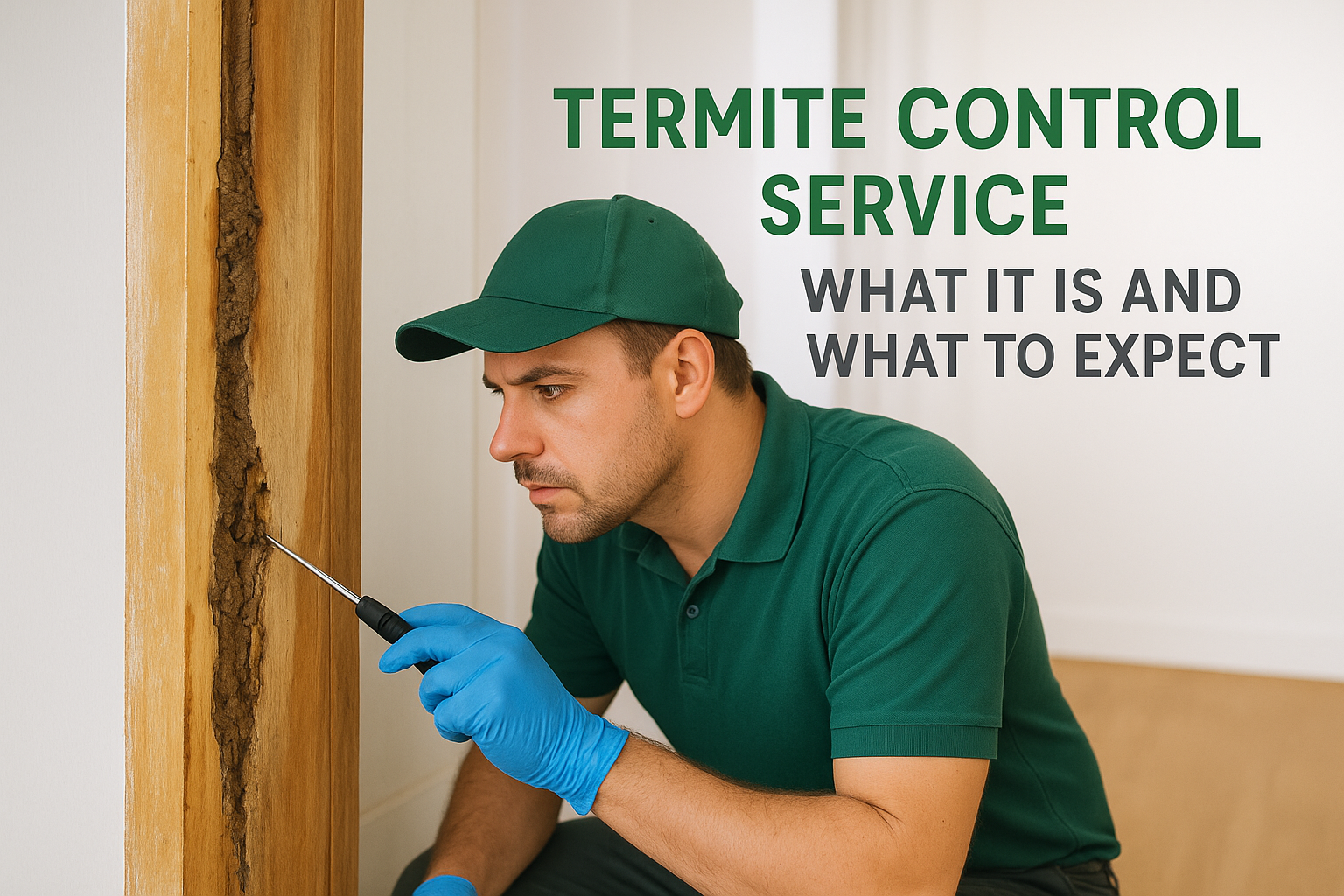
Spotting mud tubes along your wall or a hollow sound when you tap on your wooden furniture usually means one thing: termites have already moved in. At that point, most homeowners in Bangalore start searching for a termite control service, but few actually know what the process involves or what a fair price looks like. That confusion leads to delayed decisions, and every delayed week gives termites more time to damage doors, beams, and furniture.
A proper termite control service is more than a quick spray around the skirting. It’s a structured process that includes inspection of the infestation, soil or wood treatment based on the termite species involved, and follow-up visits to confirm the colony is gone. Whether you need pre-construction treatment for a new build or post-construction treatment for an existing infestation, the approach, chemicals, and timelines differ, and knowing this beforehand helps you evaluate any company you’re considering.
In this article, we break down what a termite control service actually includes, the treatment methods used by professionals, how pricing typically works in Bangalore, and what questions to ask before you book one. By the end, you’ll know exactly what to expect from inspection to warranty.
Why professional termite control matters
Termites don’t announce themselves. They work inside walls, under flooring, and through wooden beams for months before you notice a single sign, and by then, the damage is usually structural, not cosmetic. Structural damage from termites can weaken door frames, staircases, and even roof supports, turning a pest problem into a safety issue. This is why a termite control service isn’t a luxury purchase, it’s a preventive investment that protects the single biggest asset most families own: their home.
The hidden cost of delayed treatment
Every month you wait, the colony grows, and so does the repair bill. A termite colony can number in the hundreds of thousands, and a mature colony can consume wood around the clock without you seeing a trace on the surface. We’ve inspected homes in Bangalore where the owner replaced a wardrobe twice before realizing the real issue was in the subfloor, not the furniture. Replacing damaged wood, repainting walls, and redoing flooring almost always costs more than the treatment itself would have.
Treating termites early costs a fraction of what repairing termite damage costs later.
Property value takes a hit too. Buyers and inspectors in Bangalore increasingly ask for termite treatment records before closing a sale, especially for independent houses and villas. A documented treatment history with warranty paperwork reassures buyers, while visible termite damage or mud tubes can stall a sale entirely or force a price cut.
Why DIY sprays don’t solve the problem
Hardware store sprays kill the termites they touch, but they rarely reach the queen or the main nest, which is often buried in soil beneath the foundation. Without addressing the colony’s source, the workers you see are replaced within weeks, and homeowners end up spraying the same spot every few months with diminishing results. Professional treatments use termiticides applied to soil and drilled into walls at calculated depths and concentrations, something a retail spray bottle simply can’t replicate.
Qualified technicians also identify the termite species first, since subterranean and drywood termites need different treatment approaches entirely. Guessing at the species, or skipping this step altogether, is one of the most common reasons DIY treatments fail and infestations return within a year.
How a termite control service works, step by step
Booking a termite control service in Bangalore usually follows a predictable sequence, though the exact steps can vary slightly between companies. Knowing this sequence helps you spot shortcuts, like a technician who skips inspection and jumps straight to spraying without ever checking your soil type or the extent of the infestation.
Inspection and species identification
Every reliable job starts with a thorough inspection. A technician checks skirting boards, door frames, false ceilings, and the areas around plumbing lines where moisture attracts termites. They also identify whether you’re dealing with subterranean termites, which travel through soil, or drywood termites, which nest directly inside timber. This distinction changes everything about the treatment plan that follows.
Treatment application
Once the inspection is done, the technician applies termiticide based on what they found:
- Drilling holes along the foundation and injecting chemical into the soil
- Treating wooden furniture, door frames, and beams directly
- Applying gel or dust treatments for localized infestations inside walls
- Sealing drilled points once the chemical has been injected
A treatment plan built on the wrong species assessment fails no matter how much chemical gets used.
Follow-up and warranty period
Most companies schedule a follow-up visit within a few weeks to confirm the colony hasn’t resurfaced elsewhere. Reputable providers back this with a written warranty, typically ranging from one to five years depending on the treatment type. Post-construction treatments for existing homes often need this follow-up more than pre-construction jobs, since active colonies can shift location temporarily before dying off completely.
Documentation matters here too. Ask for a service report listing the chemical used, concentration, and treated areas, since this paperwork becomes useful both for warranty claims and for future property transactions.
Termite treatment methods and what they cost
Bangalore homeowners typically choose between three treatment types, and the right one depends on whether you’re building fresh, dealing with an active infestation, or protecting furniture alone. Pricing varies widely across the city depending on property size, treatment type, and how severe the infestation already is, so any quote you get should specify the exact method being used.
Pre-construction vs post-construction treatment
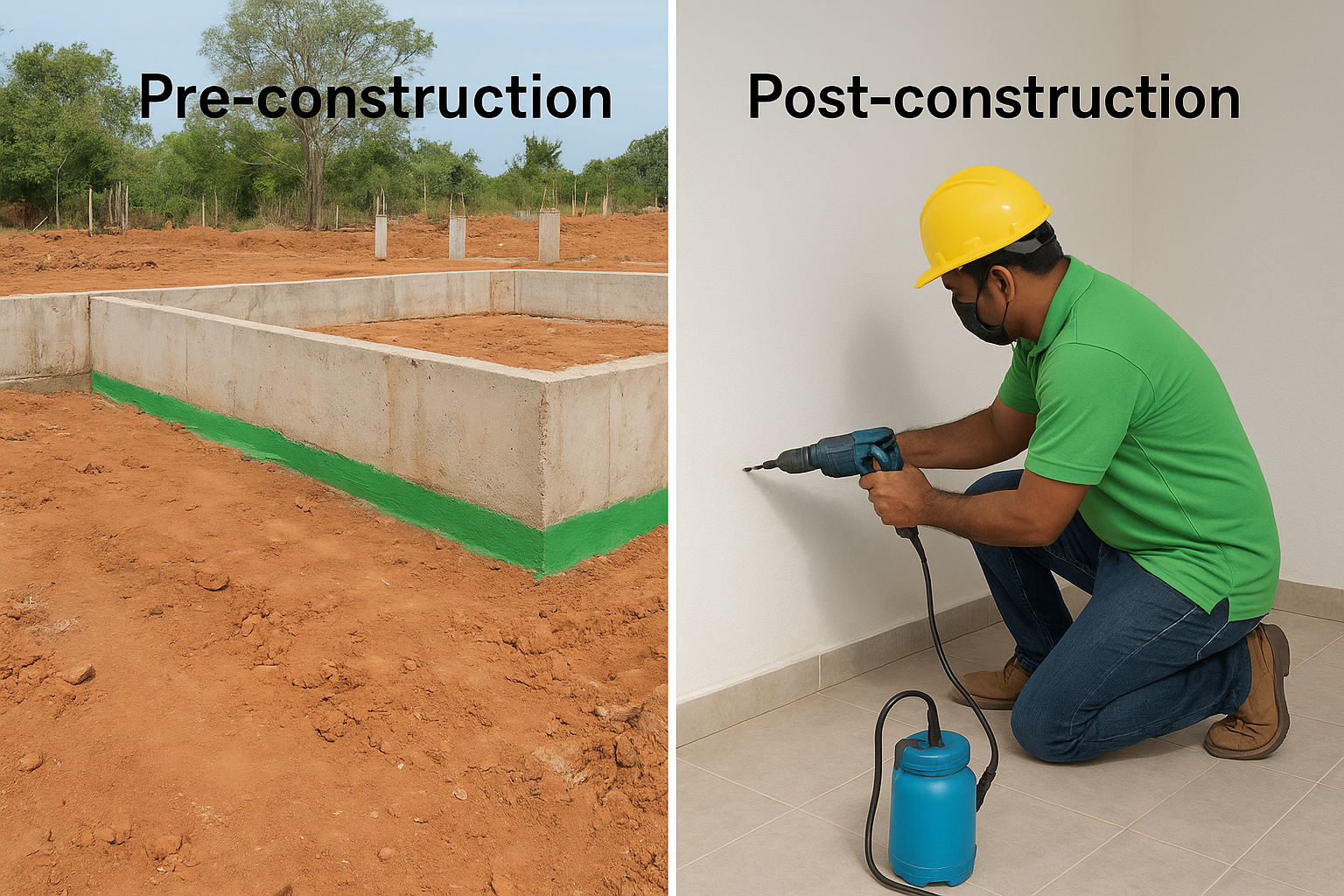
Pre-construction treatment happens before flooring is laid, when the soil and foundation trenches are still exposed. It’s cheaper per square foot because there’s no drilling involved, and it gives long-lasting protection since the termiticide barrier sits directly in the soil before the building goes up. Post-construction treatment, on the other hand, requires drilling into existing floors and walls to reach the soil beneath, which takes more labor and typically costs more.
Chemical barrier, baiting, and wood treatments
Chemical soil treatment remains the standard for subterranean termites, while baiting systems work well for slower, ongoing colony reduction in gardens or open plots. Wood treatment, using borate-based solutions, protects furniture and structural timber directly and suits drywood termite cases where there’s no soil contact involved.
The cheapest treatment on paper is rarely the cheapest option once you factor in repeat infestations.
Typical price ranges in Bangalore
| Treatment Type | Best For | Typical Coverage |
|---|---|---|
| Pre-construction soil treatment | New builds | Per sq. ft. of plot area |
| Post-construction drilling treatment | Existing homes with active termites | Per sq. ft. of built-up area |
| Wood/furniture treatment | Drywood termites, wooden furniture | Per piece or per room |
| Annual maintenance visit | Ongoing prevention | Per visit, often bundled with warranty |
Exact figures depend on your property size and infestation severity, so always ask for a written quote after inspection rather than a phone estimate. A company that quotes a fixed price without seeing your property first is guessing, and that guess rarely accounts for how deep the infestation actually goes.
Signs you need to call a termite control service
Most termite infestations stay invisible until the damage is already advanced, but a few warning signs almost always show up first if you know where to look. Catching these early is the difference between a straightforward treatment and a full furniture replacement bill. If you notice any of the signs below, book a termite control service inspection instead of waiting to see if the problem gets worse on its own.
Physical signs around your home
Walk around your skirting boards, window frames, and any wooden furniture touching the floor at least once a season. Look for:
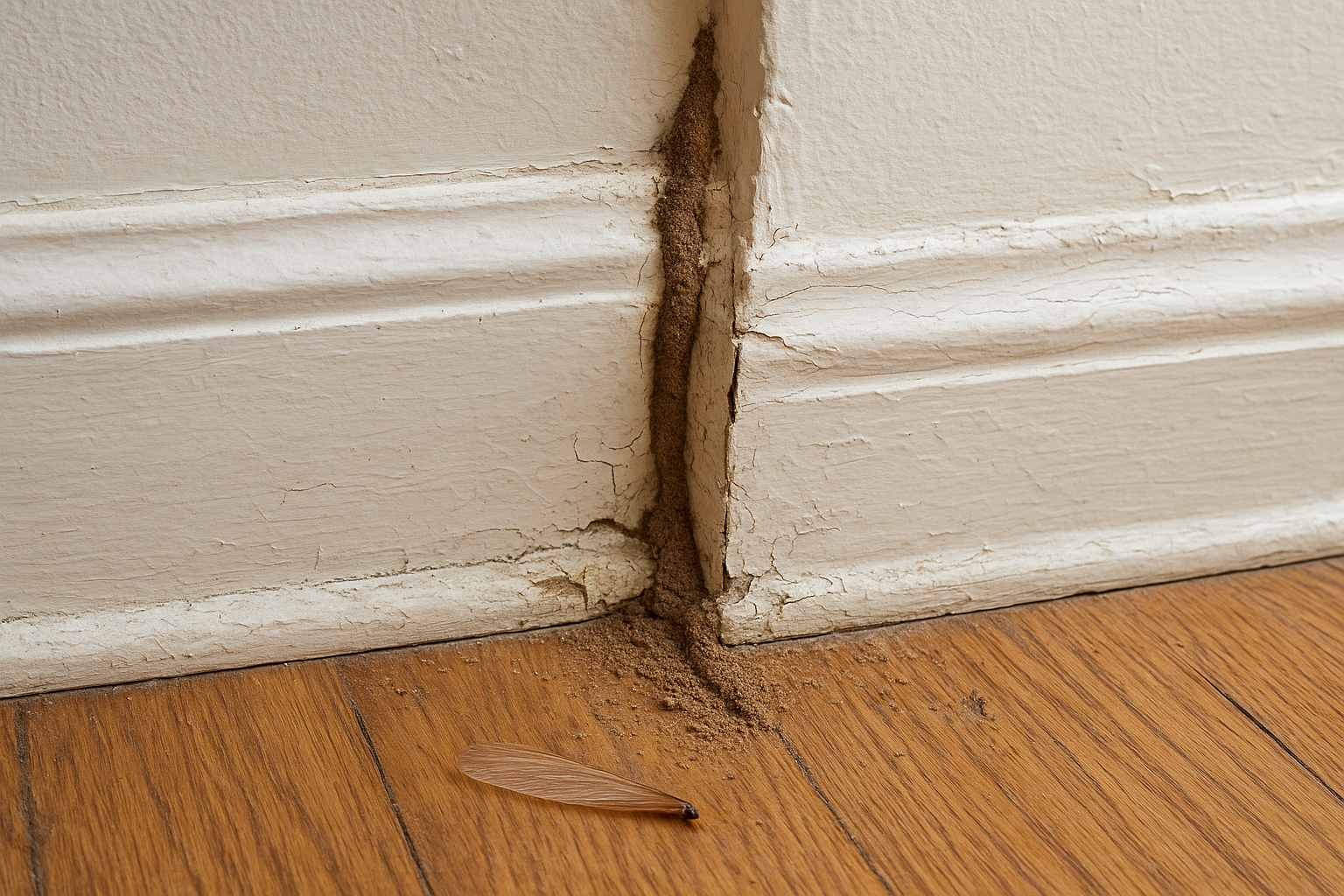
- Mud tubes running along walls, foundations, or pipes
- Hollow-sounding wood when tapped with a knuckle
- Discarded, translucent wings near windowsills or light fixtures
- Small holes or blistering in wooden surfaces and paint
- Frass, a fine sawdust-like powder, collecting near furniture legs
Any one of these on its own is worth investigating. Two or more together usually means an active colony is already established somewhere close by.
Behavioral and structural clues
Sometimes the signs aren’t visual at all. Doors and windows that suddenly stick or don’t close properly can mean termites have warped the frame from the inside. Squeaky or sagging floorboards, particularly near bathrooms or kitchens where moisture collects, often point to subterranean damage that hasn’t reached the surface yet.
If a door frame feels soft or spongy when you press it, termites have probably been inside it for months already.
Noticing swarmers, the winged termites that appear briefly during humid weather, is another clear signal. They mean a colony nearby is mature enough to reproduce, and waiting even a few more weeks lets that colony spread further into your home’s structure.
How to choose the right termite control company
Bangalore has dozens of pest control operators, and not all of them follow the same standards. Picking the right termite control company matters as much as picking the right treatment, since even the best termiticide fails when applied incorrectly or in the wrong concentration. Before you sign anything, verify a few basics that separate serious operators from fly-by-night sprayers.
Questions to ask before booking
Before you commit, ask the technician or company representative these questions directly:
- How many years have you operated in Bangalore, and can you share local references?
- Which termite species did you identify, and how does that change the treatment plan?
- What chemical or termiticide will you use, and is it approved for residential use?
- Does the price include a written warranty, and for how many years?
- Will you provide a service report listing chemicals, concentrations, and treated areas?
Companies that answer these clearly, without vague reassurances, are usually the ones that stand behind their work.
A company that hesitates to answer basic questions about chemicals and warranty isn’t one you want drilling into your foundation.
Red flags worth avoiding
Watch for pricing that’s suspiciously low compared to every other quote you’ve gathered, since it usually means diluted chemicals or a rushed job that skips proper drilling depth. Avoid any operator who refuses to inspect your property before quoting a price, or who pressures you to sign on the spot without a written estimate.
Experience counts for more than a glossy website here. A to Z Pest Solutions has handled termite treatments across Bangalore homes and commercial properties since 1993, and that track record shows up in documented warranties, transparent quotes, and technicians who explain exactly what they’re treating and why, not just what they’re spraying.
Keeping your property termite-free for good
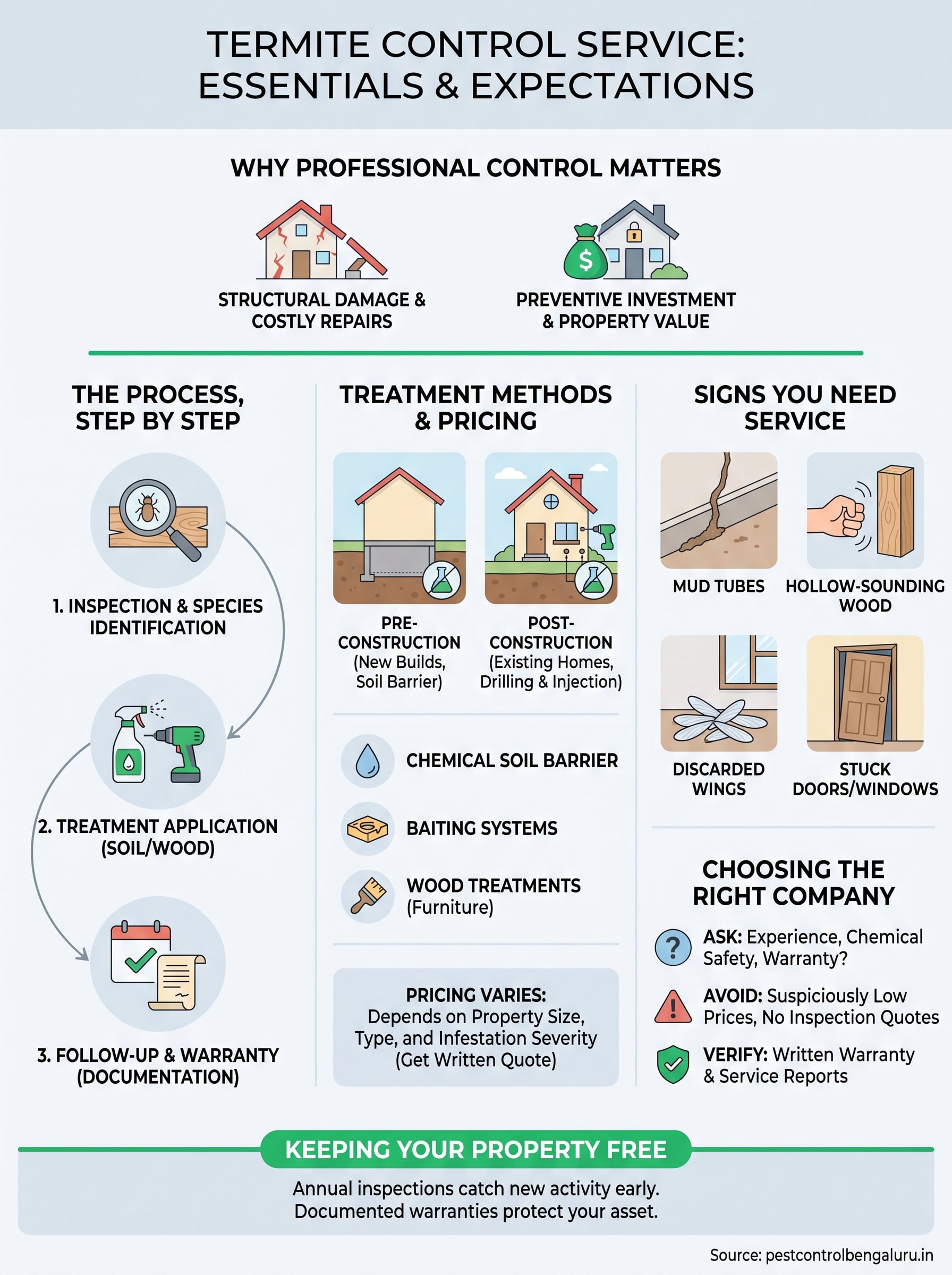
Termites don’t take breaks, and neither should your prevention routine. A termite control service worth hiring gives you more than a one-time spray: it gives you inspection records, a documented warranty, and a technician who tells you exactly what species you’re dealing with and why the treatment plan fits it. Skip any of that, and you’re just delaying the same infestation, not solving it.
The homeowners who avoid repeat treatments are the ones who act on the first mud tube or hollow board, not the fifth. Annual inspections cost far less than replacing a termite-damaged door frame or subfloor, and they catch new activity before it spreads past what you can see.
If you’ve spotted any warning signs, or it’s simply been a while since your last inspection, book a termite control service in Bangalore with A to Z Pest Solutions and get a written assessment before the problem grows any further.