
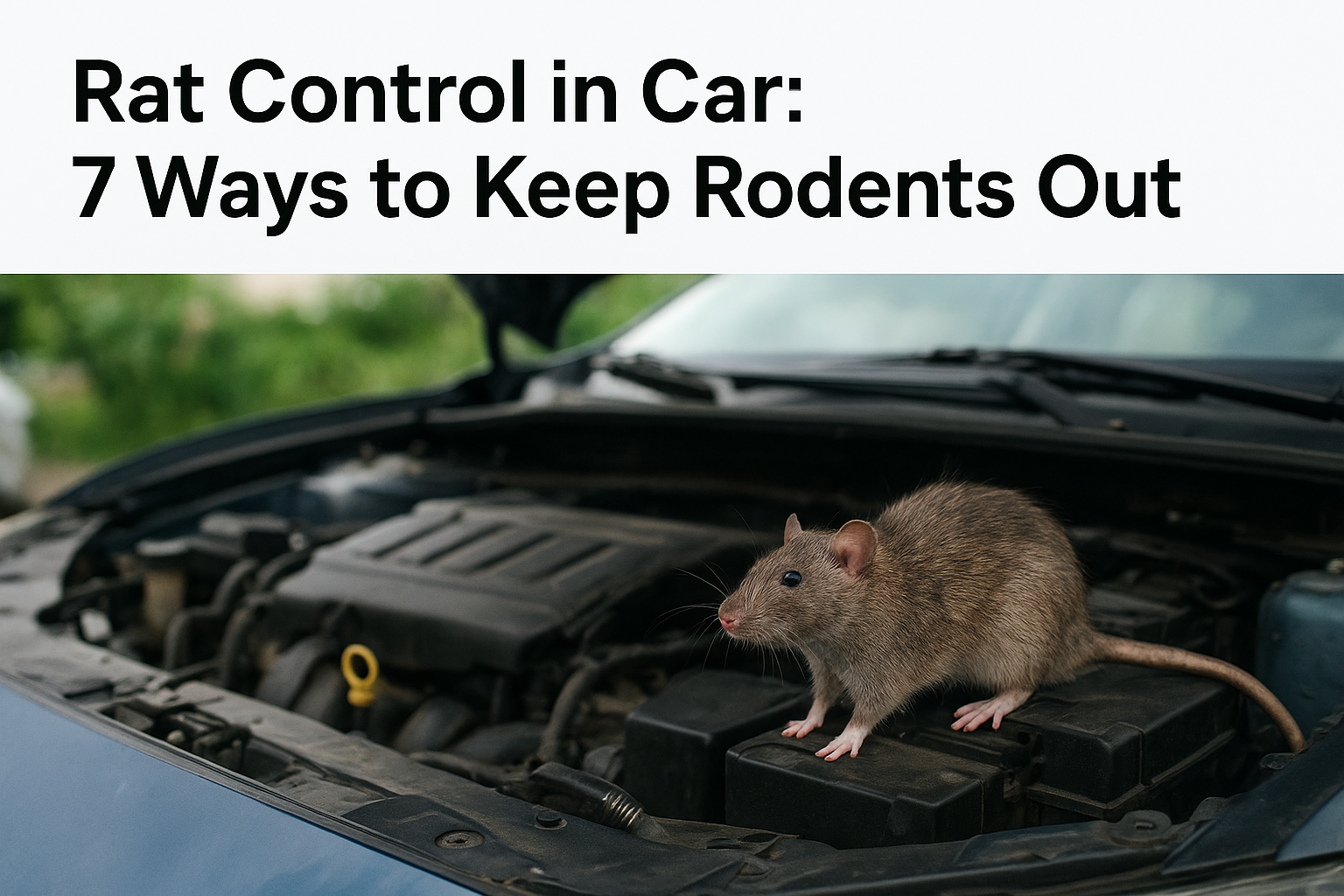
You park your car for a night or two, and the next morning the check engine light comes on, or you spot chewed-up wiring under the hood. That gnawed insulation, the droppings near your tires, the faint smell inside the cabin: these are classic signs of rat control in car problems, and Bangalore’s mix of gardens, drains, and parked vehicles gives rats plenty of reason to move in. Rats love the warmth of an engine bay and the quiet of a parked car, and once they settle in, repair bills climb fast.
This article gives you seven practical, tested methods to keep rodents out of your car, from simple habit changes to products you can pick up locally. You’ll learn what actually works against rats chewing wires, not just generic advice recycled from pet-focused pest sites.
We’ve built these recommendations from real fieldwork with residential and commercial rodent control across Bangalore, not for pets, but for the actual rats causing property damage. Whether your car sits in an apartment basement or an open driveway, you’ll find steps here to protect it and know when a professional rodent inspection makes more sense than another trip to the hardware store.
1. Professional rodent inspection and control services
When rats have already chewed through wiring, hollowed out air filters, or built a nest behind the bumper, DIY fixes rarely finish the job. A trained pest control technician inspects not just the car but the surrounding parking area, drains, and gardens where the rodents are breeding, then treats the source instead of just the symptom. This is the starting point we recommend at A to Z Pest Solutions whenever a client tells us their car keeps getting infested despite home remedies.
How it works
A technician begins with a physical inspection of the vehicle’s engine bay, wheel wells, and cabin, checking for droppings, gnaw marks, urine odor, and nesting material like shredded insulation or leaves. Outside the car, they trace entry points into the parking structure or building itself, since a rat problem in a basement parking lot rarely stays confined to one vehicle. Based on what they find, they apply targeted rodent baiting and trapping around the parking zone, seal or flag structural gaps, and recommend maintenance steps specific to your situation. Unlike scattergun spray solutions, this approach treats the whole property, not just the car sitting on it.
Effectiveness
Professional treatment consistently outperforms home remedies for established infestations, because it addresses the colony, not just the one rat you happened to see. Homeowners who try sprays or ultrasonic gadgets alone often see rats return within weeks because the nesting site nearby never got treated.
A car parked next to an untreated rat colony will get reinfested no matter how many gadgets you put under the hood.
Best for
This method suits residents dealing with repeat infestations, visible chewing damage, or a shared parking area where multiple vehicles are affected. It’s also the right call for apartment complexes, gated communities, and commercial lots where rodent activity is a building-wide issue rather than a single car’s problem. Pricing depends on the property size and severity, but most Bangalore providers, including us, offer a free initial inspection before quoting a treatment plan, so there’s little downside to getting a second opinion before you invest in devices that might not solve the underlying issue.
2. Keep the parking area and engine bay clean
Rats don’t wander into empty spaces looking for trouble. They follow food scraps, dead leaves, and clutter that build up around parking spots and under the hood. A messy driveway or basement corner near your car is basically an open invitation, and this is one of the easiest fixes to make before you spend money on anything else.
How it works
Start by clearing dry leaves, cardboard, and garden waste from around where you park, since rats use this debris to build nests within a few feet of your vehicle. Pop the hood every couple of weeks and clear out leaves or nesting material that collects near the air filter and battery, areas rats find warm and sheltered. Sweep the parking area itself, especially in basements and gated communities where waste tends to pile up unnoticed near tires and walls.
Effectiveness
This habit alone won’t stop a determined rat with an existing nest nearby, but it removes the everyday conditions that attract new ones. Combined with other steps on this list, a clean engine bay and parking zone cuts down repeat visits significantly.
Rats settle where there’s clutter and food nearby, so a clean parking spot is your first line of defense.
Best for
This works best for households and apartment residents doing routine rat control in car maintenance before any signs of infestation appear, or as an ongoing habit alongside professional treatment for properties that have already had rodent problems.
3. Remove food sources from inside your car
Crumbs from a quick snack, an old lunch bag in the back seat, or pet food stored in the trunk are enough to draw rats straight into your cabin. Unlike outdoor debris, food left inside the car gives rodents a direct reason to chew through door seals or squeeze in through gaps near the pedals just to reach it. This is one of the most overlooked steps in rat control in car situations, especially for people who eat in their vehicles during long commutes.
How it works
Go through your car and remove wrappers, crumbs, spilled snacks, and anything edible sitting in cup holders, door pockets, or under the seats. Vacuum the seats and floor mats at least once a month, since crumbs settle into fabric seams where you can’t see them. If you store dog food, birdseed, or gardening supplies in the trunk, shift them to sealed containers kept outside the car entirely, since loose food storage is one of the biggest draws for rodents scouting a vehicle.
Effectiveness
Removing food doesn’t stop a rat already living in your engine bay, but it removes the incentive for one to move into the cabin itself, which is where the costliest damage to wiring and upholstery happens.
A car with no food smell gives a rat no reason to move past the engine bay into your seats.
Best for
This step suits anyone who eats in their car regularly, parents with kids who snack on the go, or households that use their trunk for pet food or garden supplies.
4. Use rodent-repellent sprays and natural deterrents
Once your car and parking area are clean, the next layer of defense is smell. Rats navigate largely by scent, and certain odors overwhelm their senses enough to make them avoid an area altogether. Rodent-repellent sprays, along with a handful of natural deterrents, work well as a preventive layer, especially in Bangalore’s monsoon months when rats push indoors and into parked vehicles looking for shelter.
How it works
Most commercial repellent sprays use peppermint oil, naphthalene, or capsaicin-based formulas, applied around the tires, engine bay edges, and wiring harnesses. You spray these every one to two weeks, more often after rain washes the scent away. Natural options like cotton balls soaked in peppermint oil, tucked near the air filter and battery compartment, work as a lower-cost backup between spray applications. Some residents also swear by mothballs placed in the engine bay, though you’ll want to keep these away from plastic components since naphthalene can degrade certain materials over time.
Effectiveness
Repellents work reasonably well against occasional rat visits, but they lose potency fast in heat, rain, or wind, and a hungry rat with no other food source nearby may push through the smell anyway. Treat this as a deterrent layer, not a standalone solution for an active infestation.
A repellent spray buys you time, but it won’t stop a rat that’s already decided your engine bay is home.
Best for
This method suits car owners doing preventive rat control in car upkeep in areas with known rodent activity nearby, like properties close to gardens, drains, or garbage collection points, but who haven’t seen direct chewing damage yet.
5. Fit mesh and other physical barriers
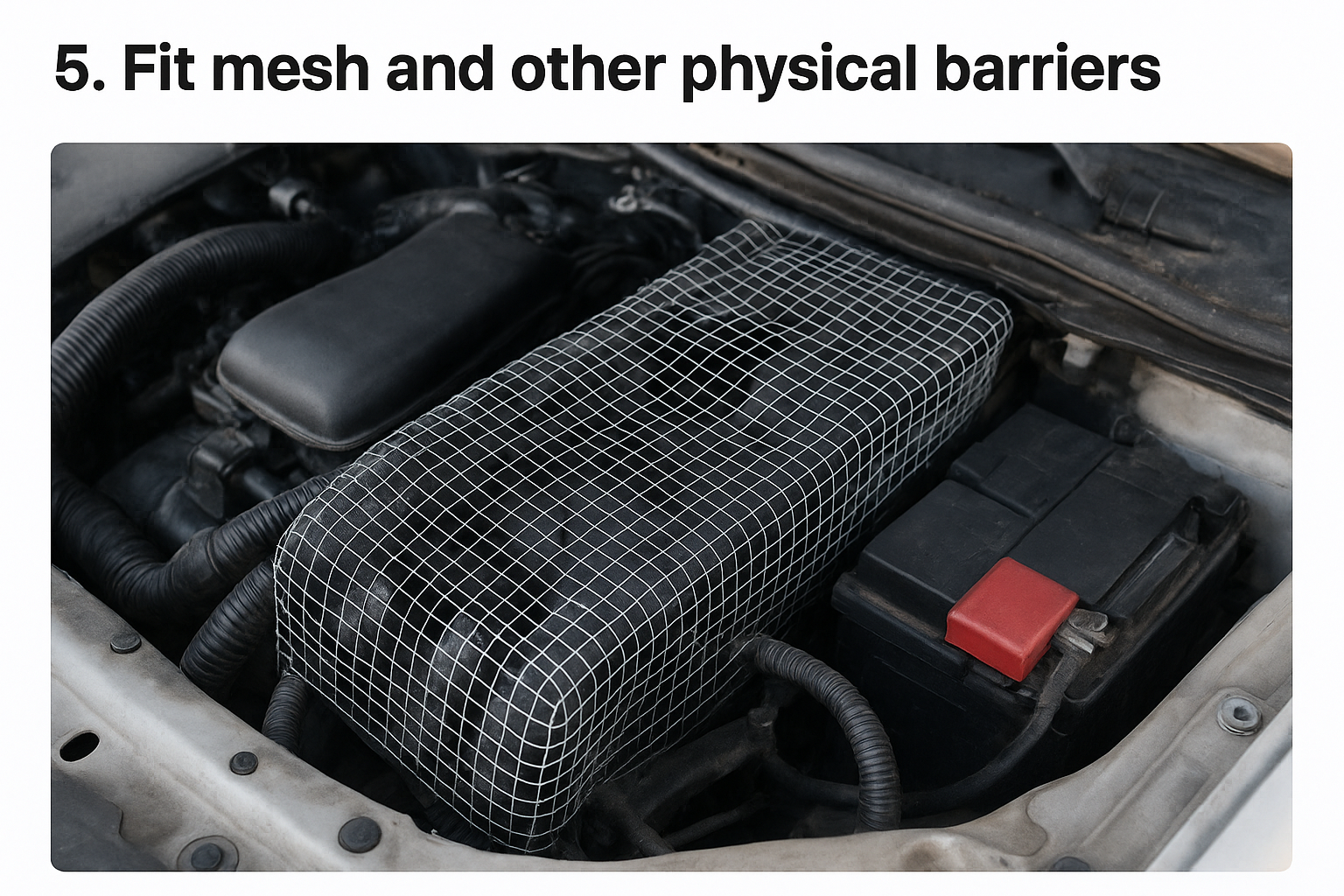
Sprays and clean habits reduce temptation, but rats that are already circling your car need a physical wall they can’t chew through. Mesh barriers and physical blockers stop rodents at the point of entry instead of just discouraging them, which matters most for cars parked in basements or near drains where rats have a short, direct route to your tires and engine bay.
How it works
Galvanized steel mesh, wrapped around exposed wiring looms and tucked into gaps near the engine bay, blocks the small openings rats use to squeeze in, since rats can fit through gaps as narrow as a coin’s width. Wire loom tape and rodent-resistant conduit sleeves protect specific cables that rats target most, particularly near the battery and fuse box. For the parking area itself, sealing gaps under gates, covering drain openings with mesh grates, and blocking gaps under basement doors closes off the routes rats use to reach your car in the first place. None of this requires a mechanic, just a Saturday afternoon and some patience with a screwdriver.
Effectiveness
Physical barriers work well against repeat chewing damage because they remove the option entirely rather than relying on a rat deciding to avoid the smell or sound. The tradeoff is time: fitting mesh properly around a modern engine bay takes more effort than spraying a repellent.
A mesh barrier doesn’t ask a rat to change its mind, it takes the choice away entirely.
Best for
This suits car owners who’ve already replaced chewed wiring once and don’t want to repeat the repair bill, plus anyone parking near drains, gardens, or basements with confirmed rodent traffic.
6. Try ultrasonic rodent repellent devices
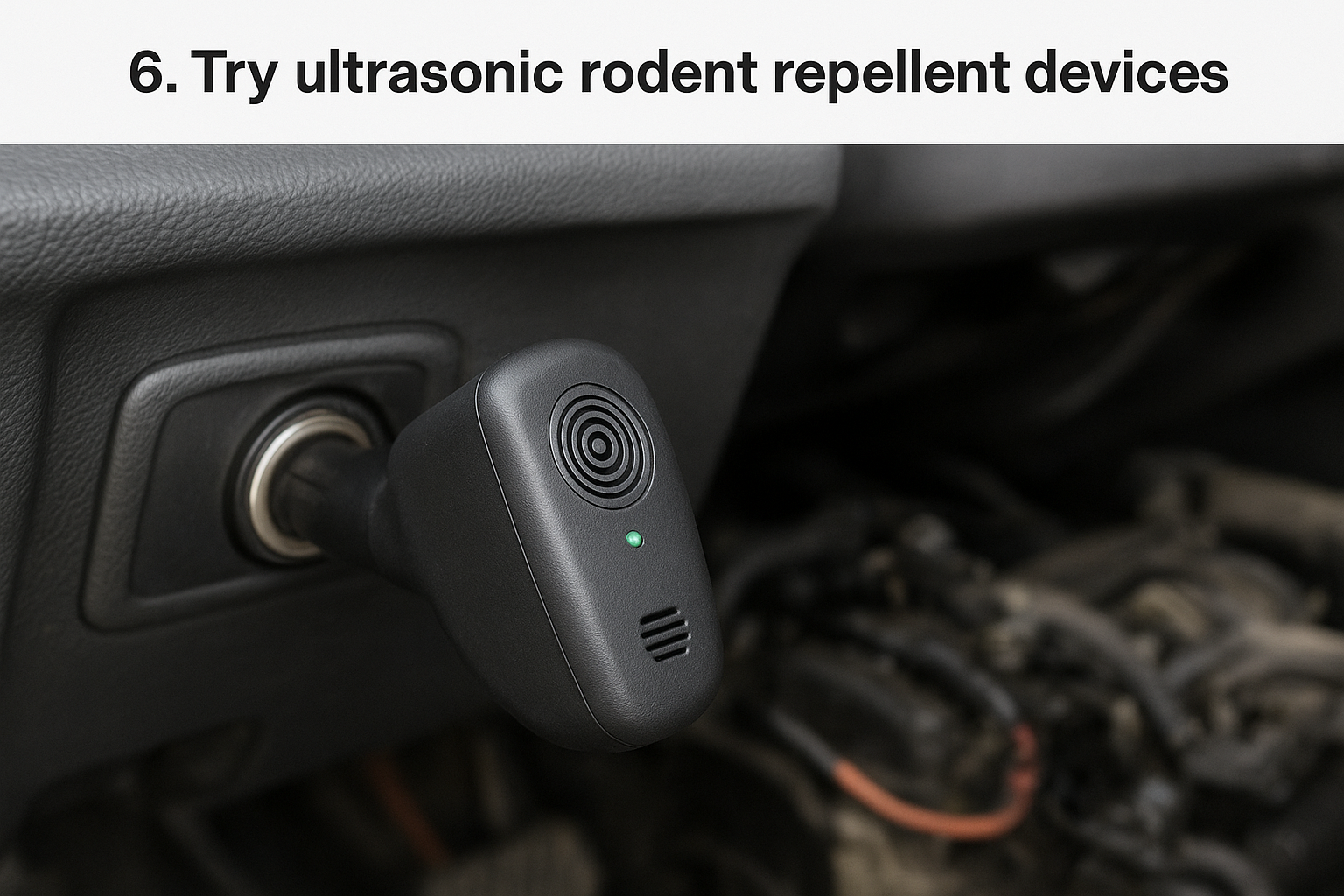
Ultrasonic devices plug into your car’s cigarette lighter socket or run on batteries tucked near the engine bay, promising to drive rats away with sound humans can’t hear. They’ve become popular with car owners who want a hands-off deterrent that doesn’t involve spraying chemicals near wiring or dealing with mesh installation. The pitch sounds good on paper, but the results in real Bangalore driveways and basements are mixed at best.
How it works
These devices emit high-frequency sound waves, typically between 20 and 65 kHz, that irritate a rat’s hearing without affecting humans or most pets. You mount one or two units near the engine bay or under the dashboard, and they run continuously whenever the car has power, or on their own battery if parked without ignition access. Coverage is limited to a small radius, so a single unit rarely protects the entire underside of a car.
Effectiveness
Results vary a lot depending on the rat population and how used they are to the sound. Rats in areas with heavy ultrasonic device use, like apartment basements where multiple residents have tried them, often grow tolerant over time, a pattern pest control technicians see repeatedly during rat control in car inspections. Treat this as a supplementary layer, not your main defense.
Ultrasonic devices work best as one layer among several, not as a standalone fix for a determined rat.
Best for
This suits car owners looking for a low-effort addition to cleaning and repellents, particularly in areas without a heavy existing rodent population where rats haven’t yet adapted to the sound.
7. Drive your car regularly and inspect often
A car that sits untouched for days is exactly what a rat wants: a quiet, warm space with no disturbance. Regular driving and inspection breaks that comfort, and it’s the simplest habit on this list because it costs nothing and takes minutes. If your car sits parked for long stretches, whether during a work-from-home phase or a long trip out of town, this is the step you’re most likely skipping.
How it works
Start the engine and drive at least a short distance every two to three days if possible, since the vibration, heat, and noise disrupt any rat trying to settle in. Open the hood every few days and shine a torch around the battery, air filter box, and wiring harness for droppings, chew marks, or nesting material before it becomes a bigger problem. Check under the car too, since rats often leave a trail of droppings near the tires before they ever move up into the engine bay.
Effectiveness
This habit works well as an early-warning system, catching rat activity in car engines before wiring gets destroyed, but it does little against a rat that’s already made a home behind your bumper. Pair it with the cleaning and barrier steps above for real protection.
A car that moves regularly is a much harder home for a rat to keep.
Best for
This suits anyone with a second car, a work-from-home schedule, or frequent travel that leaves a vehicle parked for days at a stretch without use.
Protecting your car for the long run
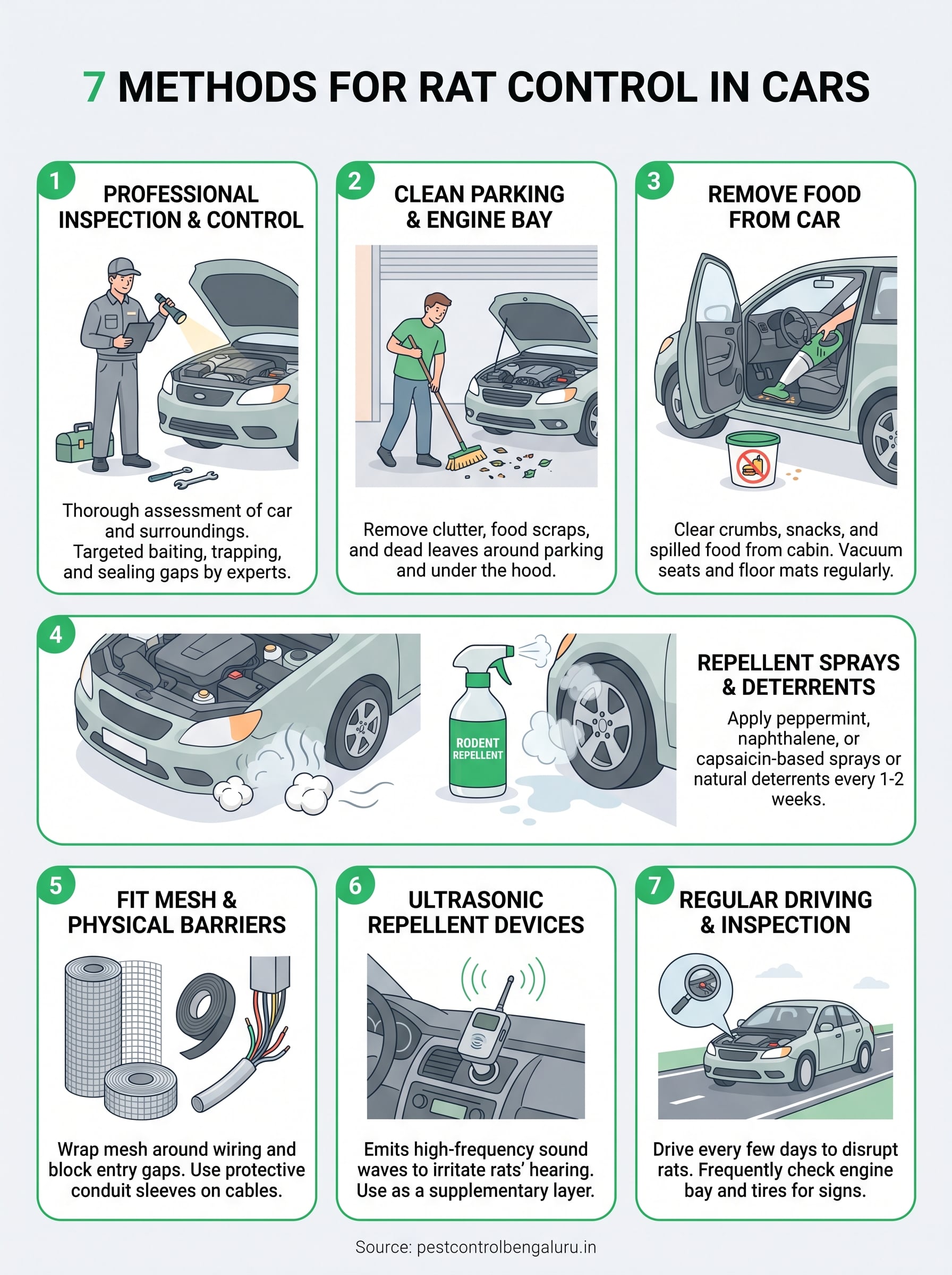
No single trick on this list works forever on its own. Rat control in car situations improves fastest when you stack habits together: a clean parking spot, no food left inside, mesh over the gaps rats squeeze through, and a quick drive every few days to keep the engine bay disturbed. Sprays and ultrasonic devices earn their place as extra layers, not replacements for the basics.
Once chewed wiring or nesting material shows up, though, gadgets and good habits won’t undo the damage or clear out a colony living near your parking spot. That’s when a trained technician who treats the whole property, not just the car, makes the difference between a one-time fix and another repair bill next month.
If you’re already seeing droppings, gnaw marks, or repeat activity around your vehicle, get a professional rodent inspection before the wiring bill grows any bigger.
FAQs about rat control in cars
Do ultrasonic rat repellent machines actually work in a car?
They help as a supplementary layer but rarely work alone. Coverage is limited to a small radius around each unit, and rats in areas with heavy ultrasonic device use often grow tolerant of the sound over time. Pair one with cleaning, sealed food storage, and mesh barriers rather than relying on it by itself.
Can I use the same ultrasonic device for my car and my home?
Most car units are built to run off a 12V socket or battery and aren’t meant for household outlets, so you’ll typically need separate devices for each. The underlying technology is the same, but placement matters: a home unit covers a room, while a car unit needs to sit near the engine bay to have any effect.
How do I know if I need professional treatment instead of a device?
Once you see chewed wiring, nesting material, or repeat droppings despite using repellents or ultrasonic devices, the colony nearby needs treating directly. A technician addresses the source, not just the symptoms a gadget can mask temporarily.
Are ultrasonic devices safe for pets?
Most units operate in a frequency range that doesn’t bother cats and dogs, but sensitivity varies by animal. If your pet rides in the car or spends time in the treated room, watch for signs of stress after installing one.