
You spot a few mosquitoes at dusk, spray some repellent, and hope they don’t come back. A week later, they’re worse. If you’re dealing with itchy bites, buzzing near your ears at night, or a stagnant drain outside your gate, you already know home remedies only buy you a few hours of relief. Mosquito control is the actual solution, and it works very differently from a can of insect spray.
At its core, control of mosquito breeding and resting sites means identifying where mosquitoes gather around your property, then applying targeted treatment to break that cycle at the source. A proper mosquito control treatment combines breeding site inspection, fogging, and residual spraying so adult mosquitoes and larvae are both handled, not just the ones flying around your living room.
In this article, we’ll walk through what mosquito control actually involves, how professional treatments differ from DIY sprays and coils, and what you should expect during and after a service visit. We’ll also cover how often treatment is needed to keep your home or office genuinely mosquito-free through Bangalore’s seasons, not just for a few days.
Why mosquito control matters for your home and health
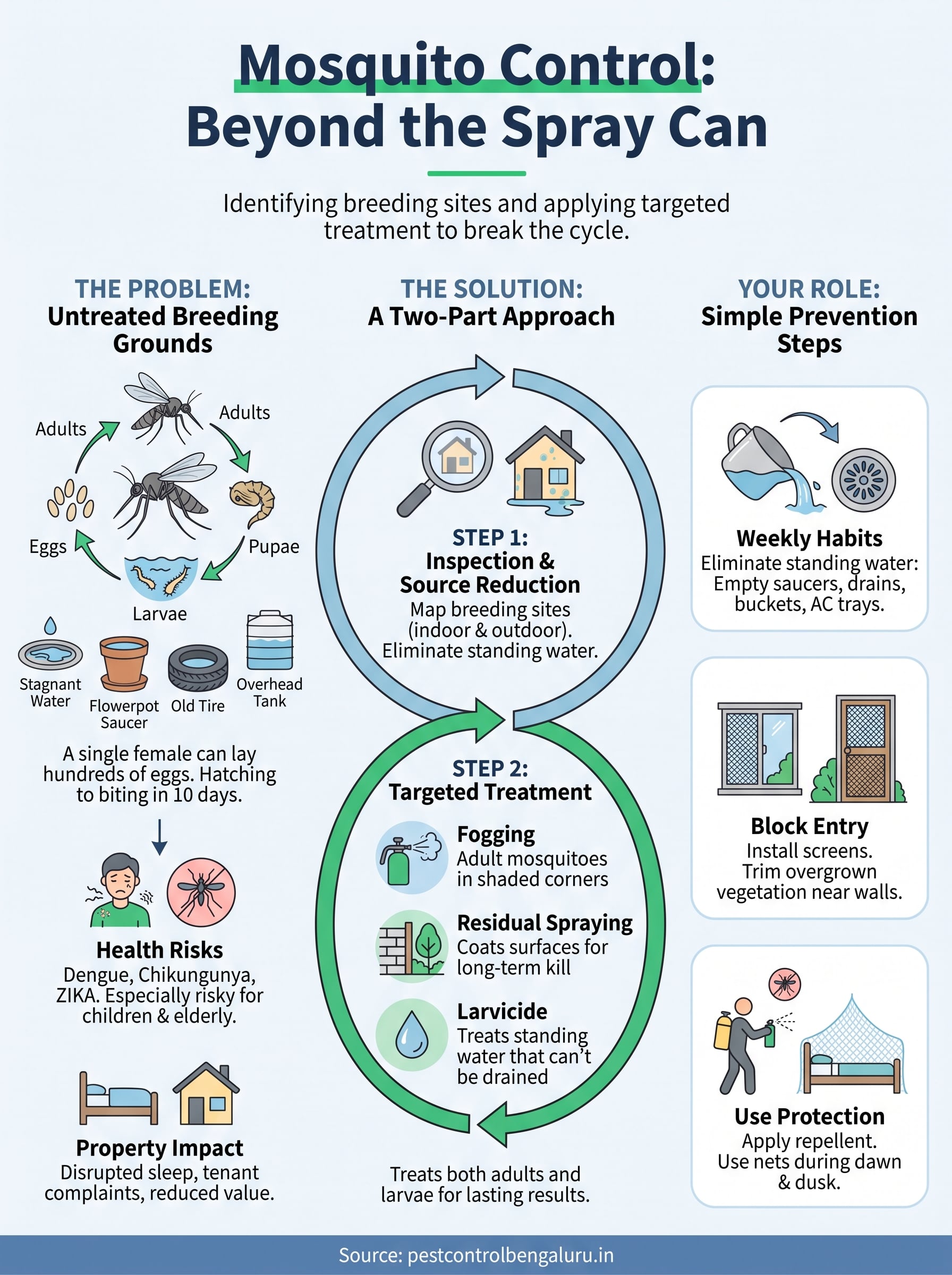
Mosquitoes aren’t just an evening annoyance, they’re a genuine health hazard in a city like Bangalore where standing water collects in construction sites, drains, and potted plants year-round, and it explains why thousands of mosquitoes suddenly appear in Bangalore. Untreated breeding grounds near your home don’t stay contained to your compound either; a single female mosquito can lay hundreds of eggs in stagnant water within a week, and those eggs hatch into a new generation biting your family within ten days, which is exactly how the mosquito life cycle keeps repeating.
Health risks you can’t ignore
Bangalore regularly reports dengue and chikungunya cases during monsoon and post-monsoon months, and both spread through the same Aedes aegypti mosquito that breeds in clean, stagnant water around homes rather than dirty drains. According to the World Health Organization, dengue incidence has grown dramatically worldwide over recent decades, with urban areas seeing the sharpest rise. The pests you’re swatting away at dusk aren’t a minor inconvenience, they’re a disease transmission risk for every person in your household, especially children and elderly family members with weaker immunity.
A single stagnant puddle near your gate can put your entire family at risk of dengue or chikungunya within days.
Beyond bites: comfort, sleep, and property value
Constant buzzing at night disrupts sleep, and repeated bites lead to skin irritation, scratching, and secondary infections in young kids especially. Effective control of mosquito populations also protects how your property is perceived, whether that’s a rental apartment tenants avoid renewing, a restaurant losing customers to visible pest activity, or a gated community where residents complain at every meeting. Consider what’s actually at stake:
- Health of family members, especially children and elderly residents
- Sleep quality and daily comfort at home
- Reputation of restaurants, hotels, and offices
- Resale or rental value of the property
- Compliance with hygiene standards for commercial spaces
Getting ahead of an infestation with a structured mosquito control service costs far less, in money and stress, than dealing with a dengue diagnosis or a tenant complaint later.
How control of mosquito populations works
Proper control of mosquito breeding starts with inspection, not spraying. A technician walks your property looking for breeding sites like flowerpot saucers, terrace drains, overhead tank overflows, and even bottle caps holding rainwater, since Aedes mosquitoes need only a teaspoon of clean water to breed. This step matters more than any chemical used later, because treating adults without removing larvae just means the problem returns in ten days.
The two-part treatment approach
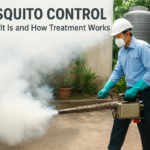
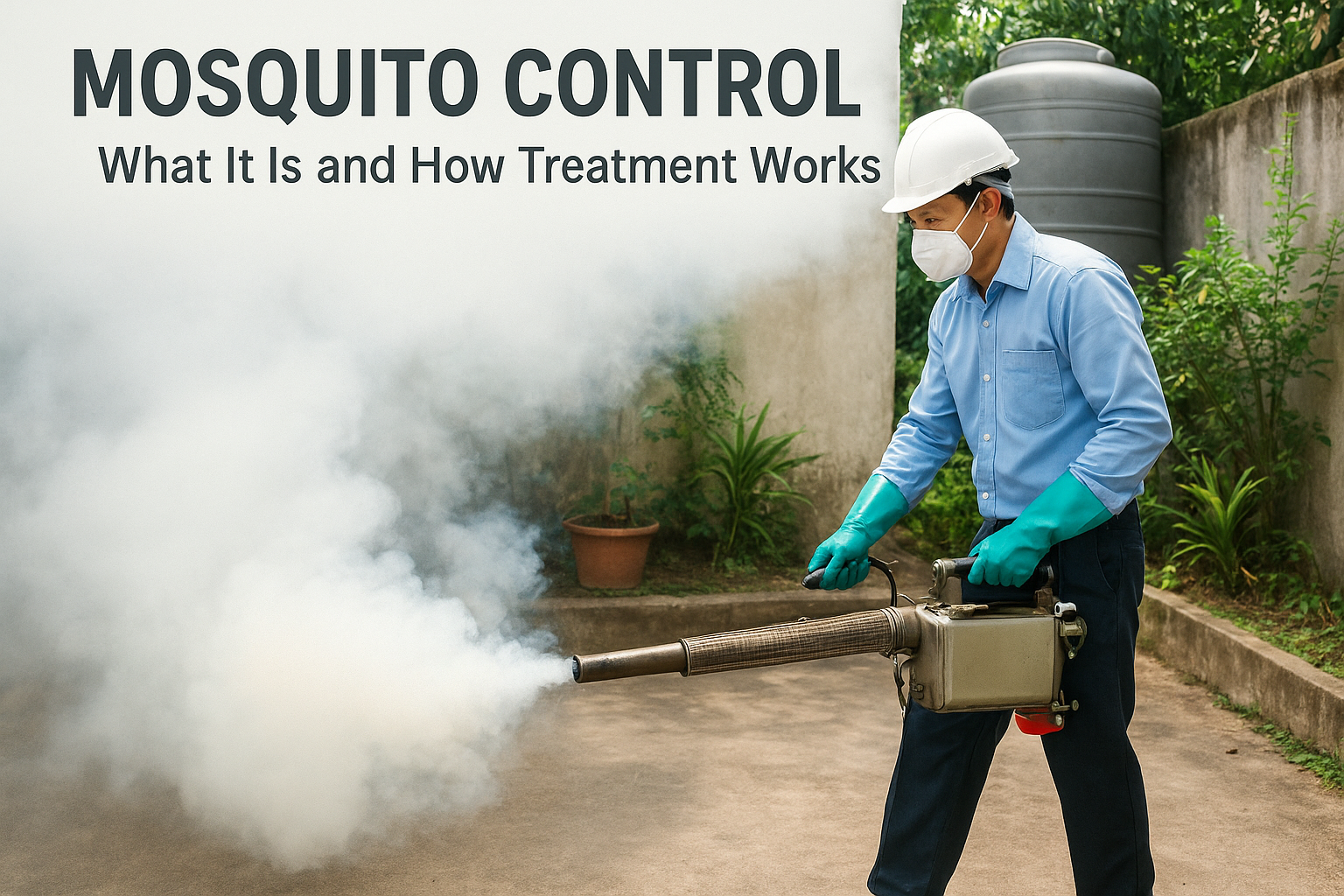
Once breeding sites are mapped, treatment moves in two directions at once. Fogging knocks down adult mosquitoes resting in shaded corners, under furniture, and near drains using a fine mist that reaches areas a hand sprayer can’t. Residual spraying coats walls, plant beds, and drain covers with a treatment that keeps killing mosquitoes that land there for weeks afterward, not just on the day of service.
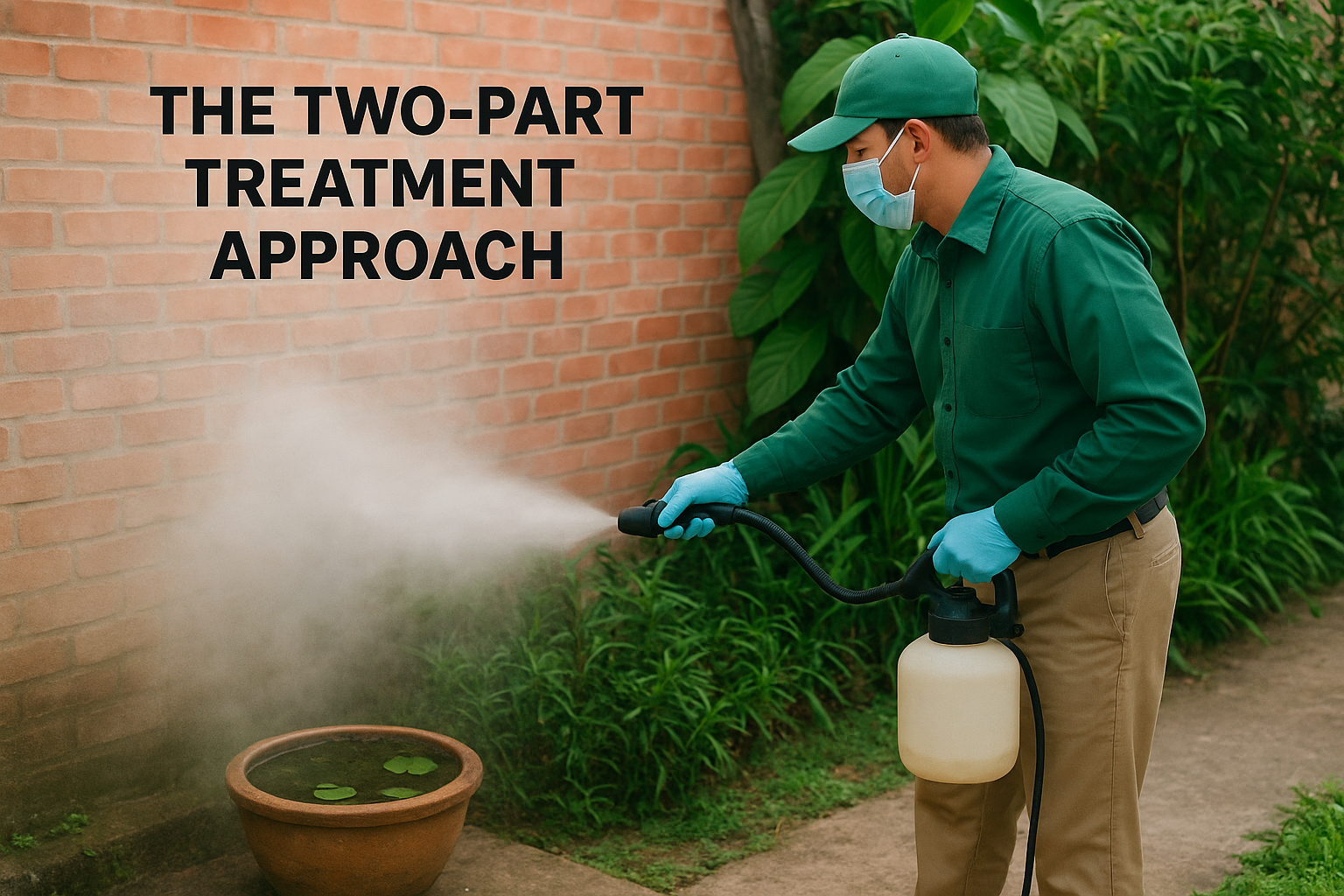
Treating adult mosquitoes without eliminating their breeding sites only delays the problem by a few days.
What a typical service visit includes
Here’s what you can expect during a standard visit:
- Inspection of indoor and outdoor breeding sites
- Larvicide treatment for standing water that can’t be removed
- Fogging of indoor rooms and outdoor common areas
- Residual spraying on walls, drains, and vegetation
- A follow-up schedule based on the season and infestation level
Seasonal timing matters too. Post-monsoon visits usually need shorter gaps between treatments since breeding conditions are at their peak.
Simple mosquito prevention steps you can take at home
Professional treatment works best when you back it up with a few habits at home. You don’t need special equipment for most of these, just fifteen minutes a week and some attention to the spots mosquitoes love most.
Eliminate standing water weekly
Stagnant water is where the real problem starts, and most of it sits in places you walk past daily. Standing water sources like flowerpot saucers, terrace drains, unused tires, and overhead tank lids collect rainwater fast during Bangalore’s monsoon months, when monsoon pest control matters most across the whole property. Check these spots every week without fail:
- Flowerpot saucers and plant trays
- Terrace and balcony drains
- Overhead tank and sump covers
- Unused containers, buckets, and tires
- Air conditioner drip trays
Emptying standing water every week does more to stop mosquitoes than any spray you’ll buy at the store.
Block entry points and reduce resting spots
Screens on windows and doors keep adults out while you handle breeding sites outside. Window screens cost little compared to what a single dengue case costs in hospital bills, and they work around the clock without any effort from you. Trim overgrown plants near walls, since dense vegetation gives mosquitoes shaded resting spots during the day, and keep gutters clear so rainwater doesn’t pool along the roofline.
Use protection during peak hours
Mosquitoes bite most aggressively at dawn and dusk, so this is when precautions matter most. Applying repellent, using mosquito nets over beds, and running screens or nets on windows during these hours cuts bites significantly, even in a home that’s otherwise been treated recently, so it helps to know which mosquito repellents actually work.
When to call a professional service for control of mosquito infestations
Home habits slow mosquitoes down, but they rarely solve an established infestation on their own. Persistent biting despite weekly water checks, screens, and repellent usually means a breeding site you can’t see, like a neighbor’s construction pit, a blocked terrace drain, or water trapped inside a broken pipe. That’s the point where a professional inspection finds what you’re missing.
Signs it’s time to call in help
Watch for these warning signs before the situation turns into a health risk:
- Mosquito bites indoors even after using nets and screens, a sign you still need to clear mosquitoes out of the house
- Visible swarms near drains, plants, or stored water
- A recent dengue or chikungunya case in your building or street
- A newly moved-in property with no pest history on record
- Commercial spaces needing documented, scheduled treatment for compliance
If bites keep happening despite your best efforts, the breeding site is somewhere you haven’t checked yet.
What professional treatment adds
Unlike a can of spray, a professional mosquito control service maps every breeding site on your property, treats standing water that can’t be drained, and applies fogging and residual spraying in a sequence timed to Bangalore’s seasons. Technicians also set a follow-up schedule instead of leaving you to guess when the next round is due. Regular commercial properties like restaurants, hotels, and clinics need this structure most, since one visible mosquito during business hours can cost more than months of preventive service.
Frequently asked questions
How often should mosquito control treatment be repeated?
Most homes need a follow-up visit every few months, with shorter gaps right after the monsoon when breeding conditions peak. The exact schedule depends on how much standing water collects around your property and how severe the infestation was at the first inspection.
Does fogging alone get rid of mosquitoes for good?
No. Fogging only kills adult mosquitoes flying at the time of treatment. Without larvicide and residual spraying at breeding sites, a new batch of adults hatches within about ten days and the problem returns.
Can I handle mosquito control myself without a professional?
Weekly checks for standing water, screens, and repellents during dawn and dusk go a long way, but they will not remove hidden breeding sites like a blocked terrace drain or a neighboring construction pit. A professional inspection finds what home habits miss.
Is mosquito control treatment safe for children and pets?
Professional services use targeted application methods like residual spraying and larvicide in specific spots rather than blanket household spraying, which limits exposure. Ask your service provider about re-entry times for treated rooms if you have young children or pets.
When should I book a mosquito control service instead of waiting?
Book one as soon as you notice persistent indoor bites despite screens and nets, visible swarms near drains or plants, a dengue or chikungunya case nearby, or if you’ve just moved into a property with no pest history.
Keeping your home mosquito-free
Mosquitoes aren’t a problem you fix with one good spray session. Real control of mosquito infestations means finding every breeding site on your property, treating standing water you can’t drain, and backing that up with fogging and residual spraying timed to Bangalore’s seasons. Weekly habits like emptying flowerpot saucers, fixing screens, and using nets during dawn and dusk keep new breeding from starting between visits.
You now know what separates a proper mosquito control treatment from a can of spray that wears off by evening: inspection, larvicide, and a follow-up schedule instead of guesswork. If bites keep happening despite your best efforts at home, or you’ve noticed dengue cases nearby, don’t wait for the situation to get worse. Reach out to our mosquito control team for an inspection and a treatment plan built around your property, your family, and Bangalore’s weather.