
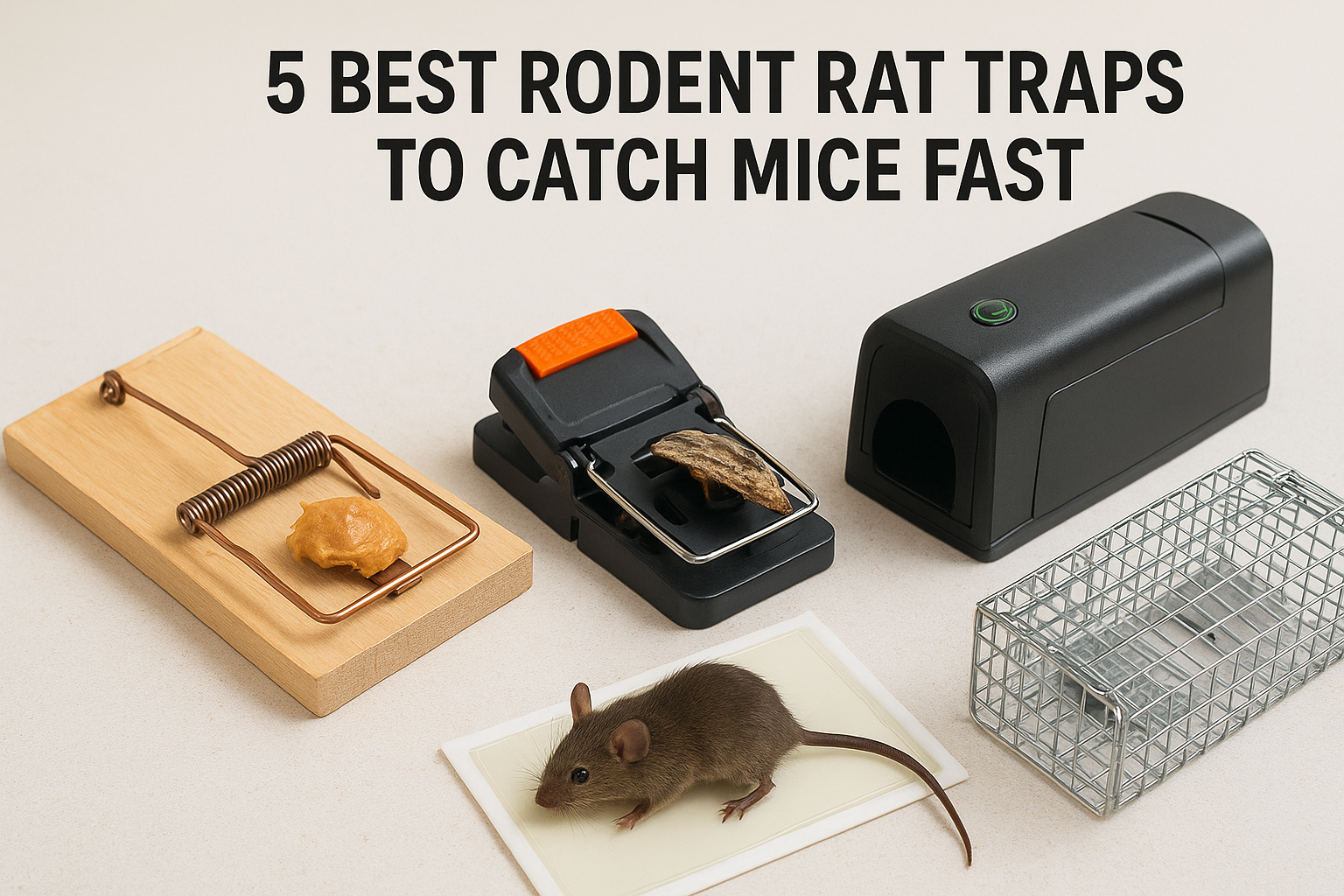
You’ve heard them scratching in the ceiling at night or found droppings near the kitchen counter, and now you want them gone fast. Picking the right rodent rat trap matters more than most people think. A cheap plastic snap trap from the local store often fails to trigger, while the wrong bait leaves your trap empty for weeks while the infestation grows.
This guide walks you through the 5 best traps available for homes in Bangalore, comparing snap traps, glue boards, and live-catch cages so you know exactly which one suits your situation. Whether you’re dealing with a single mouse in the pantry or a full-blown rat problem in a warehouse, a good rat snap trap paired with correct placement and bait catches rodents within the first few nights, not weeks.
We’ll cover how to pick between a mouse rat trap for smaller spaces and a heavier rat & mouse trap for bigger rodents, plus placement tips our technicians at A to Z Pest Solutions have used across thousands of Bangalore homes since 1993. If traps alone don’t clear a serious infestation, we’ll also tell you when it’s time to call in professional rodent control.
1. Classic wooden and plastic snap traps
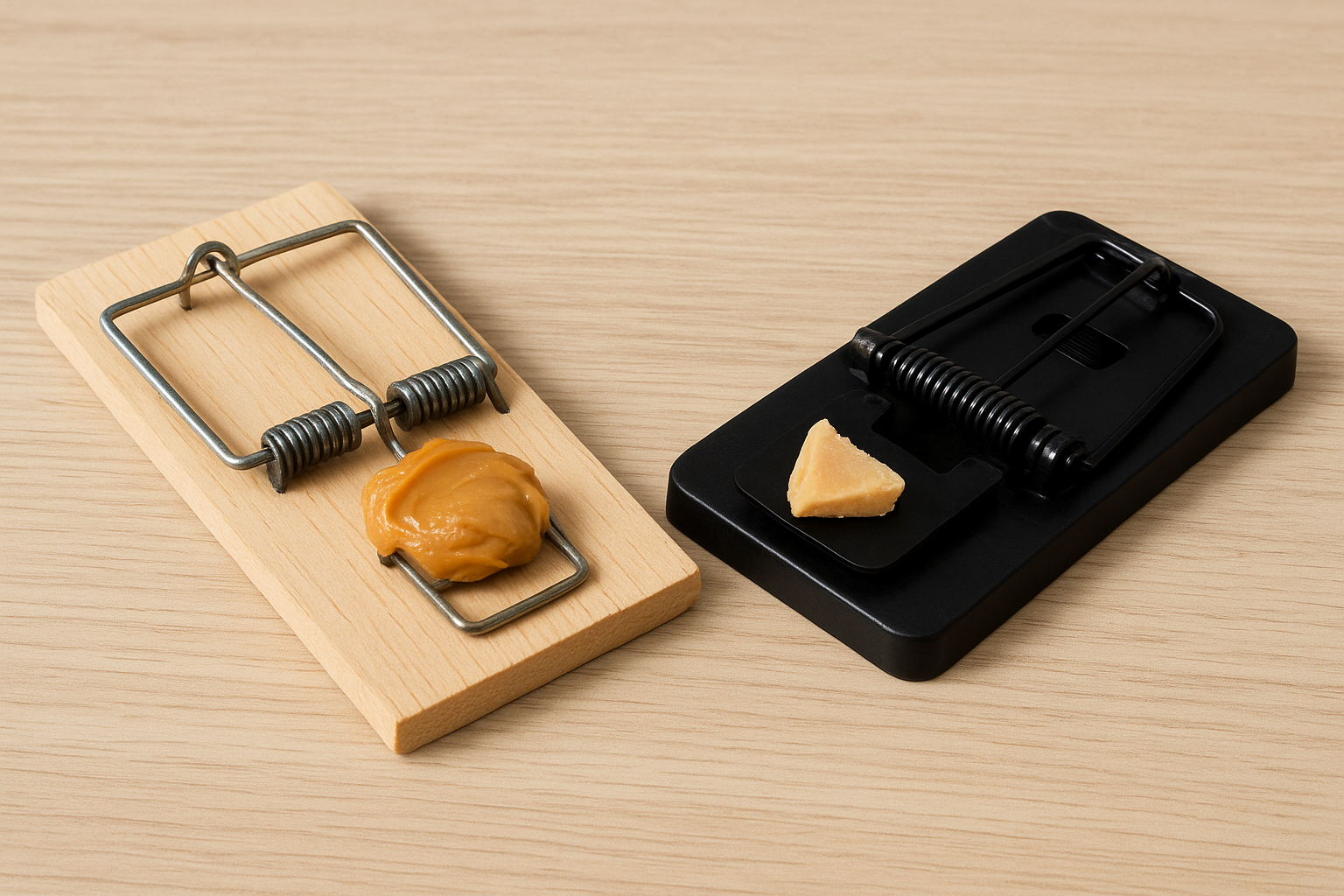
The rat snap trap is the original spring-loaded design your grandparents likely used, and it still works better than most modern gadgets when set up correctly. A wooden base with a metal bar snaps shut the instant a rodent touches the trigger plate, delivering a quick kill rather than a slow, stressful death. Plastic versions work the same way but resist moisture better, which matters in Bangalore’s humid kitchens and monsoon-damp store rooms.
How it works
You bait the trigger plate with something the rodent actually wants, peanut butter, roasted coconut, or a small piece of dry fish works well in Indian homes (safer around children than a rat killer poison), then set the spring mechanism along a wall where you’ve spotted droppings or gnaw marks. Rodents run along walls, not through open floor space, so placement against skirting boards catches far more than a trap left in the middle of a room.
A snap trap only works if it sits exactly where the rodent already travels, not where you wish it would go.
Best for
This mouse rat trap style suits single-room infestations, pantries, garages, and small kitchens where you’re dealing with one or two rodents rather than an established colony.
Pros and cons
| Aspect | Detail |
|---|---|
| Cost | Very low |
| Kill speed | Instant |
| Reusability | Multiple uses |
| Safety concern | Finger injury risk, keep away from kids |
| Effectiveness on smart rats | Drops after repeated failed attempts |
Price range in India
A basic wooden snap trap costs between ₹30 and ₹80 per unit at hardware stores, while heavier-duty plastic versions built for bigger rats run ₹100 to ₹250.
2. Electronic and electric shock traps
Electronic traps deliver a high-voltage jolt the moment a rodent steps inside the enclosed chamber, killing it in seconds without any mess or snap-related injury risk. Unlike a traditional rat snap trap, these battery-powered units house the rodent completely, so you never see or touch the carcass, just an indicator light telling you it’s time to empty the chamber.
How it works
Bait sits inside a plastic tunnel wired to sensors that detect when a rodent has fully entered, then trigger a lethal shock through metal plates lining the base. Most units run on 4 to 6 AA batteries and reset automatically after each catch.
An electronic trap trades a lower price for a cleaner, faster kill with zero contact for you.
Best for
Apartments and kitchens where households want a hygienic rodent rat trap option without touching dead rodents suit this style best.
Pros and cons
| Aspect | Detail |
|---|---|
| Kill speed | Instant, humane |
| Cleanup | Minimal, no blood |
| Reusability | High, battery-dependent |
| Upfront cost | Higher than snap traps |
| Power needs | Requires fresh batteries |
Price range in India
Expect to pay ₹800 to ₹2,500 depending on brand and chamber size.
3. Glue traps for rats and mice
A glue trap is a flat cardboard or plastic tray coated with a thick, sticky adhesive that traps a rodent’s feet the moment it walks across the surface. Unlike a rat snap trap, nothing snaps or shocks, the rodent simply gets stuck and can’t move, which makes this option cheap but also the messiest to deal with afterward.
How it works
You place the tray flat against walls or inside cabinets where you’ve seen droppings, sometimes adding a dab of bait in the center to pull the rodent across the sticky zone. Once stuck, most rodents struggle for hours before you find them.
Glue traps catch reliably, but disposing of a live, struggling rodent is a job most homeowners aren’t prepared for.
Best for
This mouse rat trap format works well for tracking activity in tight spaces like behind appliances, where snap traps won’t fit.
Pros and cons
| Aspect | Detail |
|---|---|
| Cost | Very low |
| Setup | No mechanism to trigger |
| Humaneness | Poor, slow death |
| Reusability | Single use only |
| Mess | High, requires careful disposal |
Price range in India
Glue boards cost ₹20 to ₹60 per sheet, sold in packs at most hardware stores.
4. Live-catch cage traps for humane removal
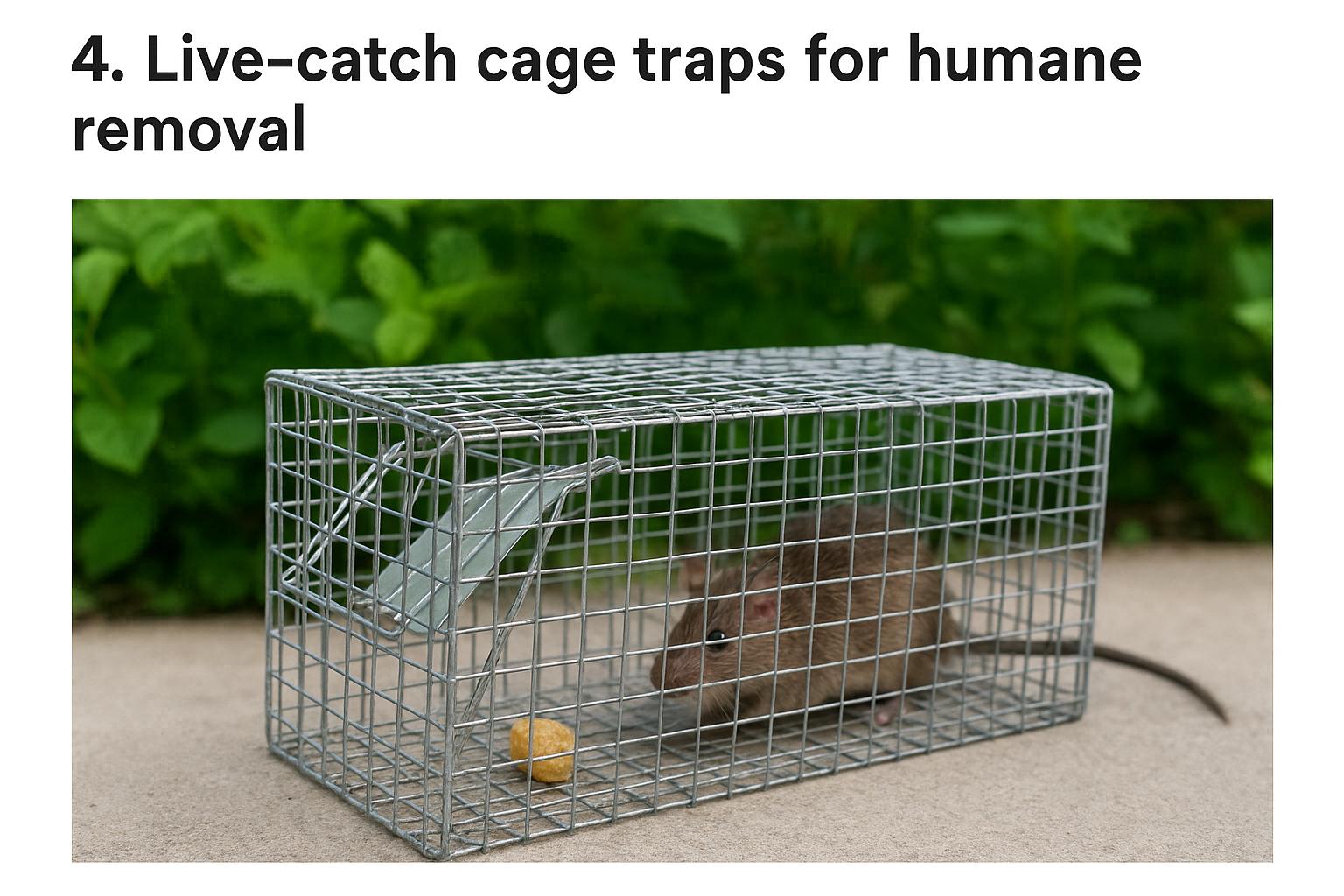
A live-catch cage trap lets you remove a rodent without killing it, which suits households that want pests gone but don’t want a dead animal to deal with. This wire cage design works well as a rat & mouse trap for people who release rodents far from the property rather than disposing of a carcass.
How it works
Bait sits at the back of a spring-loaded door mechanism, and once the rodent steps fully inside to reach it, the door swings shut and locks behind it. You then carry the sealed cage outdoors and release the rodent well away from your home, ideally more than a kilometer, or the same animal often finds its way back.
Catching a rodent alive solves nothing unless you release it far enough away that it can’t return.
Best for
Families with children or pets who prefer a non-lethal rodent rat trap option find this style easiest to accept.
Pros and cons
| Aspect | Detail |
|---|---|
| Humaneness | High, no killing involved |
| Reusability | Multiple uses |
| Cost | Moderate |
| Effort | Requires transport and release |
| Success rate | Lower than snap or electronic traps |
Price range in India
Cage traps typically cost ₹150 to ₹500 depending on size and build quality.
5. Professional rodent control service
When traps keep coming back empty or you’re finding fresh droppings every week despite your best efforts, the infestation has likely outgrown DIY tools. A professional rodent control service brings trained technicians who inspect entry points, wall voids, and ceiling spaces that homeowners rarely check, then apply a treatment plan built around your specific property rather than a single trap type, and it helps to know what a rat control visit in Bangalore covers before you book.
How it works
Technicians combine tamper-resistant bait stations, targeted baiting, and rodent-proofing recommendations to seal gaps where rats and mice enter. A to Z Pest Solutions follows up with repeat visits to confirm the colony is actually gone, not just quiet for a few days.
A single trap catches one rodent at a time; a proper inspection stops the next twenty from ever getting inside.
Best for
Households and businesses facing recurring infestations, warehouses, or anyone who has tried multiple traps without lasting results.
Pros and cons
| Aspect | Detail |
|---|---|
| Effectiveness | Highest, addresses root cause |
| Convenience | No trap monitoring needed |
| Cost | Higher than DIY options |
| Guarantee | Follow-up visits included |
Price range in India
Professional rodent control typically runs ₹1,500 to ₹5,000 depending on property size and infestation severity, and you can compare the best rodent control services in Bangalore with prices before deciding.
Choosing the right trap for your home
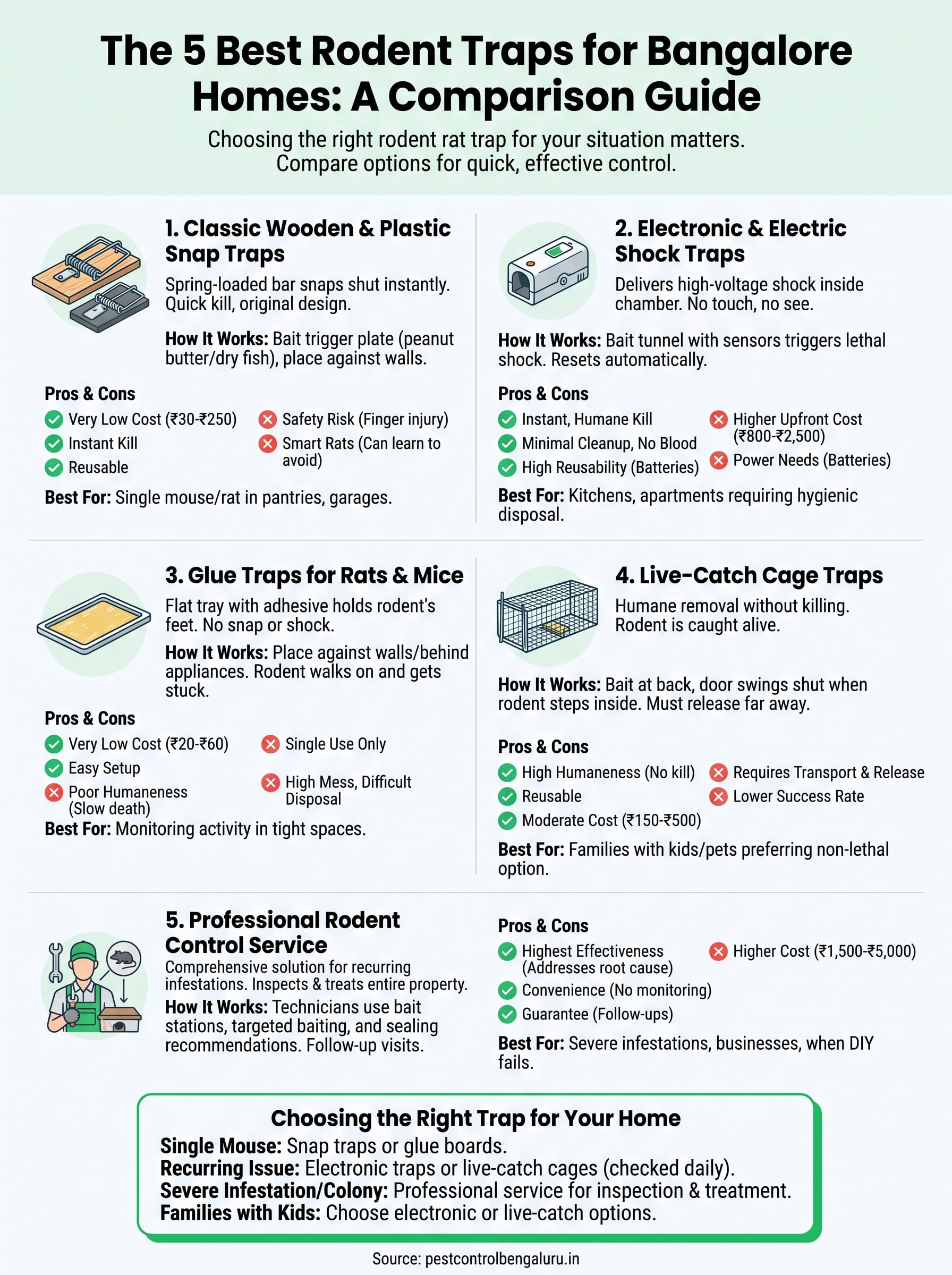
Match the tool to the size of your problem. A single mouse in the pantry calls for a rat snap trap or a couple of glue boards, nothing more. A recurring rat problem in the kitchen or ceiling voids needs an electronic trap or cage setup, checked daily, not left forgotten in a corner, alongside the basic steps to keep rats out of the house for good. Families with kids around should skip snap traps entirely and lean toward electronic or live-catch options instead.
But here’s the honest truth from 32 years of fieldwork: traps manage a small problem, they don’t fix an infestation. If you’re refilling bait every night, finding fresh droppings weekly, or hearing movement in the walls after a month of trying, the colony has already outgrown what any store-bought rodent rat trap can handle. That’s when a proper inspection and treatment plan saves you weeks of frustration. Get in touch with our rodent control team and we’ll sort it out for good.