
You hear scratching in the ceiling at night, find droppings near the pantry, or spot a rat darting across the kitchen floor. Your first instinct is to grab a rat trap and end the problem before it spreads. That’s the right call, but most people place the trap in the wrong spot or use bait that rats simply ignore, so the rodent keeps coming back while the trap sits empty.
This guide answers the real question behind every search for a rat trap for home use: how do you actually catch the rat, not just set a trap and hope? We’ll walk through correct placement, the difference between a snap trap and a glue board, and the bait selection that actually works on Indian house rats, not just mice.
By the end, you’ll know how to choose the best trap for rat problems in your home, set it up so it triggers reliably, and recognize when a single rat becomes an infestation that needs professional rat control in Bangalore from a team like A to Z Pest Solutions, which has handled rodent control across Bangalore homes since 1993.
What is a rat trap and which type works best
A rat trap is any device built to capture or kill a rat by exploiting its habit of squeezing through tight gaps along walls and skirting boards. If you’ve ever wondered what is rat trap technology actually relies on, the answer is simple: pressure, scent, or adhesive, triggered the moment the rodent commits to the path you’ve set for it. Understanding this before you buy anything saves you from wasting money on a device that never gets triggered.
Common types you’ll find in Bangalore stores
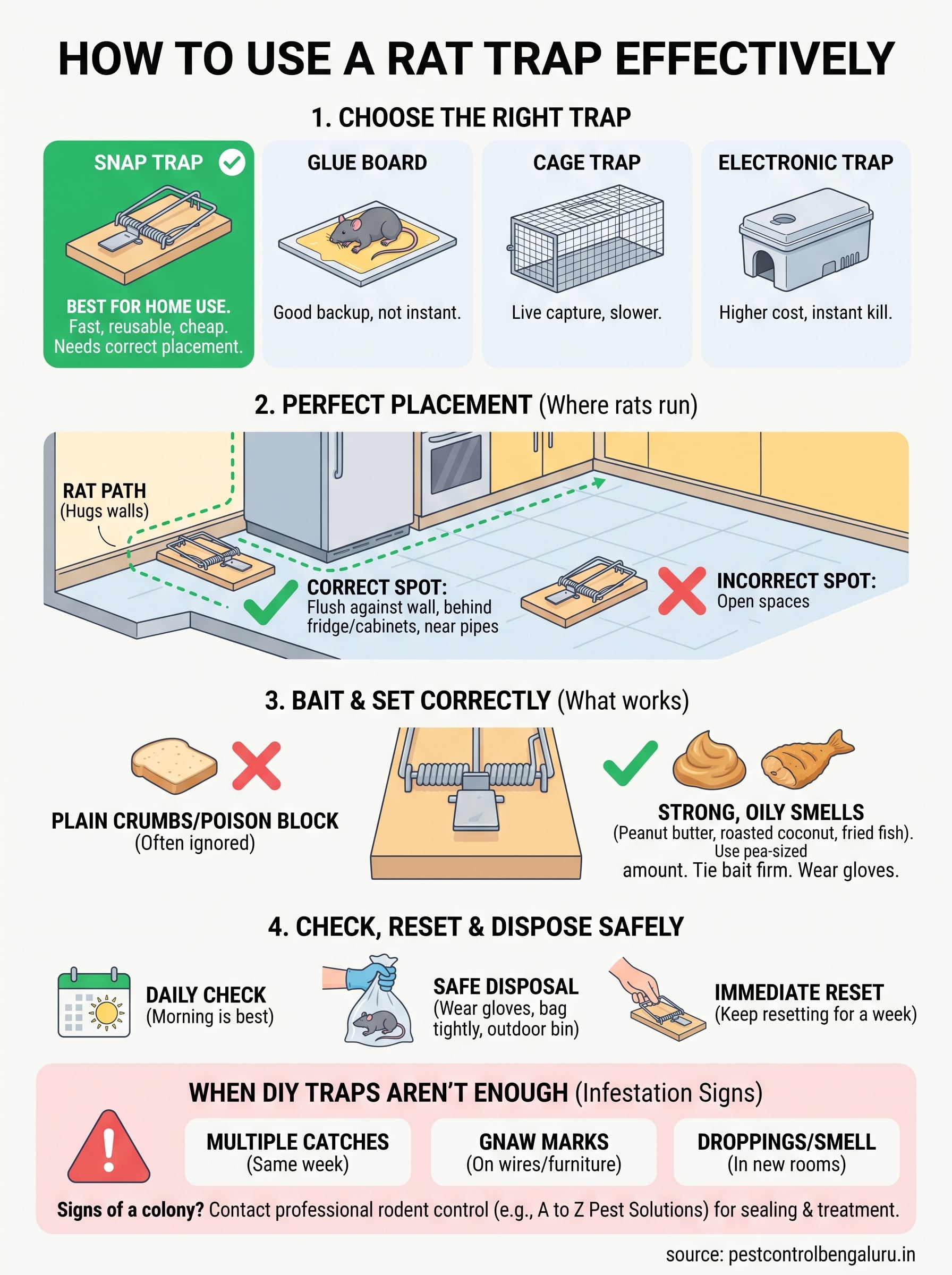
Not every trap on the shelf performs the same way indoors, especially in kitchens and store rooms where rats are cautious. Here’s how the main options compare:
| Trap type | How it works | Best for | Downside |
|---|---|---|---|
| Snap trap | Spring-loaded bar kills instantly on contact | Kitchens, godowns, single rat problems | Needs correct placement to trigger |
| Glue board | Sticky surface traps the rat by its feet | Narrow gaps, behind appliances | Distressing for the rat, not instant |
| Cage trap | Live capture through a one-way door | Homes wanting to release rats away from the property | Slower, needs daily checking |
| Electronic trap | Electric shock kills on entry | Pantries, warehouses | Higher upfront cost |
Which one actually works best
Snap traps remain the best trap for rat control in most Bangalore homes because they’re fast, reusable, and cheap to replace. If you’re dealing with a single rat that darted through your kitchen once, a snap trap near the wall line will usually settle it within a night or two.
A trap only works if it sits exactly where the rat already travels, not where you find it convenient.
Glue boards work well as backup or in spots too narrow for a snap trap’s bar, but they’re not a first choice if you want a quick, humane outcome.
Step 1. Find the right spot to place the trap
Rats stick to the same routes every night, hugging walls and skirting boards because their whiskers guide them along vertical surfaces. Placing your rat trap anywhere in the open middle of a room wastes the effort, since a rat rarely crosses exposed floor space unless it’s desperate. Walk your kitchen, store room, and balcony edges after dark with a torch and look for droppings, grease marks, or gnaw marks along the base of cabinets and pipes. That trail tells you exactly where to set the trap for a rat that’s already using the space.
Spots that consistently work
Check these locations first before anything else:
- Behind the fridge or washing machine, tight to the wall
- Along the base of kitchen cabinets, especially near the sink
- Near pipe entry points and drain openings
- Inside store rooms, next to sacks or boxes
- Along the compound wall or balcony grille
A trap placed six inches off the wall catches nothing; a trap flush against it catches the rat.
Avoid placing it near strong smells like detergent or spices, since these can mask the bait’s scent and delay a rat in trap situations you’re hoping to resolve quickly.
Step 2. Bait and set the trap correctly
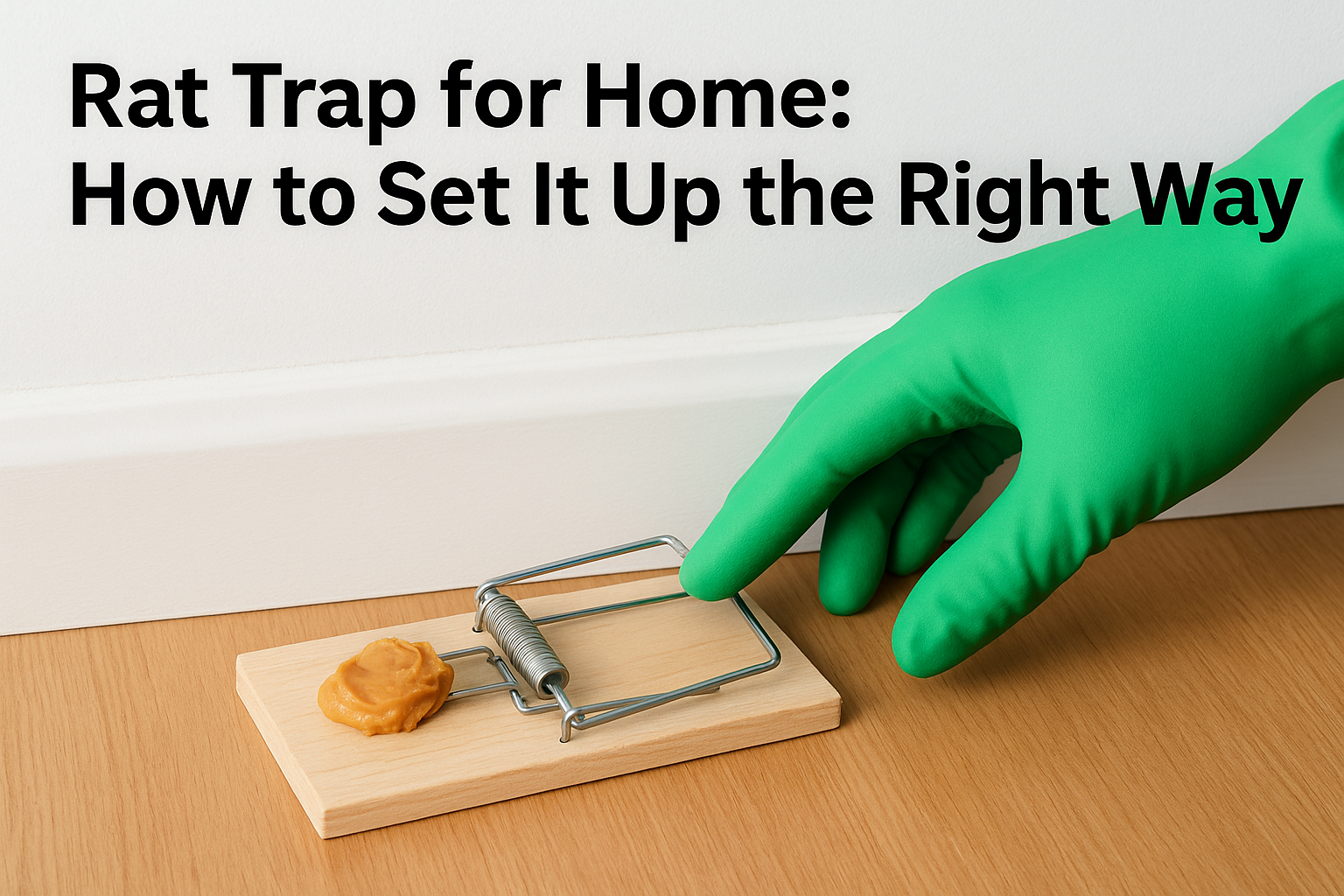
Getting a rat in trap depends less on the trap itself and more on what you tie to the trigger. Peanut butter, roasted coconut, or a small piece of fried fish work better than plain bread or a rat killer poison block, since Indian house rats respond to strong, oily smells rather than dry crumbs. Tie or smear the bait firmly onto the trigger plate so the rat has to tug at it to trigger the snap, instead of nibbling from the edge and walking away unharmed.
Setting the trap step by step
Follow this sequence every time you set a fresh trap:
- Wear gloves to avoid leaving your scent on the metal
- Load a pea-sized amount of bait onto the trigger
- Set the spring bar and lock it into place
- Position the trigger facing the wall, so the rat approaches head-on
- Leave the trap undisturbed overnight
A trap baited with the wrong smell just feeds the rat for free.
Common setup mistakes
Many homeowners overload the trigger with bait, which lets a cautious rat trap rat food without pressing down hard enough. Keep portions small and check the tension on the spring weekly, since a loose mechanism fails even with perfect bait.
Step 3. Check, reset, and dispose of catches safely
Morning is the best time to check a snap trap, since most rats move at night and you’ll usually find your rat in trap within the first two attempts if placement and bait were right. Checking daily also stops a dead rodent from decomposing under a cabinet, which brings flies and a smell that lingers for days in a closed kitchen.
Leaving a catch unchecked for more than a day undoes all the work you put into placing the trap correctly.
Safe disposal steps
Handle every catch, whether it’s a live capture or a kill, with the same caution:
- Wear gloves before touching the trap or the rodent
- Slide the whole trap into a plastic bag without direct contact
- Seal the bag tightly and dispose of it in an outdoor bin
- Wash the trap with soap and hot water before resetting
- Sanitize the surrounding floor area with disinfectant
Resetting immediately matters because a single trap rat catch rarely ends the problem. Rats breed fast, and if one found its way in, others likely share the same entry point. Reset the same spot for at least a week, watching for fresh droppings, before assuming the area is clear and moving on to keeping rats out of the house for good.
When DIY traps aren’t enough
Setting one or two traps works fine for a single rat that wandered in from outside, but repeated catches within the same week point to something bigger. If you’re resetting the trap every night and still finding fresh droppings, gnaw marks on wiring, or new entry holes near pipes, you’re likely dealing with an established colony rather than a lone rodent. At that point, no amount of clever baiting fixes the root issue, since traps only remove individuals while the nest keeps producing more.
When you’re catching rats faster than you can reset traps, you no longer have a trap problem, you have an infestation.
Signs it’s time to call a professional
Watch for these warning signs before the problem spreads further into walls and false ceilings:
- Multiple rats caught within the same week
- Gnaw marks on electrical wiring or furniture
- Droppings appearing in new rooms
- Strong, persistent urine odor near vents
Commercial kitchens, warehouses, and larger homes rarely get lasting results from store-bought traps alone. A professional rodent control team in Bangalore identifies entry points, seals them, and uses tamper-proof bait stations that traps at home simply can’t match. A to Z Pest Solutions has handled exactly this kind of escalation across Bangalore properties since 1993, combining inspection, proofing, and treatment into one visit.
Keeping your home rodent-free
A well-placed rat trap solves most single-rodent problems within a few nights, provided you respect the routine: correct spot, strong bait, daily checks, and immediate reset. Skip any one of those steps and you’ll end up blaming the trap for a placement or bait mistake that was fixable all along. Every home in Bangalore, whether it’s an apartment near a drain line or a villa backing onto a compound wall, deals with rats at some point, so knowing this process, along with how to remove rats permanently, puts you ahead of most homeowners who just scatter traps and hope.
Still, traps have limits. Once you’re catching rats faster than you can reset, or finding gnaw marks spreading through the house, it’s no longer a trap job, it’s an infestation. That’s when professional rodent control from A to Z Pest Solutions makes the difference, sealing entry points and clearing the nest instead of just the visible rat.